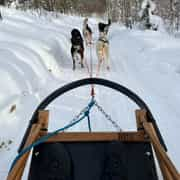
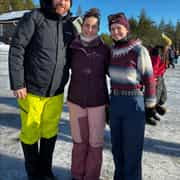
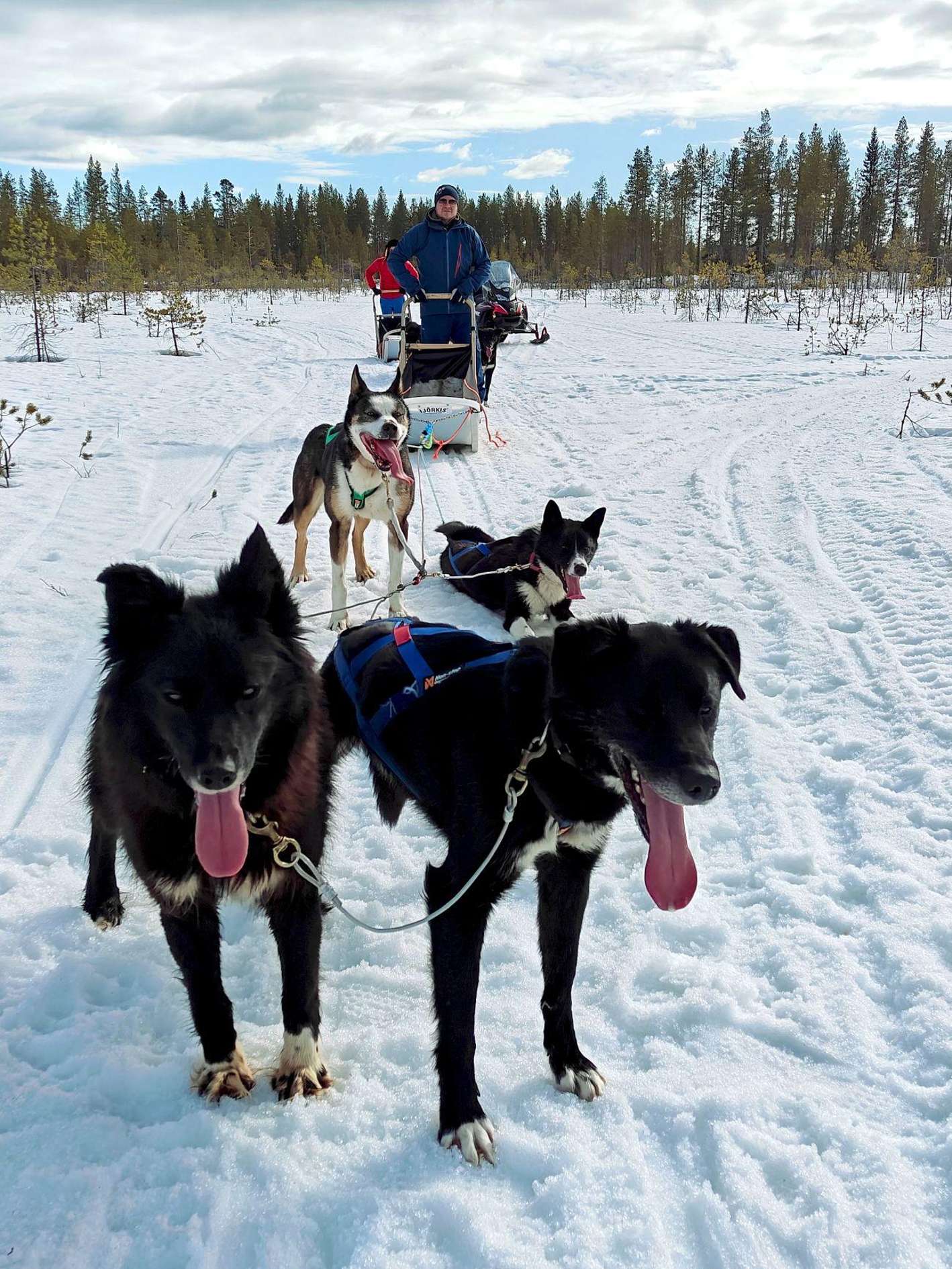
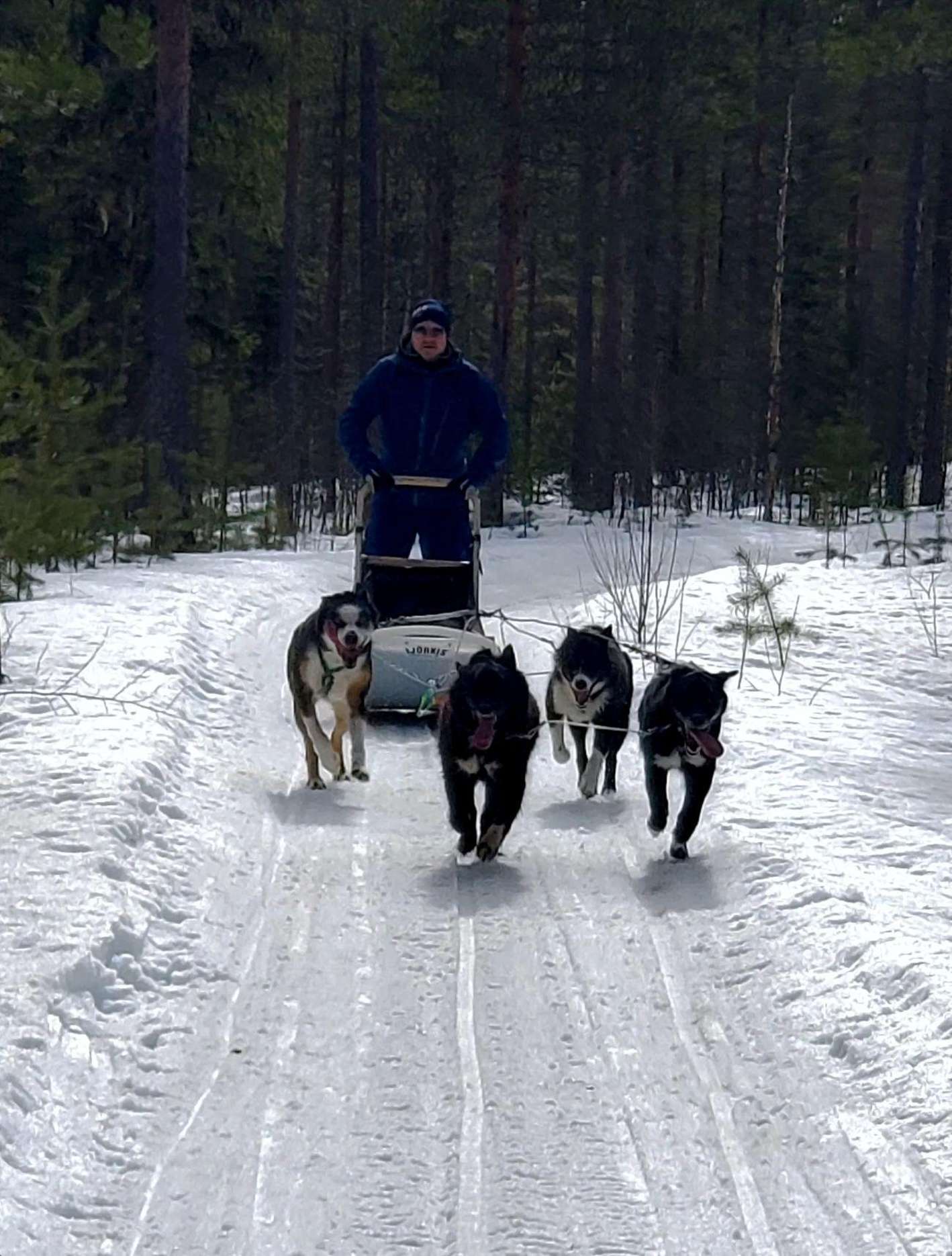
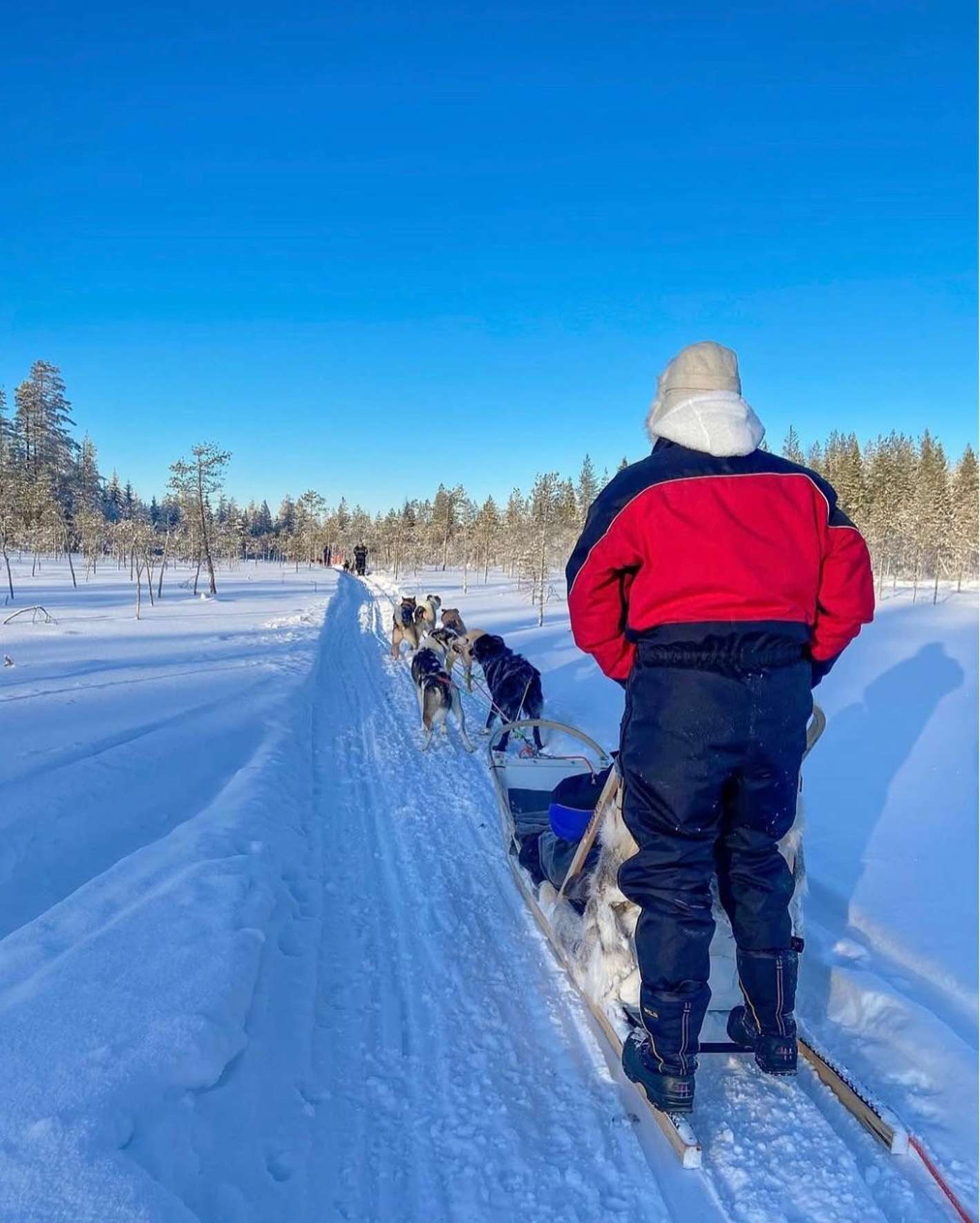
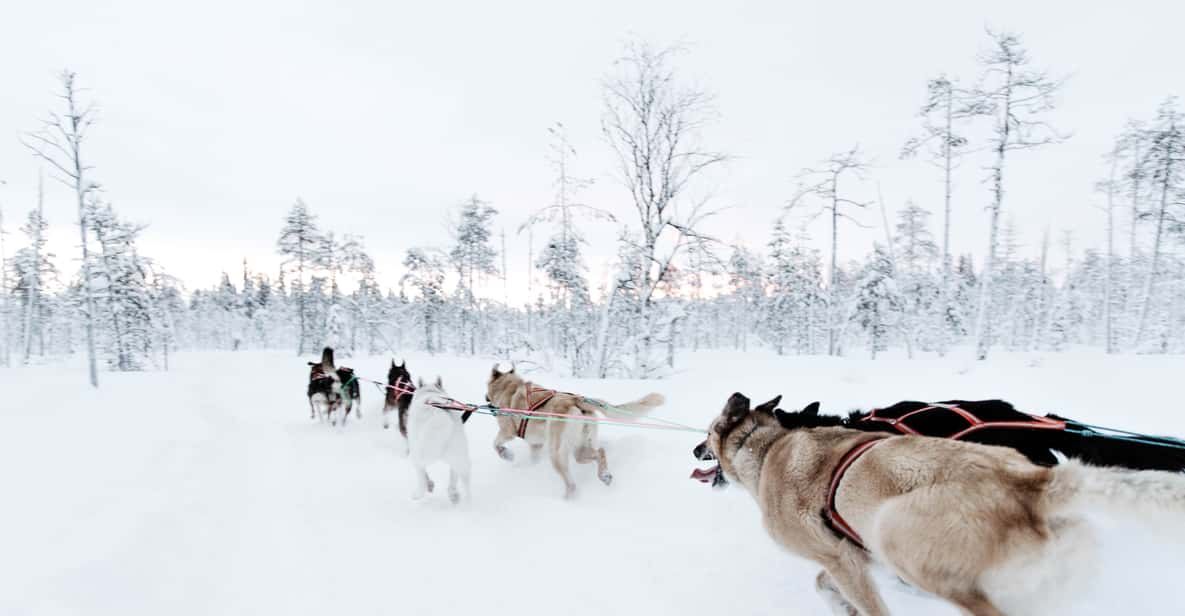
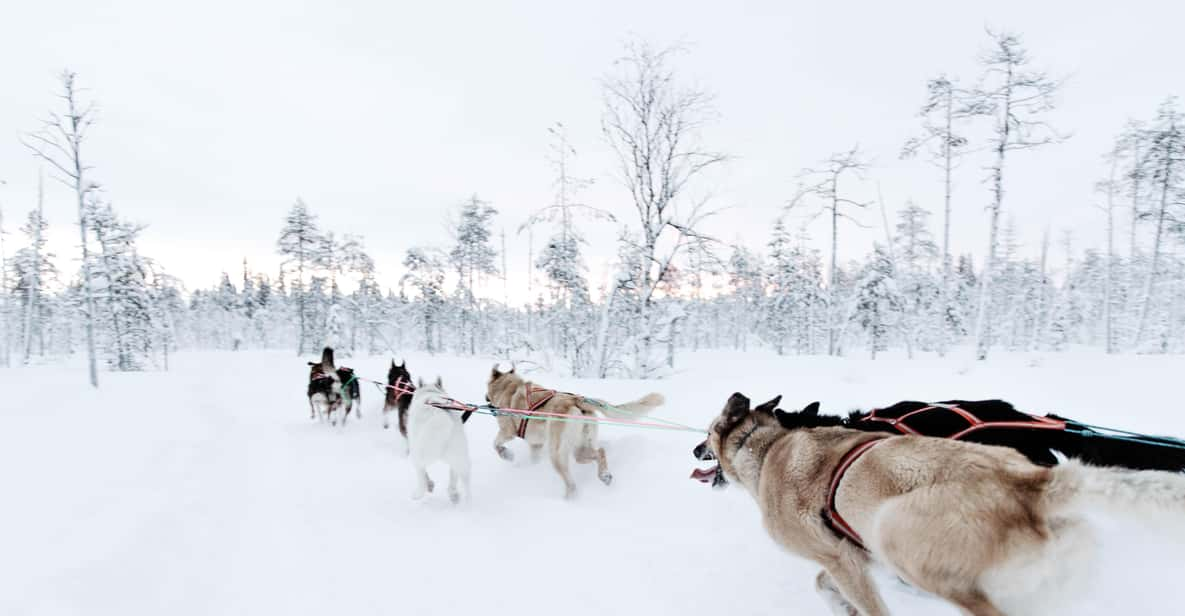
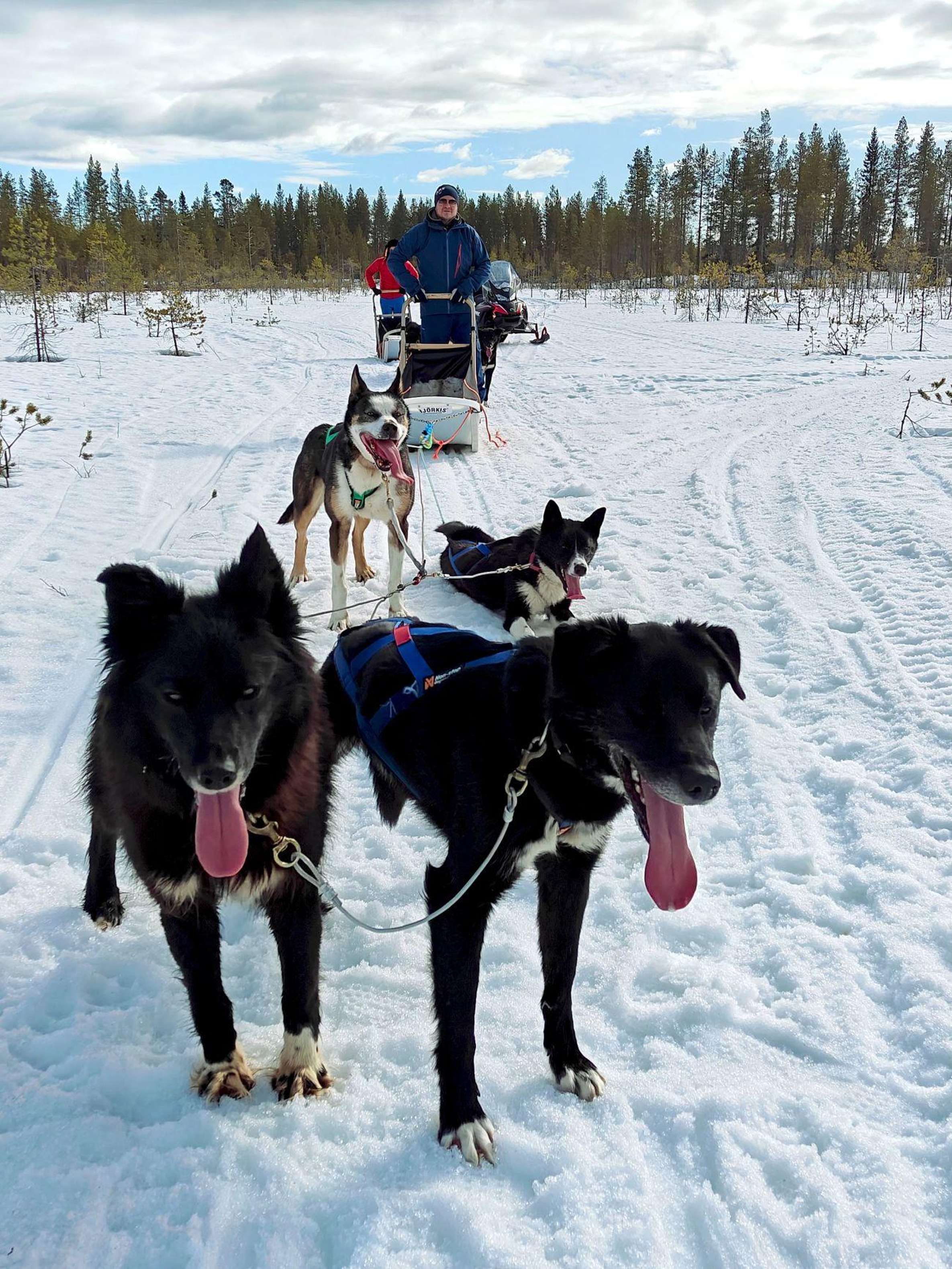
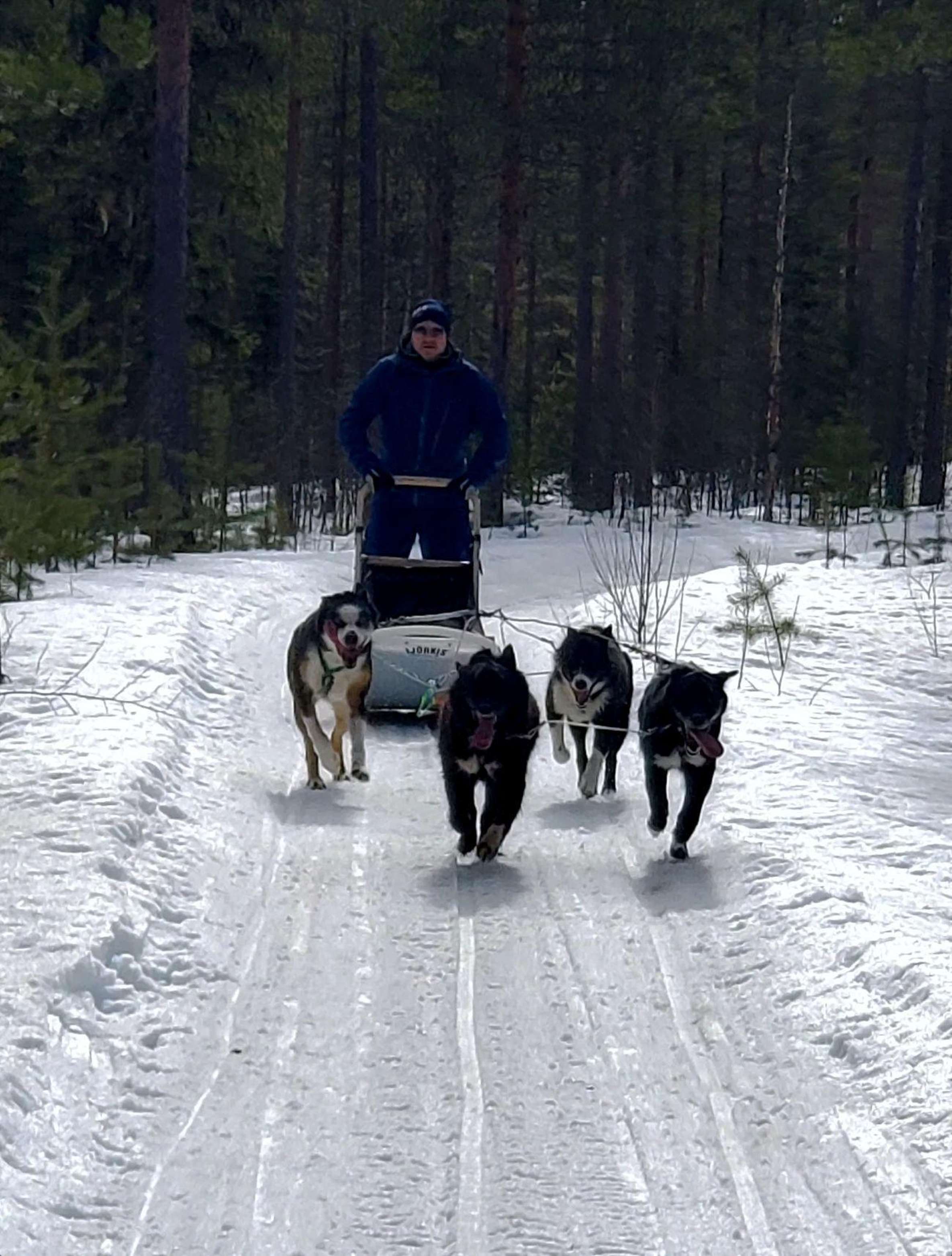
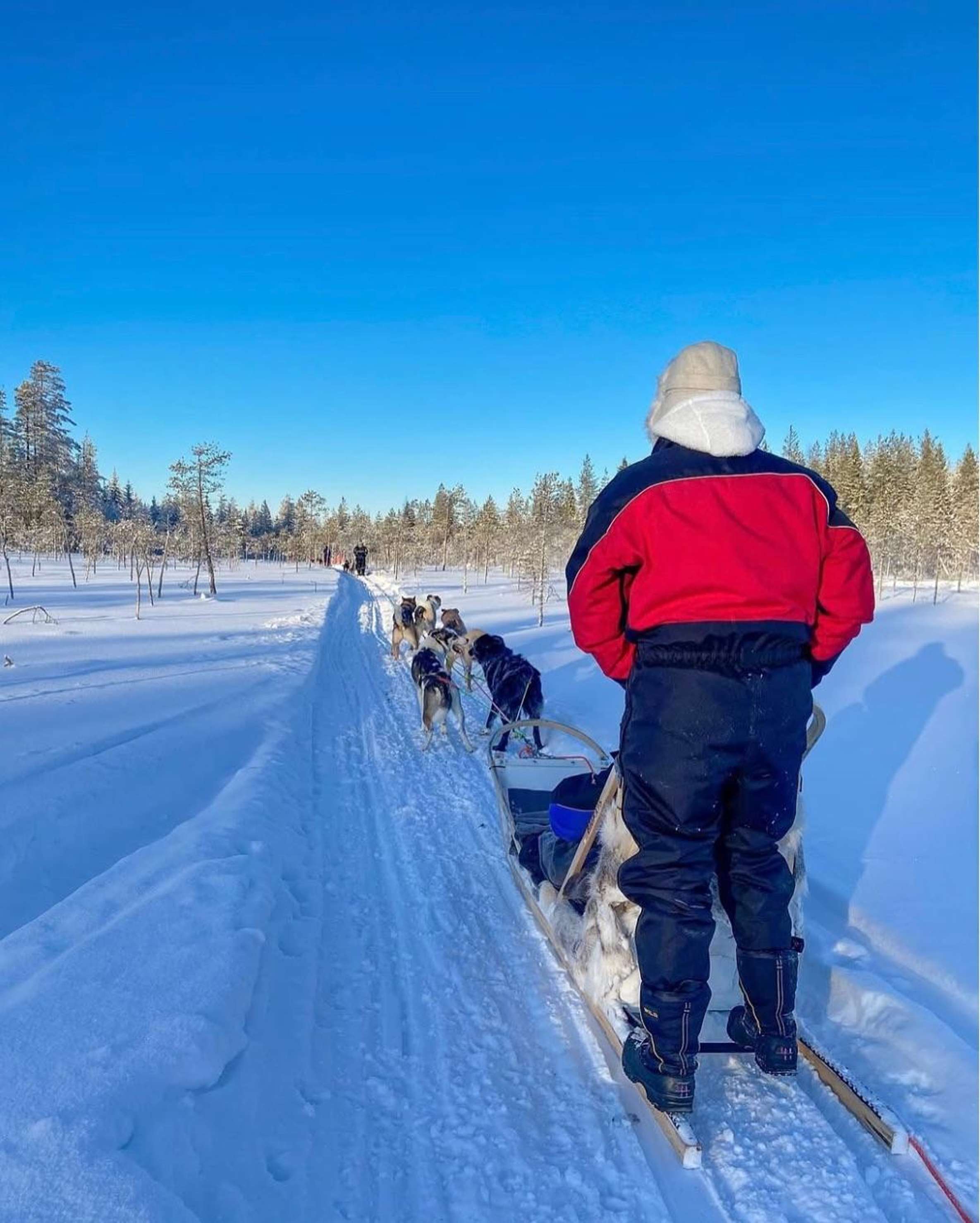
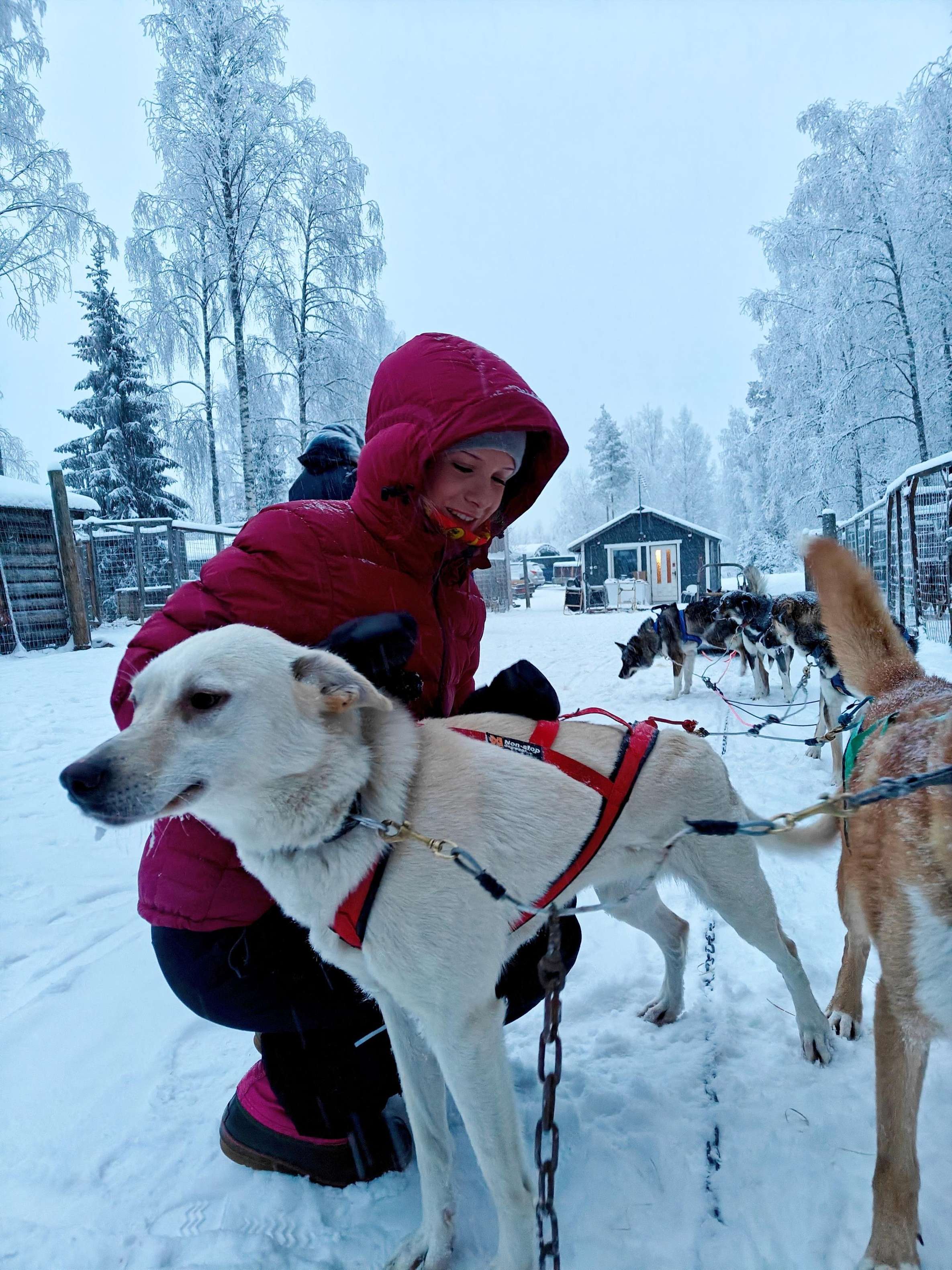
5,475 took the reins on a 6 km run through quiet forest
Husky Safari in Rovaniemi - Dog Sledding Tours and Sleigh Rides
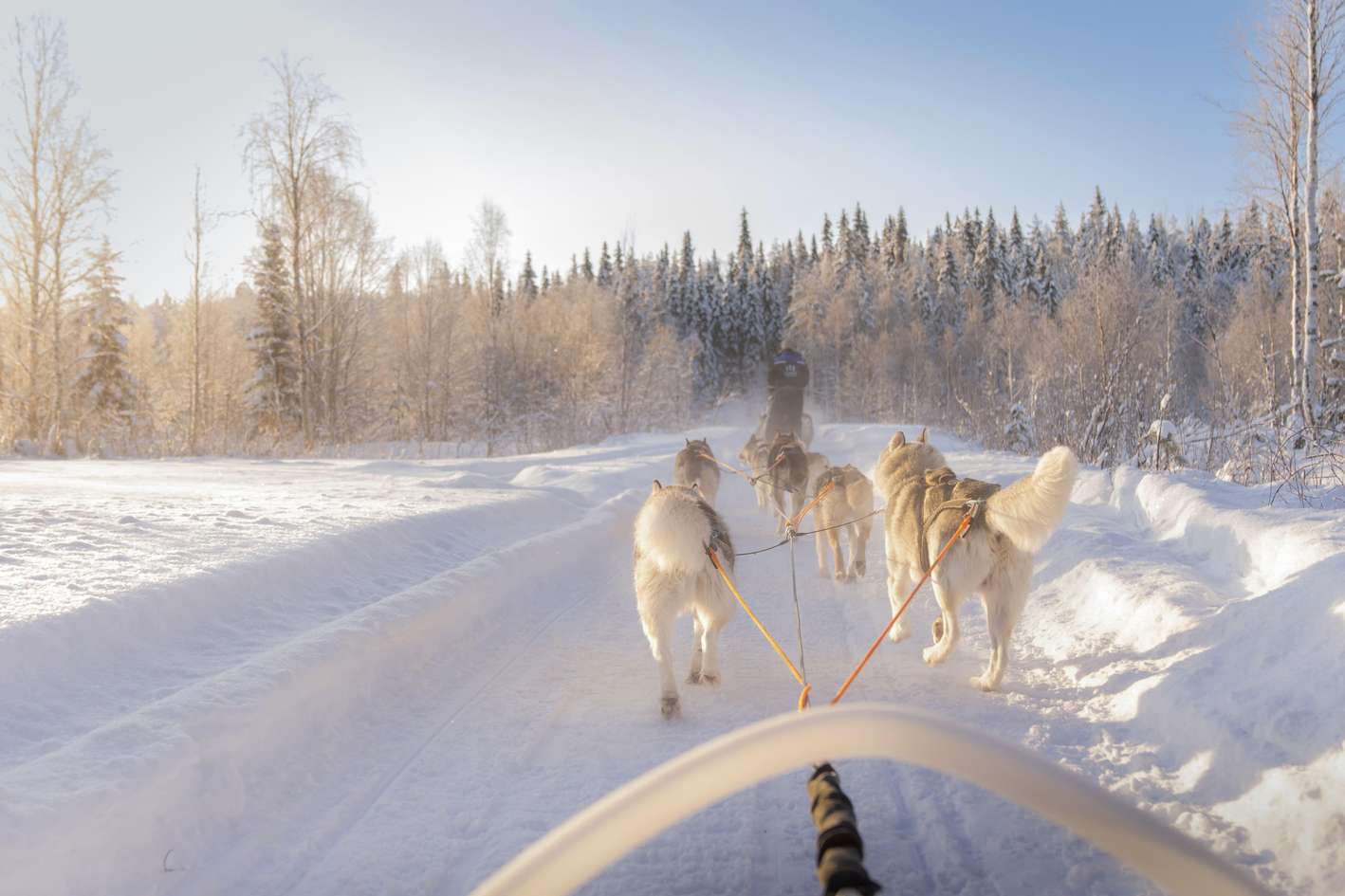
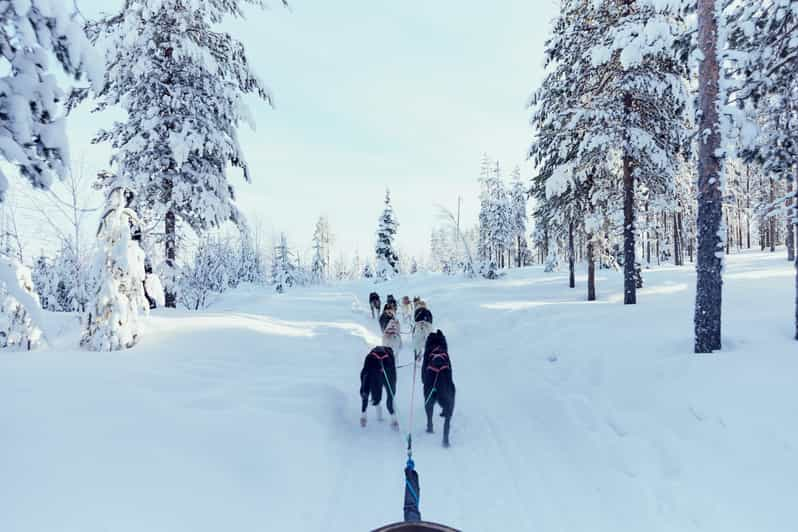
Drive your own husky team through silent Lappish forest. Join the 1,500-plus travelers who took the reins on this 6 km self-driven safari, with thermal gear, pickup from town and hot drinks by the fire afterwards.
Rovaniemi husky sledding comes in two main shapes: a short passenger ride where a musher drives, and a wilderness safari where you take the handlebar yourself. The ride itself lasts anywhere from about ten minutes to an hour. Families with toddlers lean toward the short loops; anyone who wants to drive picks a longer trail.
Booking aheadPrime midday slots around Christmas and the February school holidays can sell out weeks or even months ahead, so reserve as soon as your dates are set.
DrivingSome operators only allow adults aged 18 and over to take the handlebar, and children ride as passengers instead.
PregnancyThe bumps and sudden movements of a sled run make husky safaris unsuitable for pregnant women and people with back problems.
Deep coldTours get shortened or switched to guide-driven sleds around -28°C and cancelled at -35°C, so a cold snap can change your day.
Getting thereWilderness kennels sit 20 to 60 km from town and public buses don't reach them, so take the tour's included hotel pickup.
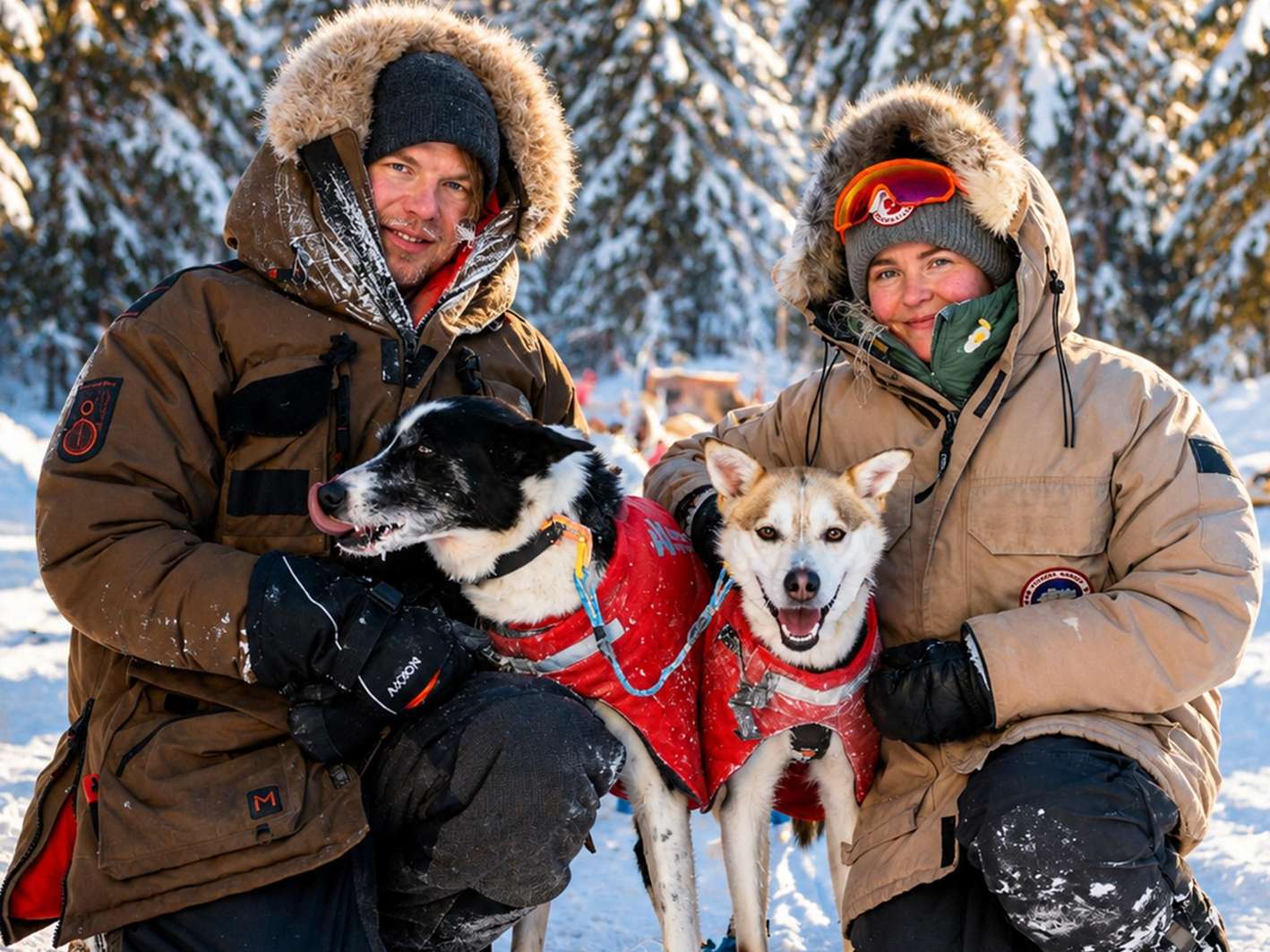
DressingThe longer tours provide thermal overalls, boots, and mittens, but you wear your own wool base layer and fleece underneath, and the short village rides give no outer clothing at all.
ToiletsWilderness trails have none, so use the restroom before you leave.
TimelinessBe at your pickup point on time, because missed departures are not refunded.
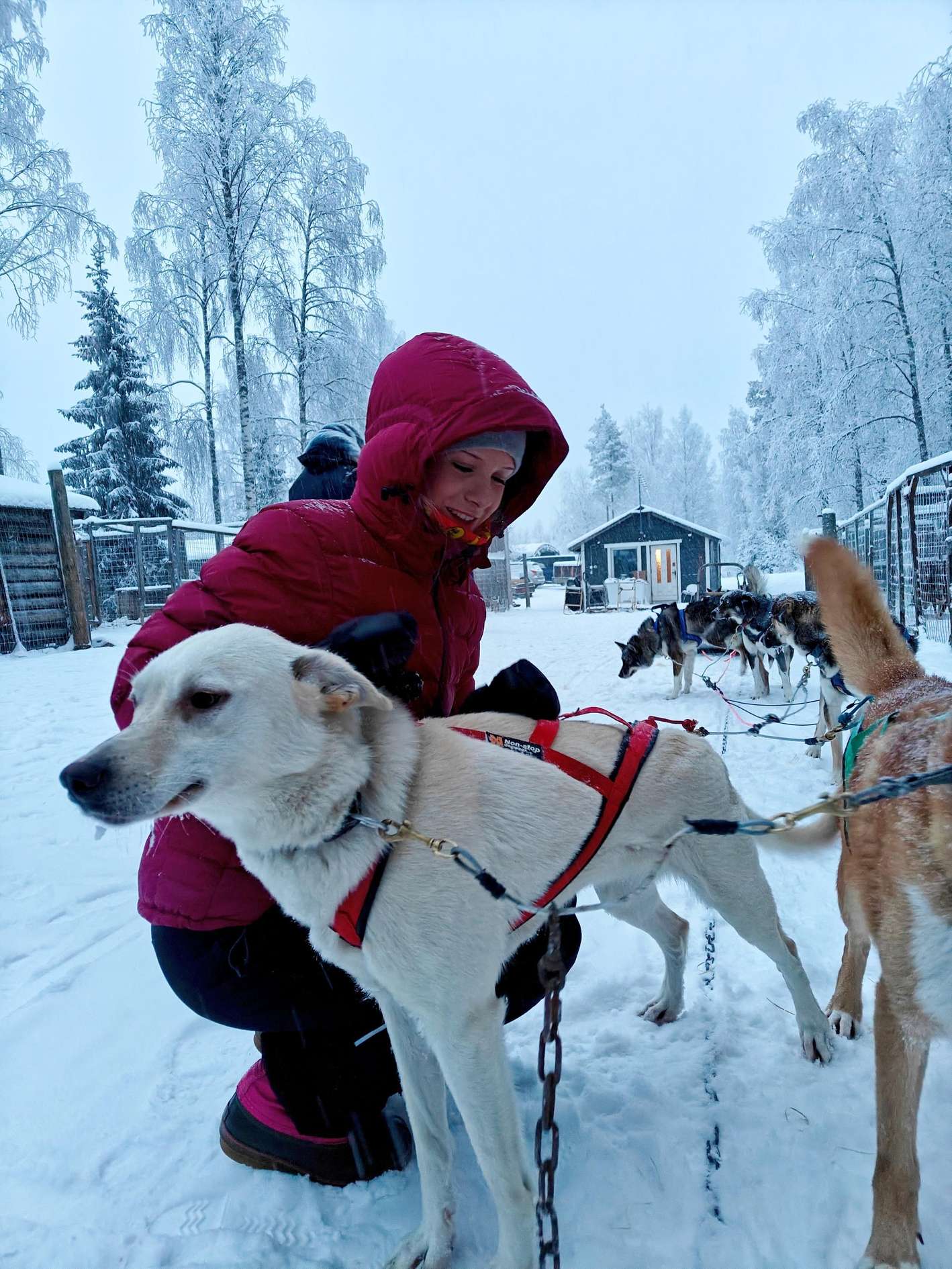
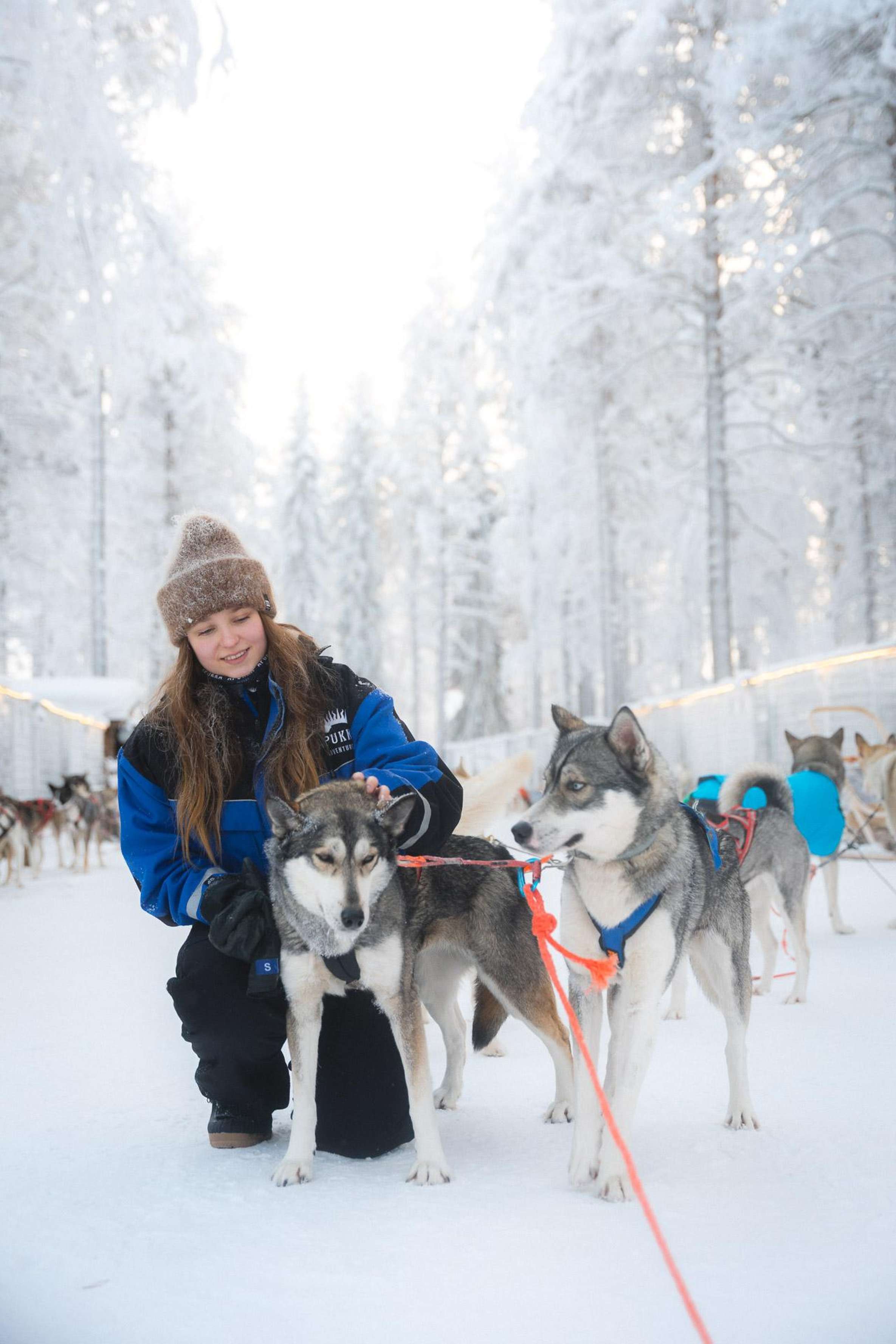
Greeting the dogsAsk your guide before approaching or petting any of the team.
Low snowIn autumn or early winter, some tours run on wheeled carts instead of sleds until the trails freeze solid.
Which husky safari in Rovaniemi is yours?
Say who's coming and how you like to ride, and a match shows up here.
1Who's coming?
2What's your budget?
3What kind of trip?
Your best match
match
Rovaniemi: Santa Claus Village Husky Ride★ 4.7 (1,588) · 30 minutes · Classic sled rides
Popular with families, friends and couples. 93% of families, 90% of friends and 92% of couples gave it 4 or 5 stars.
Booked 28 times this week
A 7 to 12 minute ride at Santa Claus Village with no transfers needed.
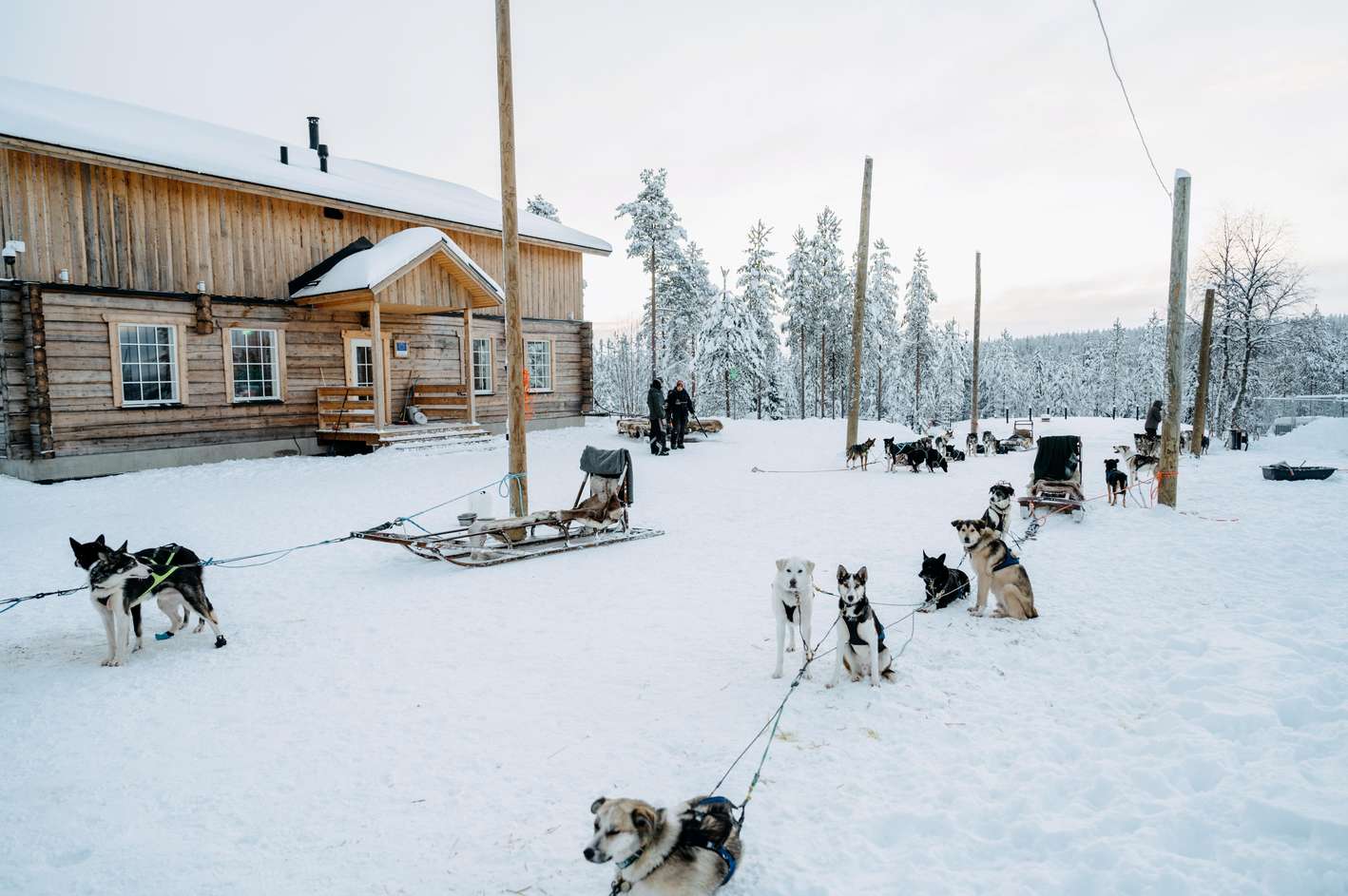
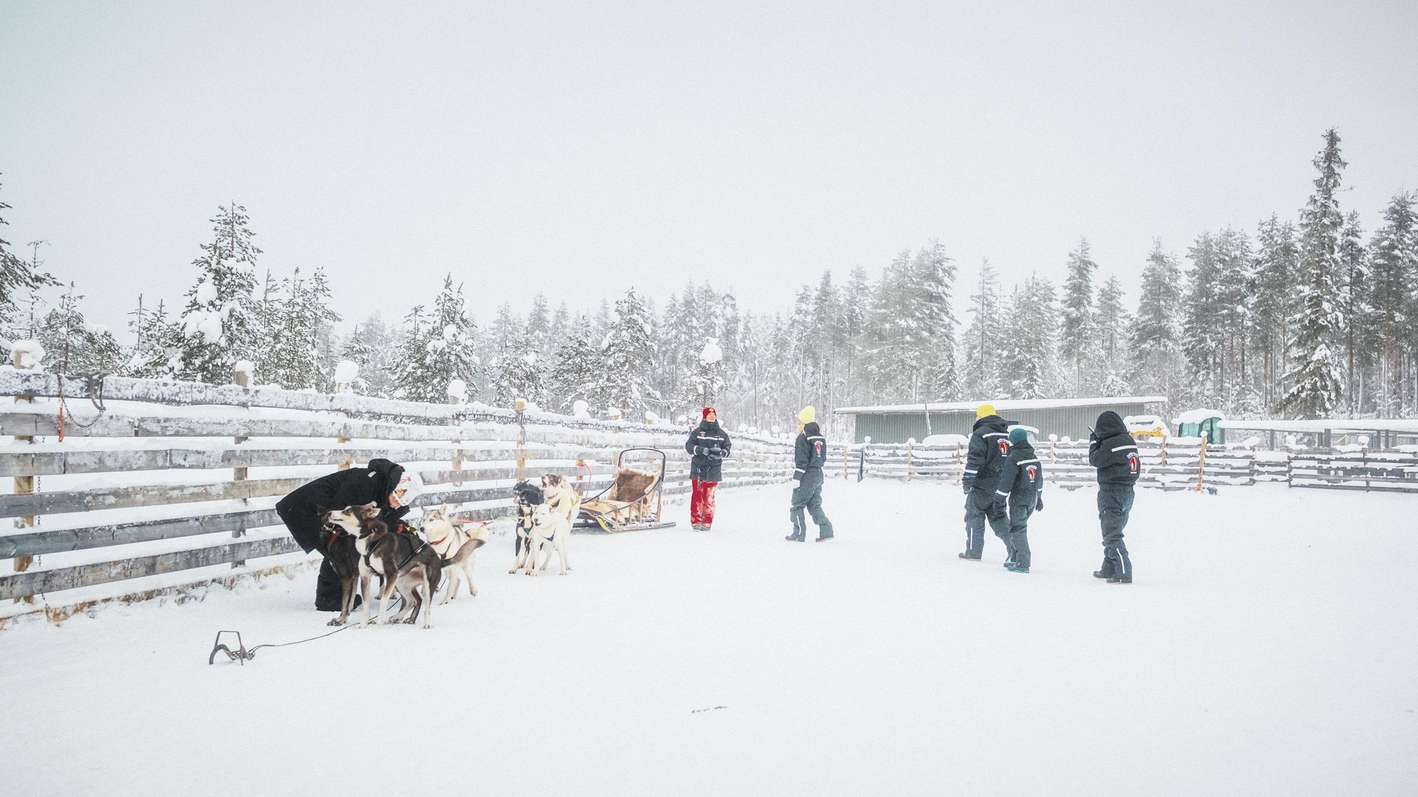
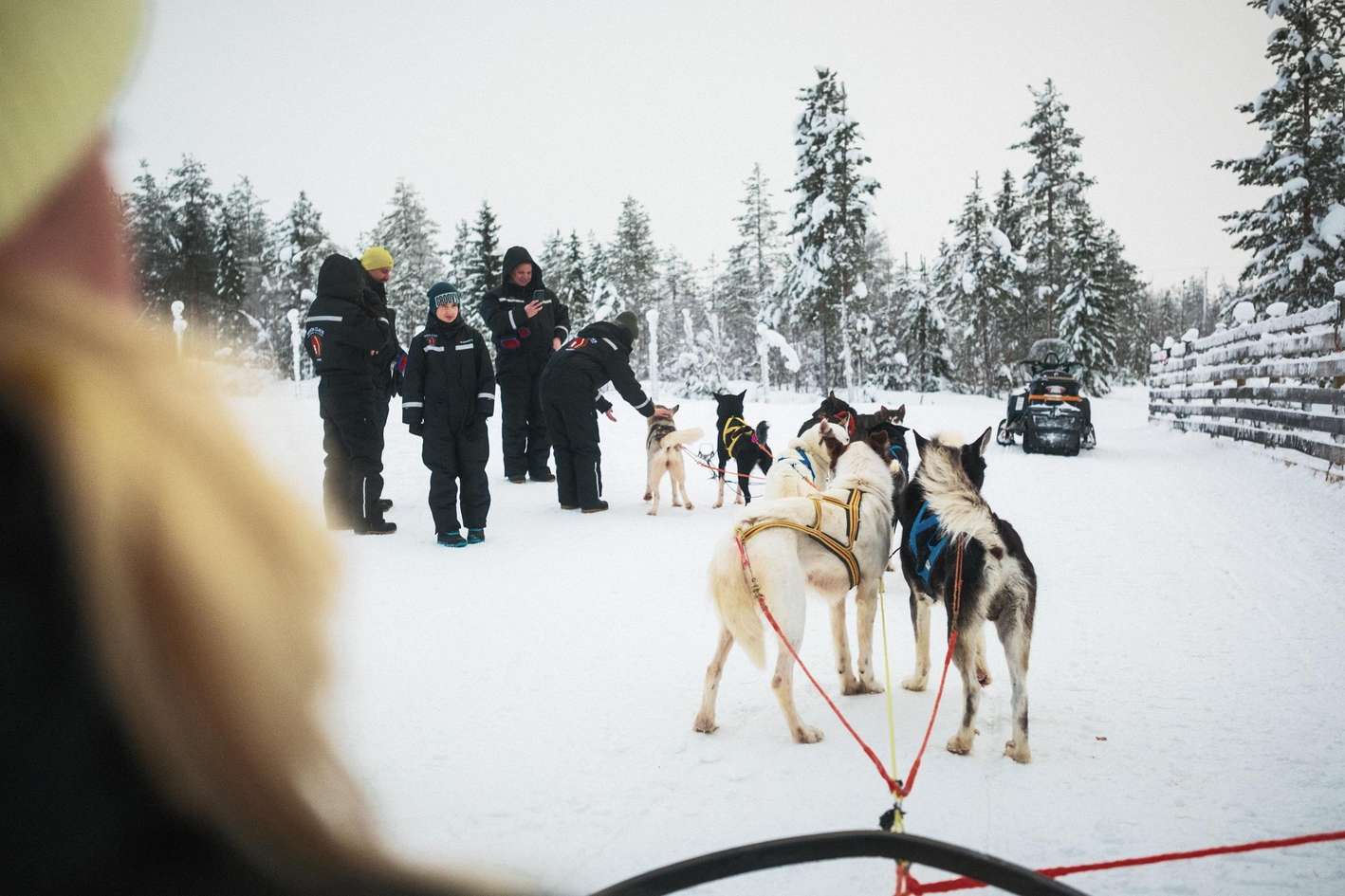
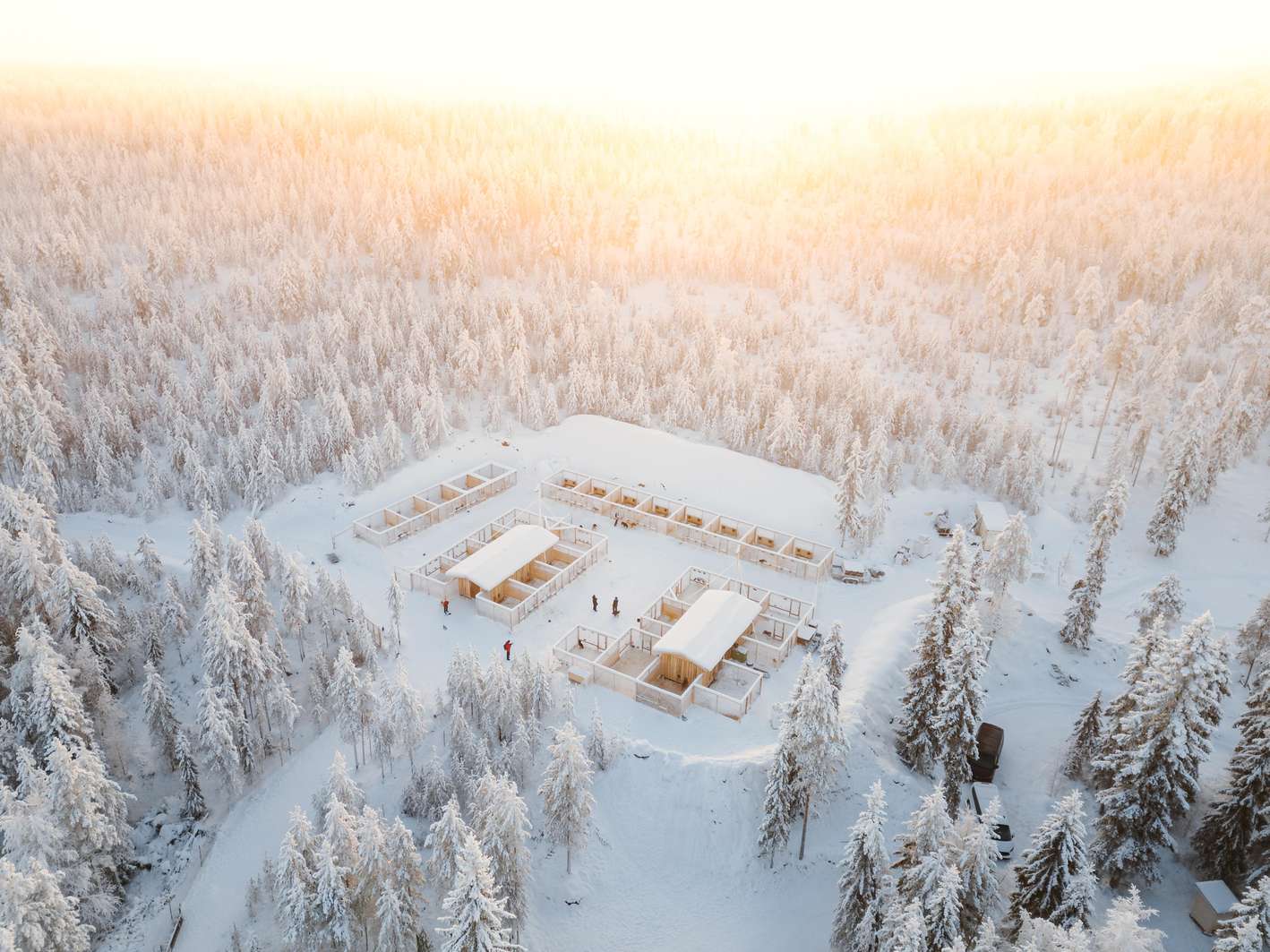
The day starts at a husky farm a short walk from Apukka Resort, where the teams are already barking to run.
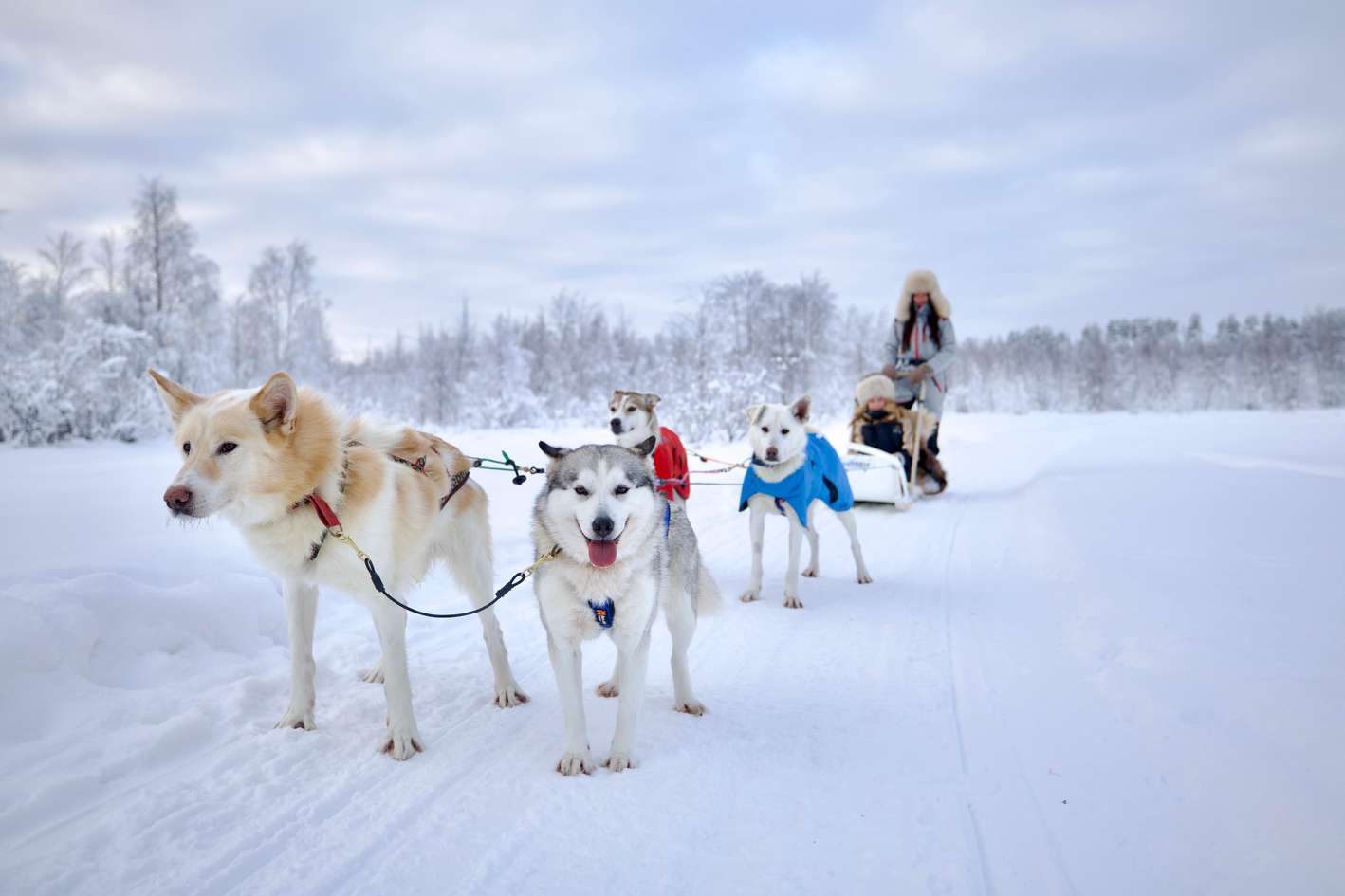
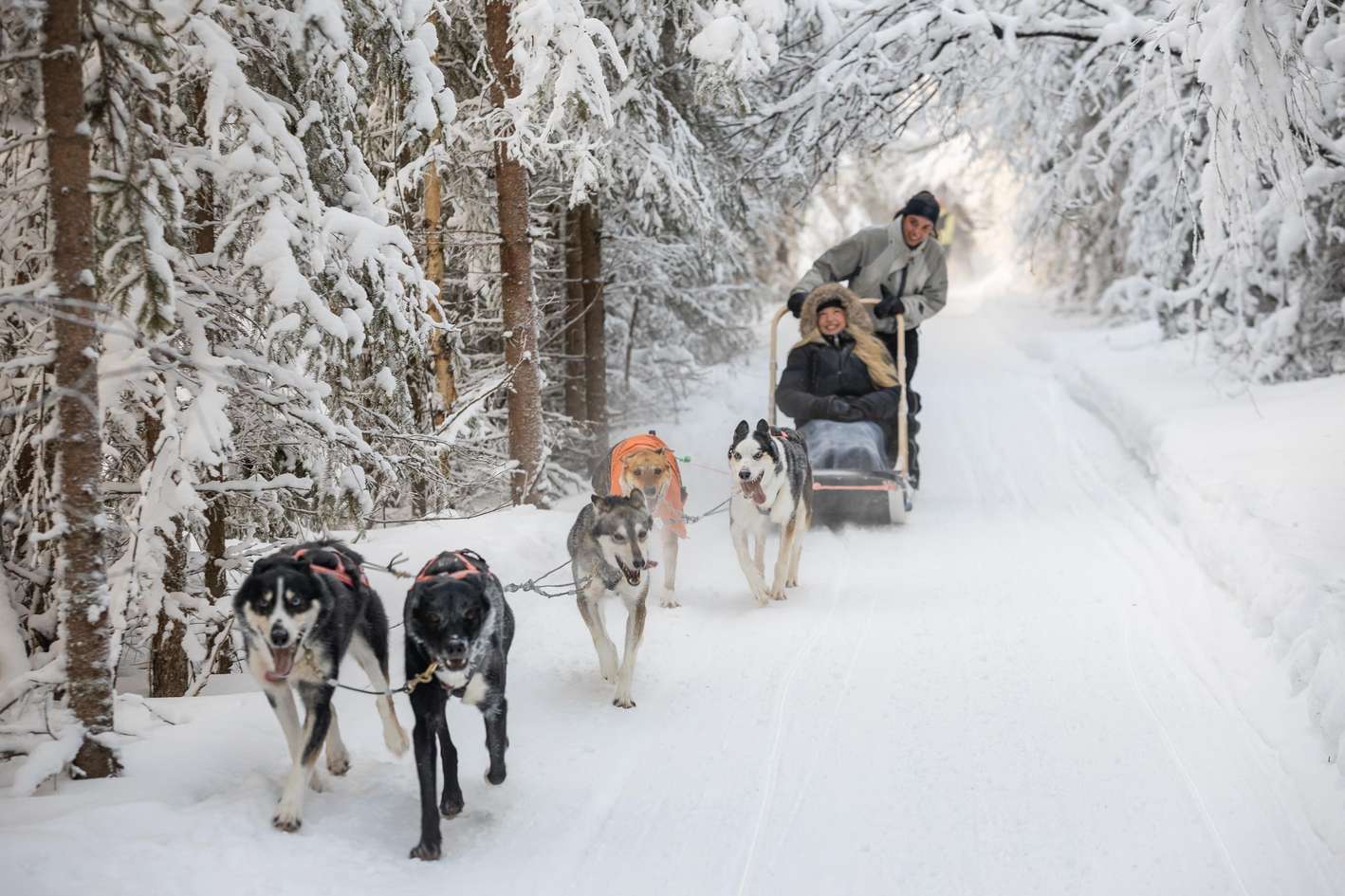
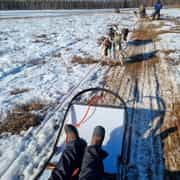
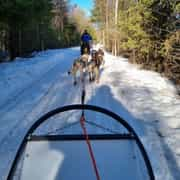
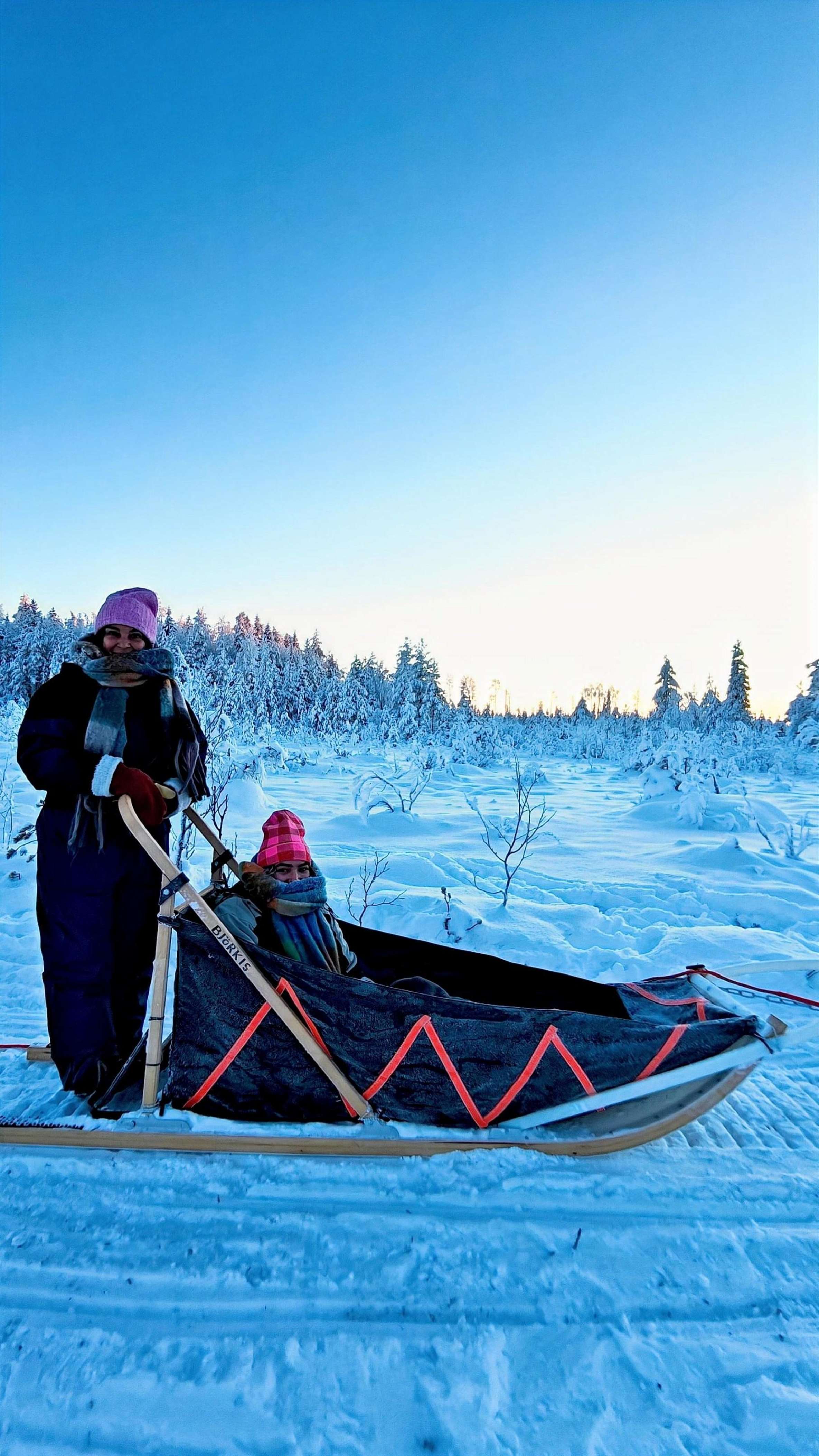
Guides fit you with thermal overalls, boots and mittens, show you how to steer and brake, then hand you the sled. Two adults share each sled and swap at the halfway point, with children riding seated in front.
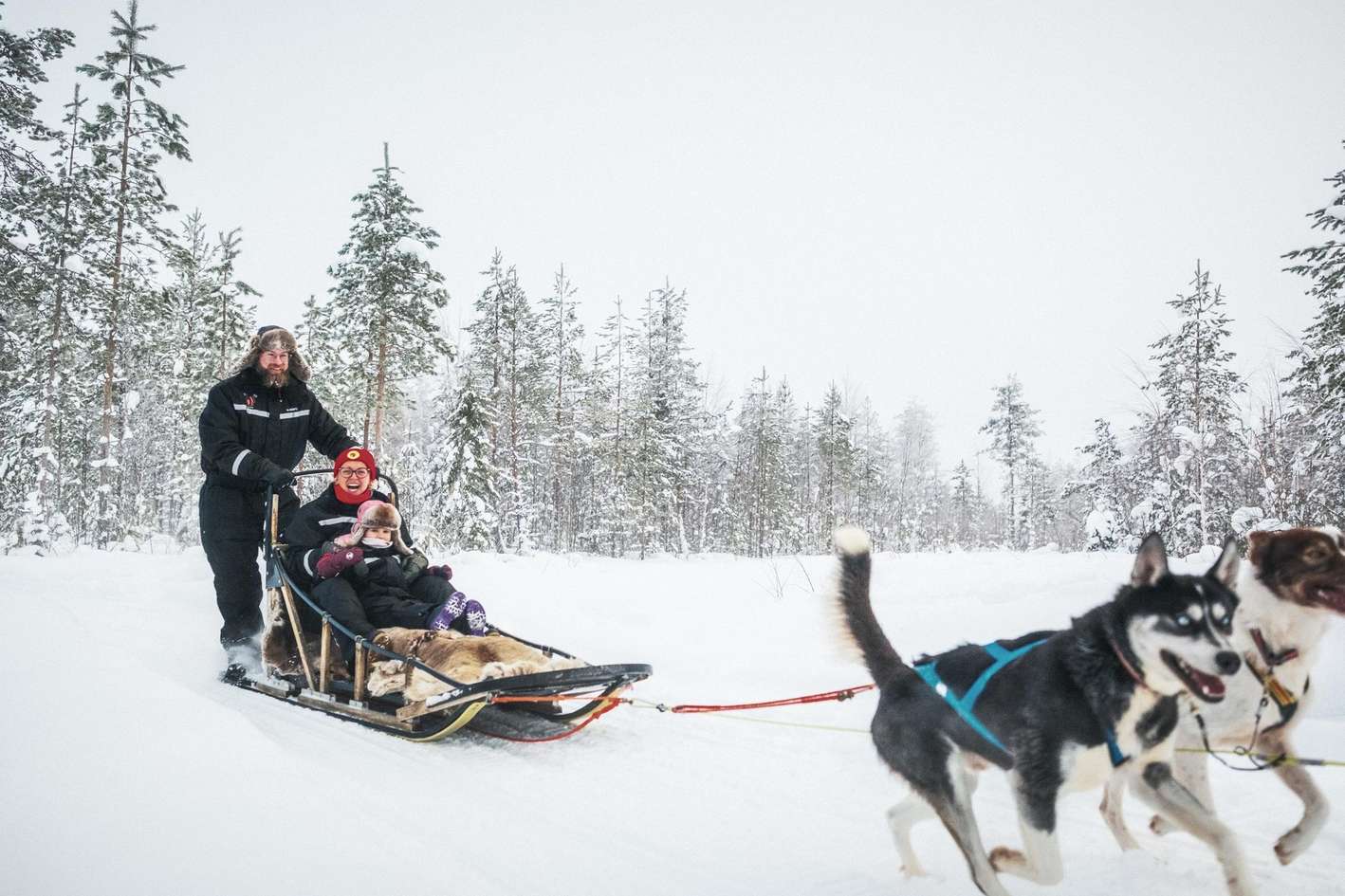
The 6 km run crosses snowy forest, and then it is back to the dogs: time to pet them and thank your team before a hot drink. On the Santa Claus Village version, a musher drives you instead, 7 to 12 minutes through the woods, with hot juice and cookies in a kota afterwards.
Pickup2 places, depending on your optionThe van waits here once the safari ends and picks guests up again for the return leg.Street ViewStop 2Apukka· 120 minThe safari itself: thermal gear, a driving briefing, then a 6 km self-driven sled run through snowy trails. Afterwards there is time to pet the huskies and warm up with a hot drink.Drop-off2 places, depending on your optionThe van waits here once the safari ends and picks guests up again for the return leg.Street View
Included
6 km husky rideHusky pettingHot drinkWinter clothing (thermal overall, thermal boots, woolen socks, mittens)Transfers (if needed, from Rovaniemi city center or Santa Claus Village to Apukka Resort and back)
Choose the day as soon as your flights are set. Prime Christmas departures often sell out six months ahead, and February school holiday slots go from a few weeks to two or three months out.
Common mistakeWaiting until you land works only for the short rides at Santa Claus Village, and even those spots are not guaranteed.
Pro tipReserving online in advance also locks your place on high-demand dates, when walk-in tickets in town are hard to come by.
2. Choose the format you want
Most listings show a single option, so the choice is the format: a 30-minute village ride, a passenger sleigh, or a self-drive team. Read the duration with the transfers in mind.
Pro tipIn the Polar Night, a slot between 10:30 am and 2 pm gives you blue twilight on the snow. Earlier starts begin in the dark.
ImportantCheck the age rules before you commit. Some safaris take no children under 4, and drivers usually need to be 18.
3. Book and watch your inbox
Payment happens on the marketplace. The confirmation and any later messages from the tour operator arrive by email, so open it right after booking and again the night before.
ImportantThe confirmation email carries the exact meeting time and place. Miss it and the safari is gone, with no refund.
4. Sort the pickup point
The bus or van collects you from major downtown hotels and central safari offices on Maakuntakatu and Korkalonkatu. The ride out to a wilderness kennel takes 30 to 60 minutes.
RecommendedBe at the pickup point ten minutes early. One tour operator does not refund late arrivals.
Pro tipLeave the rental car out of it. Remote kennels sit on icy forest roads, and the transfer is already included.
5. Plan the day around it
Door-to-door, these tours run from 1.5 hours to a full 5. Use the restroom before you leave town, because there are none on the wilderness trail.
RecommendedIf the day shifts, cancel up to 24 hours before departure for a full refund.
Travelers' reviews of their husky safari in Rovaniemi
Most reviewers praise the guides, who taught them to drive the sled and clearly cared for the dogs.
Best surprise
Several solo travelers did not expect to get a whole sled to themselves and loved the extra time driving.
Most common wish
Many reviewers wished the ride had lasted longer, saying the trail was over while they were still grinning.
Husky safari in Rovaniemi without leaving Santa Claus Village
No long transfer out to the wilderness: the dogs, the trail and the kota all sit inside Santa Claus Village itself. A musher drives while you sit back for a 2.5 kilometer loop through the woods, then hot juice and cookies warm you up.
It suits anyone with a spare half hour, families with very small children, or travelers who want a taste of the trail before committing a whole day to a wilderness safari.
A quick, real sled runThe 2.5 km ride takes 7 to 12 minutes through the forest, driven by experienced mushers.
A visitor favoriteIt rates 4.7 from nearly 1,600 reviews, and juice, cookies and a Lappish kota are included.
Warm and easy to planFree cancellation up to 24 hours ahead means you can hold a slot even if your schedule is still loose.
Walk-in spots can sell out in peak season, so reserve now and cancel free if plans change.
A daytime husky safari runs in winter daylight, when the snowy forest is at its brightest. Choose a short guided loop at Santa Claus Village or a self-drive wilderness run with transfers and warm overalls. Both suit first-timers and families who want the trail seen and not just felt.
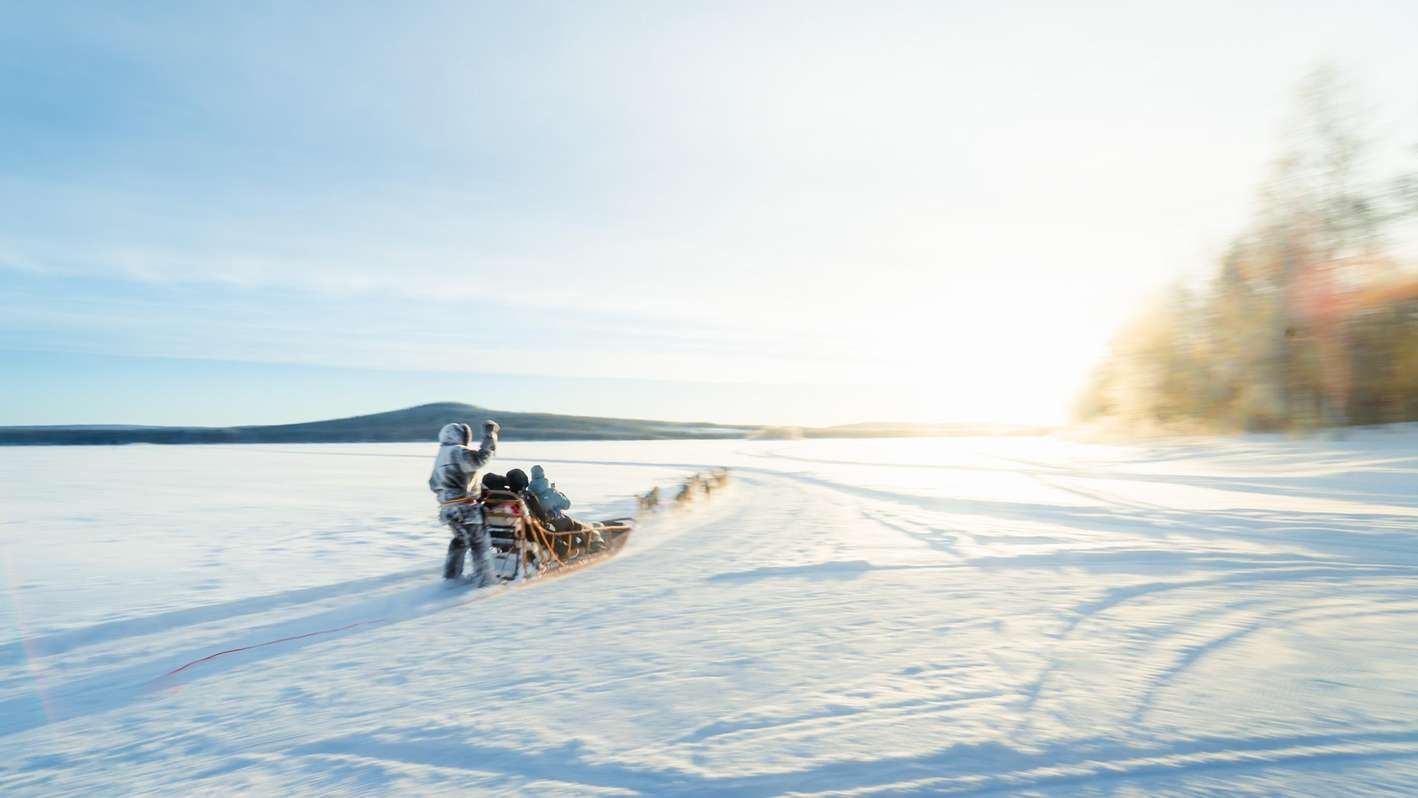
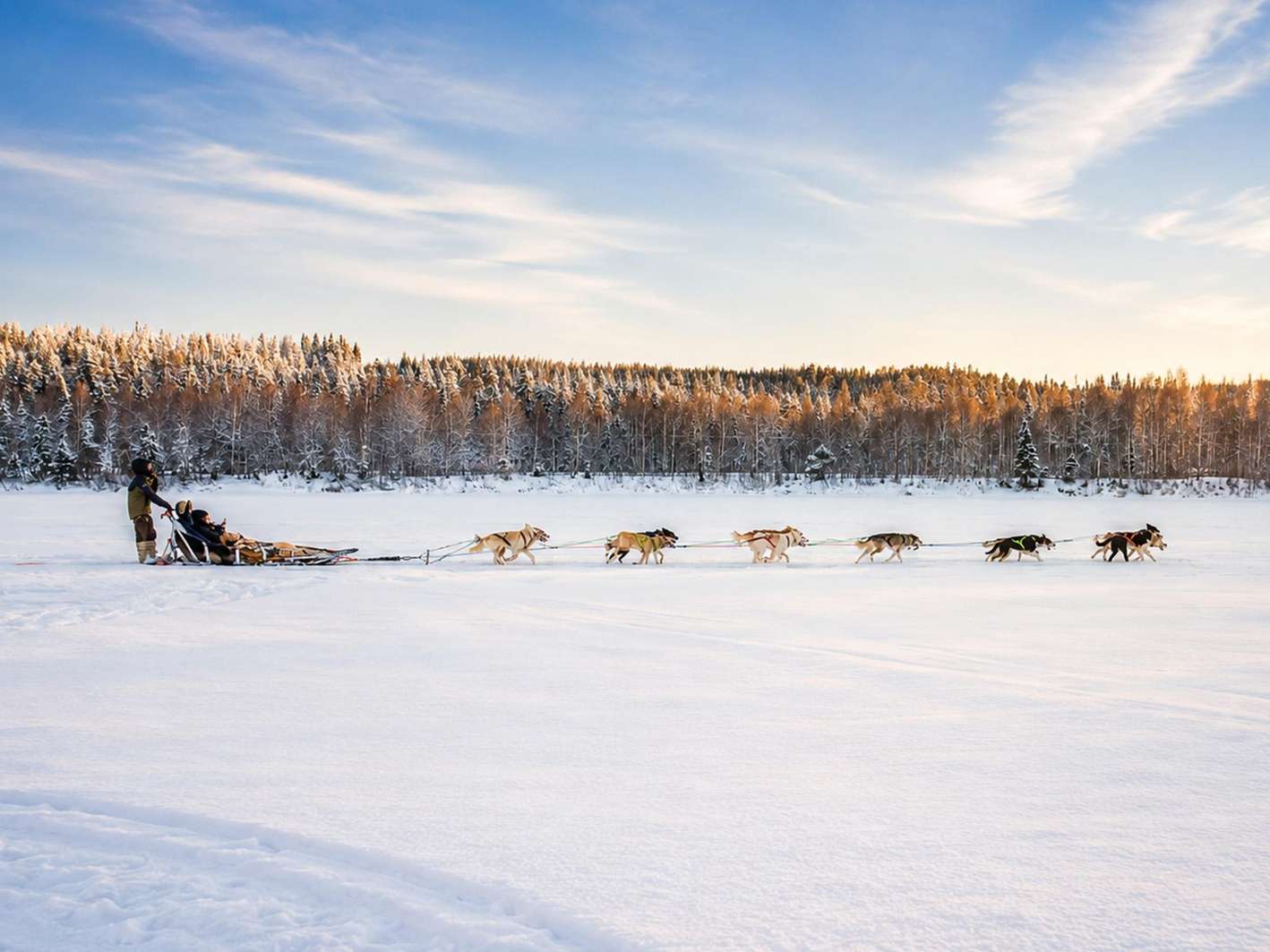
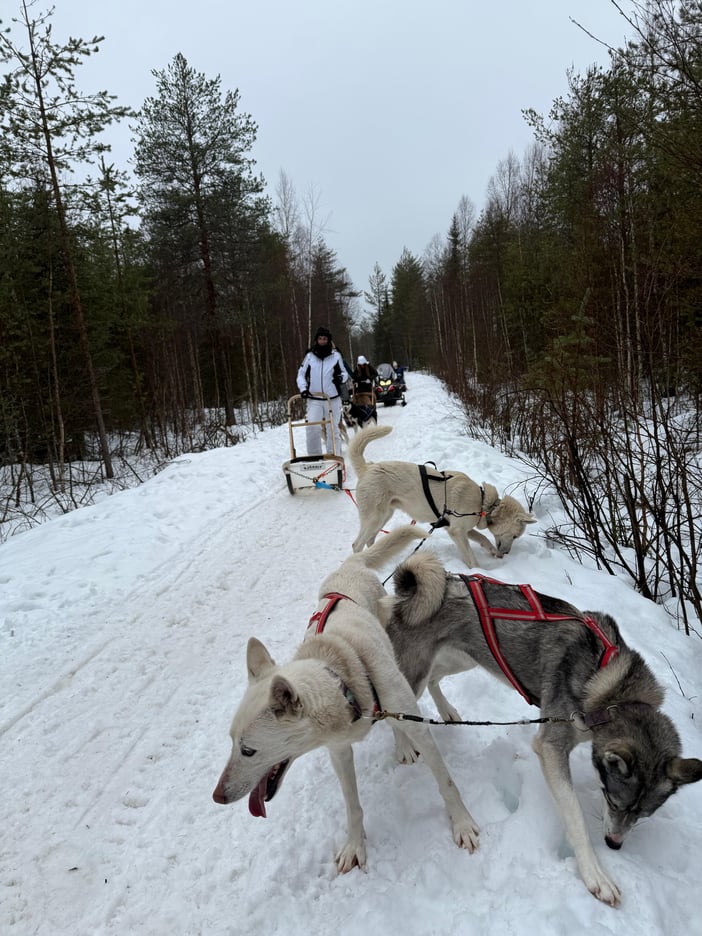
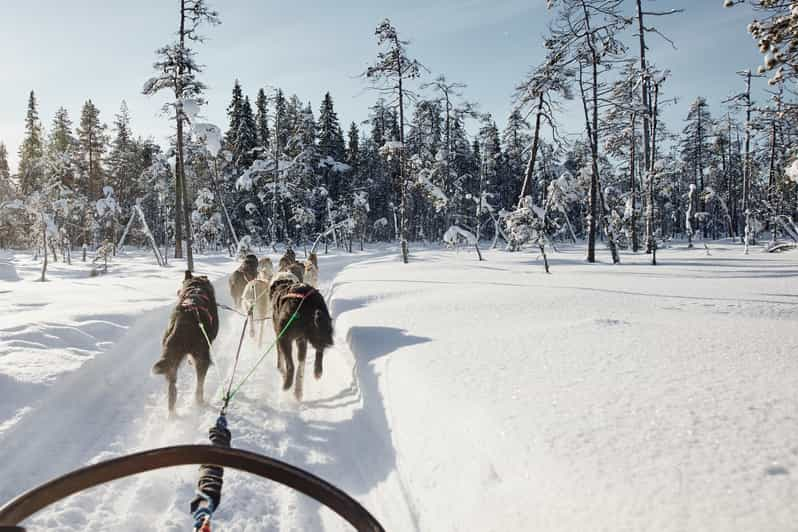
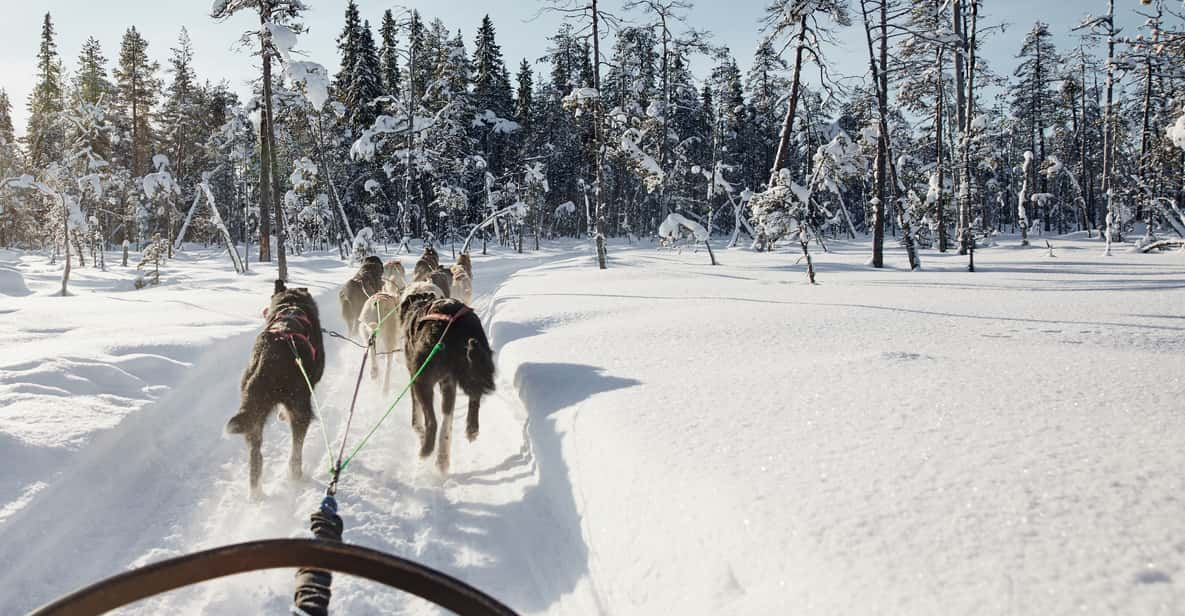
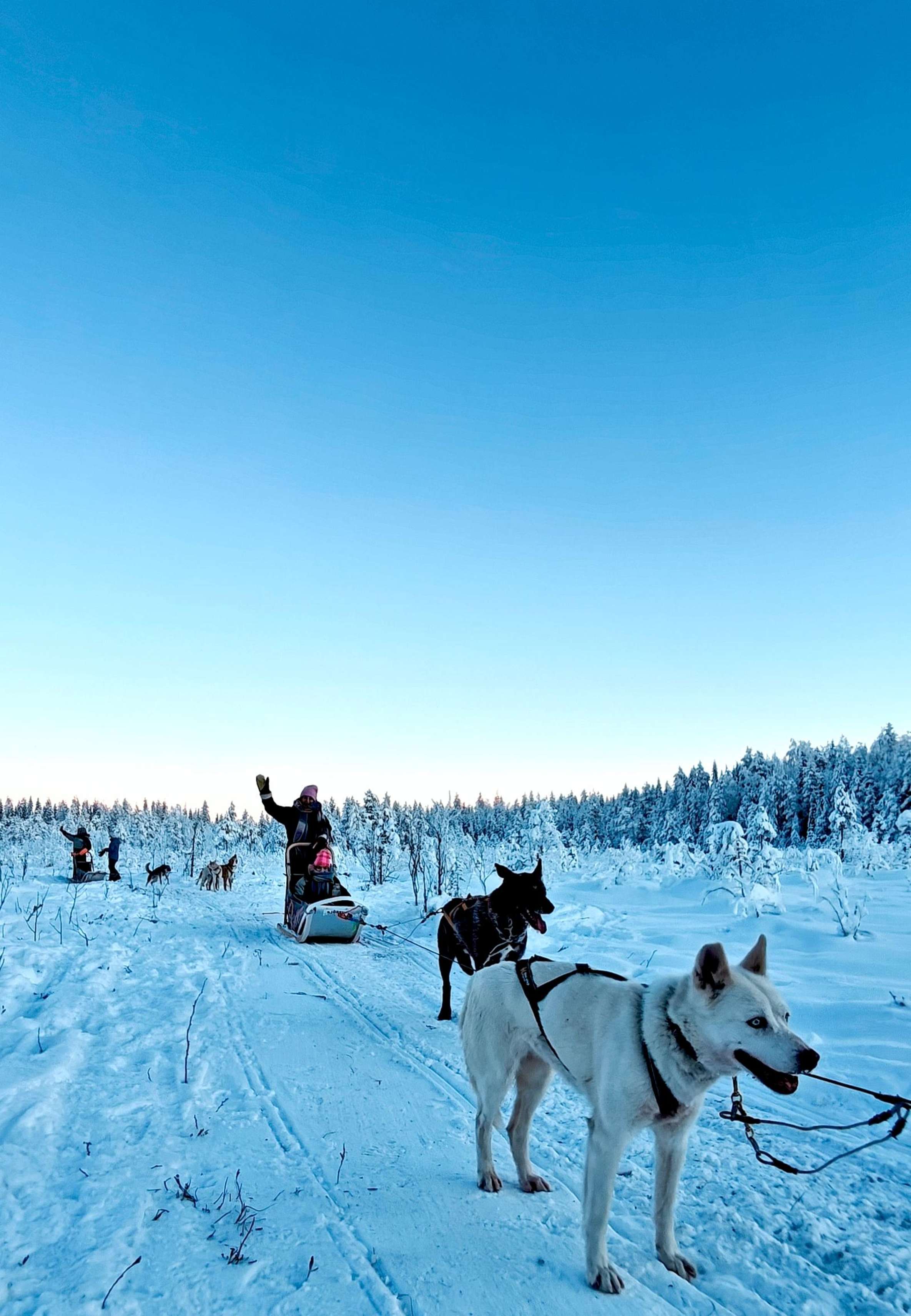
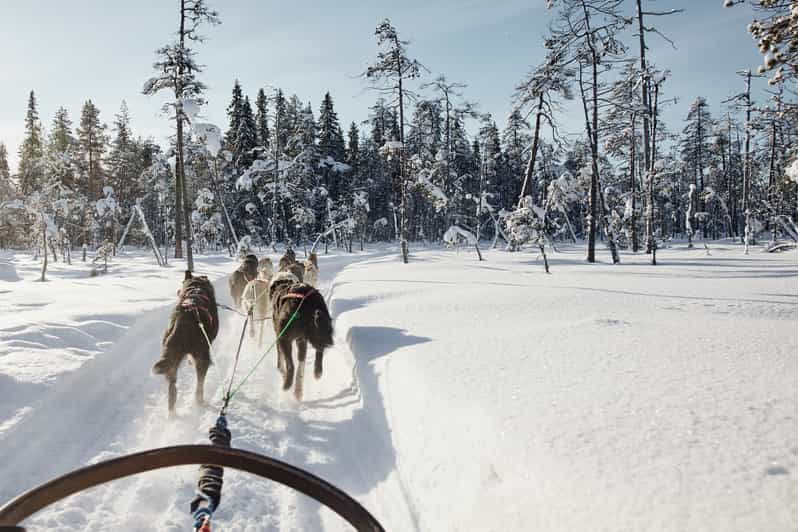
On a self-drive safari you stand on the runners and steer your own team through silent forest, sharing a sled with a partner and swapping halfway. Trails run 4 to 10 km with hotel transfers, thermal gear and a kennel visit included. It suits fit travelers who like hands-on.
The 5 km safari is the classic first run: about 20 to 30 minutes on the sled, time to meet the huskies, then hot drinks by the fire. Some versions add a kennel tour or a reindeer farm visit with soup lunch. It suits families and cautious beginners.
What to know before you book a husky safari in Rovaniemi
no toilets on wilderness trails
Can stop the dayGood to knowGood news
01
ChoosingWhat it is, who it suits, when to go
6
Health limitsCan stop the day
Pregnant women and travelers with back problems are advised against husky safaris, because the ride brings vibrations, bumps and sudden jolts. Several safaris list both groups as not suitable.
Sharing a sled
Two adults share each self-drive sled and swap halfway, one driving while the other rides. Children sit in the basket between them, and solo travelers often get a full sled to themselves.
Fitness
Driving asks for balance and a firm grip more than muscle, since the dogs do the pulling. On uphill stretches you may step off and push the sled, so fitness like walking briskly uphill is enough.
Included
Kennels fit you with heavy winter gear before departure, and full safaris bundle the rest of the day:
Insulated thermal overall, boots, mittens and wool socks
Transfers from central Rovaniemi
Hot drinks and a snack by the fire after the ride
Layers to wear
Under the provided suit you wear your own layers: a merino or synthetic base layer, a fleece or wool sweater, and warm trousers. One pair of thick wool socks goes inside the boots, with a hat that covers your ears and a neck gaiter for your face.
Restrooms
There are no toilets anywhere along a wilderness trail loop. Everyone should go before the group leaves the kennel, because the sled run itself has no stops.
02
BookingHow far ahead, and what happens if plans change
3
Booking ahead
Prime dates go early: Christmas departures often sell out around six months ahead, and February slots four to five weeks to two or three months out. Prices rarely drop for walk-ins in winter, so reserving online is the way to secure a spot.
Cancellation
You can cancel a husky safari up to 24 hours before departure for a full refund. That makes it easy to book peak dates early and adjust later if your travel plans shift.
Extreme cold
A cold snap changes the day: runs get shortened or move to guide-driven sleds around -28°C, and tours are cancelled entirely at -35°C or colder. That is rare in a normal winter, when average lows sit near -12°C.
03
Before you goPapers, health, what to bring
1
Driving ageCan stop the day
Only adults 18 and over may drive the sled on some safaris, and children under 16 ride in a sled driven by a parent. A few departures accept no children under 4. Check the age rules for your chosen safari before you book.
04
On the dayWhere to be, when, and how you get there
1
Pickup
Most safaris with a wilderness kennel collect you from a central Rovaniemi hotel or a safari office, then drive 20 to 60 minutes out to the farm on snowy roads. A rental car is the one thing you do not need, and operators advise against driving yourself in winter.
05
During the tourWhat is expected of you
1
Phones
Cold drains batteries fast: below -10°C a phone keeps only about half its normal runtime, and a device left out can die within minutes. Keep yours in an inside chest pocket and take it out briefly for photos.
Husky safari in Rovaniemi, told from the trail
december daylight lasts about 2h43
The howling at a Rovaniemi kennel is an honest advertisement: those dogs live to run. The real choices are yours to make: drive or ride, 5 km or 10, midday light or evening dark, and how far ahead to book.
Rovaniemi· 66.50° N, 25.73° E
If you only remember three things
1
Book Christmas and February midday slots two to six months ahead; prime departures are often gone six months out.
2
Choose departures between 10:30 am and 2 pm in December for the blue midday light on the trail.
3
Take the handlebar only if you can stand on the runners for 25 minutes and push uphill; everyone else rides as a passenger.
Is a husky safari in Rovaniemi really worth it?
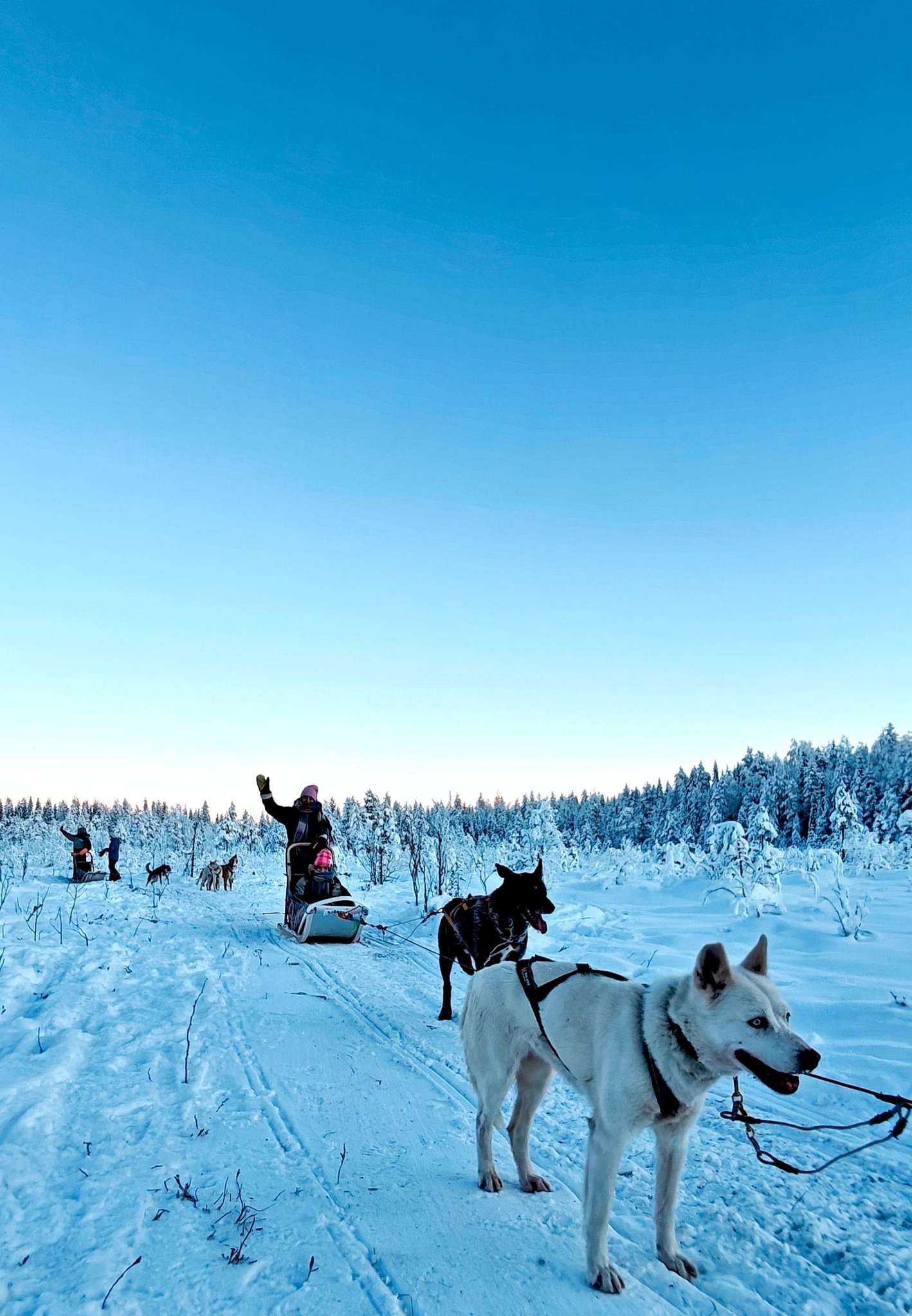
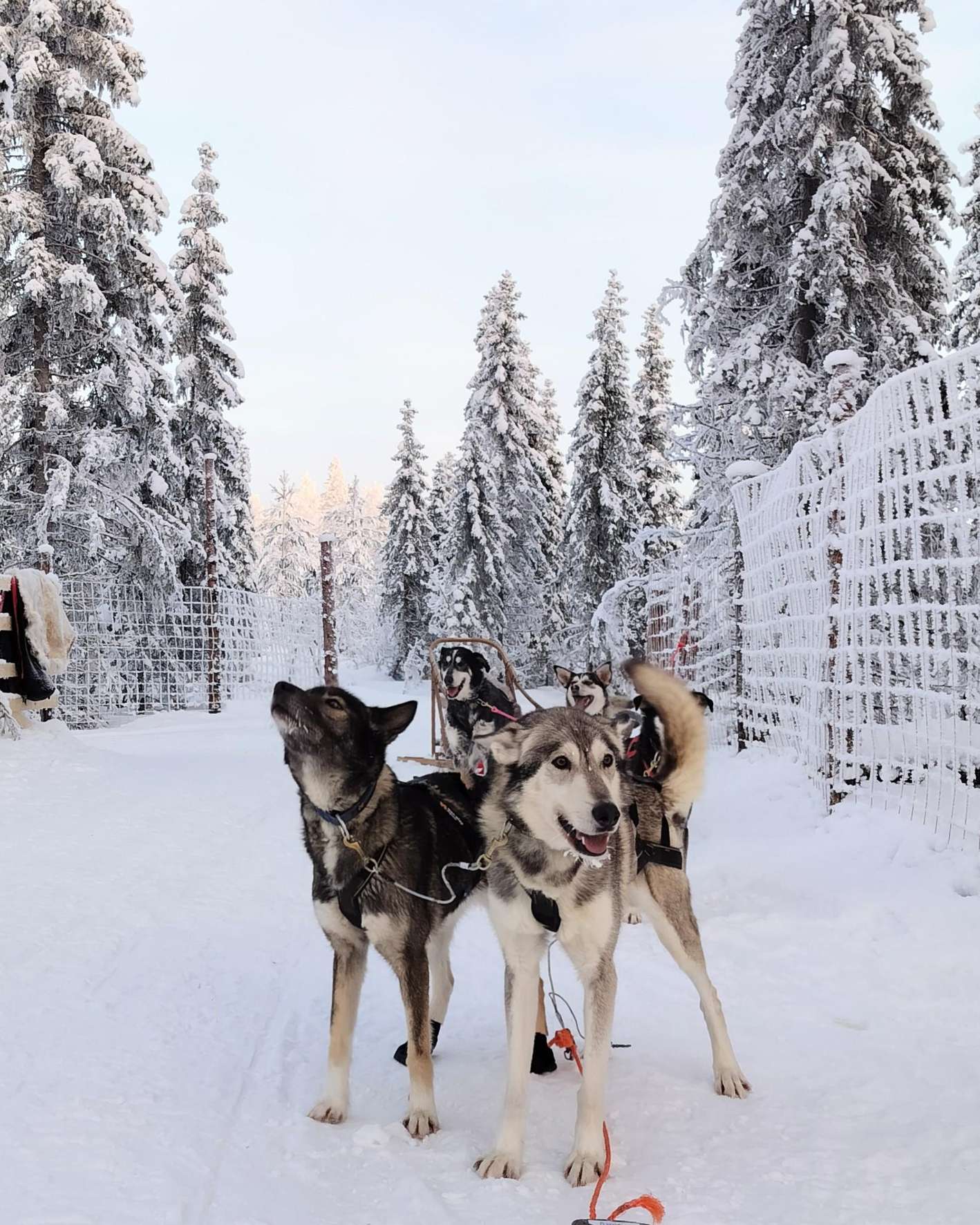
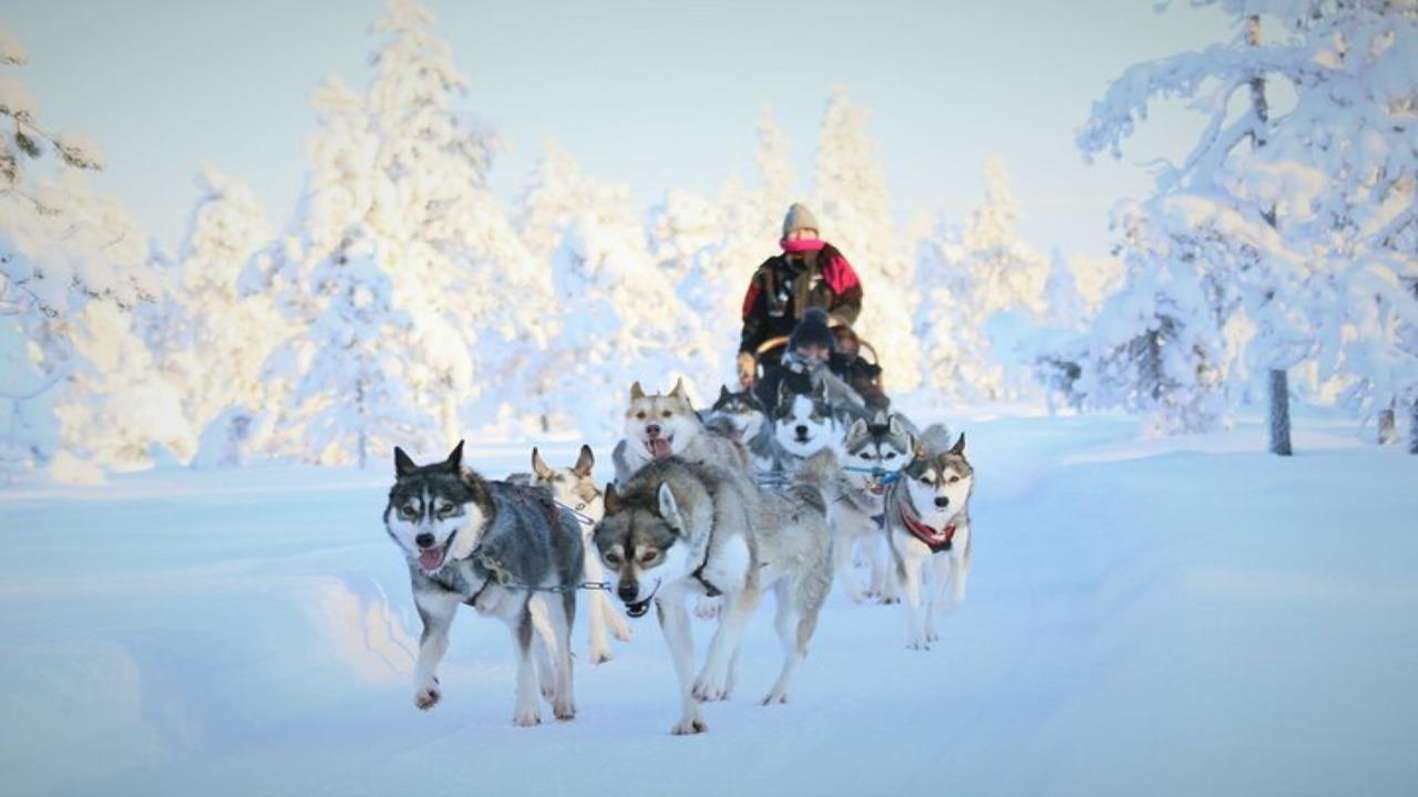
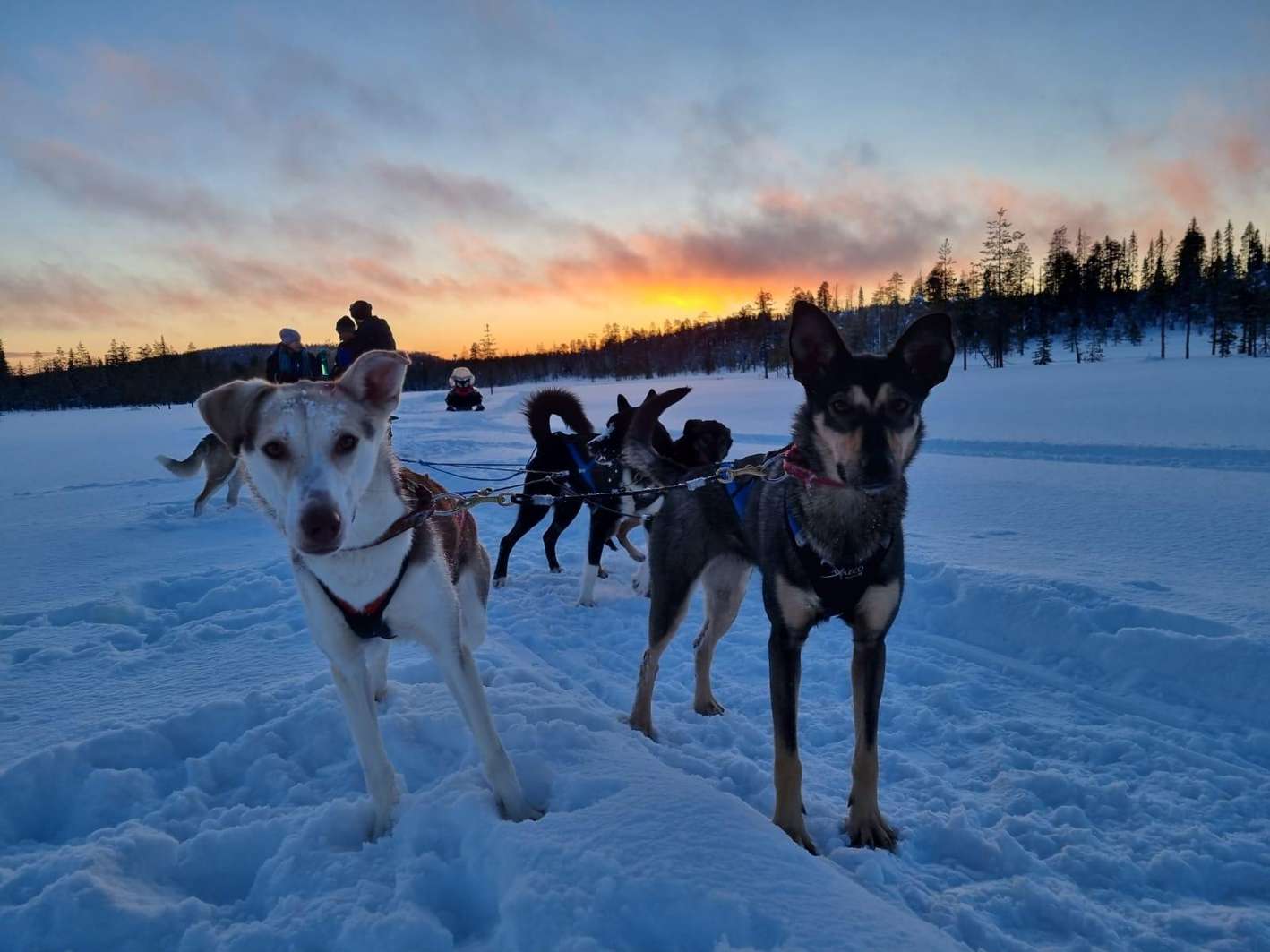
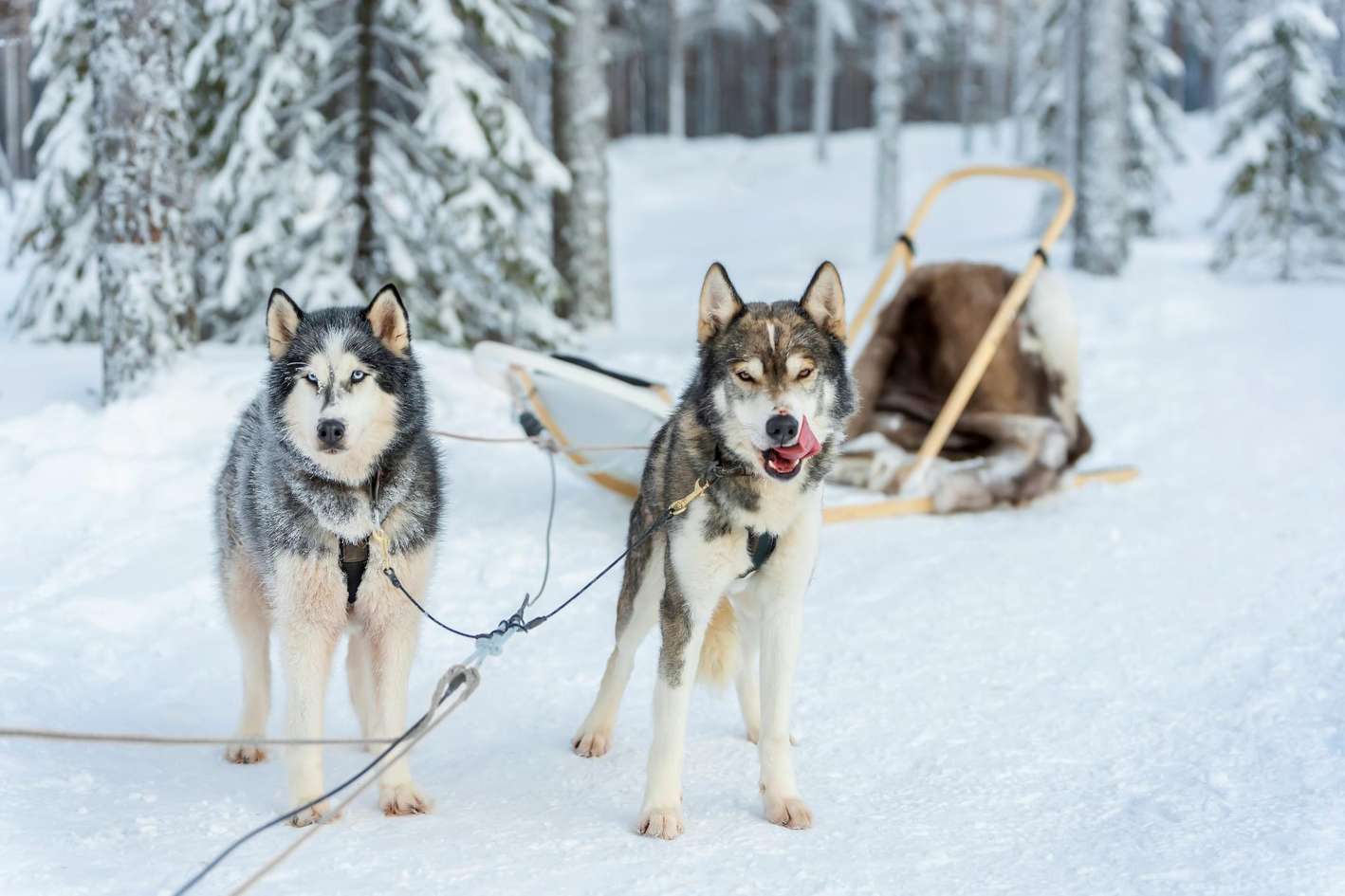
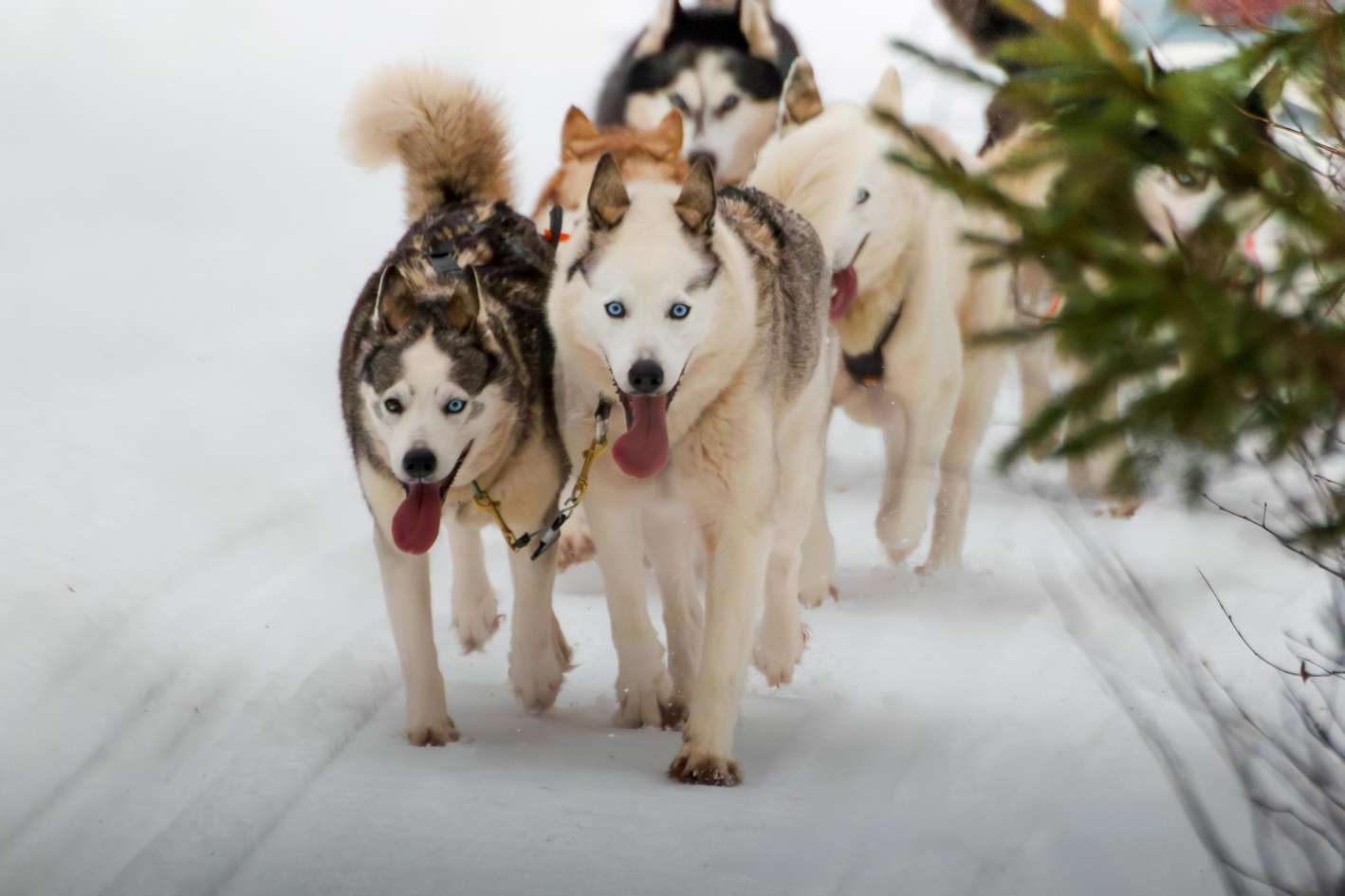
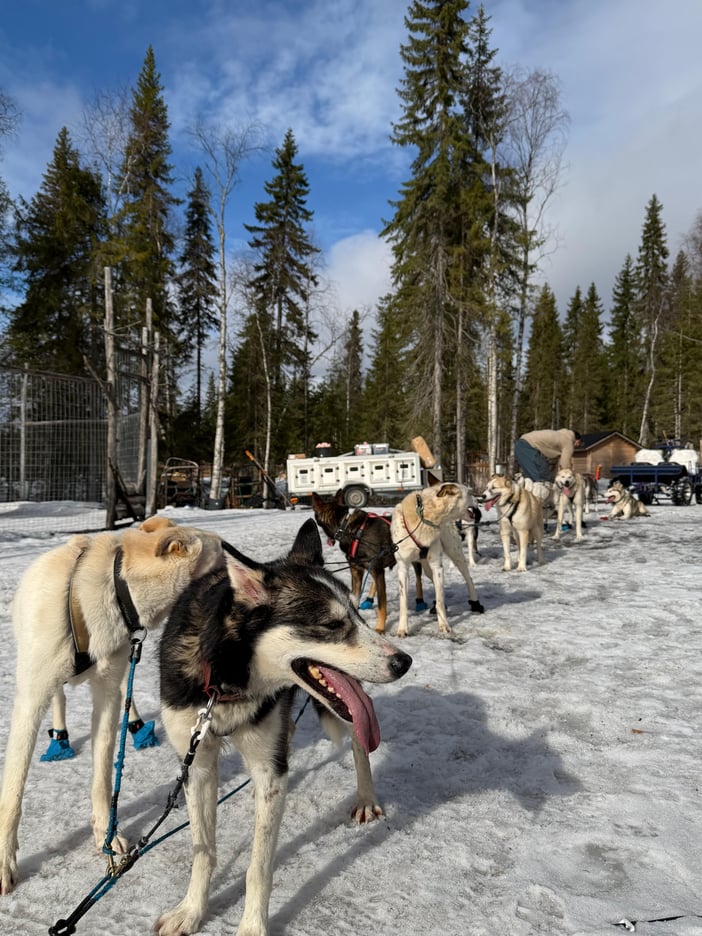
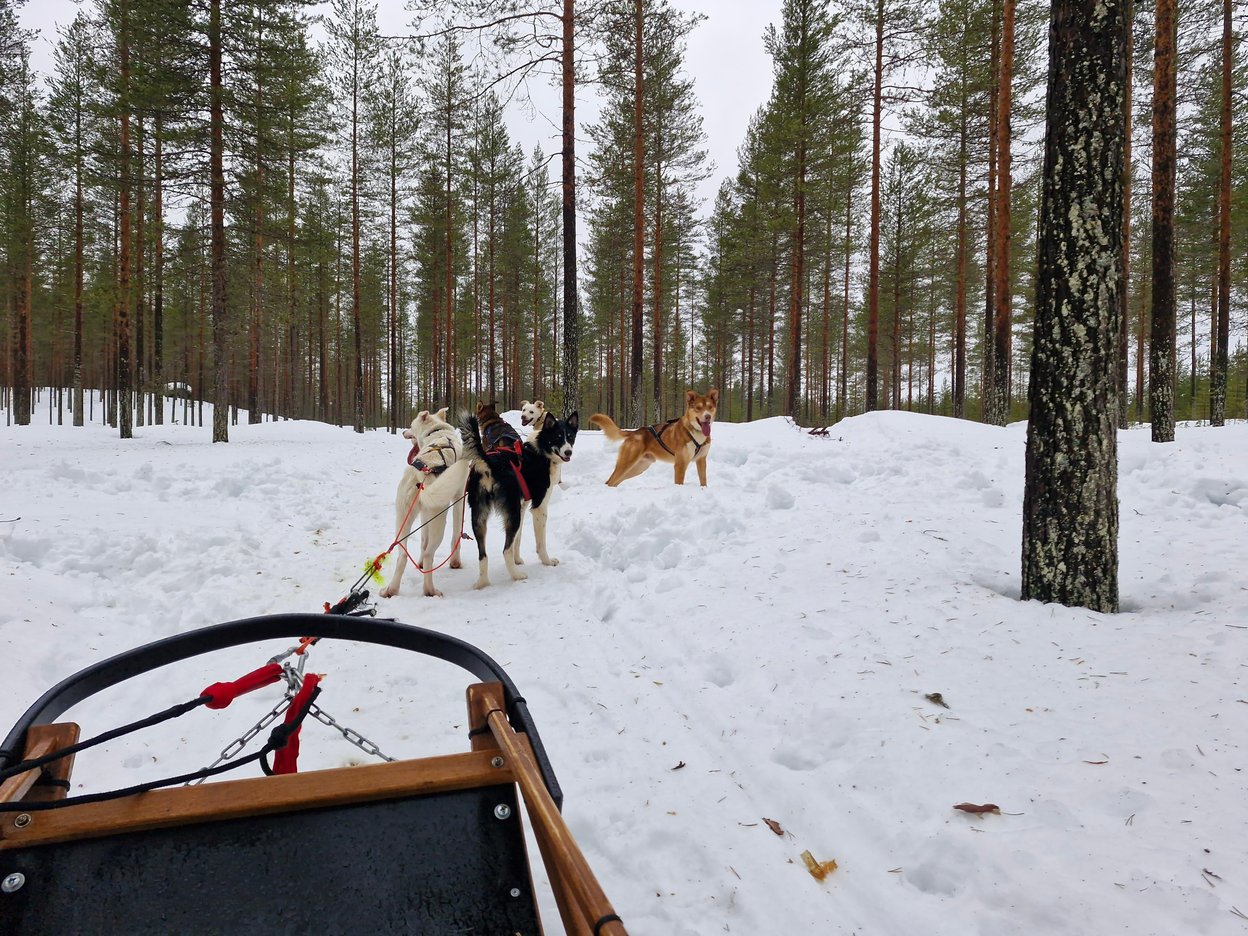
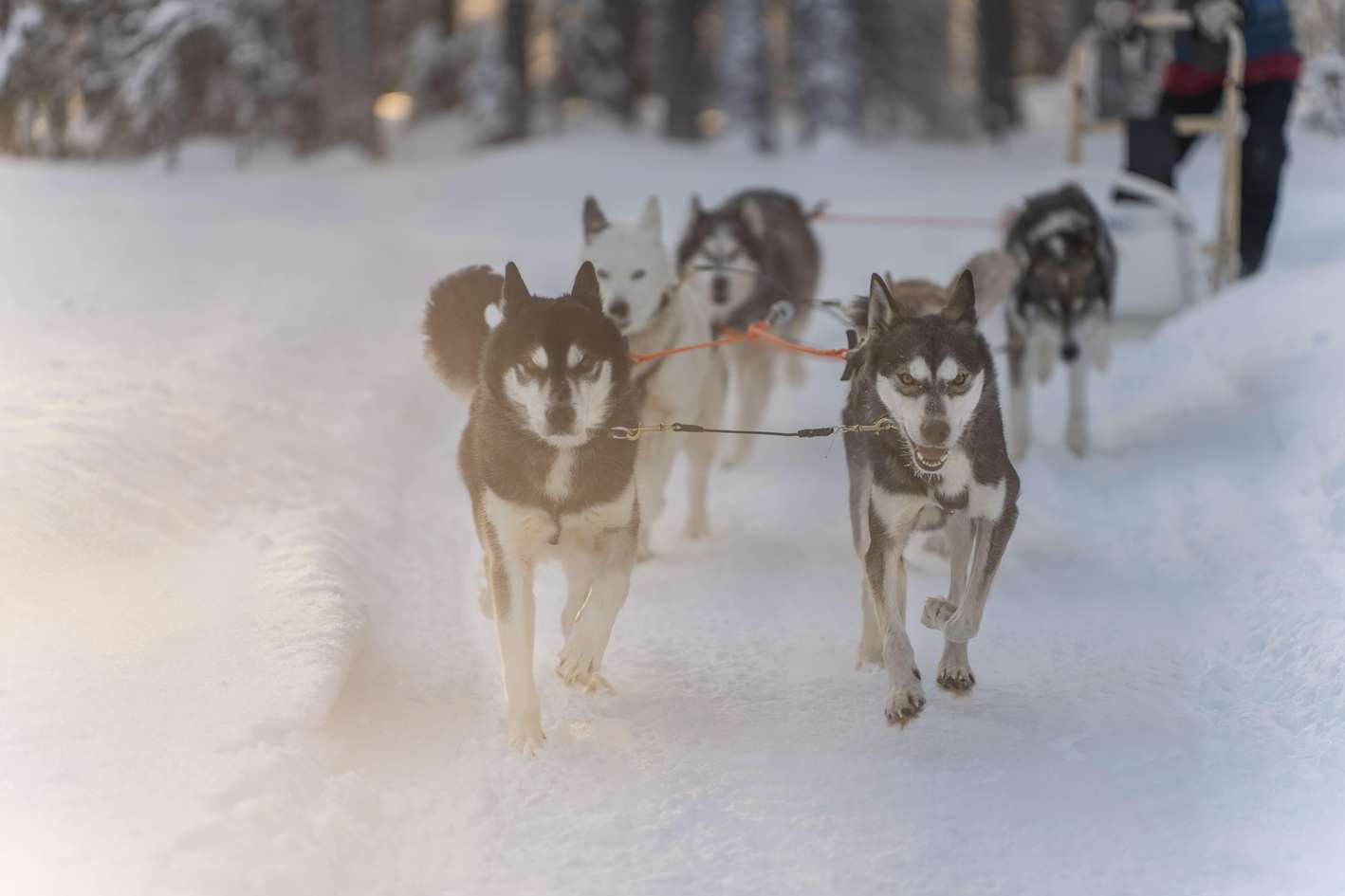
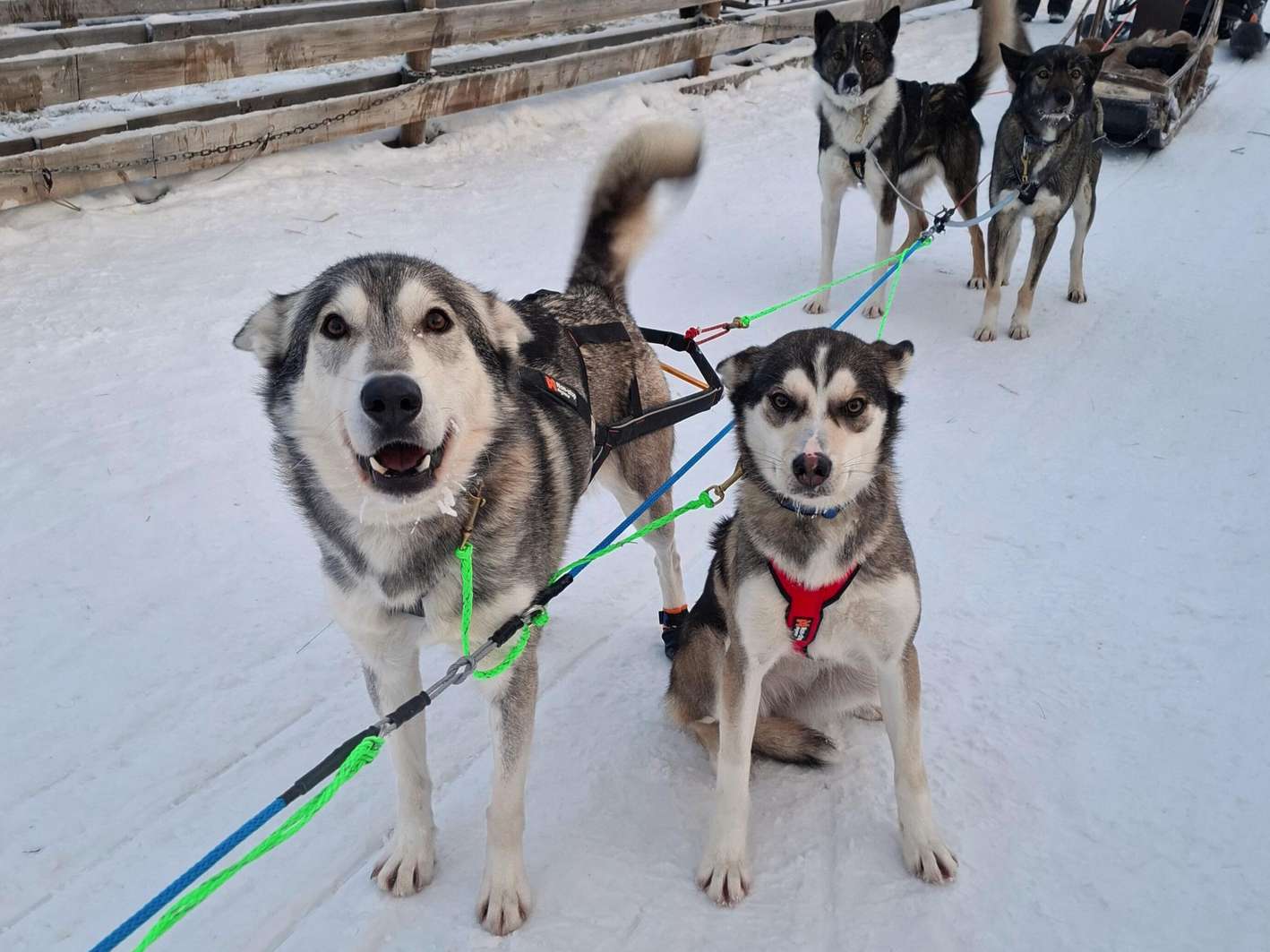
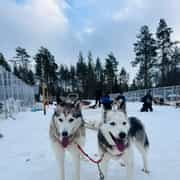
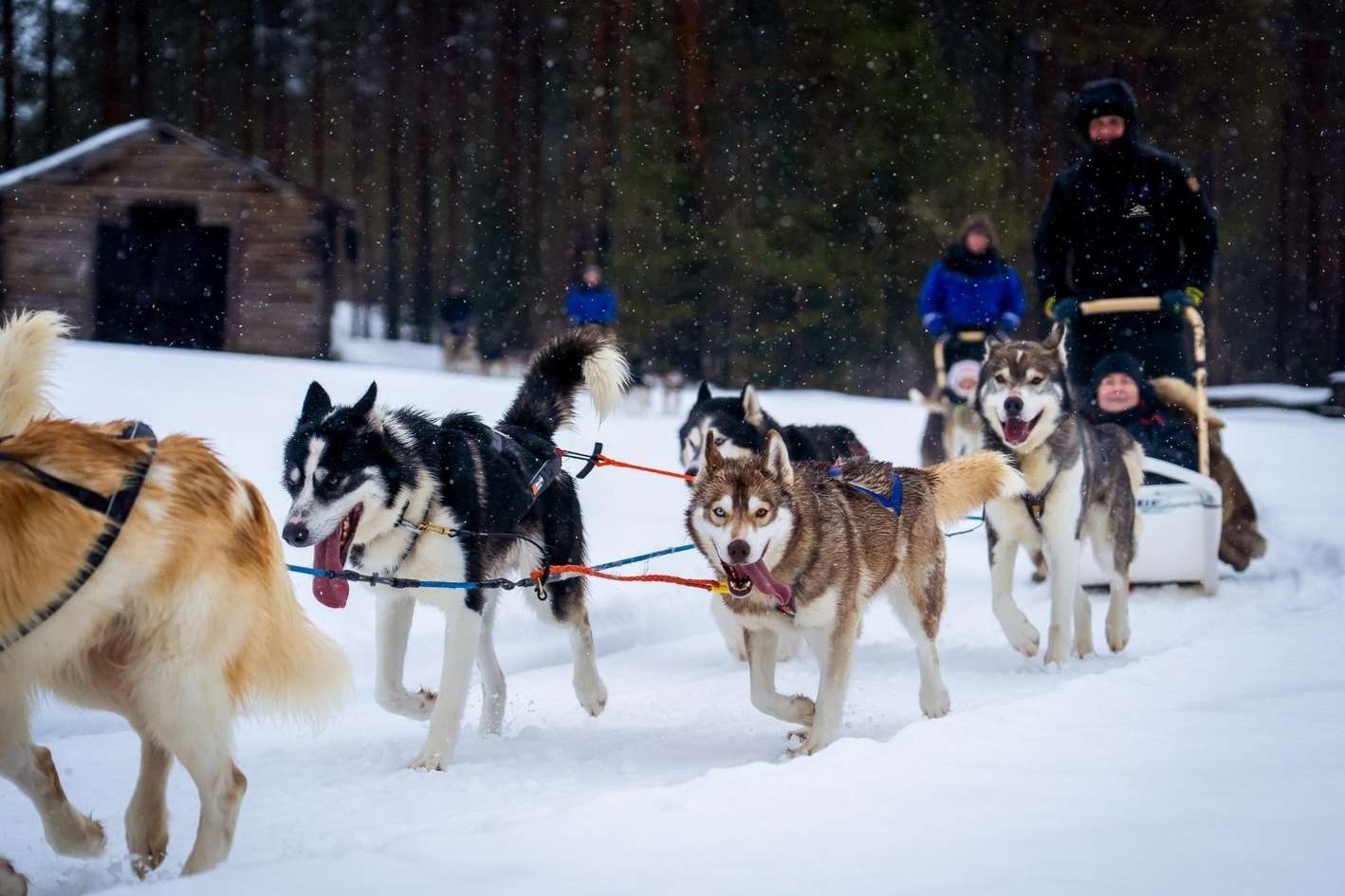
A whole kennel starts singing at once. The noise at a Rovaniemi husky kennel is the loudest thing you will hear all trip, and none of it is distress: Alaskan huskies howl, bark and leap before a run because they are desperate to run, because this is what they live for.
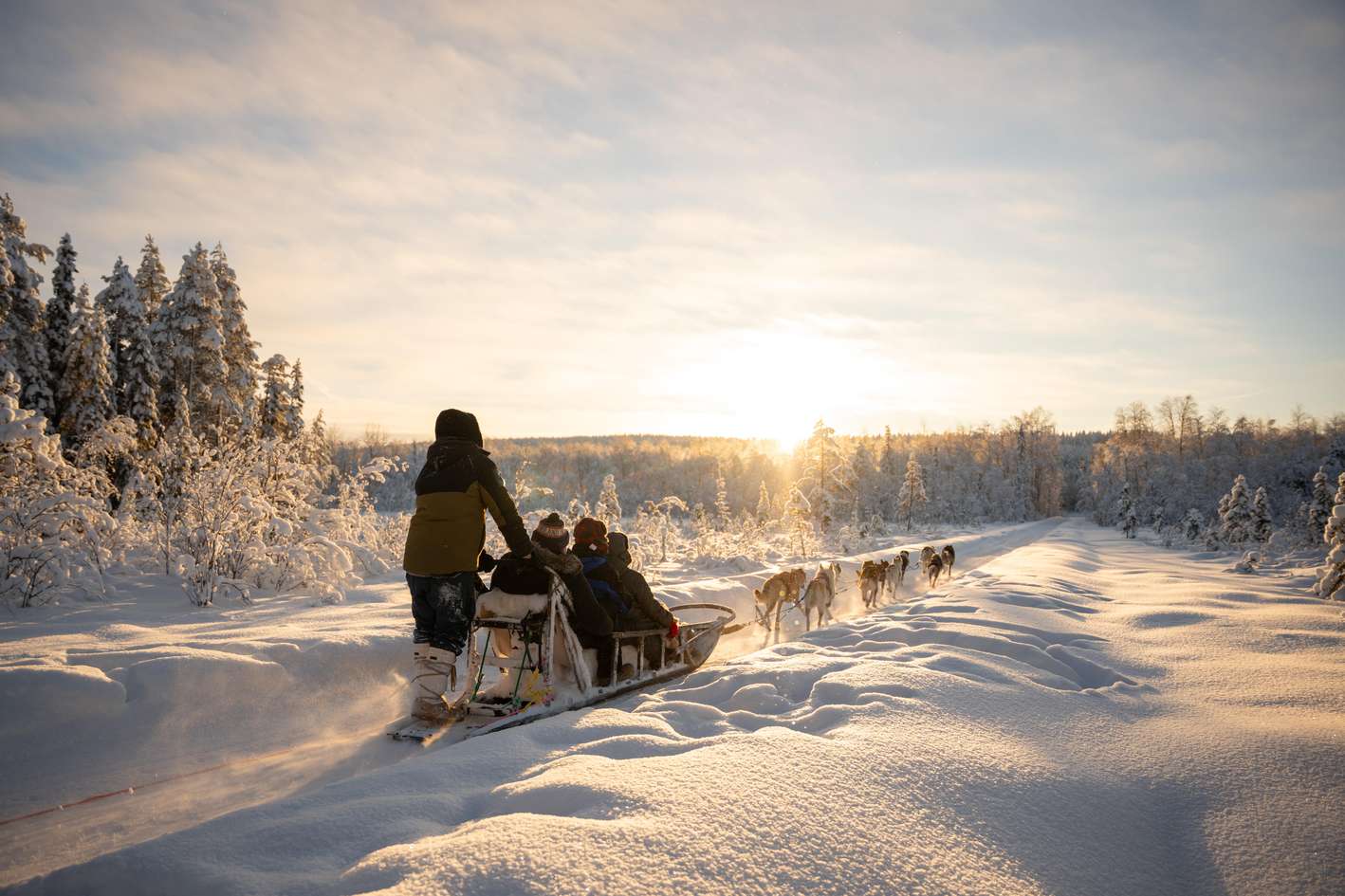
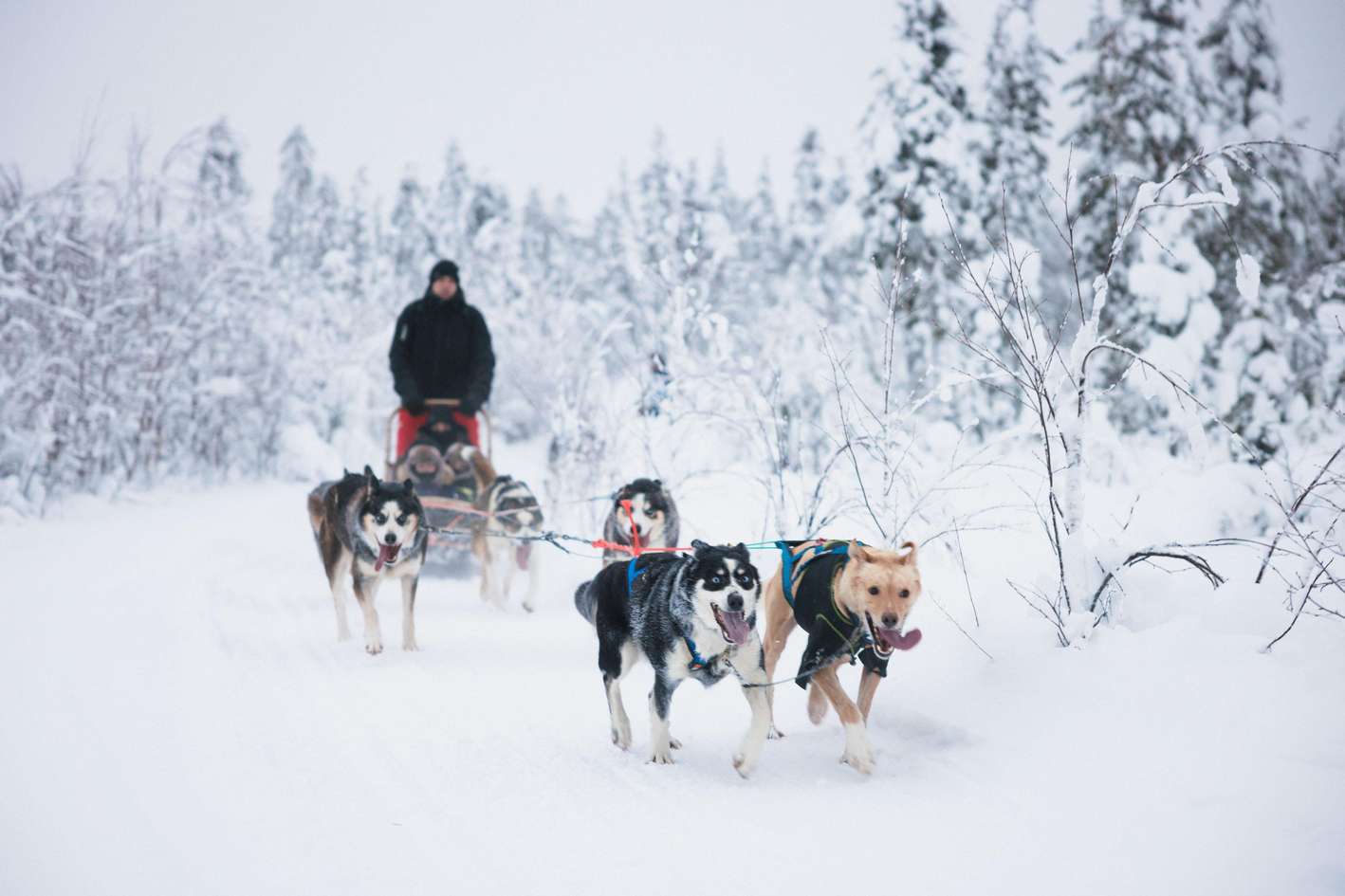
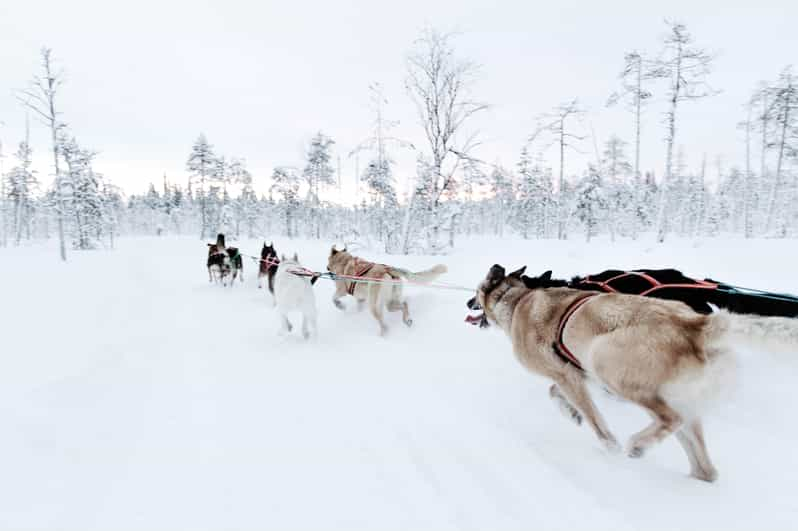
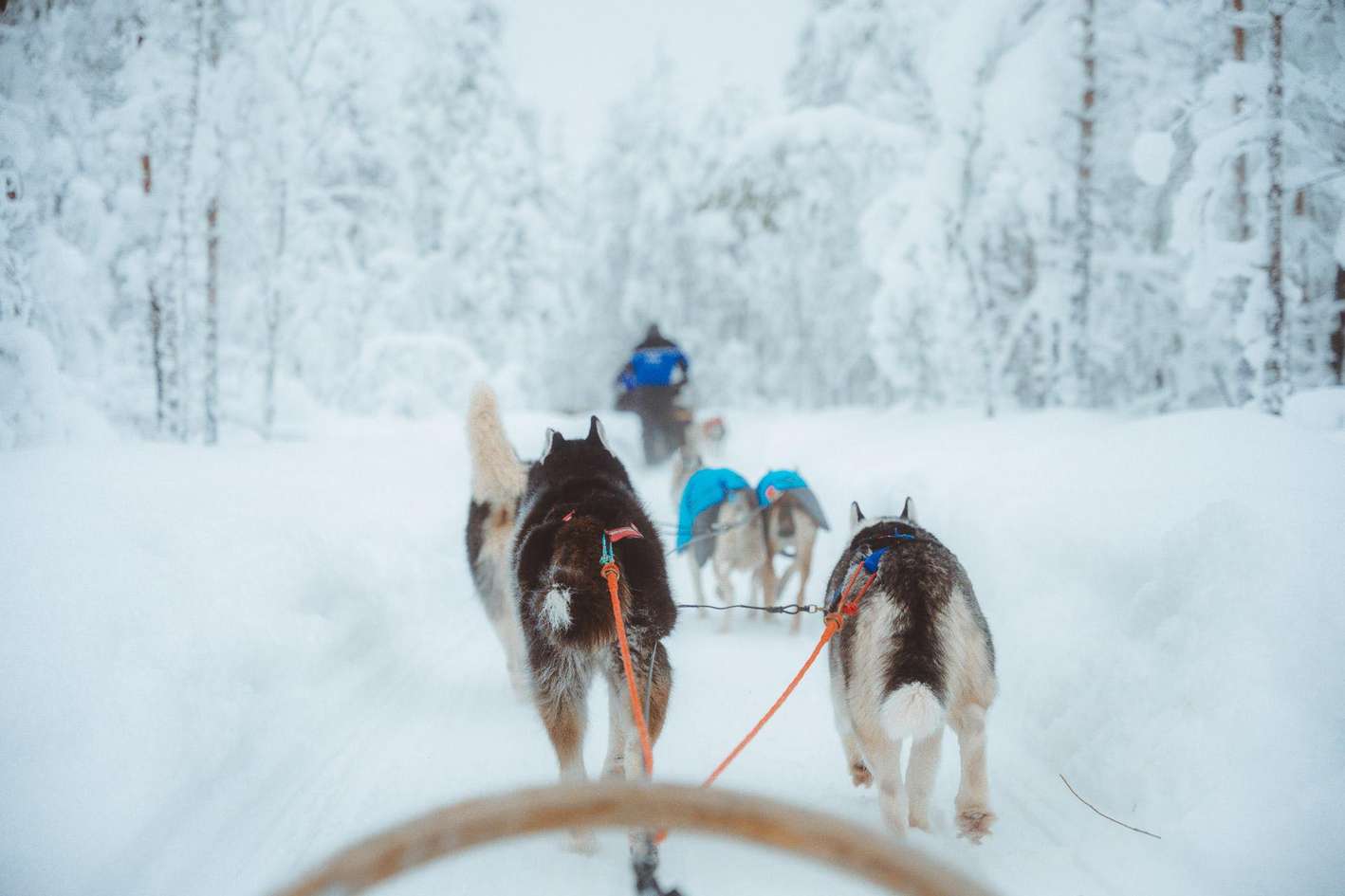
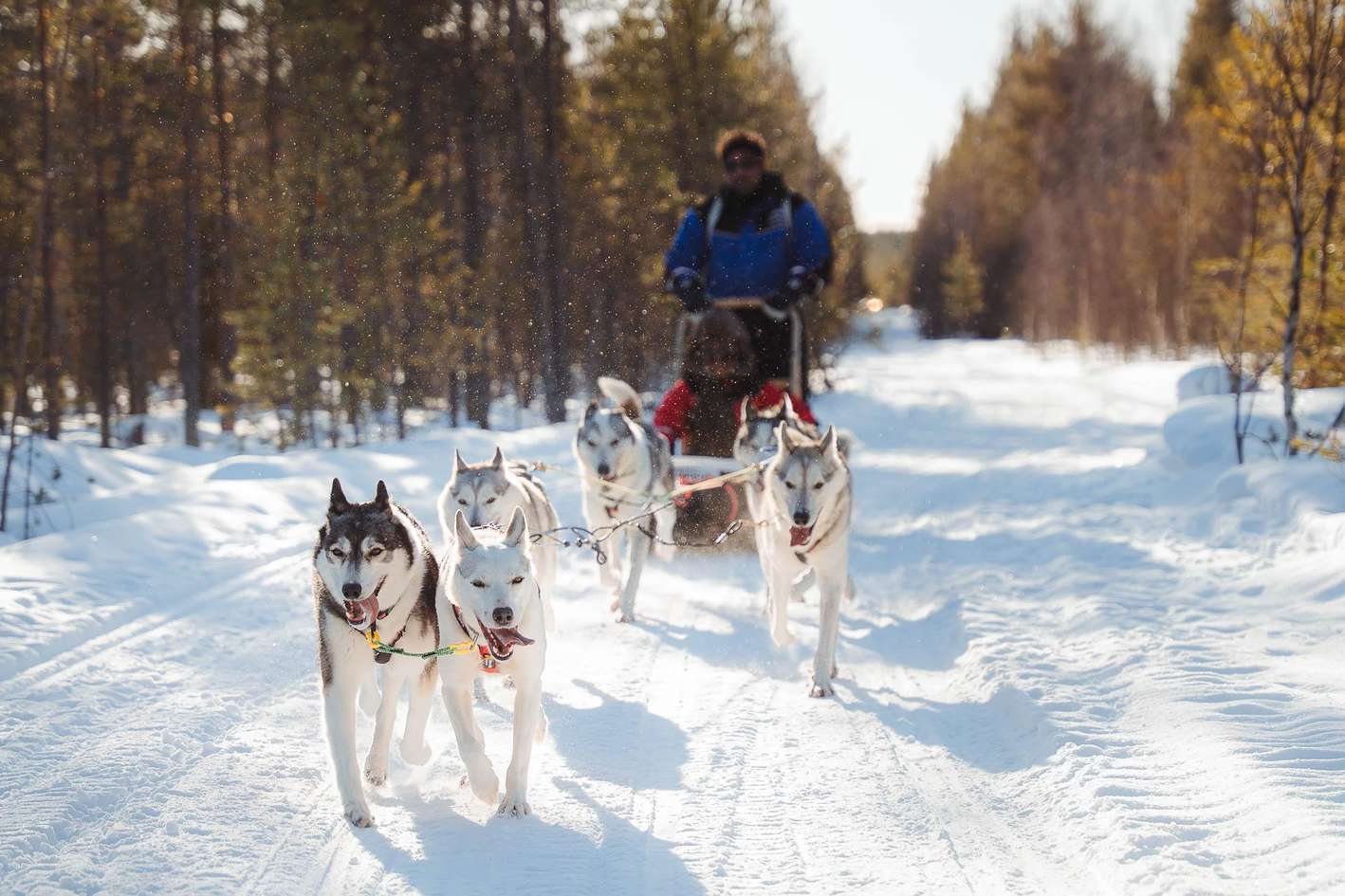
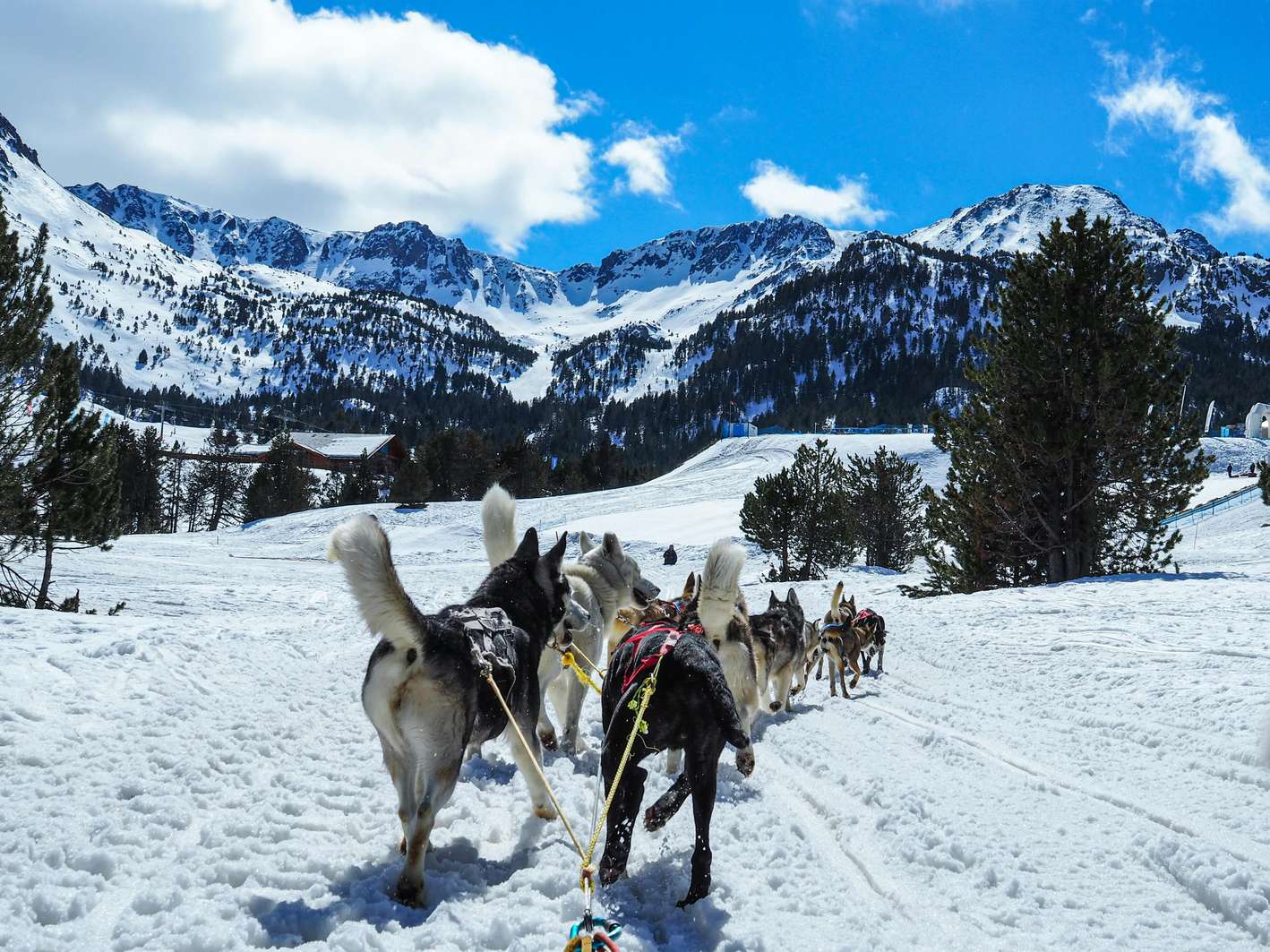
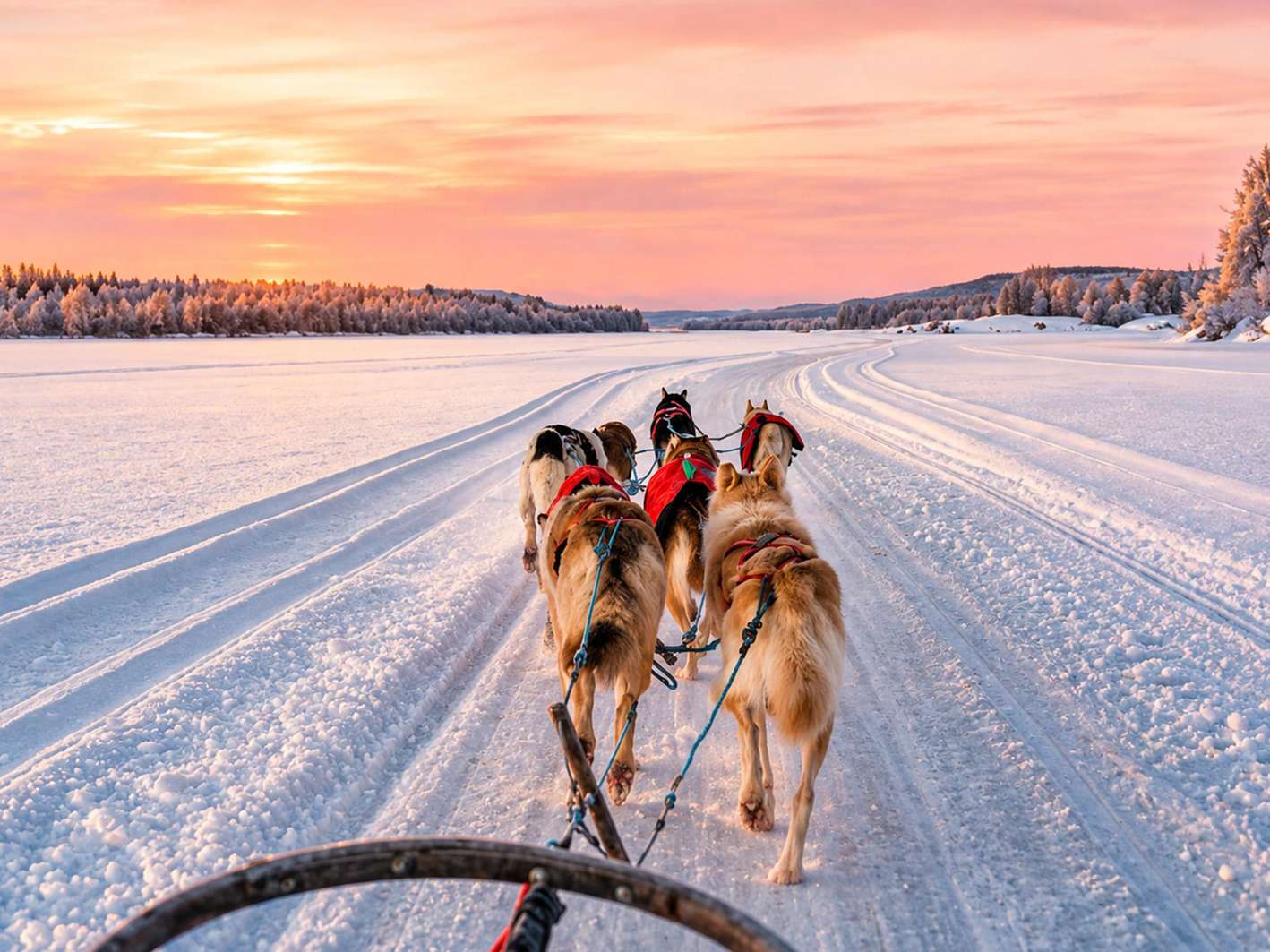
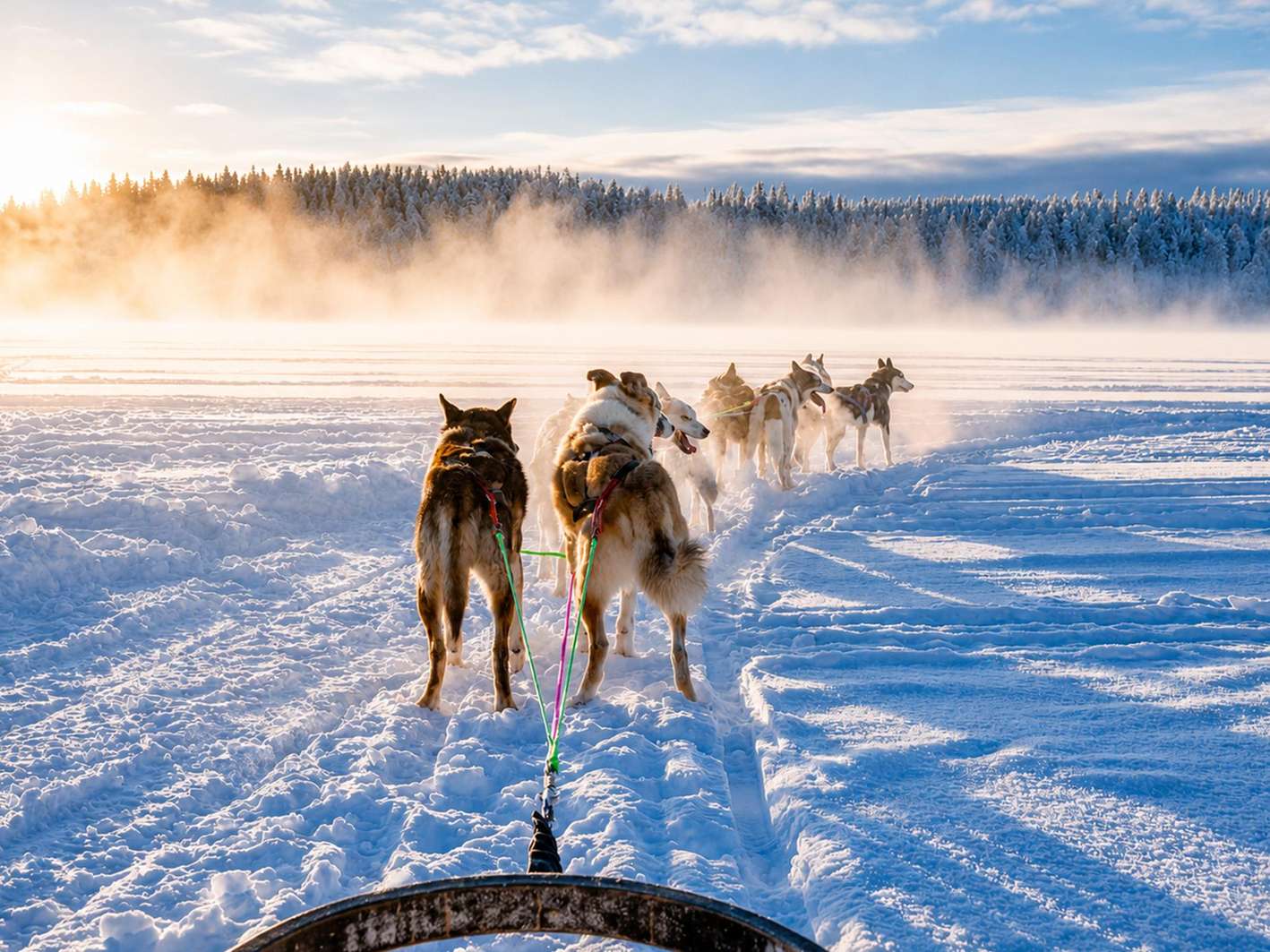
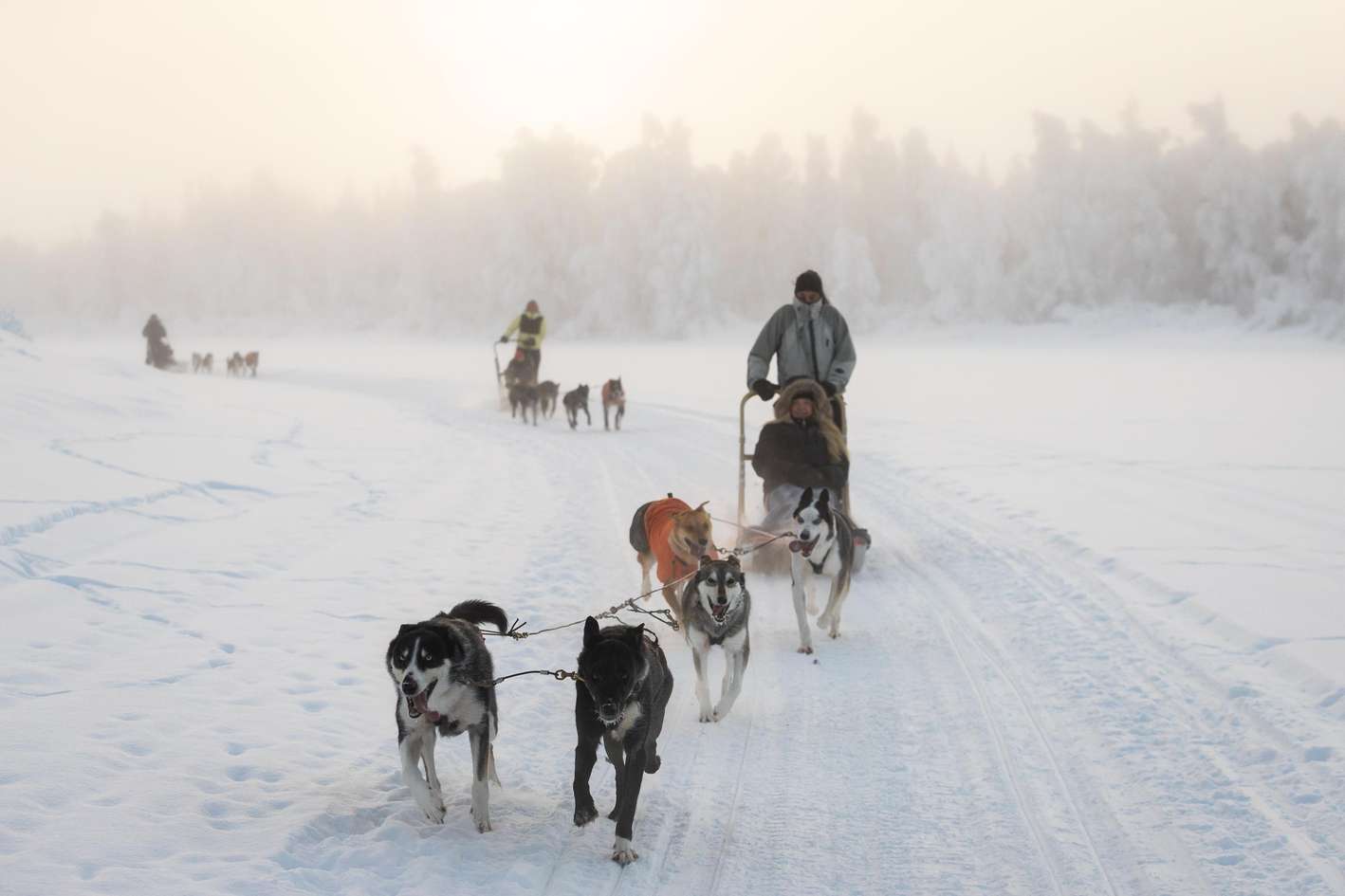
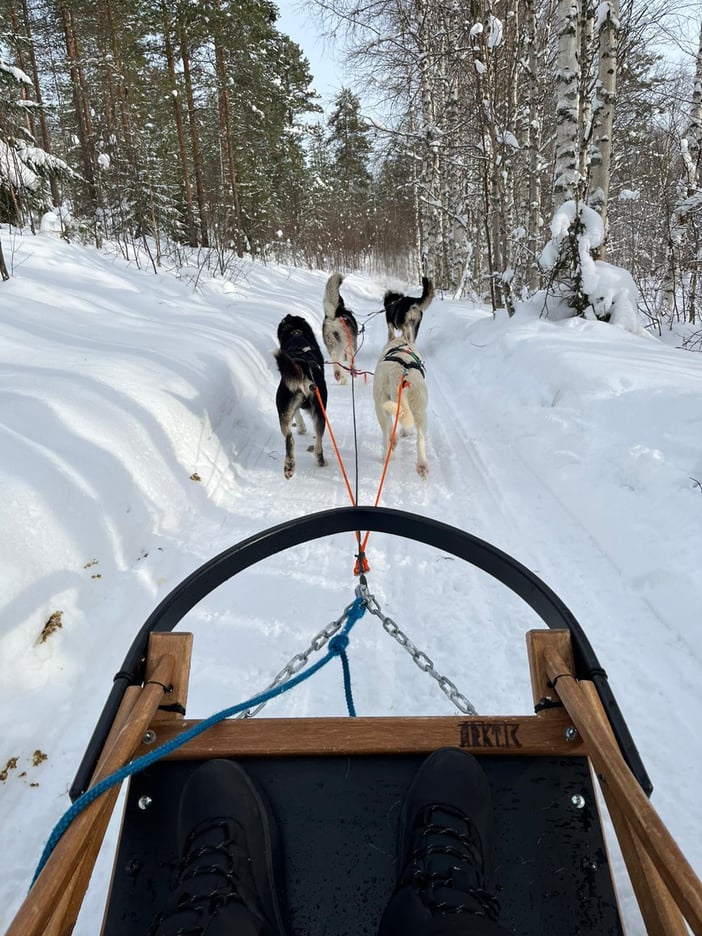
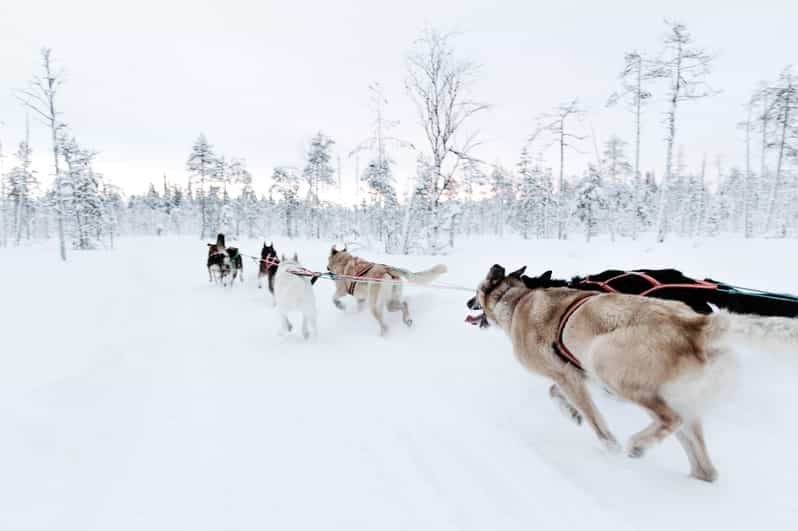
Then the brake lifts. Every dog shuts up mid-howl, the team leans into the harness, and the only sounds left are paws in snow and runners hissing behind them.
A traveler's note
An amazing experience. Our guide Tony at the husky farm was great, informed and knowledgeable, answering all our questions, even in different languages, and telling us about racing the dogs.
Guides give a short briefing before departure, the dogs are trained to answer basic commands, and the foot brake does the slowing. No experience is needed to join any of it, which is the part first-timers never quite believe.
The howling returns at every stop, and it always means the same thing: the dogs want to go again.
The first kilometre tells you what kind of ride you booked.
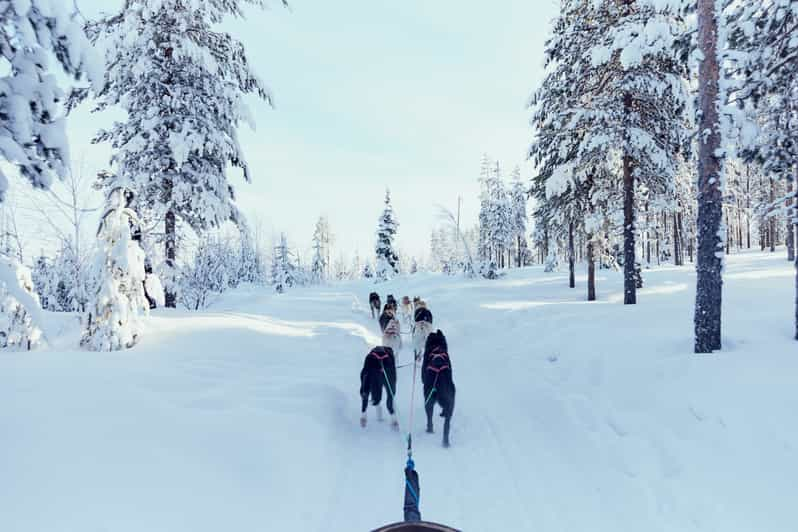
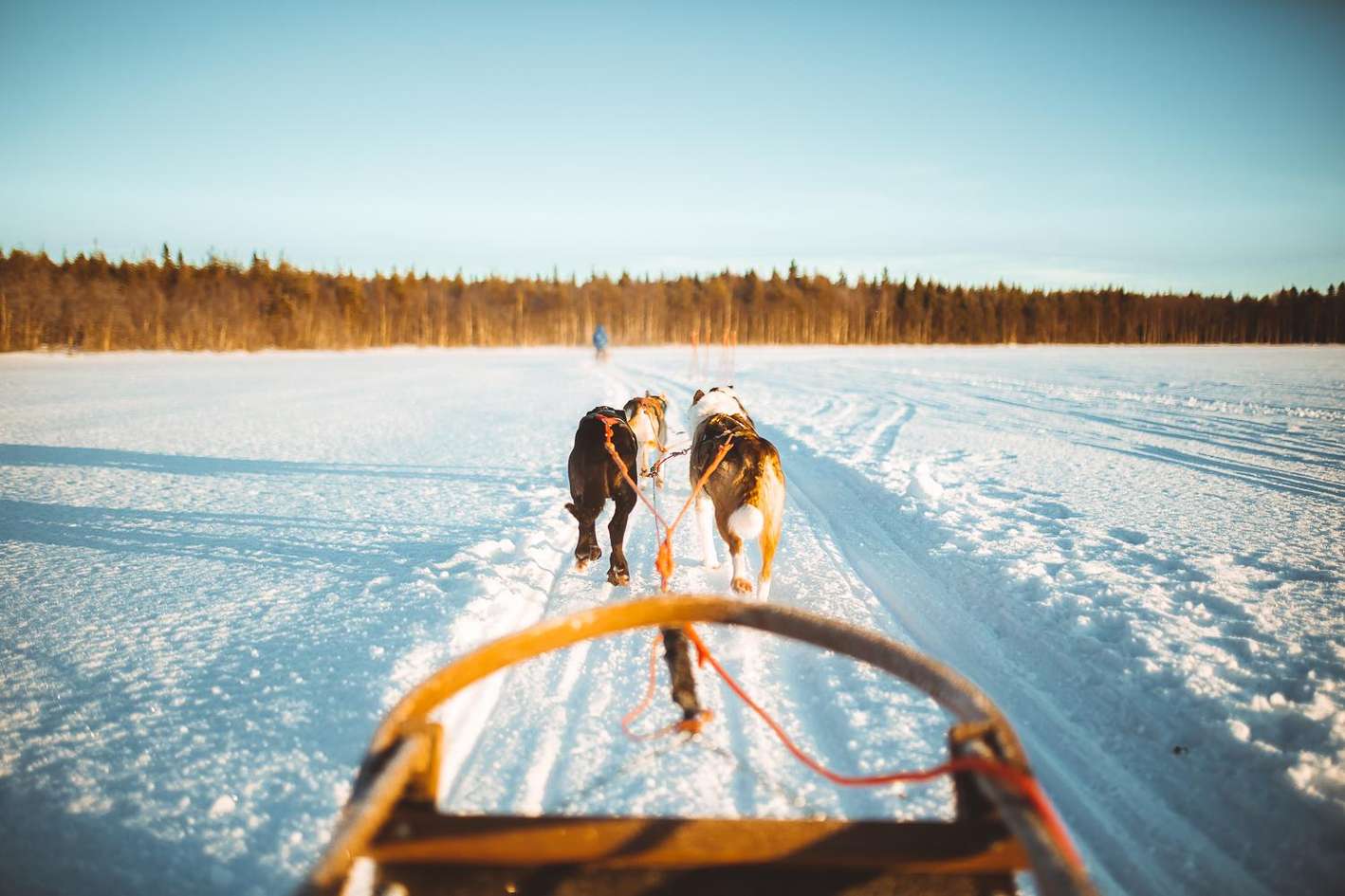
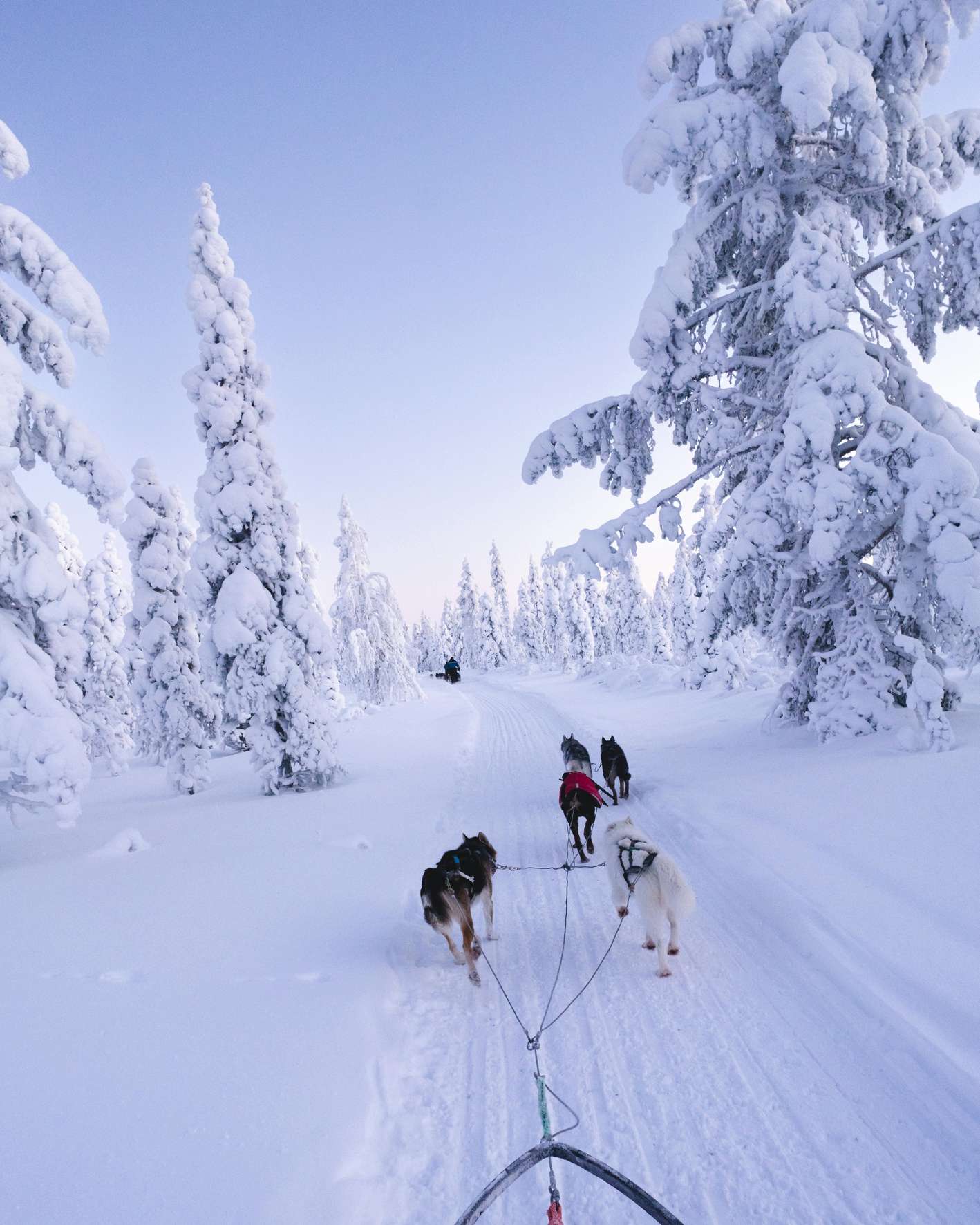
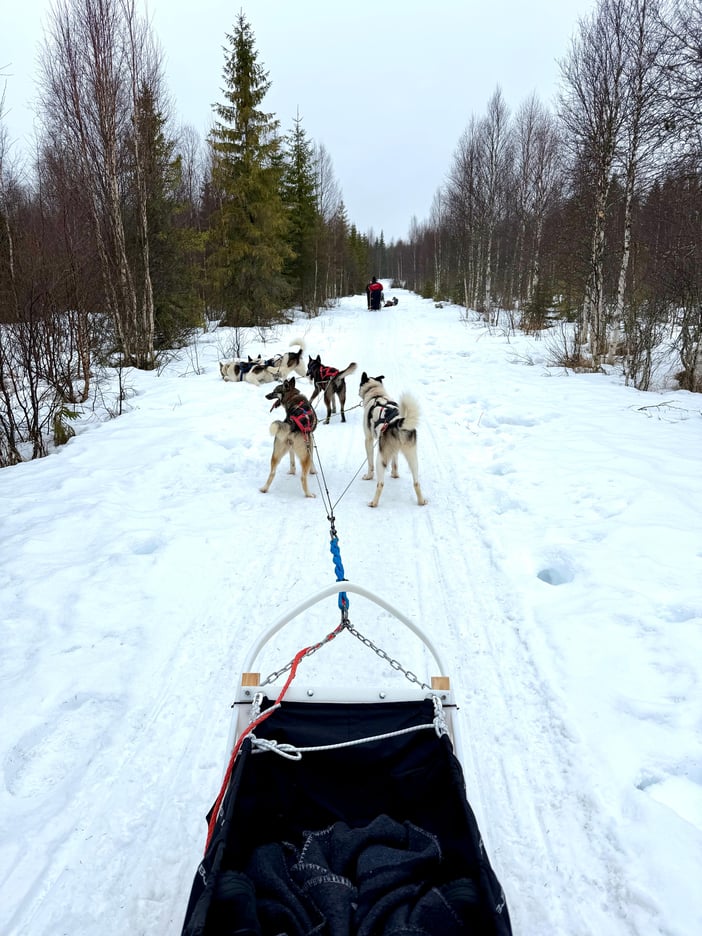
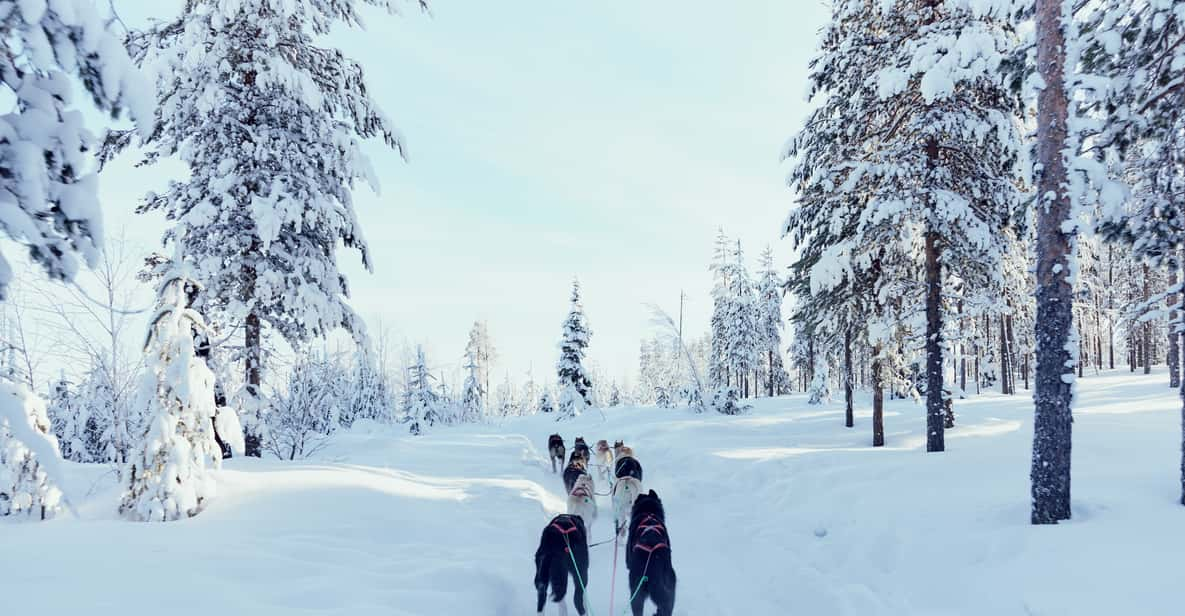
Even a short 5 km loop can cross silent spruce forest, deep snow over frozen marsh and the flat white of a frozen lake; a 10 km trail out of a wilderness kennel can run across open marshland where the only visible thing in any direction is the trail itself.
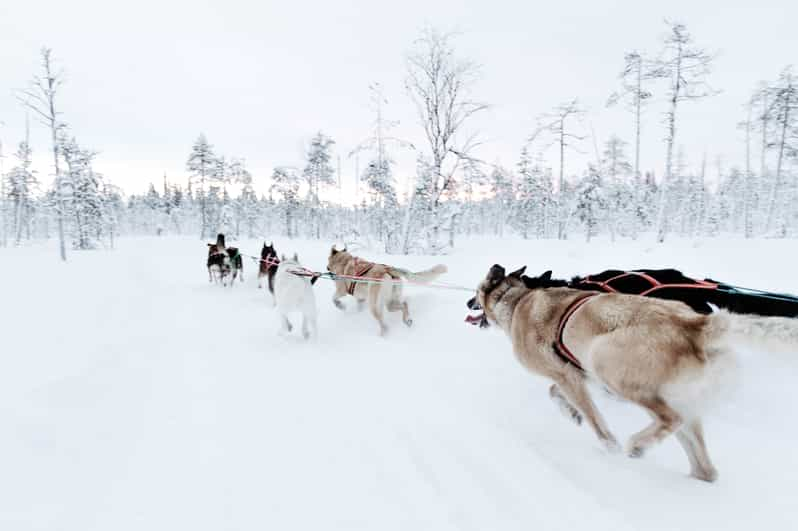
The dogs stay quiet the whole way. They bark loudly before departure and fall almost completely silent once they run, so the forest stays a forest.
The brake matters more than beginners expect. It is a U-shaped bar with metal claws that dig into the snow when you step on it, which is also how you keep distance from the sled ahead if it stops suddenly.
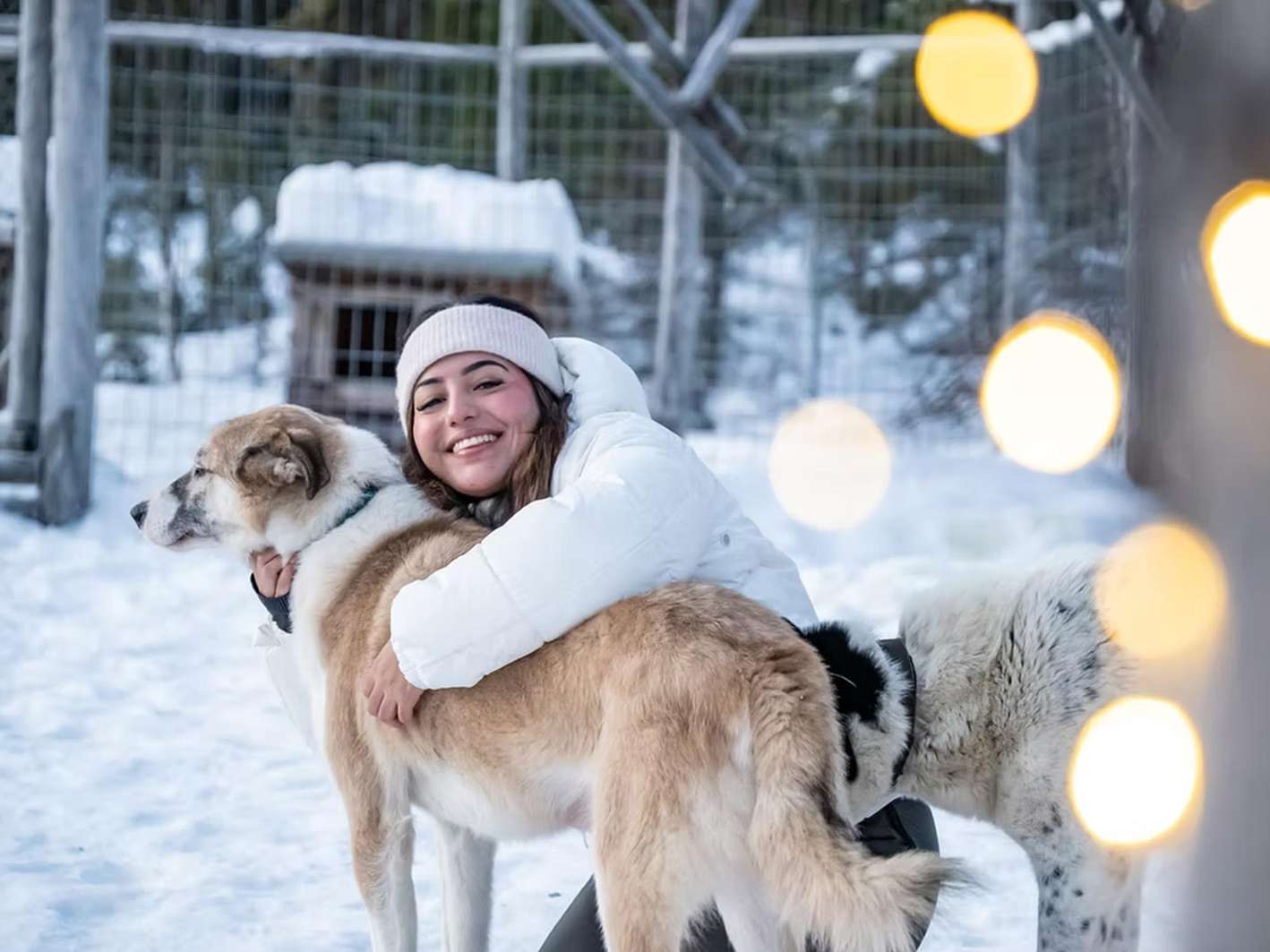
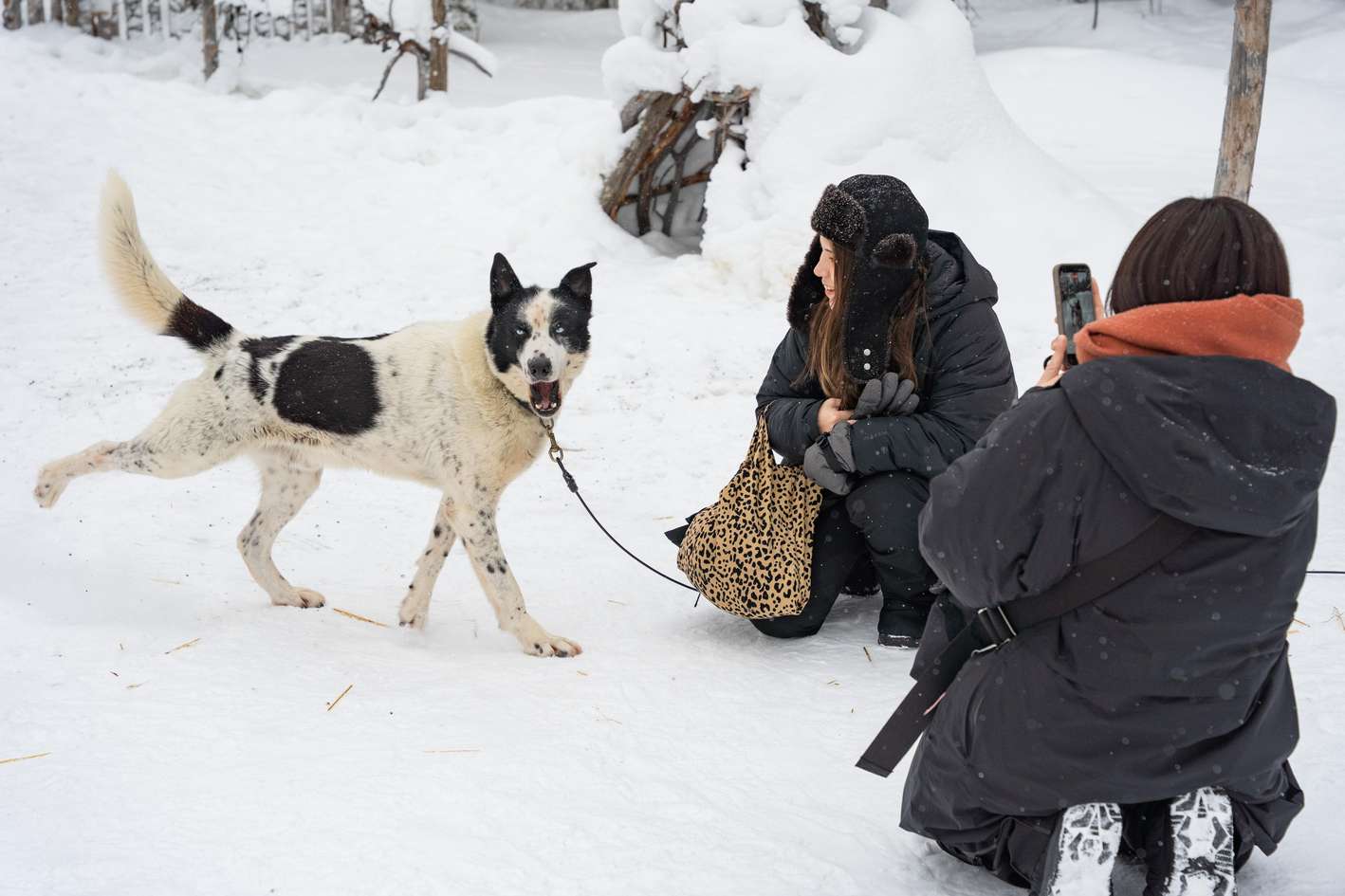
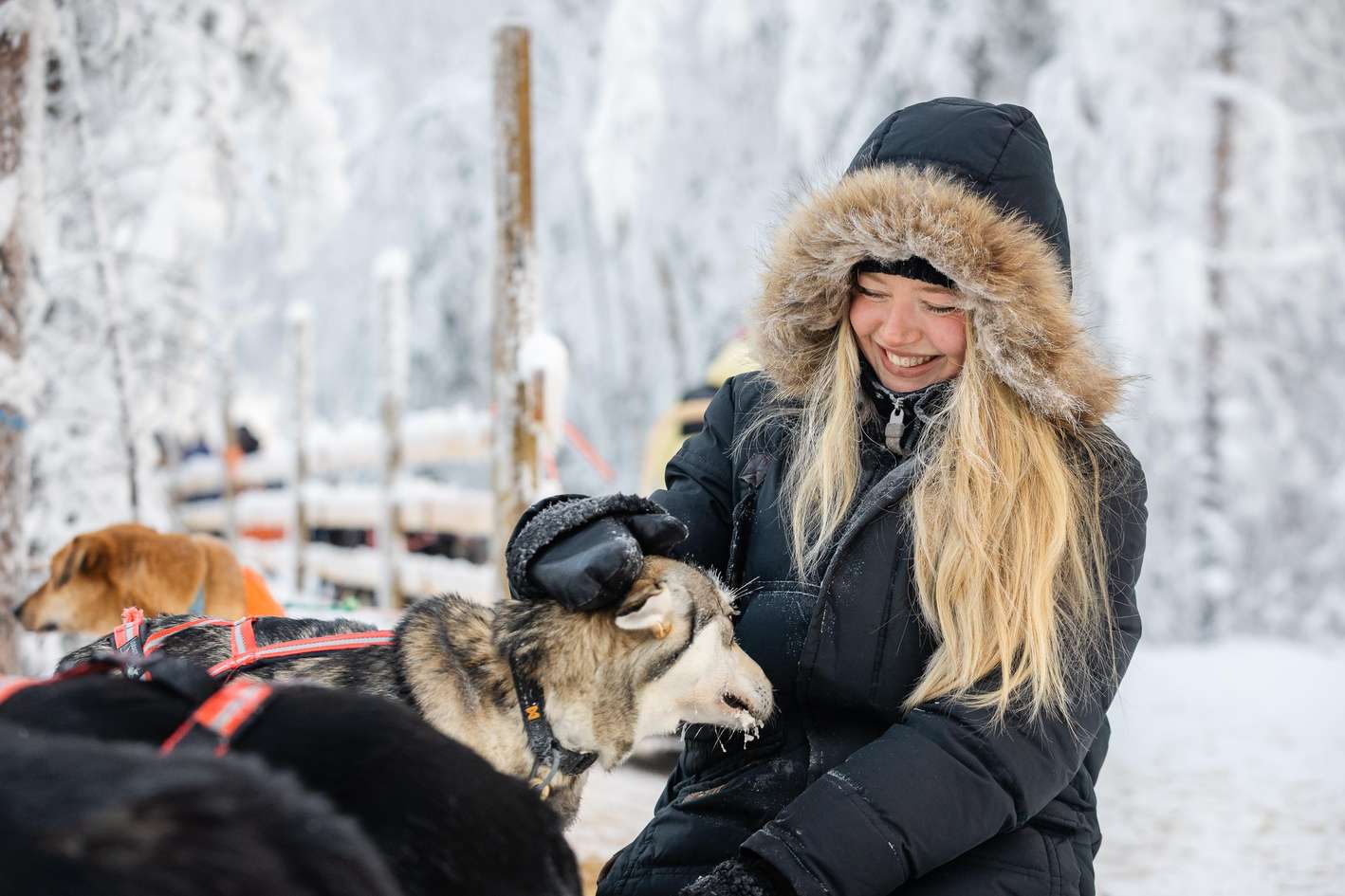
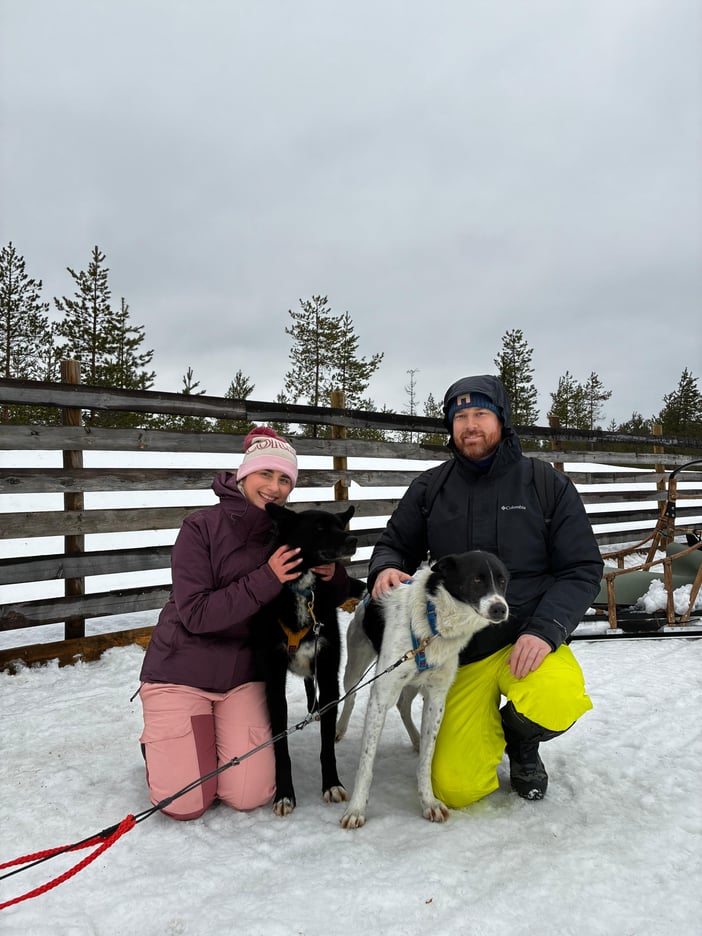
Afterwards comes the part people remember. A structured meet-and-greet gives you about 20 minutes with the dogs, and open park stays let you pet them as long as you like.
The 10 km Authentic Husky Safari in the Taiga, run from a family kennel, builds its day around exactly that, with the mushers explaining how they live with and train the dogs.
Time with huskies after a ride
20 minscheduled meet and greet
Unlimitedopen stay in park area
That 20-minute figure is the one to weigh against tour length. A fast commercial turnaround can cut petting time to about 5 minutes, while kennel safaris run unhurried, with campfire snacks and hot drinks on the side.
Tour for this
10 km Authentic Husky Safari in the Taiga, Family Kennel5.0★ (3) · 1 day · Hotel pickup · Free cancellation
Three formats share one kennel gate. At Santa Claus Village a guide drives a short loop of 8 to 15 minutes and you sit wrapped in the sled; that is the taster, and you can often just walk up for it.
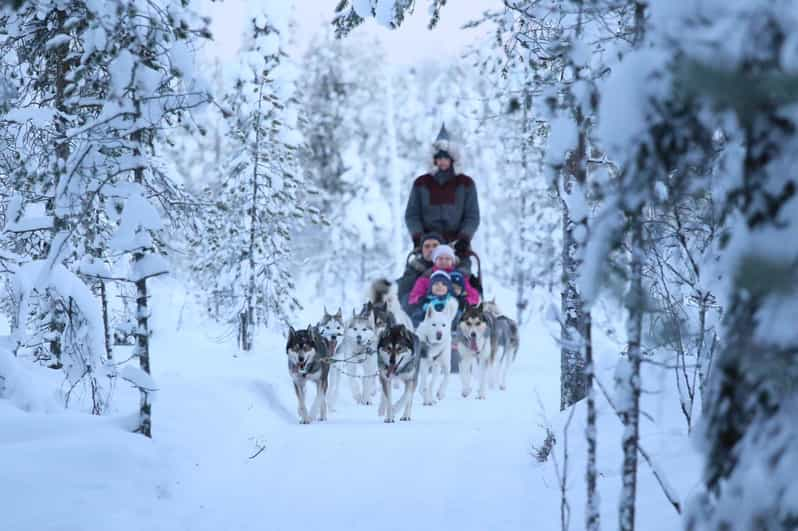
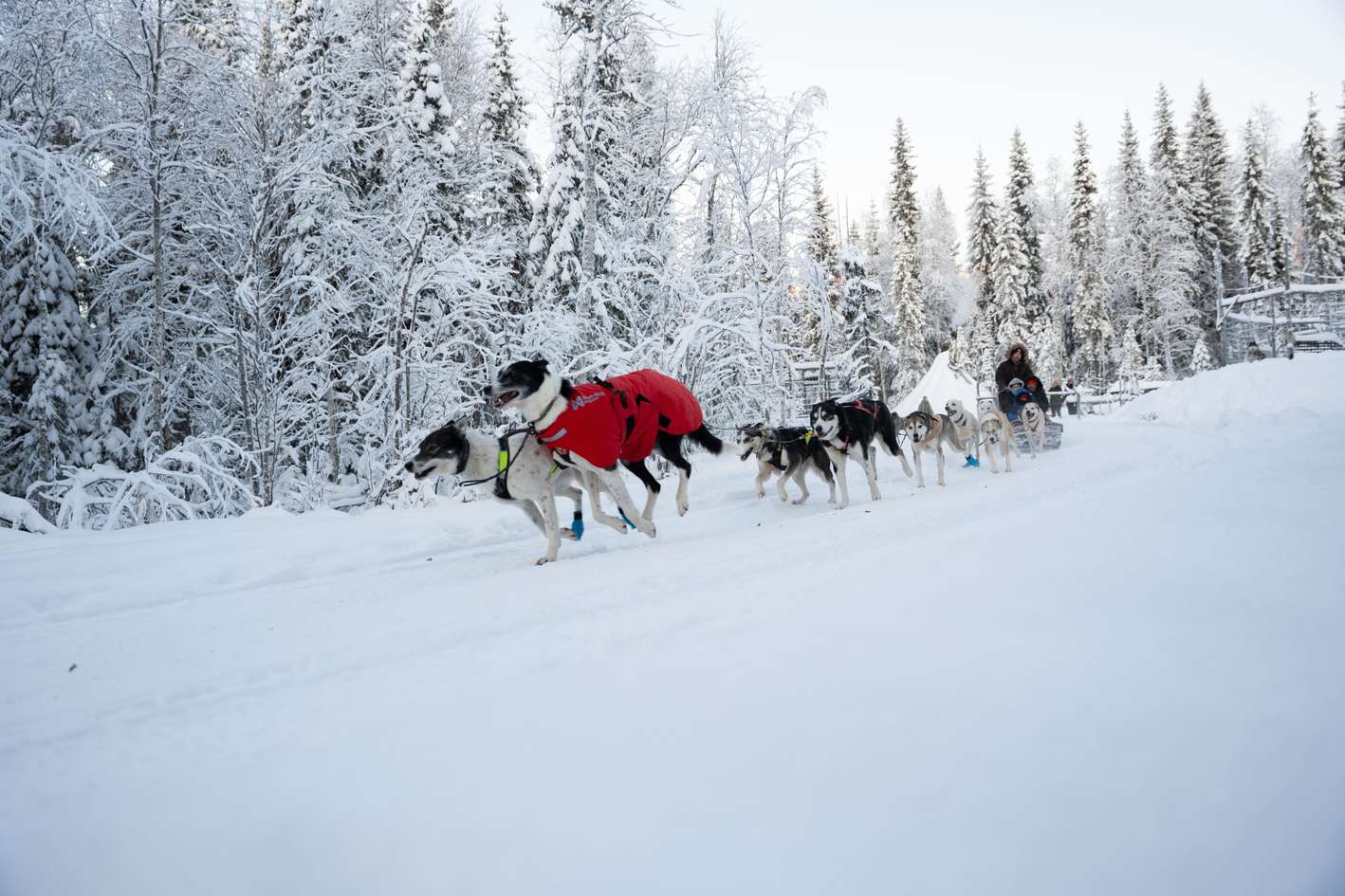
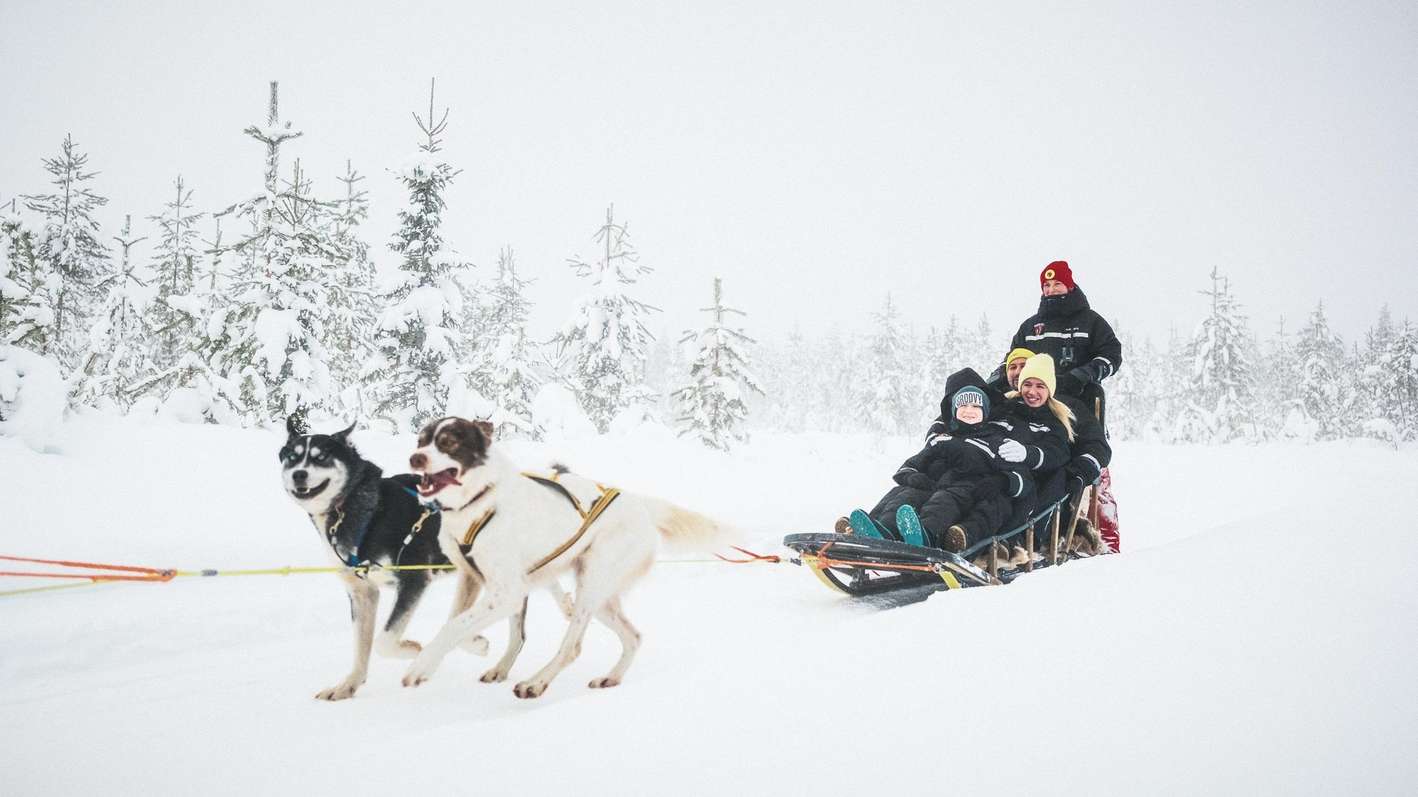
On a musher-driven passenger safari a professional drives while the whole family sits together, which fits small children and anyone who would rather photograph than steer.
On a self-drive safari you take the handlebar, paired on a two-person sled, and swap halfway so both of you drive. Distance decides the minutes more than anything.
Actual sledding time by trail distance
15 to 30 min5 km trail sledding time
30 to 50 min10 km trail sledding time
Those two ranges are sledding time only, before transfers and kennel visits, so a 10 km booking is not twice the day of a 5 km one.
The Rovaniemi: 4-5 km Self-Drive Husky Sled Through the Forest sits in the middle: about 30 minutes on the sled, overalls and boots sorted, a private farm in quiet forest.
Loop ride, passenger safari or self-drive
Santa Claus Village loop
Musher-driven passenger ride
Self-drive wilderness safari
Time on the sled
8 to 15 minutes
30 to 60 minutes
15 to 50 minutes by distance
Setting
Busy village loop
Forest trail
Quiet forest 20 to 60 minutes from town
Winter gear
Not included
Included on most safaris
Overalls and boots included
Best for
Toddlers and short stops
Families with small children
Hands-on drivers
Santa Claus Village loop
Time on the sled
8 to 15 minutes
Setting
Busy village loop
Winter gear
Not included
Best for
Toddlers and short stops
Musher-driven passenger ride
Time on the sled
30 to 60 minutes
Setting
Forest trail
Winter gear
Included on most safaris
Best for
Families with small children
Self-drive wilderness safari
Time on the sled
15 to 50 minutes by distance
Setting
Quiet forest 20 to 60 minutes from town
Winter gear
Overalls and boots included
Best for
Hands-on drivers
Gear tips the choice too: winter overalls and boots come with the wilderness safaris, while the village loop expects you in your own kit. Families with small children lean passenger; confident couples lean self-drive and swap halfway.
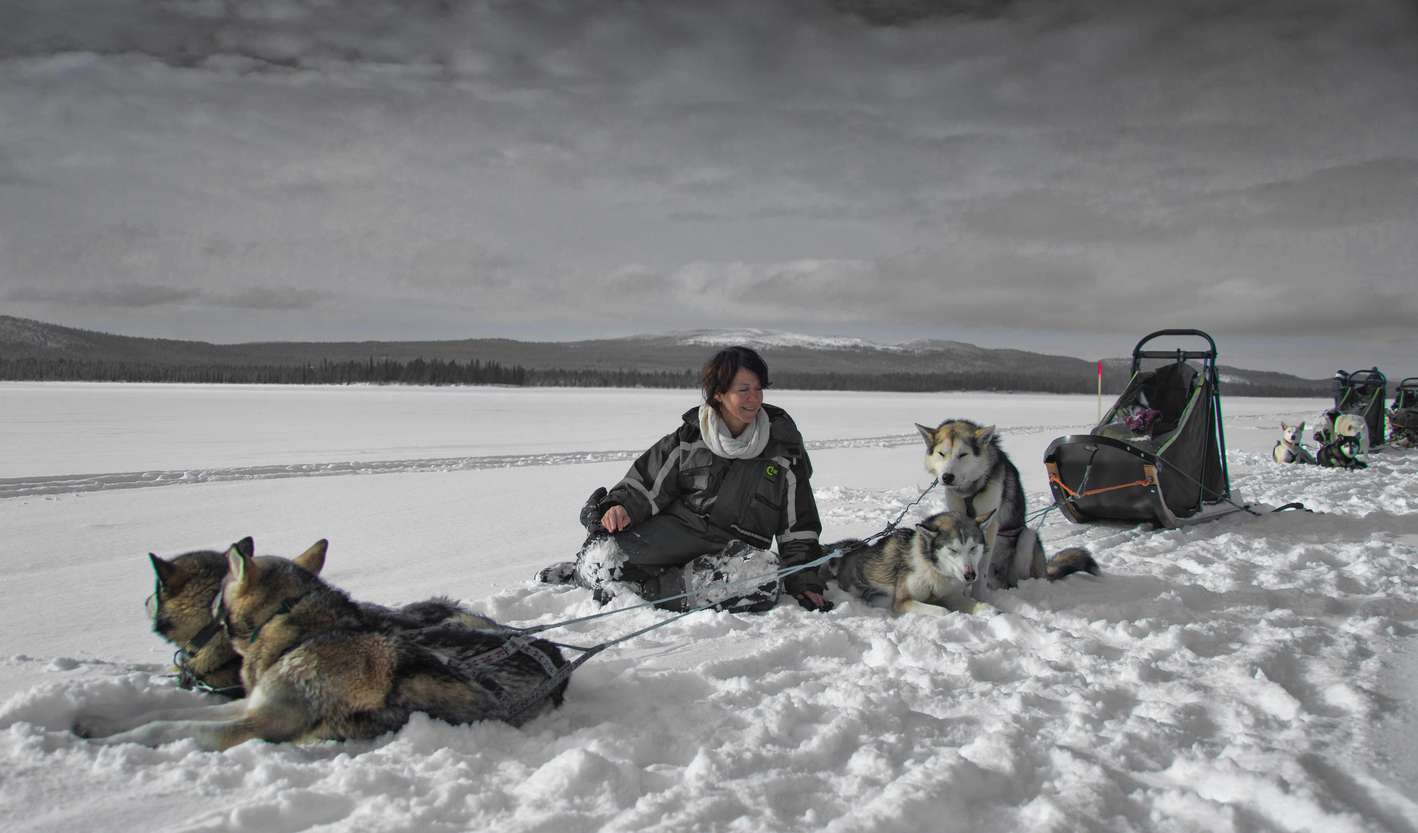
Solo travelers often get a sled of their own for the entire run, and many regulars call it the luckiest draw of the day.
Tour for this
Rovaniemi: 4-5 km Self-Drive Husky Sled Through the Forest4.6★ (284) · 3 hours · Hotel pickup · Free cancellation
Driving looks effortless from the passenger seat, and on flat forest it is. Uphill is where the truth arrives.
Drivers step off a runner and push or jog behind the sled on steeper climbs, and standing on the runners for 15 to 25 minutes at a stretch is honest work for the legs. Fitness to walk briskly uphill is the bar; balance and a firm grip are the rest of it.
The age rules are stricter than most visitors expect. Most operators want drivers to be 15 to 18 or older, and on the city's official self-drive listings children under 16 cannot drive while drivers must weigh more than 50 kg.
On family tours the adults hold the handlebar while up to two children ride in the basket. Guides watch every departure and can move a struggling driver into the passenger seat.
Pregnant travelers sit this one out, by every operator's terms: vibrations, bumps and sudden movements make the rides unsuitable, and back problems sit on the same list. A musher-driven passenger ride is the comfortable alternative for anyone with limited mobility.
With a baby or toddler, wilderness kennels mostly draw the line at under 4, though some accept from 1 or 2. The reliable toddler option is the Husky Park at Santa Claus Village, where the youngest children join free with an adult and no booking ahead.
Tour for this
Rovaniemi: Santa Claus Village Husky Ride4.7★ (1,588) · 30 minutes · Free cancellation
Deep snow is never the problem between January and March. Cover builds from roughly half a metre in mid-January to two thirds of a metre by mid-February and peaks near 75 cm in mid-March, so trails hold through spring.
Cold is the variable: January and February nights run to minus 11 or minus 14, with days near minus 6.
Winter husky conditions by month in Rovaniemi
January: 5 out of 5 for how busy it gets. Trails have guaranteed snow cover with peak midwinter cold around −13°C and very heavy booking demand.
HighestDec to Mar
LowestApr to Nov
Darker: a higher how busy it gets score, out of 5
Tap a month to read it.
December: snow on 14.6 days. Sledding tours are in high demand across firmly established snow trails during the dark holiday period.
HighestDec to Jan11.2 to 14.6 days
In betweenFeb to Apr, Oct to Nov5.2 to 9.6 days
LowestMay to Sep0 to 2.6 days
Darker months: higher, from 0 to 14.6 days
Tap a month to read it.
July: lows around 12.5°C. Husky safari tours do not operate in the summer heat.
HighestJun to Sep6.6 to 12.5 °C
In betweenMay, Oct0 to 1.6 °C
LowestNov to Apr-12.5 to -4.7 °C
Darker months: higher, from -12.5 to 12.5 °C
Tap a month to read it.
What the calendar really decides is availability. For Christmas, husky safari slots in Rovaniemi start disappearing 6 to 8 weeks out, and prime midday departures are often gone half a year ahead, with the keenest planners booking 6 to 12 months early.
February school holidays sell out 4 to 5 weeks to 2 or 3 months ahead.
Book the peak weeks first. Walk-in prices in the city centre do not drop in peak winter, so waiting for arrival saves nothing and costs the best departures.
If your dates are flexible, March gives you the deepest snowpack of the season with days warming to around minus 1: the same trails, easier fingers on the brake.
Tour for this
Rovaniemi: Ethical Husky Safari & Sled Ride with Mushers5.0★ (3) · Hotel pickup · Free cancellation
Daylight sledding or chasing the aurora in the dark?
In December, Rovaniemi gets about 2 hours and 43 minutes of daylight, with the sun up near 10:51 am and down around 1:34 pm. That window is the whole argument about departure times.
Midday tours between 10:30 am and 2 pm catch the blue twilight reflected off the snow, the light you want for seeing the dogs, the trail and the forest.
Morning departures before 11 am start in the dark; afternoon runs after 2 pm finish under headlamps.
Trail lighting by time of day in Polar Night
Morning9 am to 11 am
Tours start in the dark and gradually gain twilight.
Midday Peak11 am to 2 pm
Peak blue-hour twilight and maximum trail visibility.
Late afternoon2 pm to 3:30 pm
Fading blue twilight; sled tours finish in darkness.
Evening3:30 pm to 9 pm
Full darkness requiring headlamps on the trail.
QuietBusyThe busiest
An evening safari is its own experience. Darkness amplifies sound, so every paw-fall and sled runner feels closer, and the sky takes over as the scenery. Visibility shrinks to the headlamp beam and the cold bites harder at night.
The choice comes down to eyes or ears: midday shows you the forest, an evening run gives you the sound and, with luck, the sky.
If the aurora is the point, the months from January to March pair deep snowpack with 6 to 12 clear dark nights a month, and March has the most clear nights of the winter.
Tour for this
Rovaniemi: Daytime Husky Safari - 5 km self-driven4.6★ (1,037) · 1.5 hours · Hotel pickup · Free cancellation
There is no single official Finnish certificate that every husky kennel holds, so a logo on a tour page is not proof on its own.
What does exist is the Green Activities ecolabel, verified by third parties through on-site audits, with criteria aimed at the dogs themselves: summer activity, retirement, unplanned litters.
What nobody tells you
There is no official national welfare certificate for husky kennels
Finnish law leaves welfare monitoring to the kennel's own staff, so written standards, dog records and vet access are what to look for
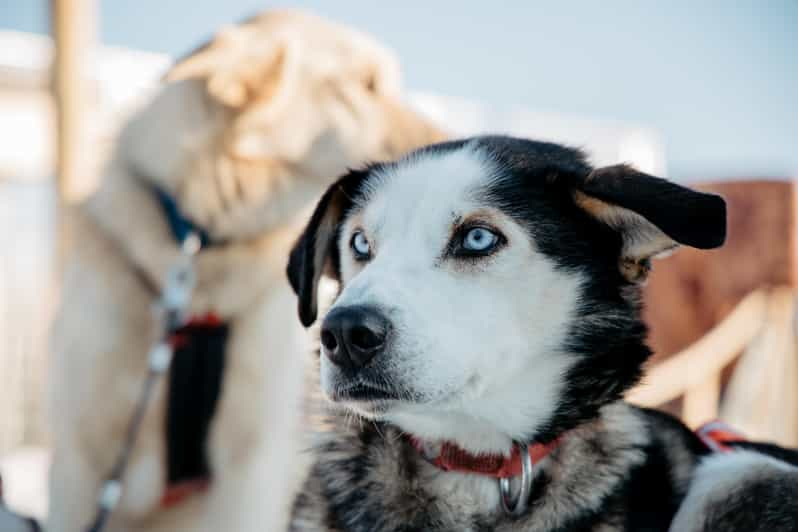
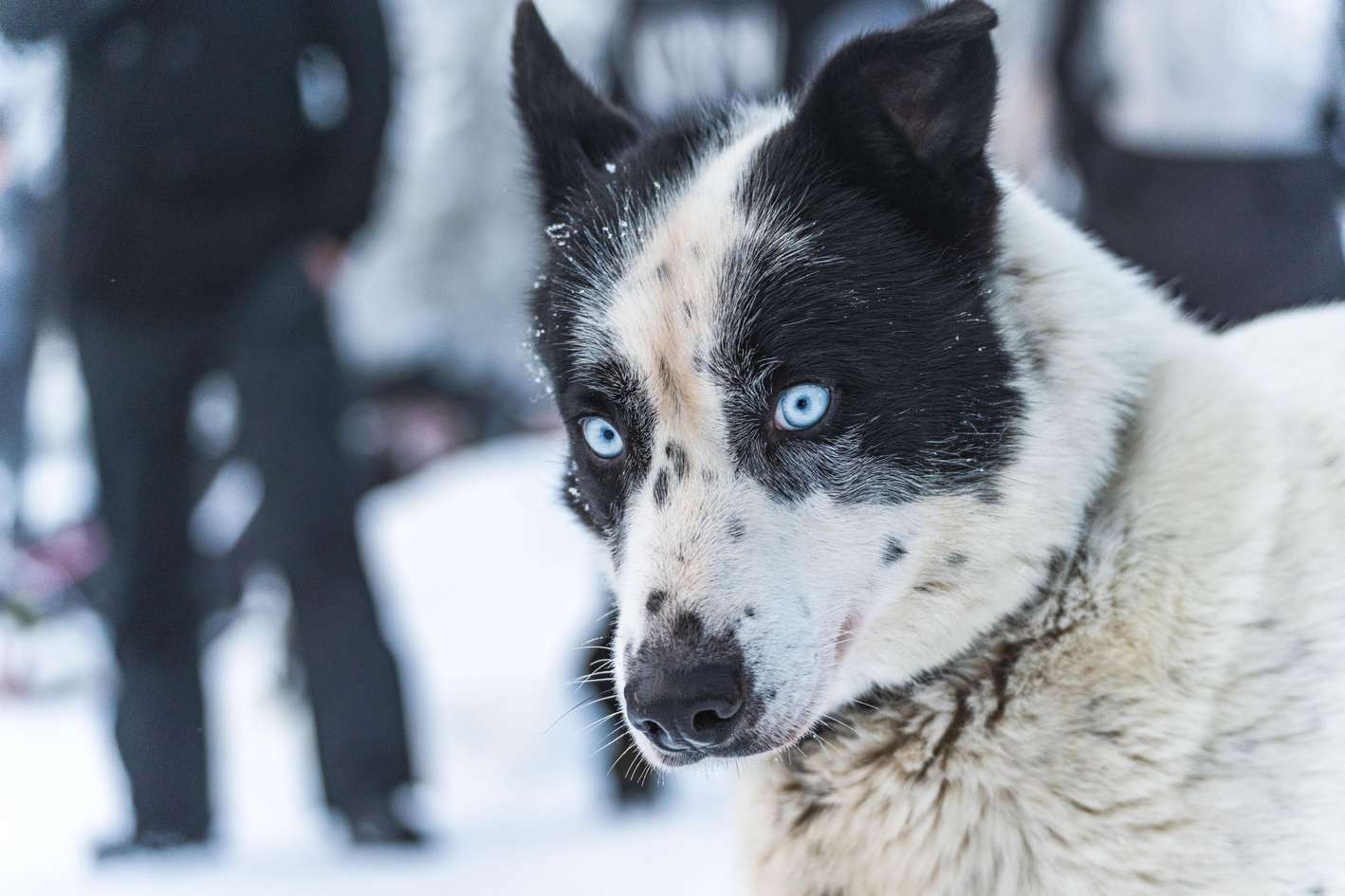
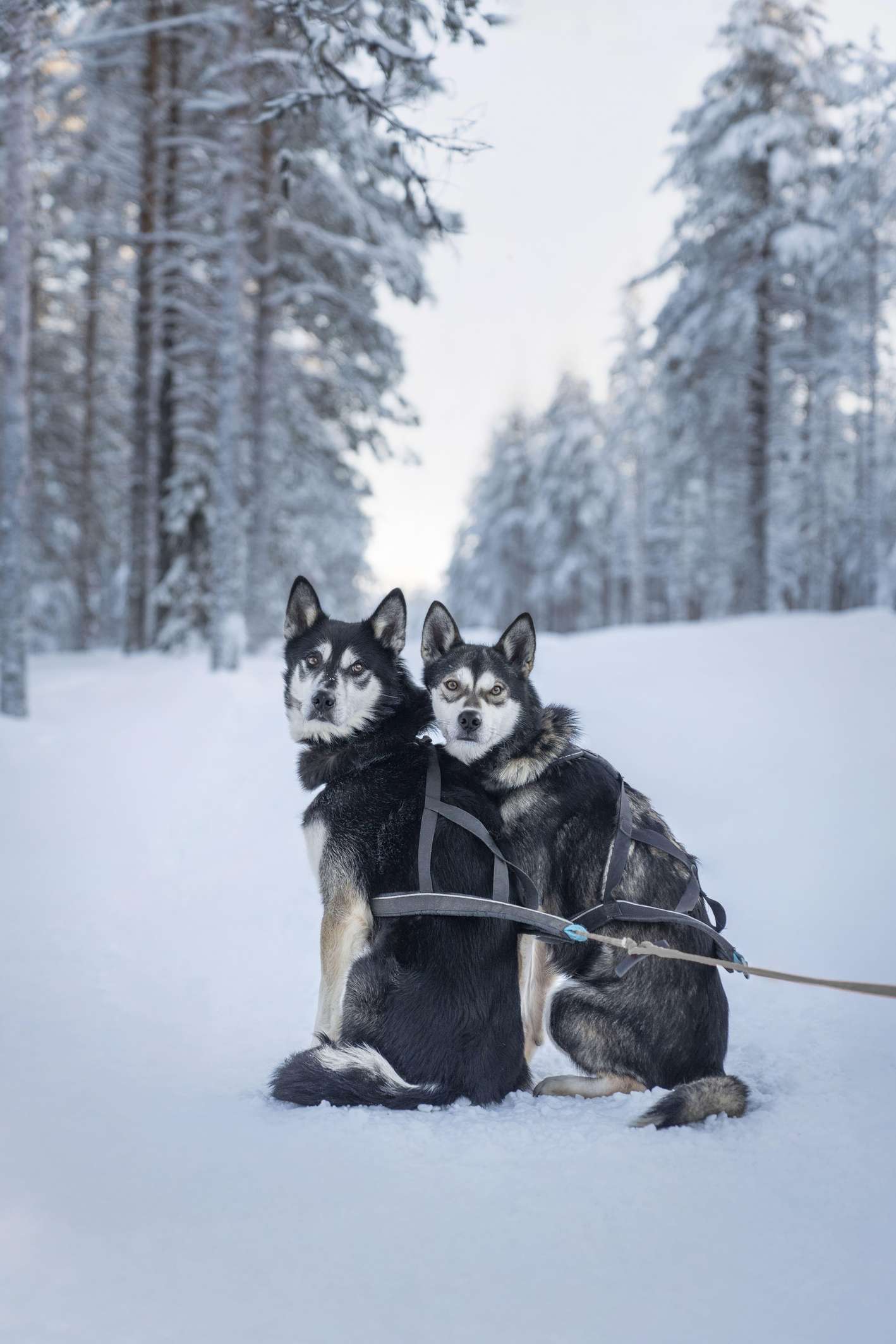
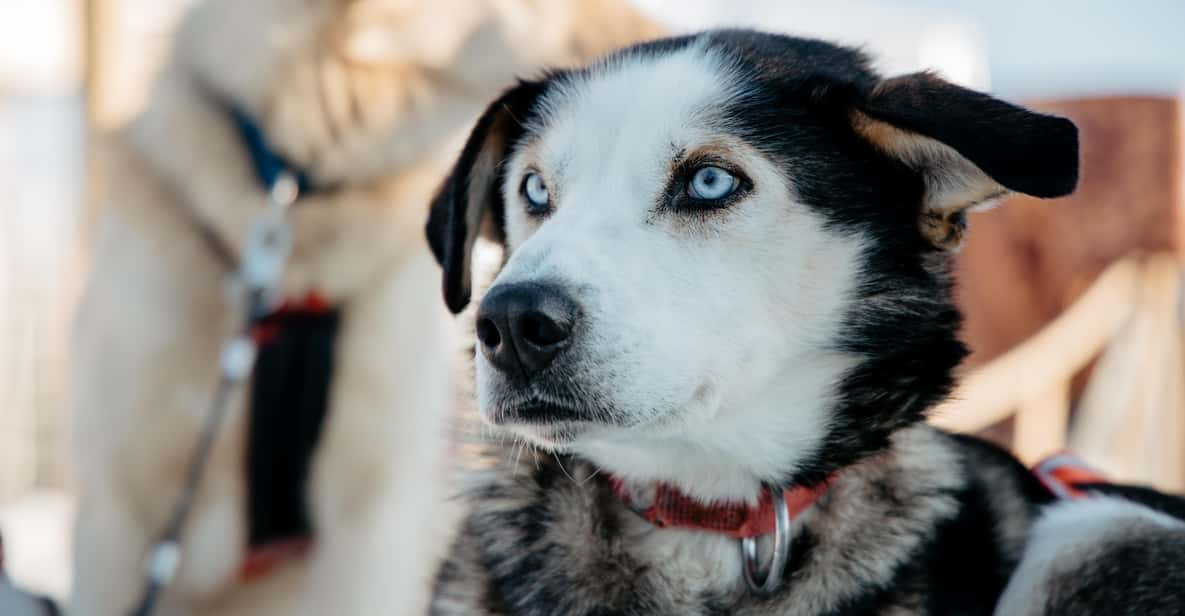
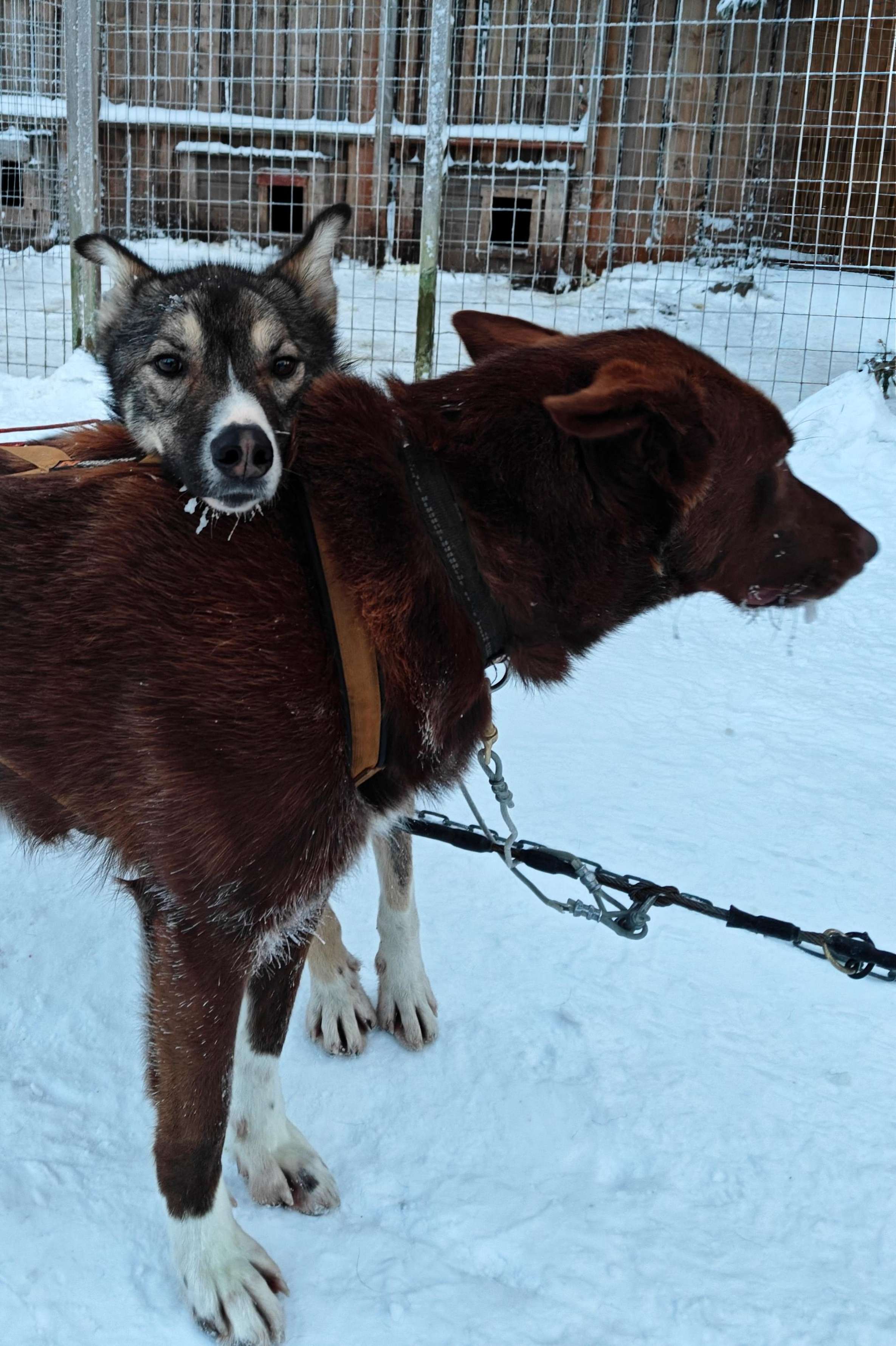
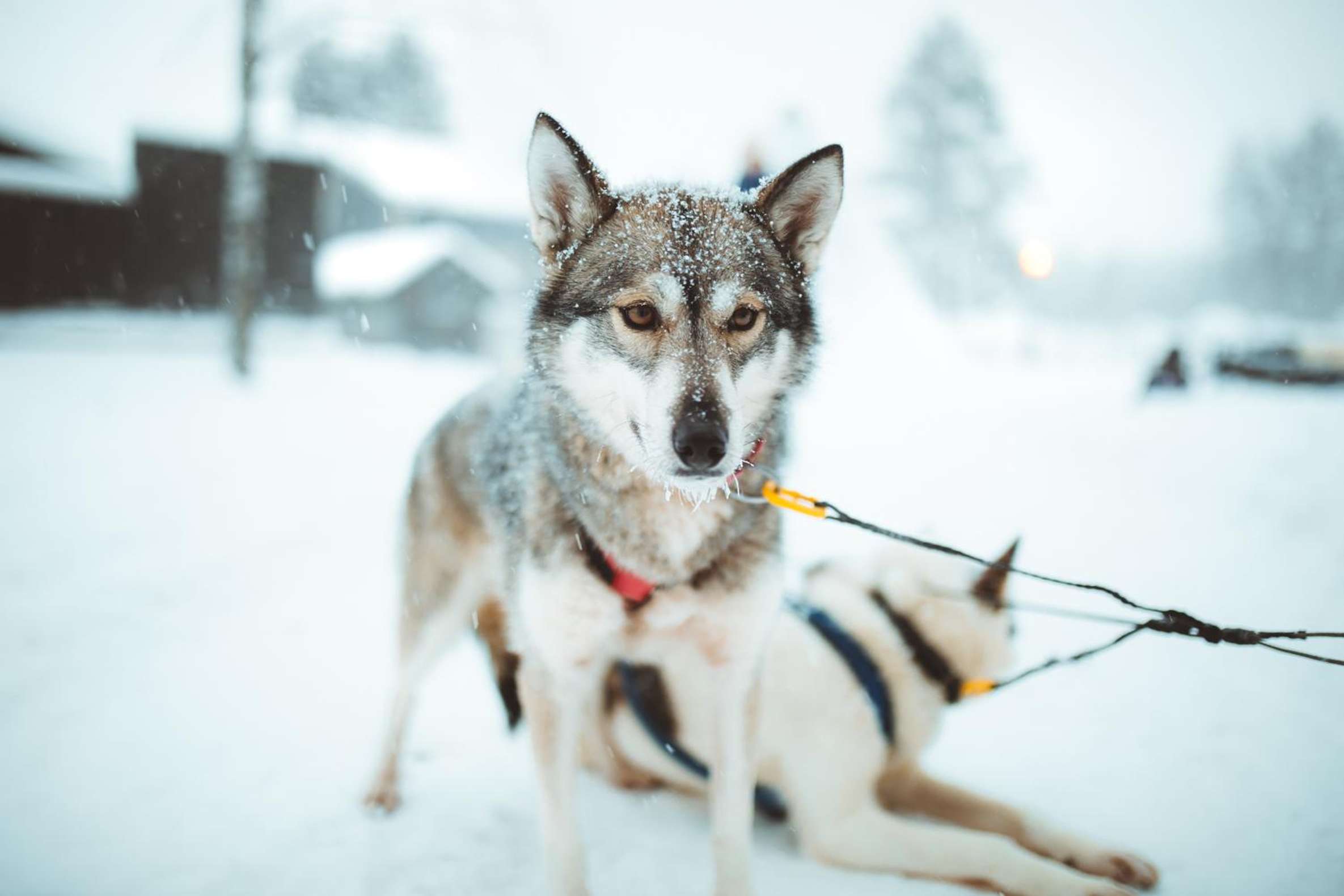
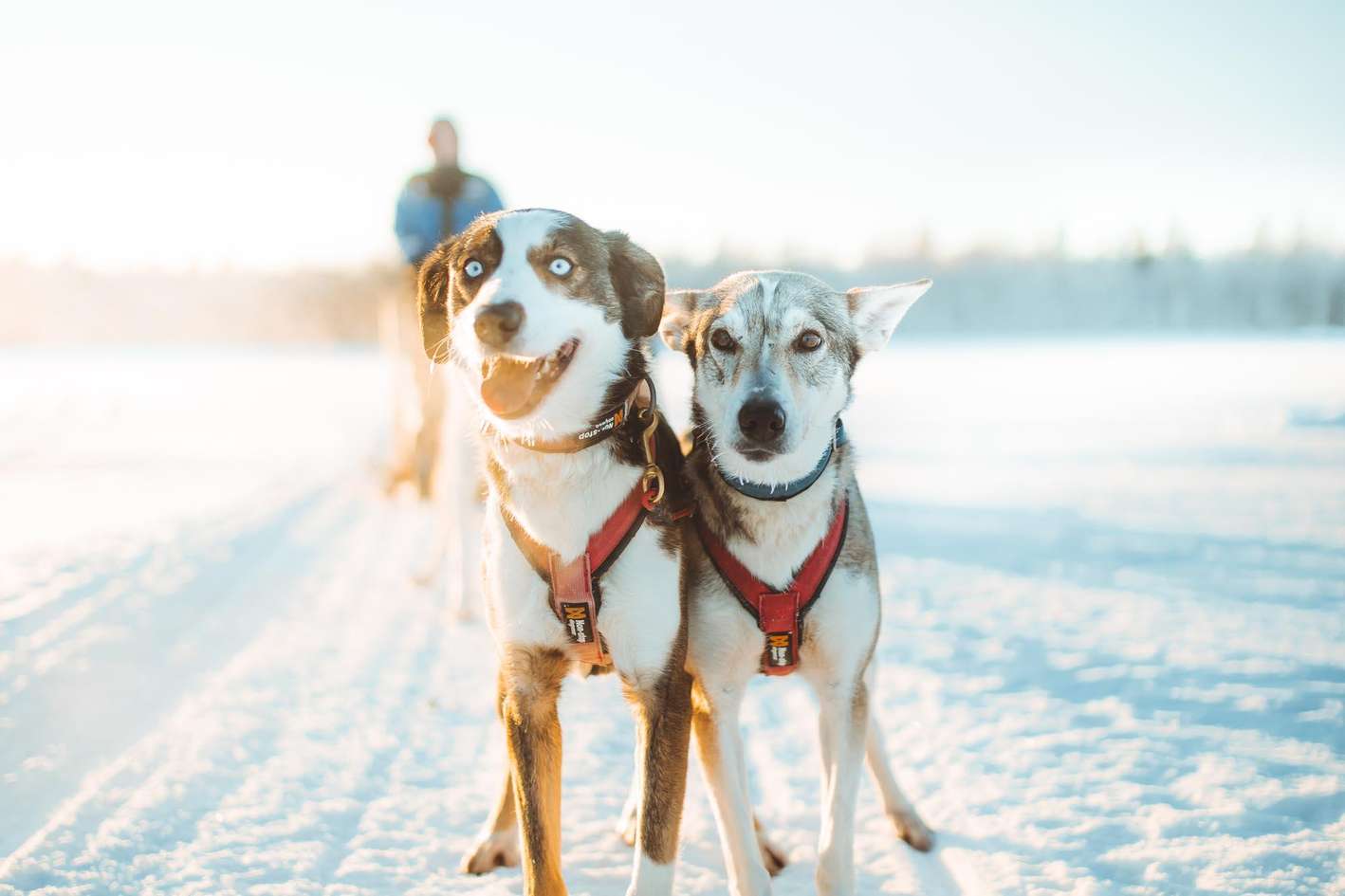
Most teams here are Alaskan huskies, crossbreeds bred for pulling speed
The pointy-eared show dog you pictured is the purebred Siberian; the racers are usually the crossbreds
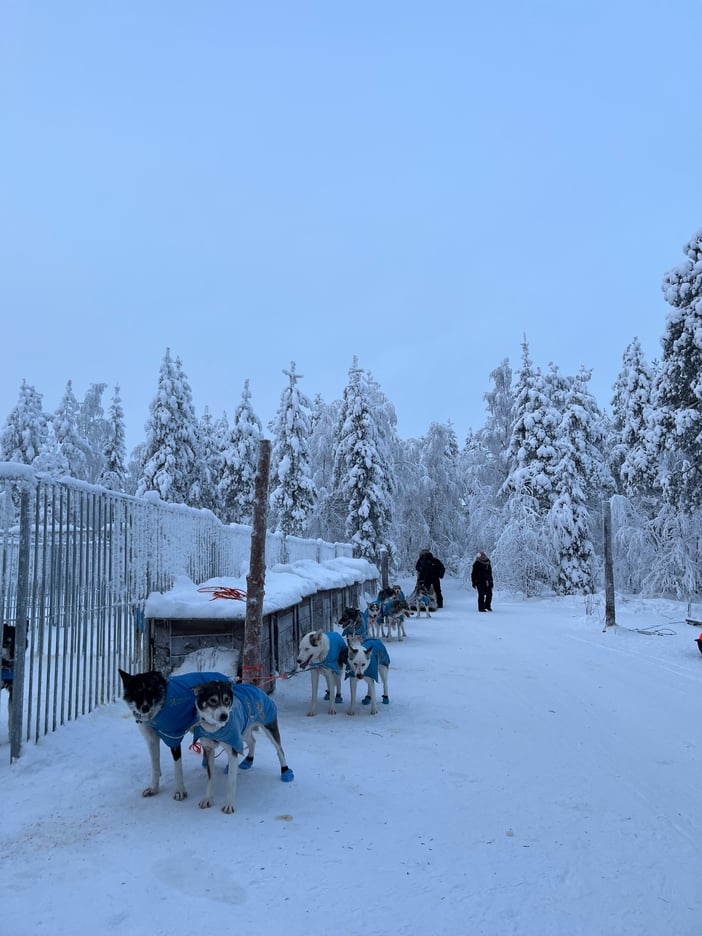
Healthy huskies choose to sleep outdoors, curled nose to tail in the snow
A dog curled in a snowdrift at minus 30 stays warm on its own coat, tail wrapped over its nose
Beyond paperwork, the signs are practical. Ethical kennels limit daily guest runs, keep veterinary care transparent and never ask a sick or unfit dog to work.
The Rovaniemi: Ethical Husky Safari & Sled Ride with Mushers is built on that model: a small family farm where your group is the only one visiting, guided by long-distance mushers who live with their dogs.
The question that sorts kennels fastest: what happens to a retired dog. The answer tells you more than any badge.
Getting to the kennels, transfers, taxis or your own car?
The kennels sit where the snow is deep and the buses are not.
Wilderness husky farms lie anywhere from 16 to 45 km outside Rovaniemi; the closest take about 20 minutes to reach, the farthest most of an hour, and that spread is where the 20 to 60 minute transfer range comes from. No public bus runs to any of them.
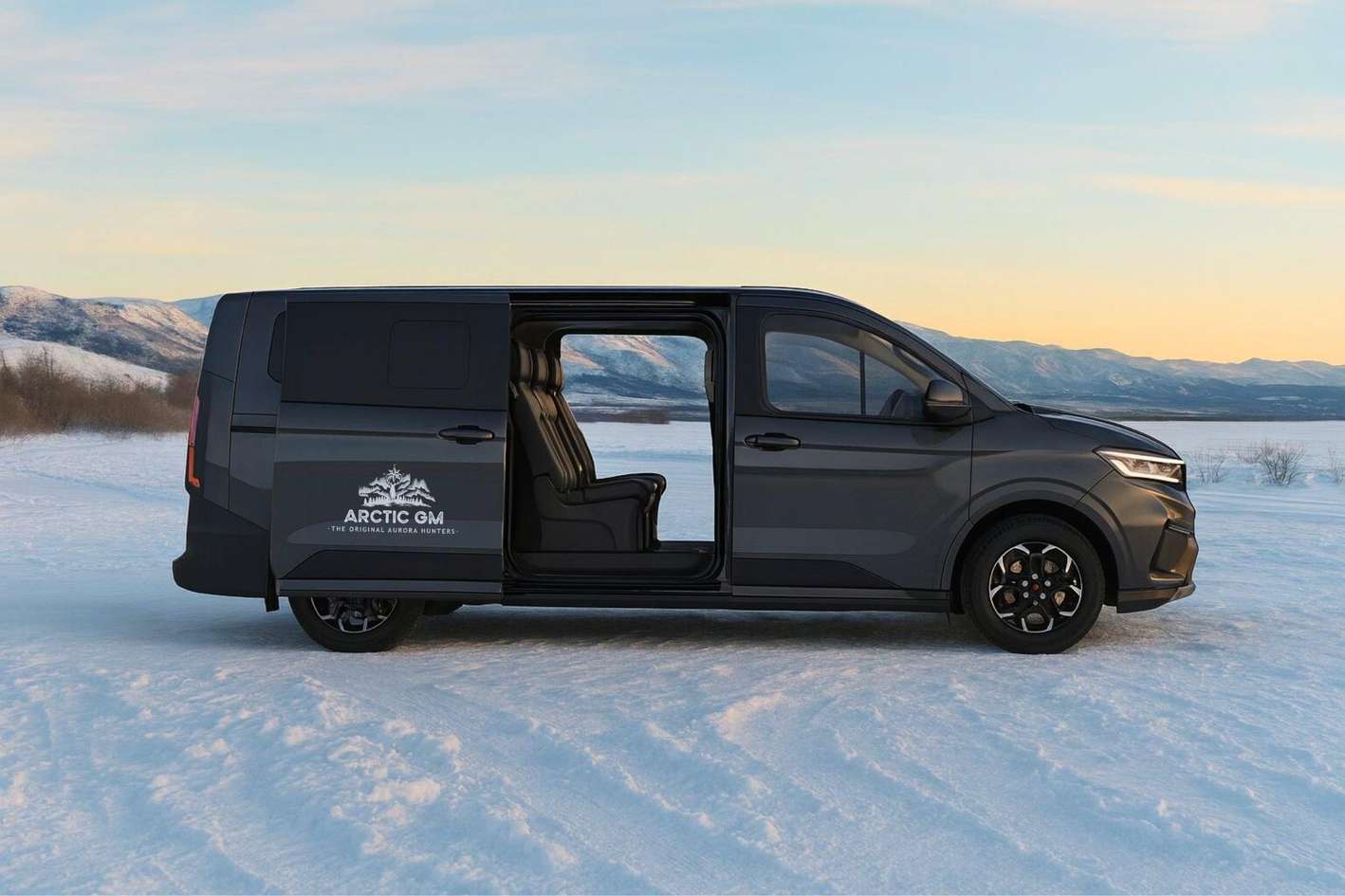
The operator's included transfer is the standard choice and the sensible one: safari buses and vans collect you from downtown hotels and from safari offices on Maakuntakatu and Korkalonkatu, then run you out to the kennel.
Many operators also fit your thermal clothing at a city-centre office before departure, so you start the tour from your hotel door with the gear already fitted.
A rental car is the option the operators themselves argue against. Icy forest roads get inexperienced winter drivers stuck, and self-driving earns no discount on the tour.
Taxis do run the route on order and are worth booking ahead in winter. But with a pickup already included and a clothing stop in town arranged for you, the tour's own van is the only transport you need to think about.
Tour for this
Rovaniemi: Husky Safari with Transfers & BBQ4.9★ (220) · 4 hours · Hotel pickup · Free cancellation
Sitting still is the coldest job on the sled. The driver works and stays warm; the passenger sits in moving air at minus 20, which is why operators hand out the heavy gear before every wilderness run: an insulated one-piece thermal overall, thick winter boots, bulky mittens, wool socks.
What they lend covers the outside. What you wear underneath decides the day, and it has to be yours: a merino wool or synthetic base layer, a fleece or wool mid layer, warm trousers. Cotton holds sweat, then holds the cold.
What to wear for sub-zero husky sled rides
Merino wool or synthetic base layerWicks sweat away from the skin without cooling down. Never wear cotton against your skin in sub-zero cold.
Fleece or wool mid layerTraps warm insulating air over your body while sitting motionless on the moving sled.
Windproof thermal overallBlocks sub-zero wind chill and snow. Provided on many safaris, but must be requested or brought for some rides.
One pair of thick wool socksKeeps feet insulated inside boots. Avoid wearing two tight pairs, which compresses air pockets and restricts circulation.
Insulated thermal bootsHeavy-soled Arctic boots stop cold transfer from the sled floor. Usually loaned by safari operators.
Liner gloves under insulated mittensMittens keep fingers warm together against wind chill, while thin liners protect skin when taking quick photos.
Neck gaiter and ear-covering hatProtects face, neck, and ears against biting airflow while sitting still in open Lapland forest trails.
Two small rules do a lot of work. One pair of thick wool socks inside the loaned boots beats two tight pairs, which squeeze out the warm air and cut circulation. Thin liner gloves under the mittens let you take a photo without bare fingers.
The loop rides at Santa Claus Village are the exception on gear, with no thermal suits included, so dress as if nothing is loaned.
Batteries are the last item. Below minus 10 a phone keeps only about half its normal runtime, and an exposed device can die within minutes. Keep it in an inside chest pocket and take it out briefly for shots.
Tour for this
Rovaniemi: Drive Your Own Husky Team (5-8 km)4.4★ (460) · 5 hours · Hotel pickup · Free cancellation
A 3-hour tour is not 3 hours of sledding, and once you see the shape of the day the arithmetic stops bothering anyone. The clock covers the whole excursion.
For most three-hour safaris the kennel sits 20 to 35 km out, the middle of the wilderness spread, so the van takes 20 to 45 minutes each way; at the farm you spend 15 to 20 minutes suiting up, meeting the pack and hearing the briefing before anyone touches a runner.
Your three hours, door to door
1
Hotel pickup
The van collects you in central Rovaniemi
Dress in your base layer before you leave the room
2
20 to 45 minutes
Transfer out to the kennel
Sleds and teams are readied while you ride
3
On arrival
Overalls, boots and the safety briefing
15 to 20 minutes, foot brake included
4
The run
30 to 50 minutes on the trail
Most two-person sleds swap driver halfway
5
Back at the fire
Hot drinks, cookies and sausages in a kota
Kennel time with the dogs, then the drive home
One rule saves real discomfort: use the toilet before departure. Wilderness trails have no facilities of any kind, and the loop gives you no exit point once the brake releases.
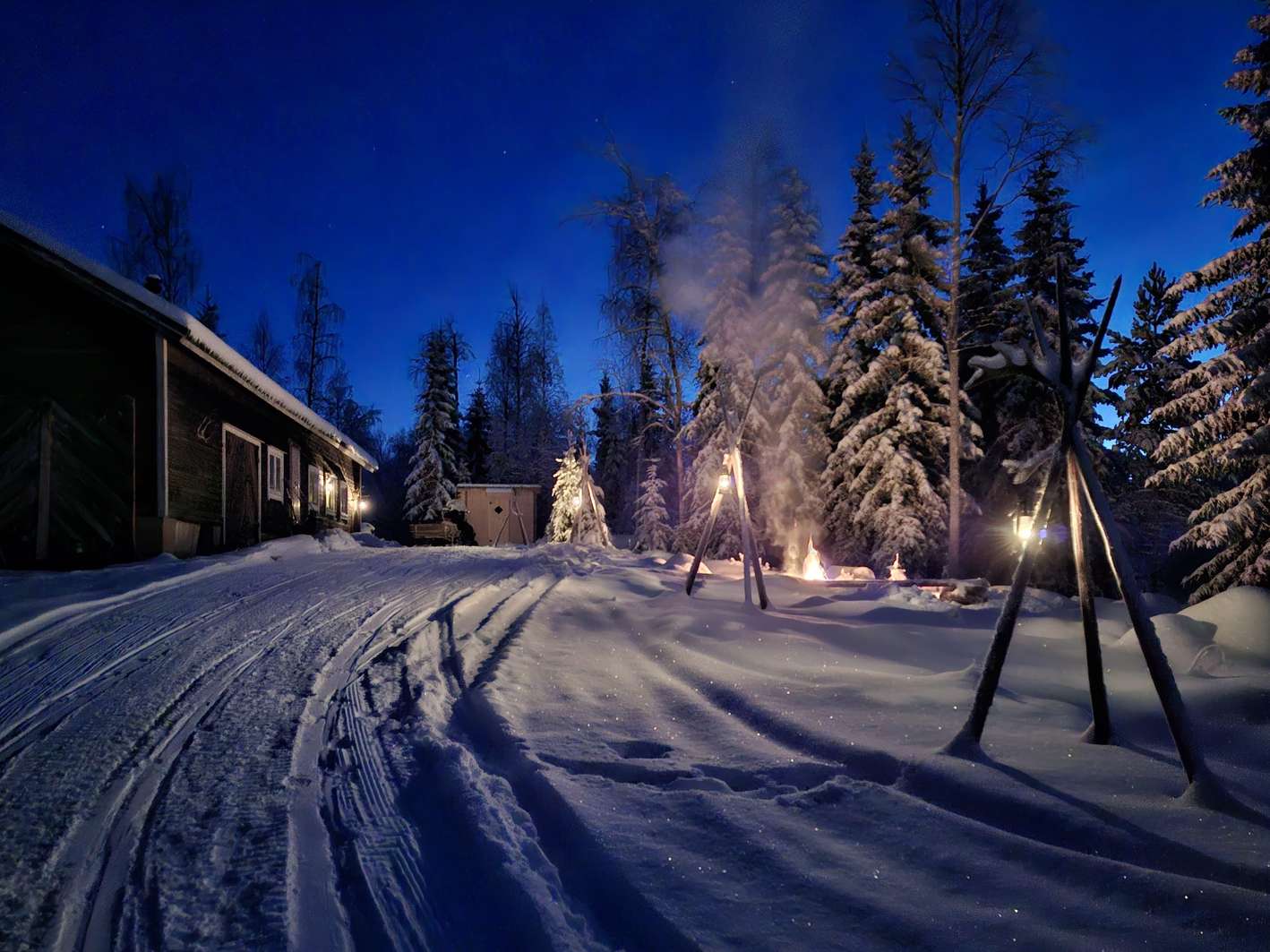
The kota at the end is a traditional dwelling of the Sámi people, and the stop is unhurried: hot drinks, sweet snacks, grilled sausages over the fire, then about 15 minutes with the huskies before the van turns back.
Tour for this
Rovaniemi: Husky Experience and Sled Ride with Pro Photos4.8★ (139) · 2 hours · Hotel pickup · Free cancellation
What if the weather turns or the lights don't show?
Arctic operators run a weather rulebook, and it protects the dogs before it protects your itinerary. With too little snow, tours move onto wheeled carts, use stored snow on early-season tracks or shorten the trail; if the changes are major, you get an alternative program with a partial refund or a full cancellation refund.
Cold works on fixed thresholds. Near minus 28 to minus 30, runs are shortened, split into sections or switched to guide-driven sleds.
At minus 35 or colder, and minus 30 on exposed trails, the tour is called off entirely. Those cutoffs sit far below a normal January night, which is why a winter booking here almost always runs.
If this happens
What happens then
If the weather turns
what the tours' own terms do about it
Heavy snow changes the plan
Carts, stored snow or a shortened trail, with a partial refund or full cancellation if the program changes badly
Deep cold near minus 30
Shorter runs or a switch to guide-driven sleds
Colder than minus 35
The tour is cancelled outright
Overcast aurora night
Cancelled or rescheduled when skies are clearly hopeless, with refund protection if no lights appear
Change of plans
Most safaris refund in full up to 24 hours before departure
The exits are marked before you pay, which is exactly what you want from a tour that depends on weather and animals.
A morning safari leaves you the whole afternoon, and the obvious pairing sits 9 km from the city centre: Santa Claus Village, about 14 minutes by car, where the Arctic Circle line, the Main Post Office, reindeer sleigh rides and Snowman World's ice slides and ice bar all sit within a few minutes' walk of each other.
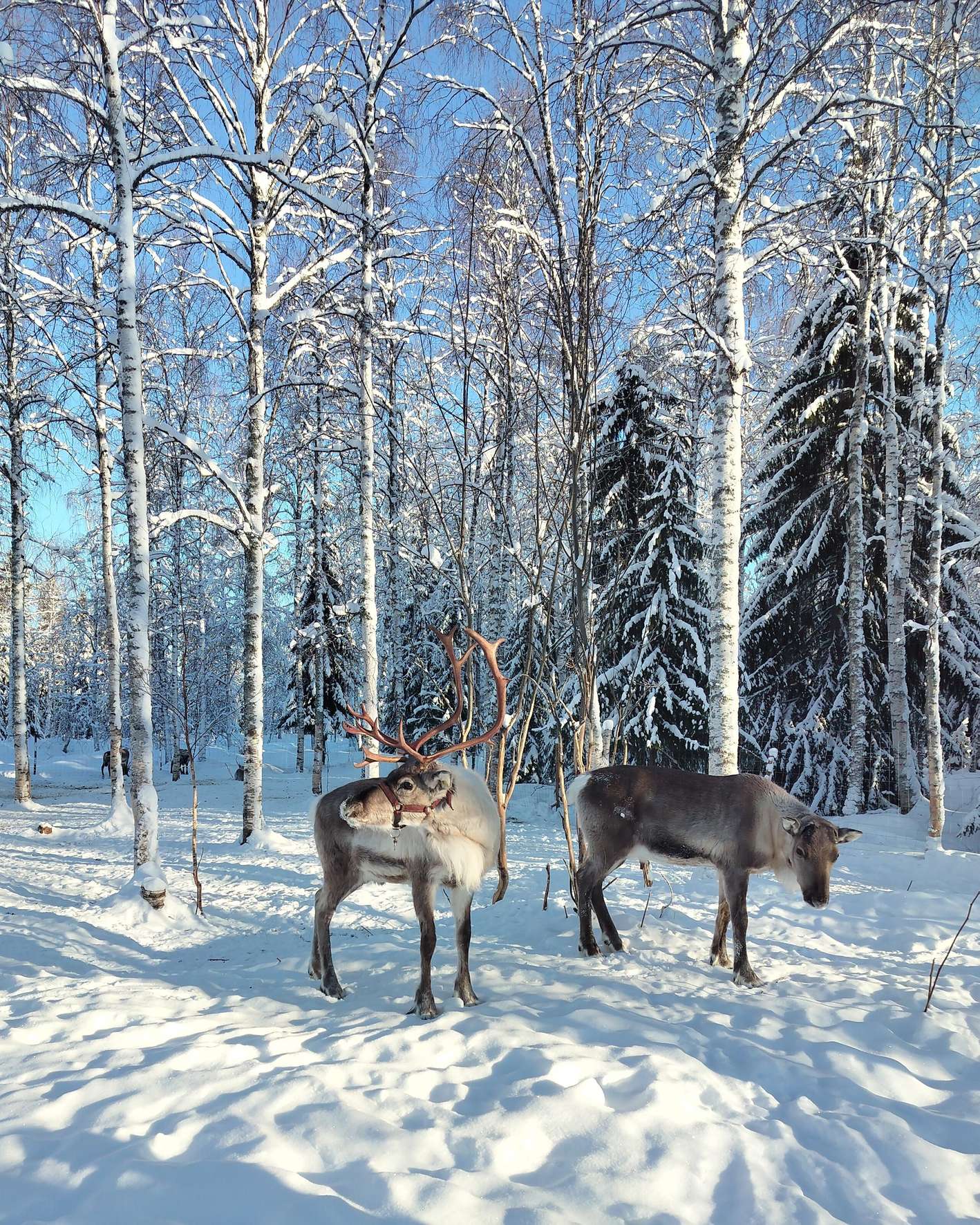
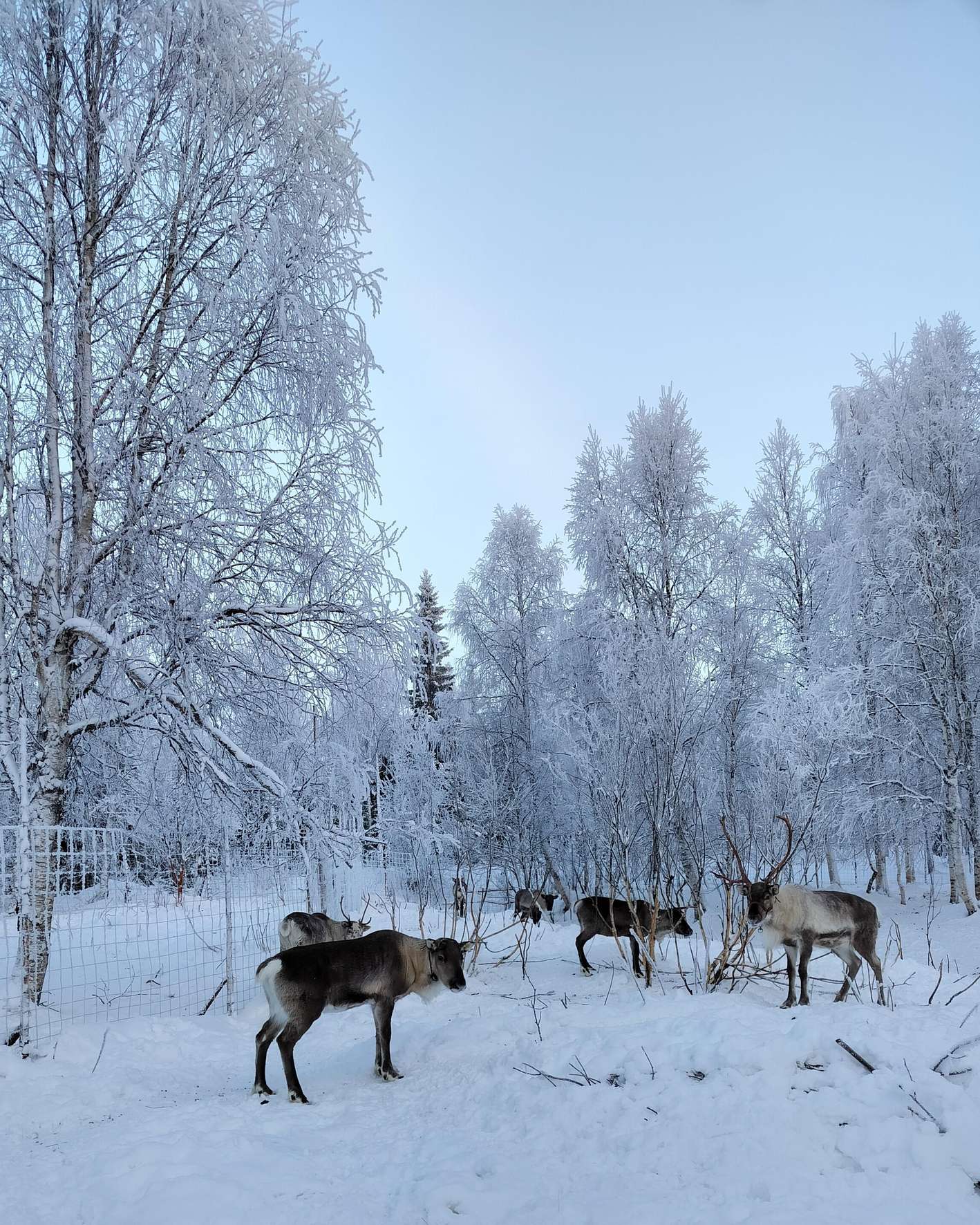
Local reindeer farms fill the other easy half-day. A morning 5 km run puts you on the sled for only about 10 to 15 minutes, so both animals fit into one day without rushing either kennel or farm.
Dogs in the morning, village after lunch is the order most winter itineraries settle on, because sled departures run through the brightest hours and the village is as good at 3 pm as at noon.
Combination tours pack the same idea into one booking, trading ride length for variety, with hand-feeding the reindeer and warm soup as the usual reward at the farm.
Rovaniemi is one of the easiest places in Finland to drive a dog team, and the huskies argue the case themselves at the start line.
Pick your format honestly: ride with a musher if the group includes small children or a pregnancy, take the handlebar if you can push a sled uphill. Book December and February midday runs months out; in other weeks, a few weeks ahead is realistic.
Go ifYou can stand on the runners for 25 minutes and push uphill when the trail climbsYour dates fall between January and March, when snow cover is certainThe dogs matter to you as much as the ride; kennel time is built into the best safaris
Skip ifYou are pregnant or have a back injury, which every operator lists as unsuitableYour youngest is under 4 and your heart is set on a wilderness kennel, which mostly takes children from 4 upYou expect a long quiet trail from the village loop, which runs 8 to 15 minutes
Short answers to what travelers ask before booking a husky safari in Rovaniemi: formats, ages, cold, the dogs and booking timing.
Rovaniemi2026
The team howls at the start line, then goes silent and you hear only paws on snow. Pick a midday slot so the forest shows itself.
Do I drive the husky sled myself or ride as a passenger?
On most wilderness safaris, two guests share a sled and swap between driving and riding at the halfway point, so each person gets a turn at the handlebar. At Santa Claus Village and on passenger sleigh tours, a musher drives while you sit. Guides brief you before departure, and no prior experience is needed.
How long is the actual sled ride on a husky safari?
A 5 km trail takes about 15 to 30 minutes of sledding, and a 10 km trail runs 30 to 50 minutes depending on snow and the dogs' pace.
A tour listed at 3 hours covers the whole outing: transfers out to the kennel, gearing up, a safety briefing, the ride and kennel time with hot drinks afterwards.
Is husky sledding possible if I'm pregnant or have a bad back?
Rides are not recommended during pregnancy because of the vibrations, bumps and sudden movements on the trail, and many tours list pregnant women as unsuitable. Back problems get the same caution. If either applies to you, ask the operator before booking, since a few formats involve less jarring than driving your own sled.
What should I wear, and what does the tour provide?
Most operators fit you with an insulated thermal overall, thick winter boots, mittens and wool socks before departure. Bring your own layers underneath: a merino or synthetic base layer, a fleece or wool mid-layer, and warm trousers. Skip cotton, because it stays damp in the cold.
Can young children join a husky safari in Rovaniemi?
It depends on the tour. Many wilderness safaris exclude children under 4, though some accept babies from 1 year old. Kids usually ride in the sled basket while the adults drive, and some sleds carry up to 2 adults with 1 to 3 children within a total weight limit of 250 kg.
Can I just turn up and book a short ride at Santa Claus Village?
Yes. Short taster rides at Santa Claus Village sell tickets on arrival, first come, first served, and the husky park there keeps about half of its daily capacity for walk-in visitors. Spots are not guaranteed, so a reservation is the surer route on a busy day.
How far in advance should I book?
Earlier than you might think. For the Christmas period, prime departures often fill up around 6 months ahead, and February school holiday slots sell out 4 to 5 weeks to 2 or 3 months in advance. Walk-in prices rarely drop during peak winter, so booking ahead also protects your budget.
How do I get to the husky kennels outside town?
Most tours include a transfer that collects you from central Rovaniemi hotels, and the drive out takes roughly 30 to 60 minutes. Public buses do not serve the rural kennels, and rental cars are a poor choice in winter on icy gravel roads. There is no discount for driving yourself.
How do I know the dogs are well cared for?
Look for small signs: responsible kennels limit daily guest runs, keep written welfare standards, dog records and veterinary care, and never make a sick dog work.
Some tours carry the Green Activities ecolabel, a third-party verified certification with specific sled dog welfare criteria. On the trail, eager howls at the start line tell you a team wants to run.
What happens if snow is thin or the cold turns extreme?
Operators adapt: rides can move onto wheeled carts, use stored snow, or run a shorter trail, and if the changes are big you get an alternative program with a partial refund or the option to cancel for a full refund. In severe cold, tours are shortened below about -28°C and cancelled once temperatures reach -35°C.
How fit do I need to be to drive my own sled?
You need balance, a firm grip and the leg strength to stand on the runners for 15 to 25 minutes. On uphill stretches you may step off and push the sled to help the dogs. If the guide sees you struggling to control it safely, they can move you to the passenger seat.
Do the huskies bark the whole ride?
No, quite the opposite. The pack howls and leaps before departure because the dogs are desperate to run, then falls almost completely silent once the sled starts moving. On the trail you hear paws in the snow and the runners, and nothing else.
Be the musher on a 6 km self-drive husky run
Drive your own husky team through Lapland's snowy trails, with thermal gear, transfers and a hot drink included, and cancel free up to 24 hours before you go.


 Your best match