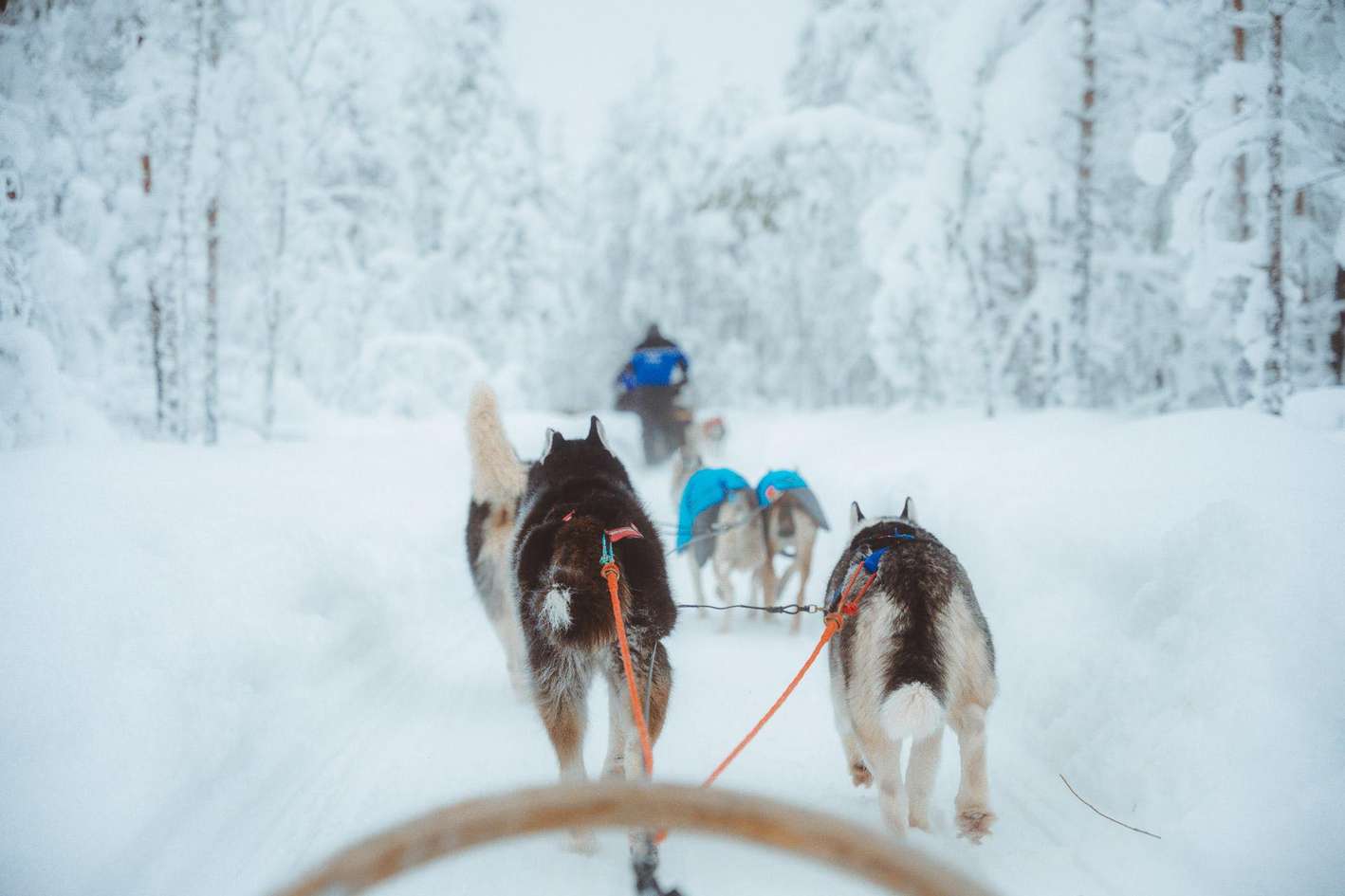
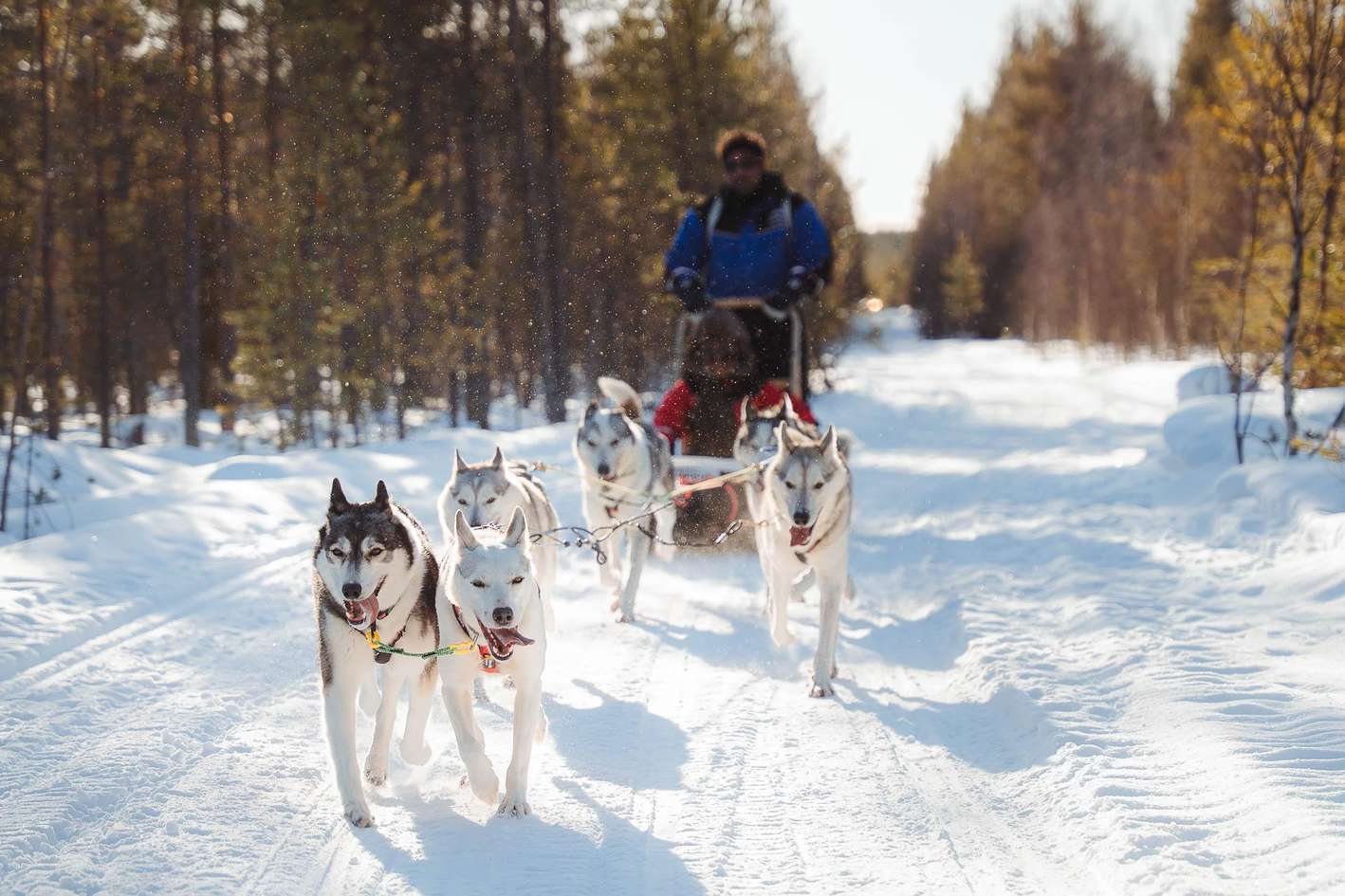
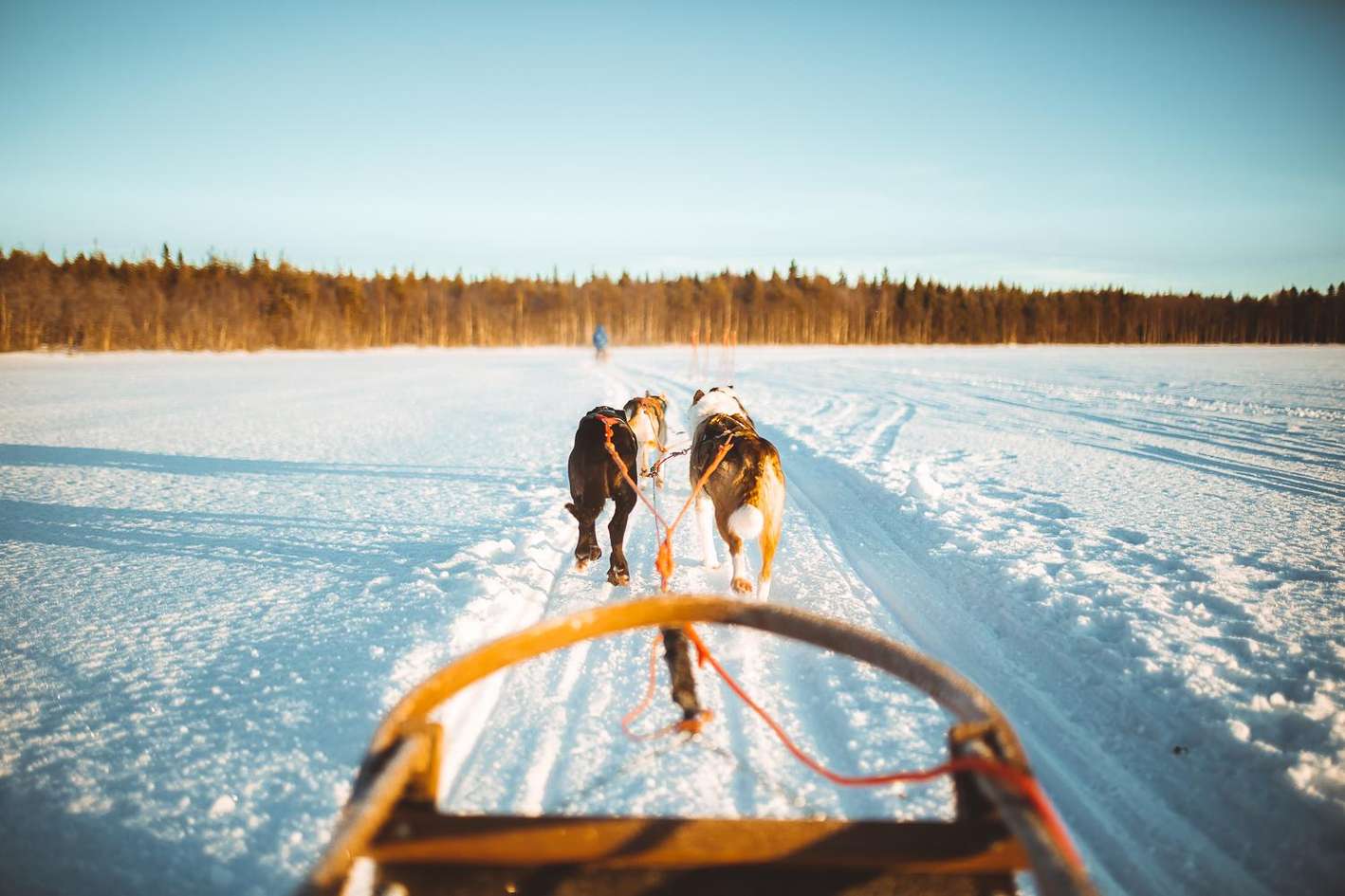
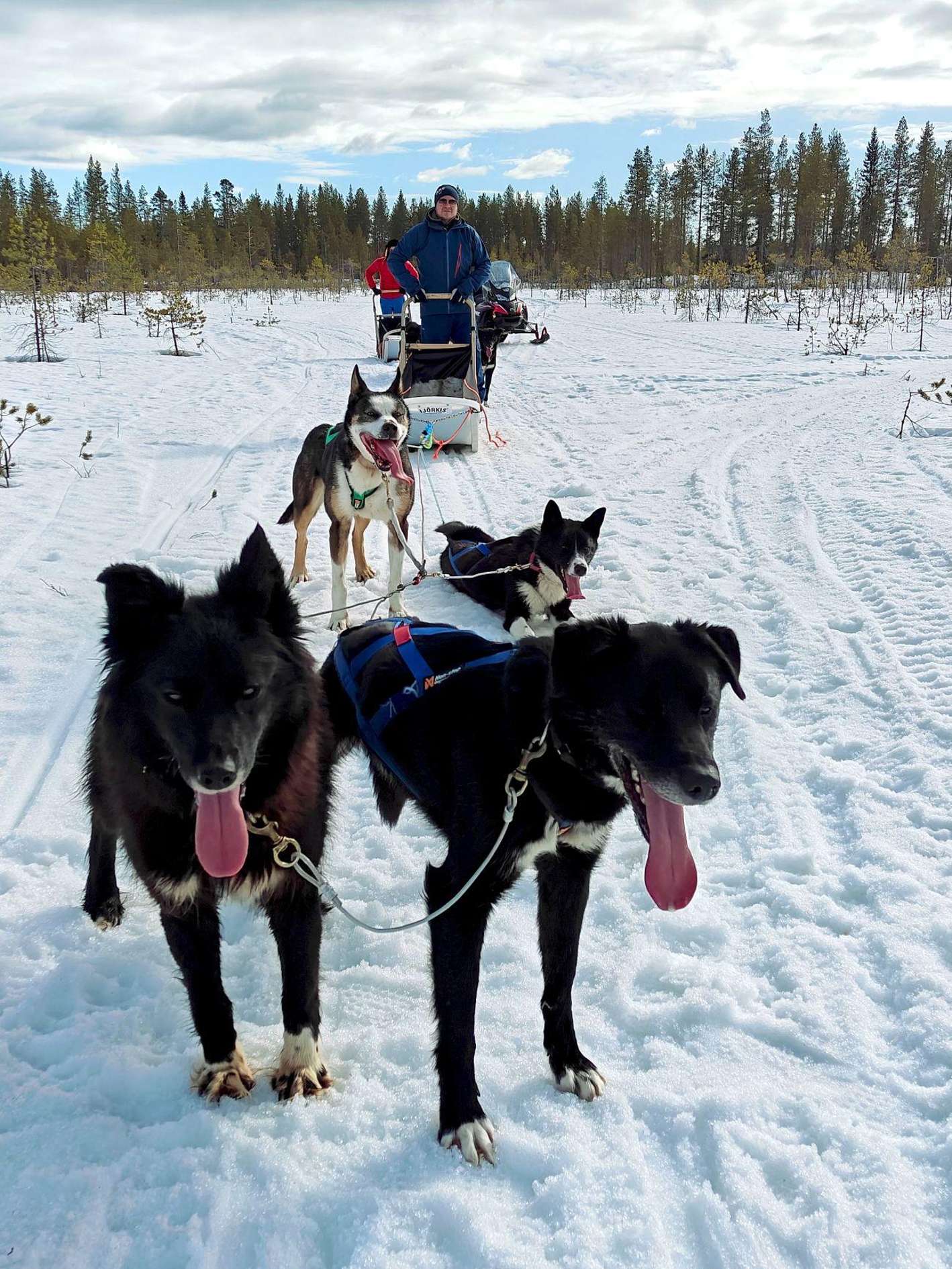
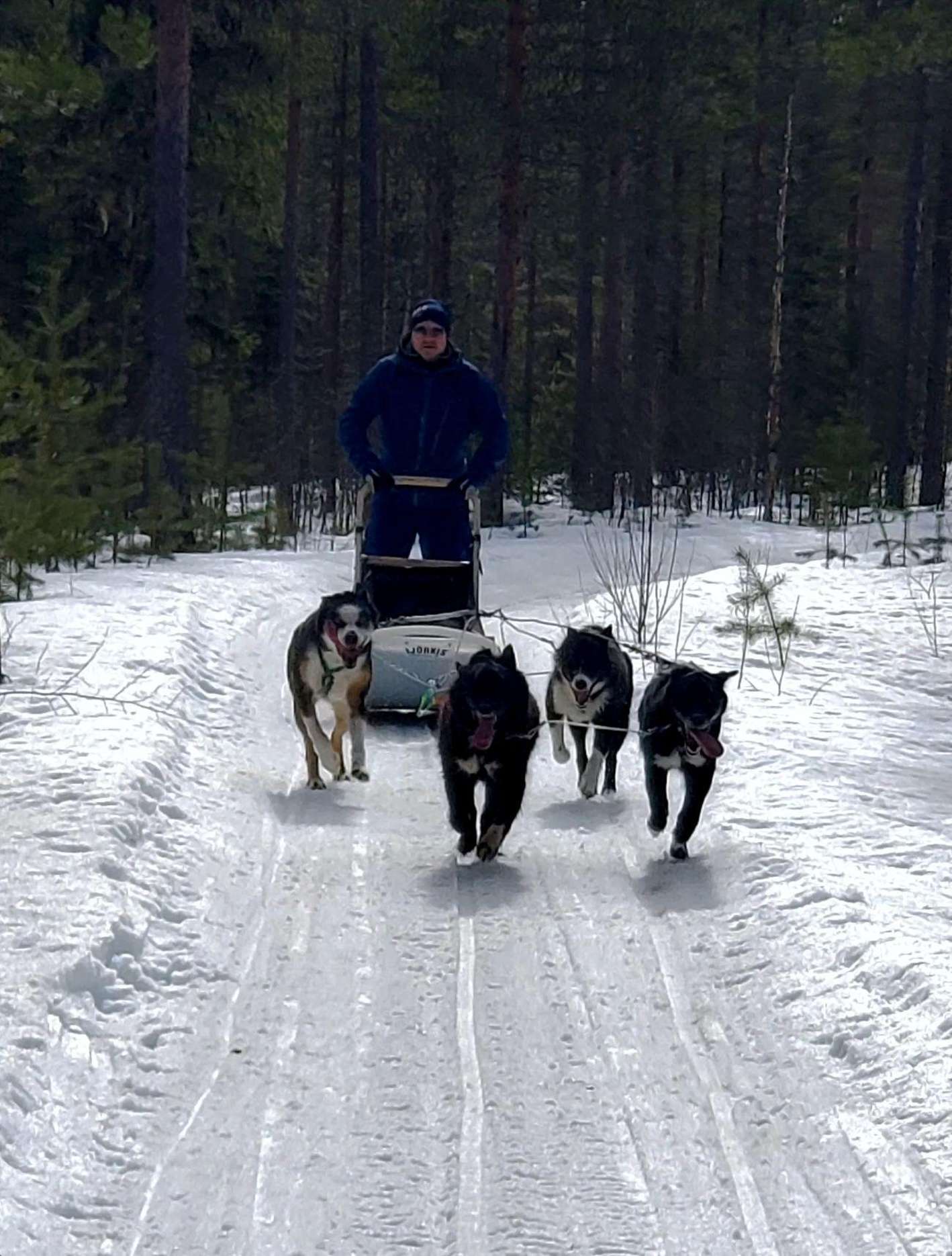
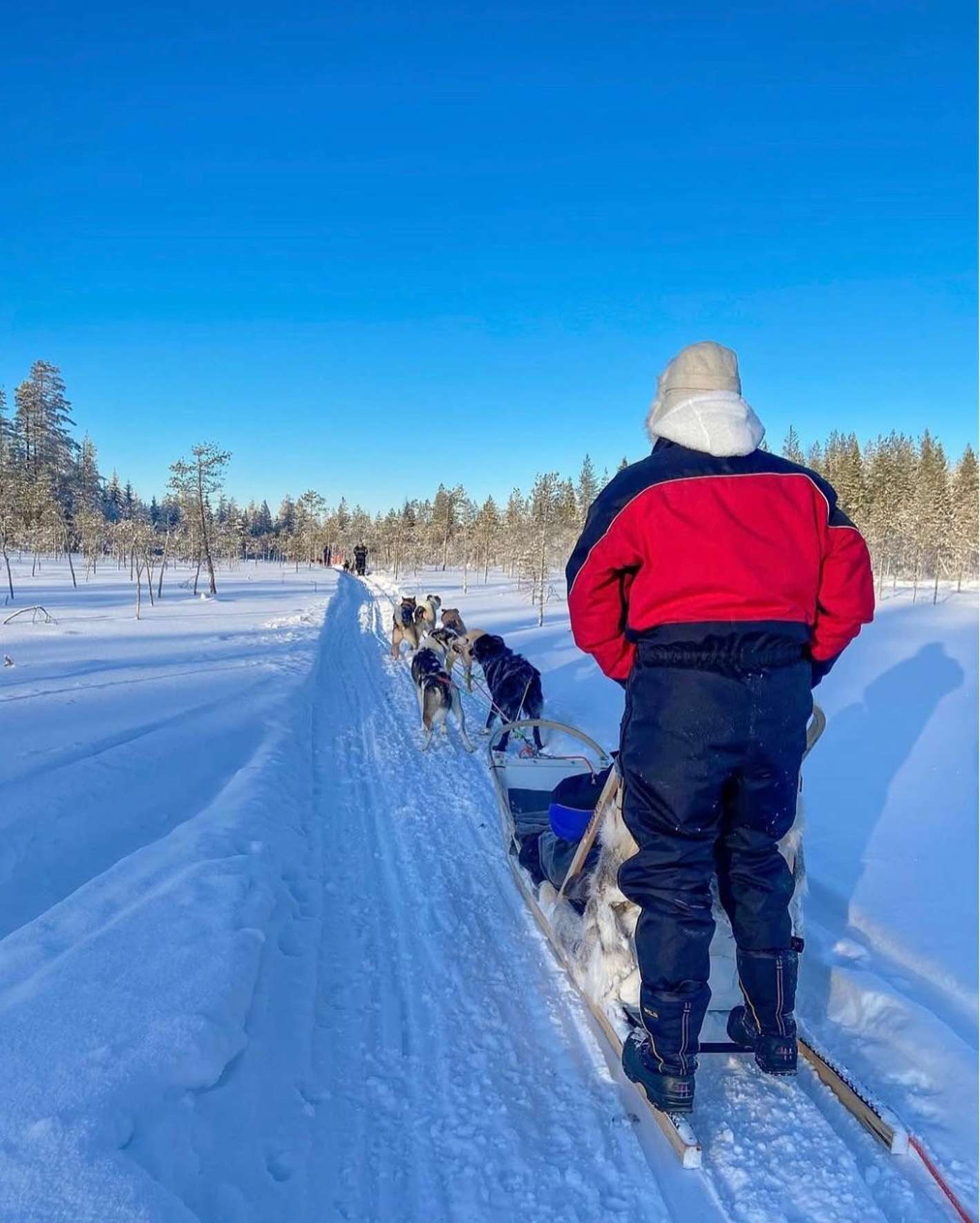
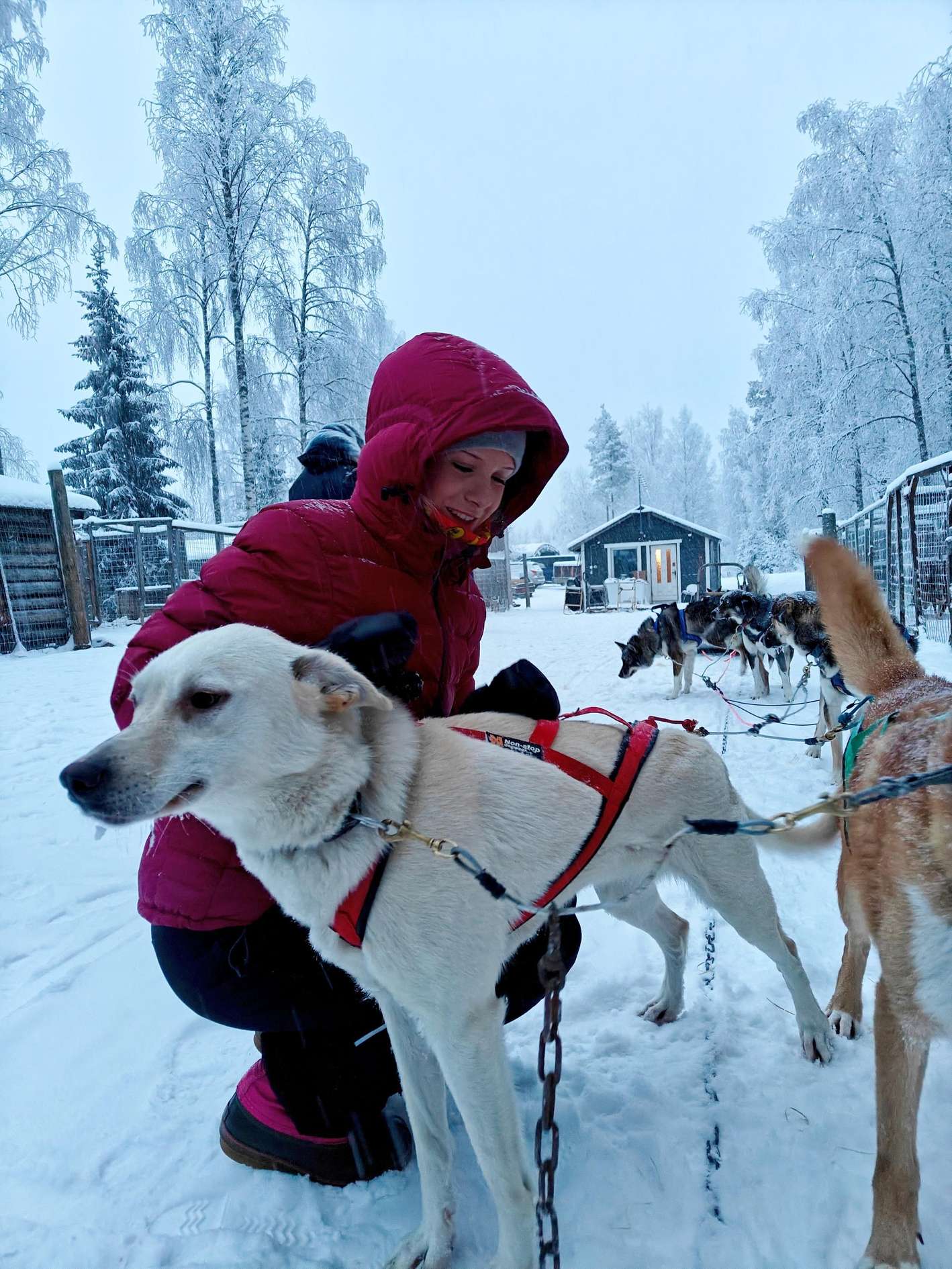
3,903 mushers drove their own team into the forest
Self Drive Husky Sledding in Rovaniemi - Husky Mushing Tours
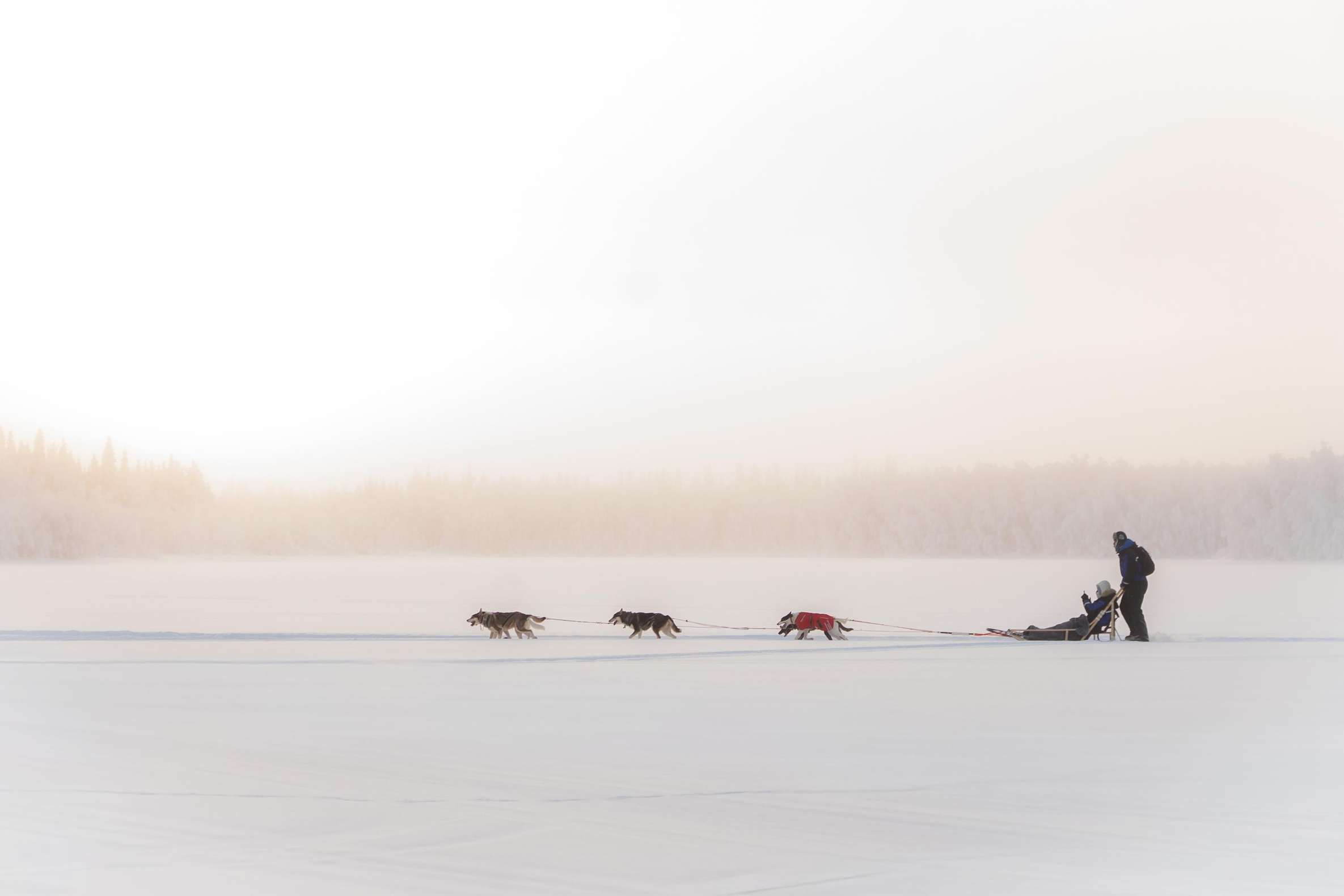
Take the handlebar and drive your own husky team through Lappish forest. Stand on the runners, learn the foot brake in a briefing before you start, and swap between driving and riding halfway. No experience needed - guides teach you, thermal gear keeps you warm, and you book in under two minutes.
Self drive husky sledding in Rovaniemi - which tour to pick
Every husky safari here puts you on the runners with your own team. The real choice is distance and setting: a 5 or 6 km run close to town for a first taste of mushing, or a longer wilderness trail that fills half a day and leaves the roads far behind.
DriversSome tour operators require you to be at least 18 and to have the fitness and balance to control a sled on your own.
ChildrenOn self-drive tours, children under 16 cannot take the handlebar and ride in a sled driven by a parent.
HealthIf you are pregnant or have a back problem, pick a ride where an experienced musher drives and you sit inside the sled.
Cold snapTours get shortened or switched to guide-driven sleds around -28°C to -30°C, and cancelled at -35°C or colder.
Thin snowEarly-season tours can run on wheeled carts or shorter trails; big changes to distance come with a partial refund or a full cancellation option.
BookingPrime departures around Christmas and the February school holidays can sell out months ahead, so reserve early.
TransfersUse the operator's included pickup; the wilderness kennels sit 20 to 60 km out on snowy roads that are difficult by rental car.
ClothingMost tours supply thermal overalls, boots and mittens, but wear your own warm layers underneath and bring a hat and gloves.
Falling offIf you slip from the runners, let go of the handlebar; the team either stops on its own or a guide intercepts it along the trail.
Self drive sledding - which tour fits you?
Answer a few quick questions and this finder lines up the tour that fits you.
importantSelf drive husky sledding has age, weight and health limits: most tours require drivers to be adults, and pregnant travelers or people with back problems are advised not to take part.
Read each tour's driving rules before booking, put anyone under the driving age in the passenger seat with a parent or guide driving, and pick a guided sleigh ride if the physical demands do not suit you.
Sledding your own way - short loop or a longer self drive trail
Shortest and cheapest
1.5 hours·English
4.6(1,037)
Rovaniemi: Daytime Husky Safari - 5 km self-driven
A 1.5-hour outing with a 5 km run of 20 to 30 minutes, the quickest way in
What a self drive sledding tour includes in the price
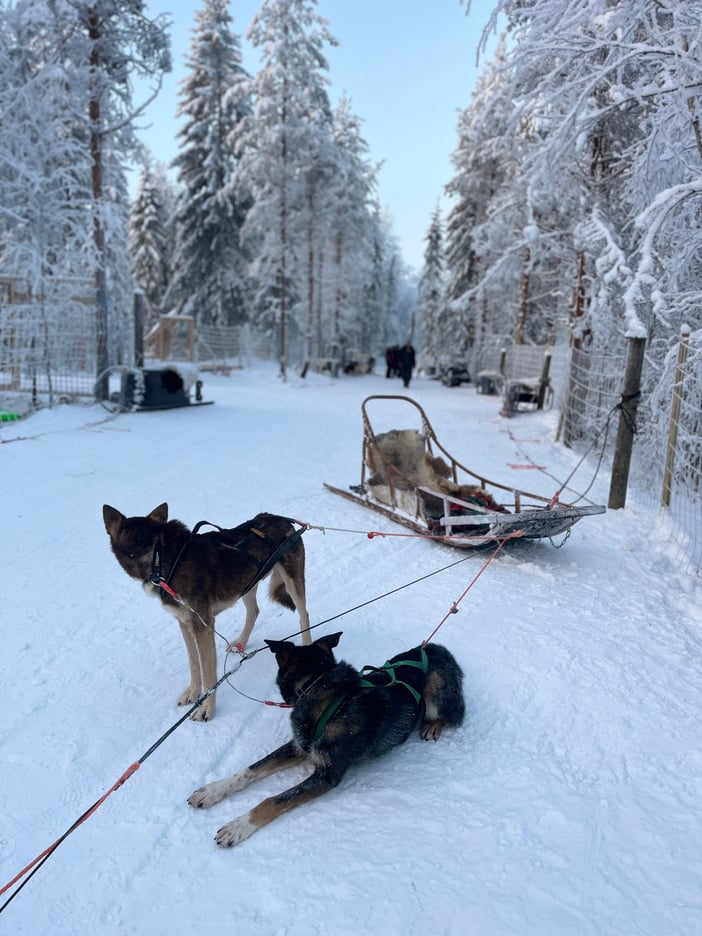
teams here are pure siberian huskies
3 stopsabout 2 h10 places
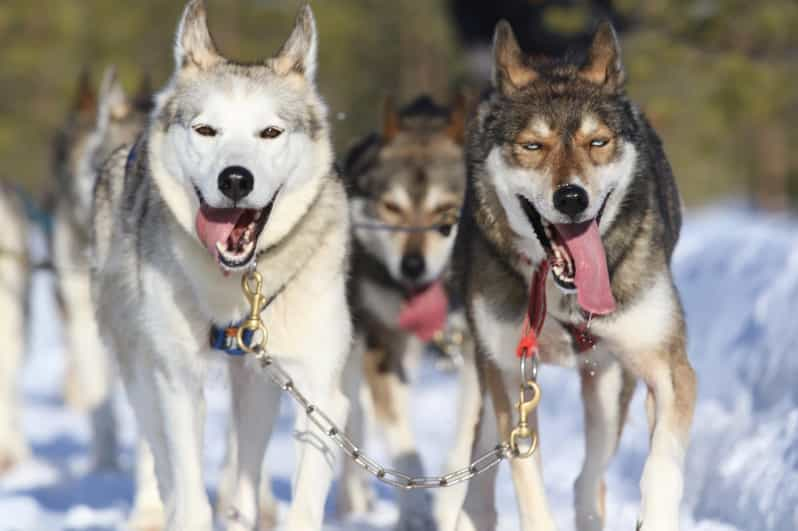
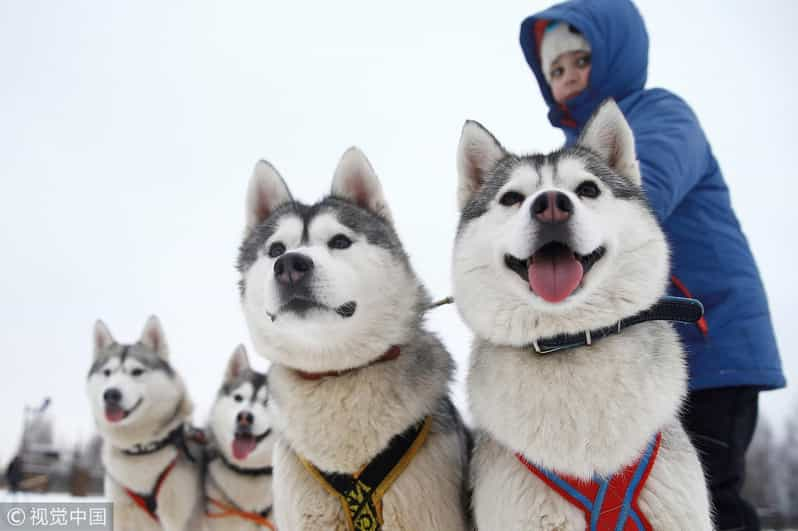
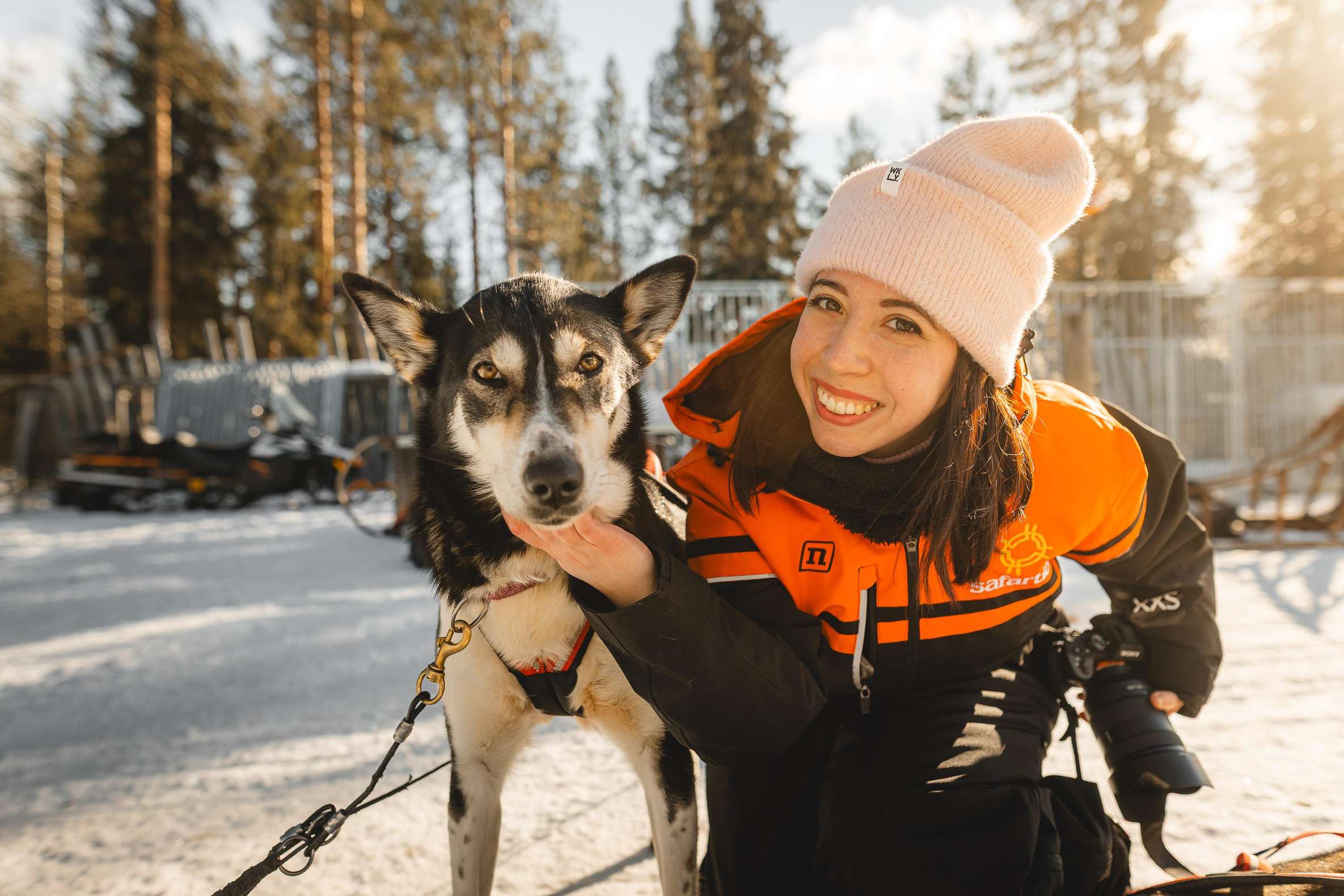
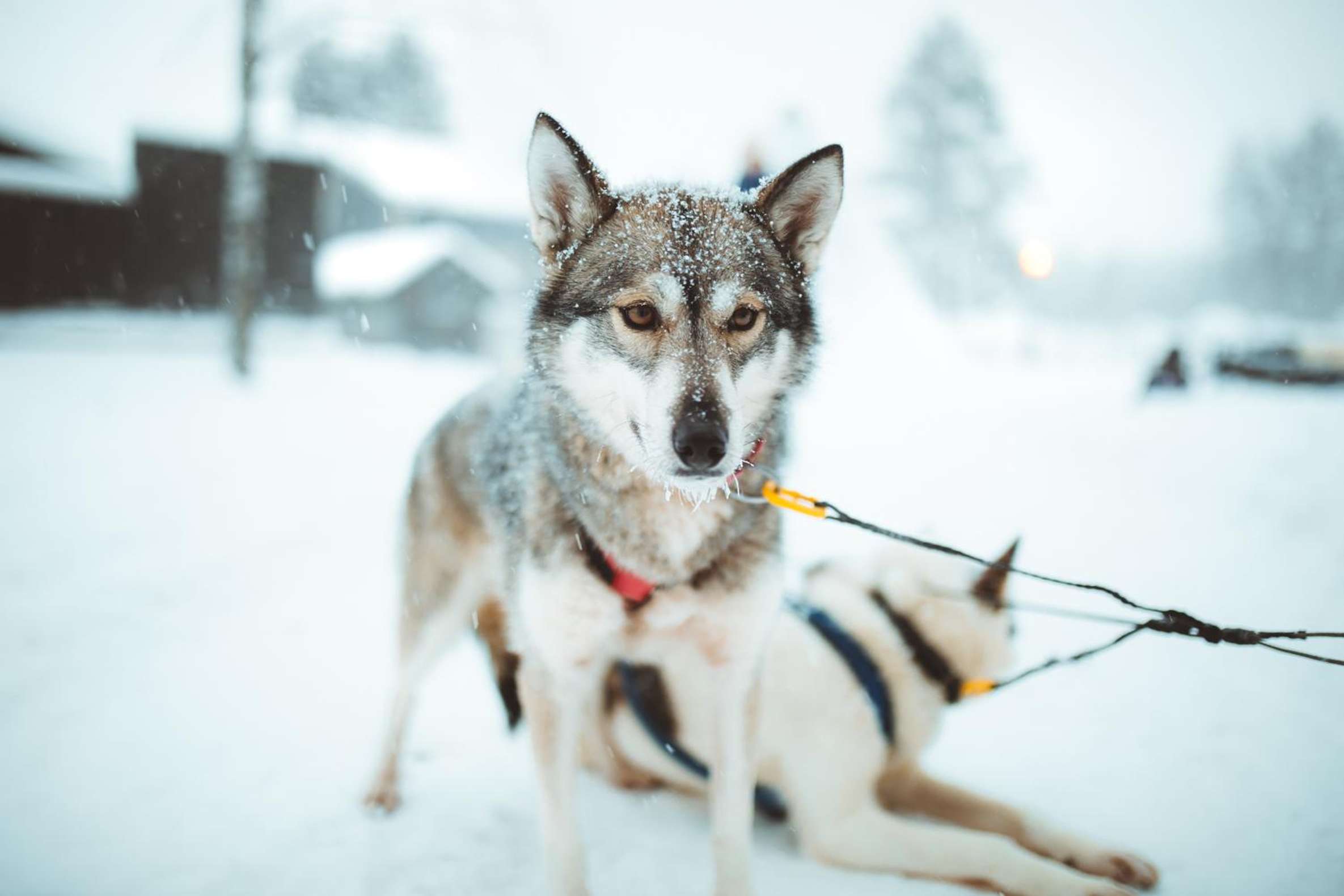
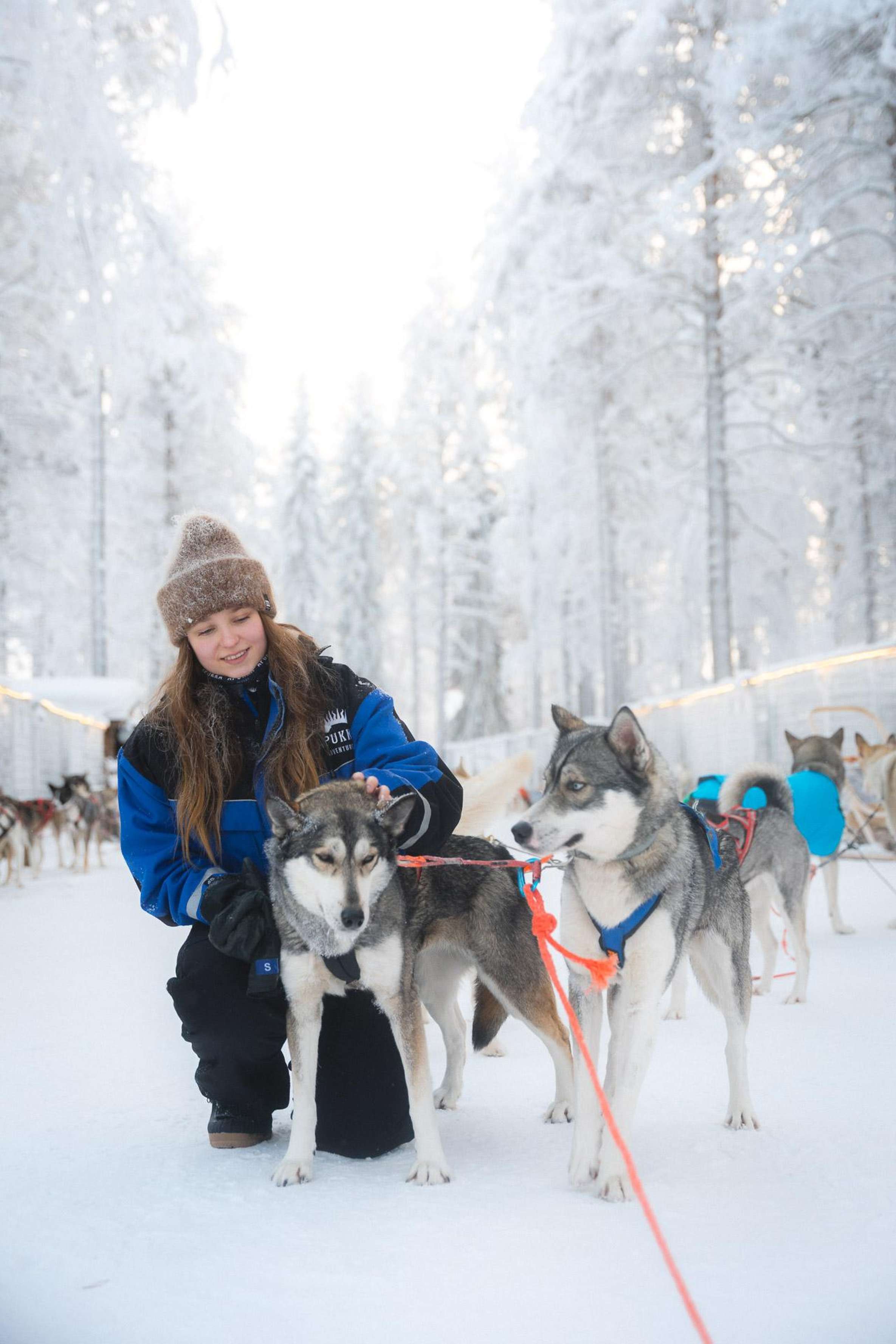
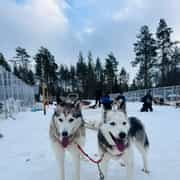
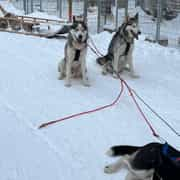
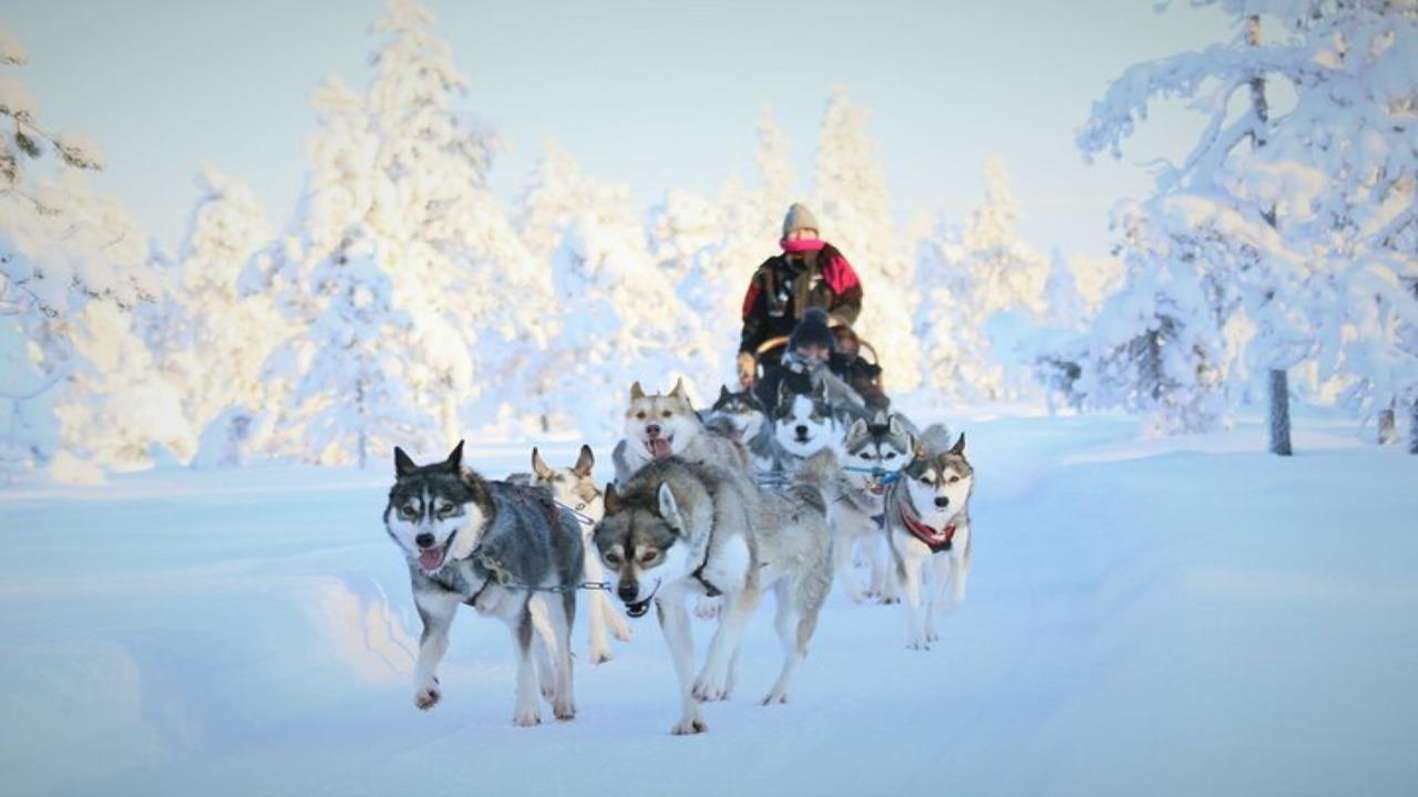
The howling starts before you even reach the kennel. Huskies bark, leap, and yap when they see guests coming, because running is what they live for, and at Apukka the teams are purebred Siberian huskies trained for the sled.
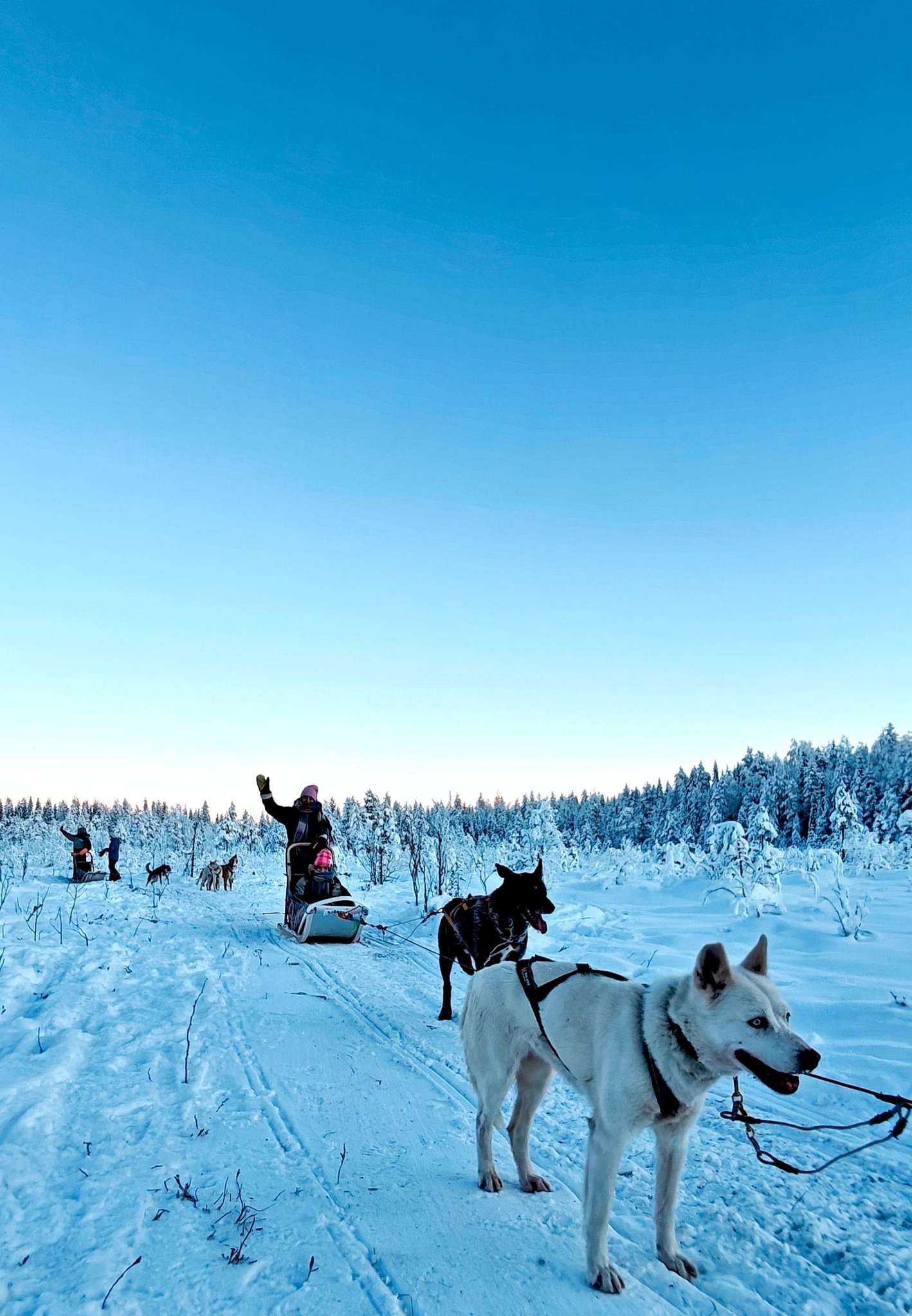
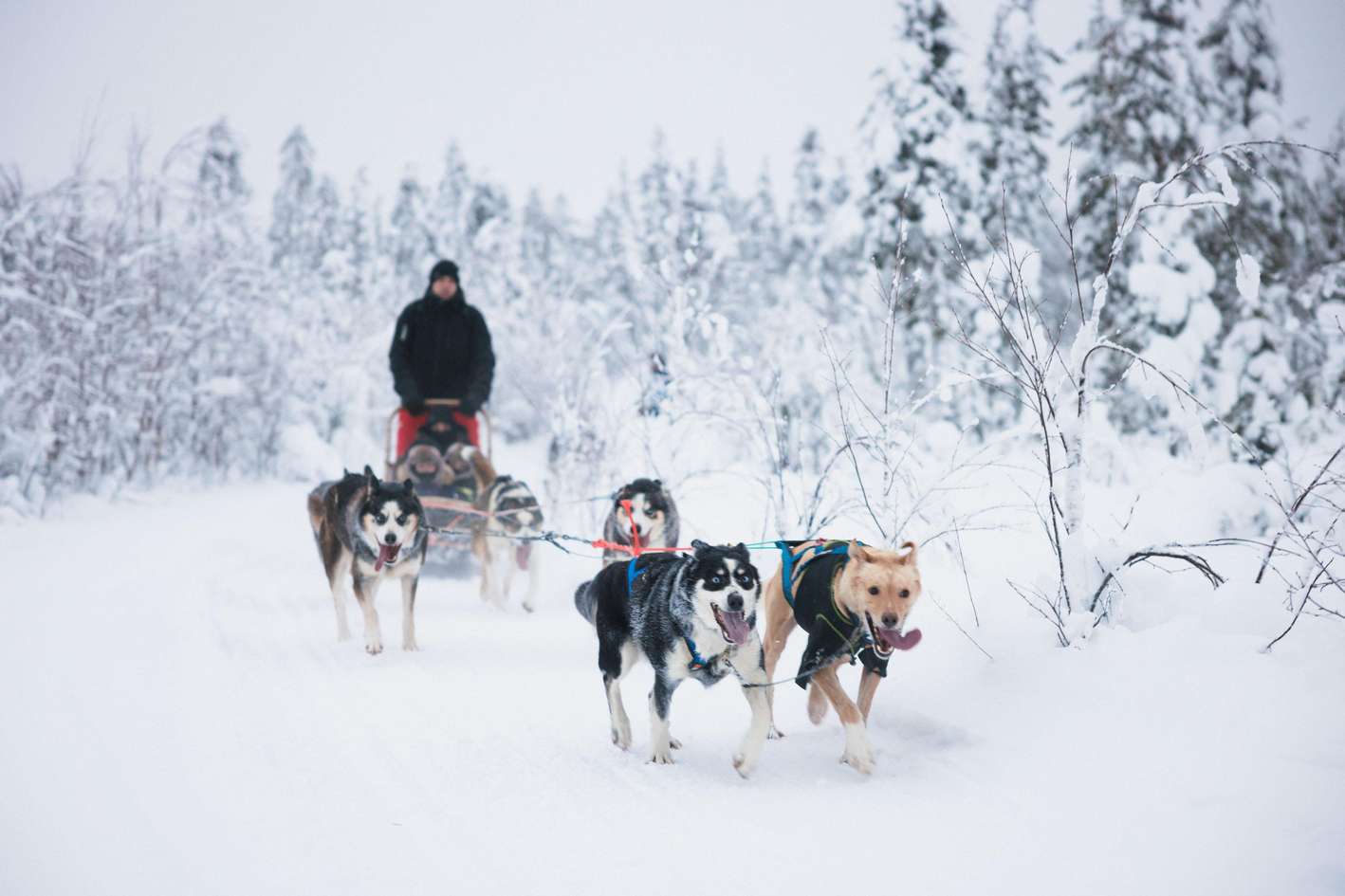
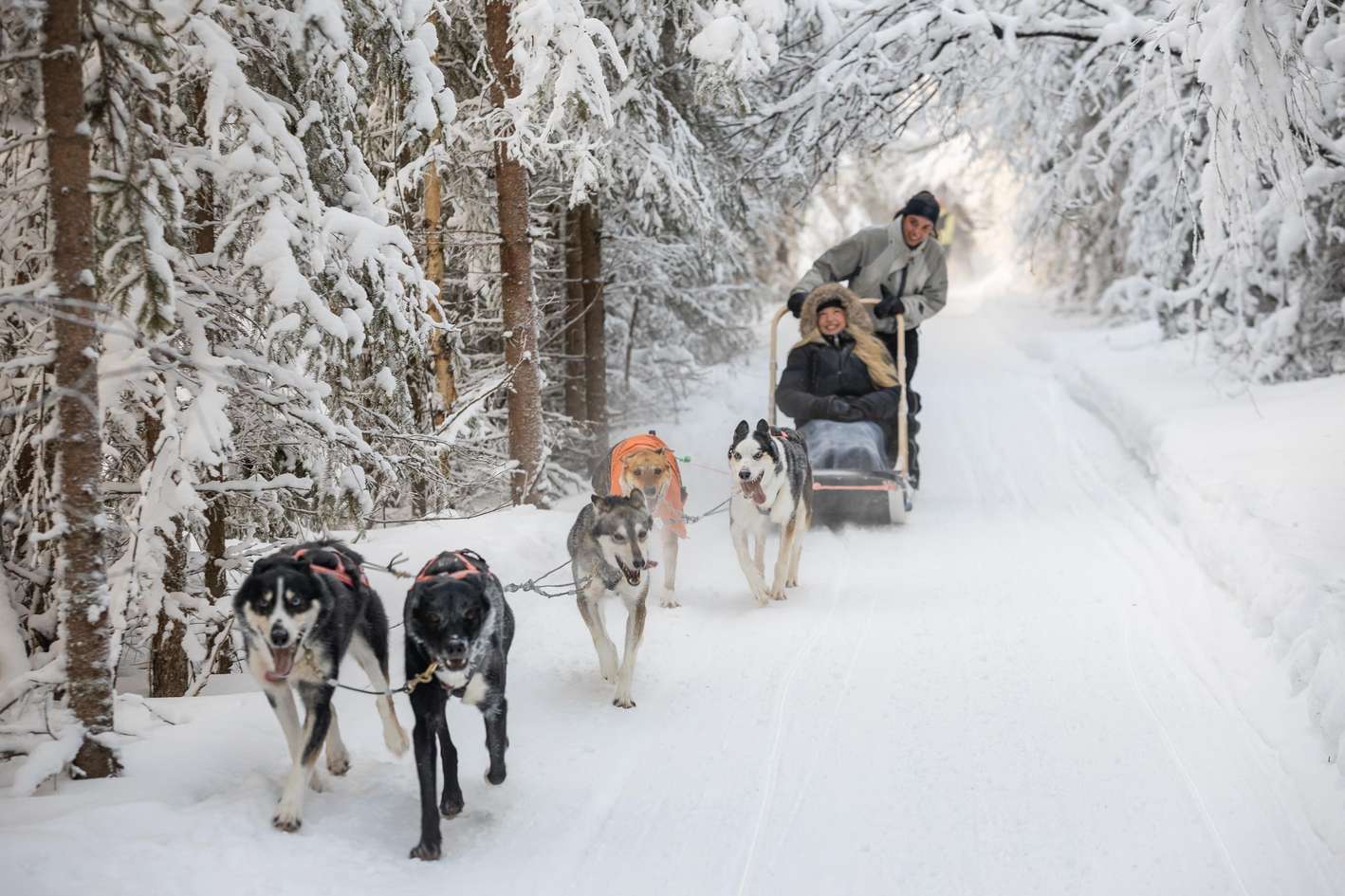
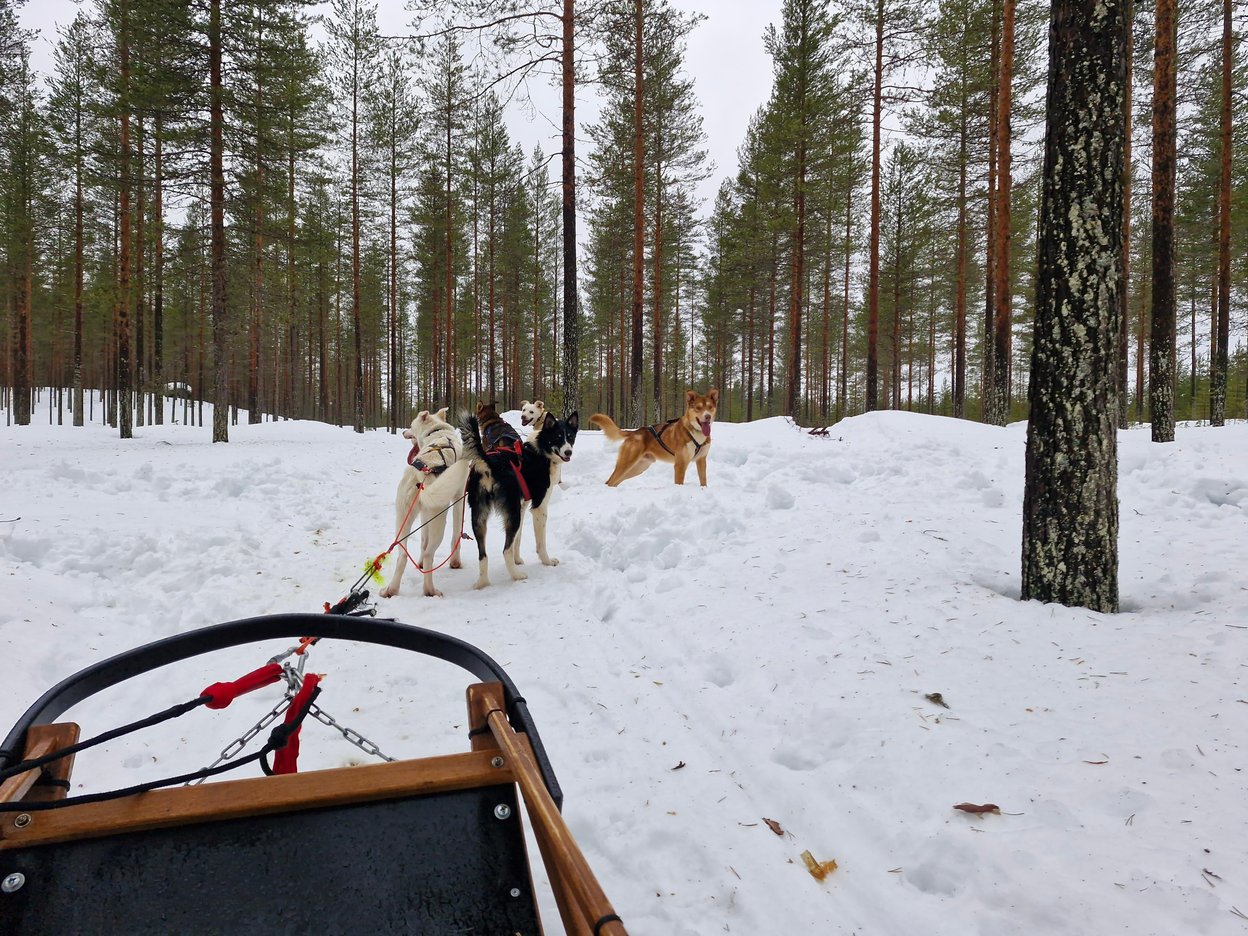
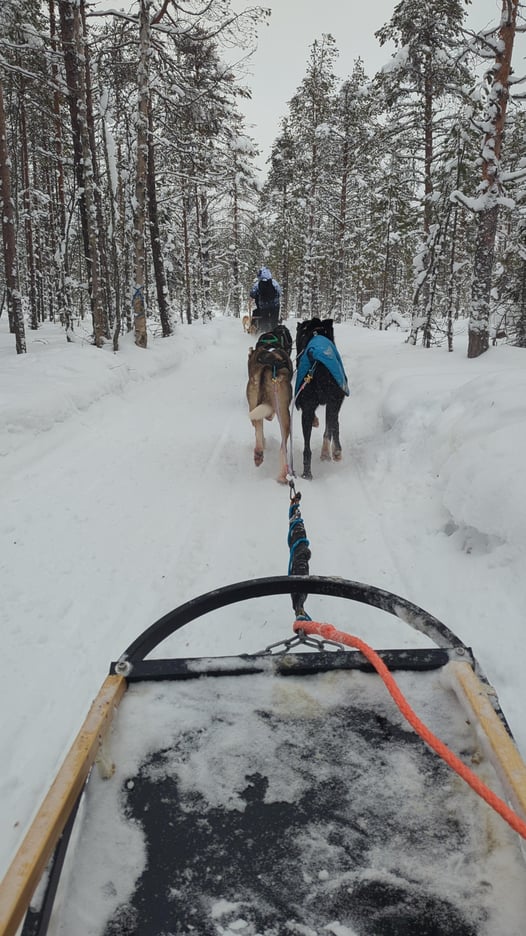
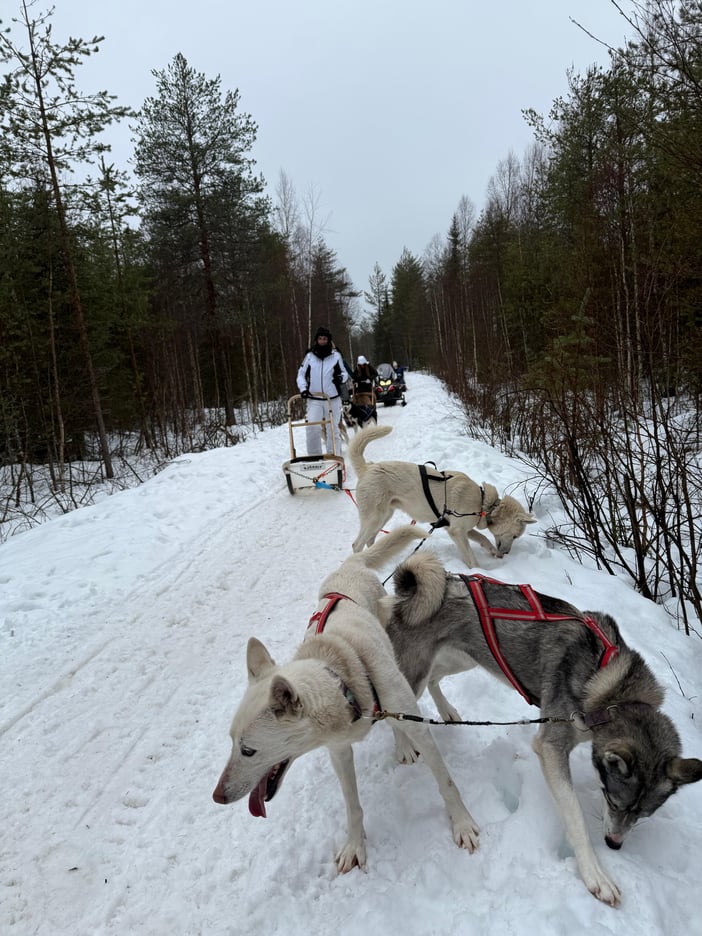
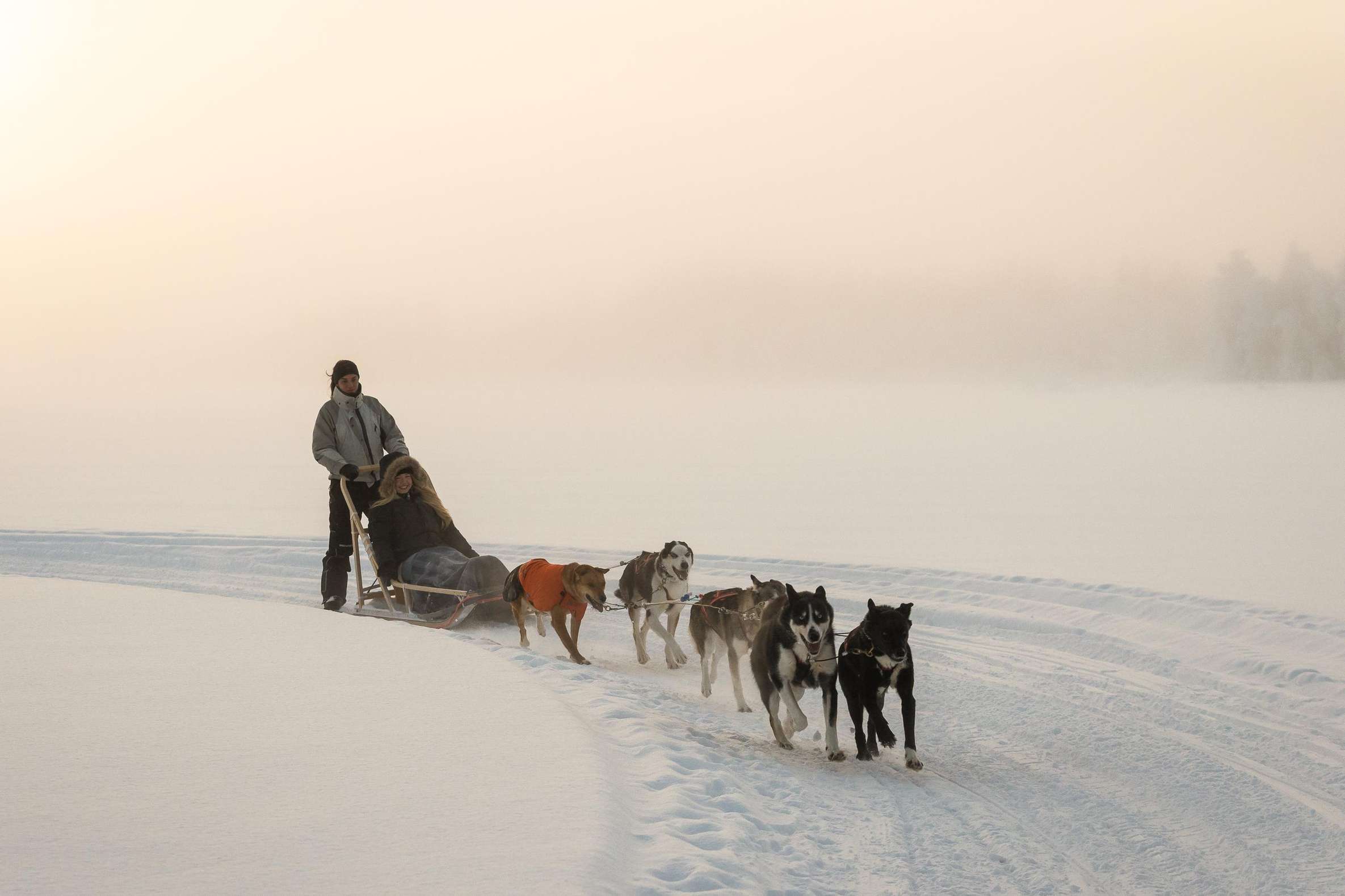
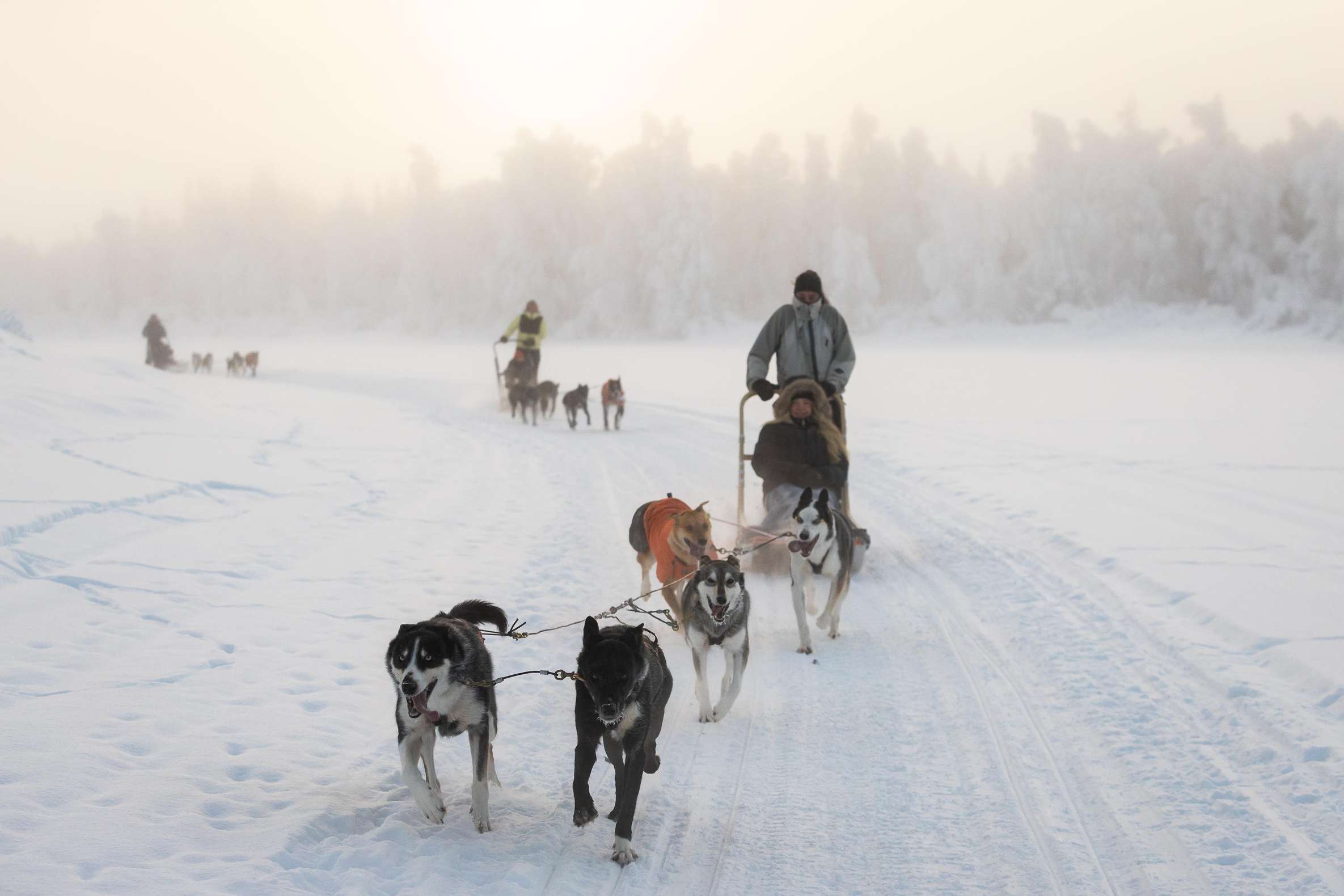
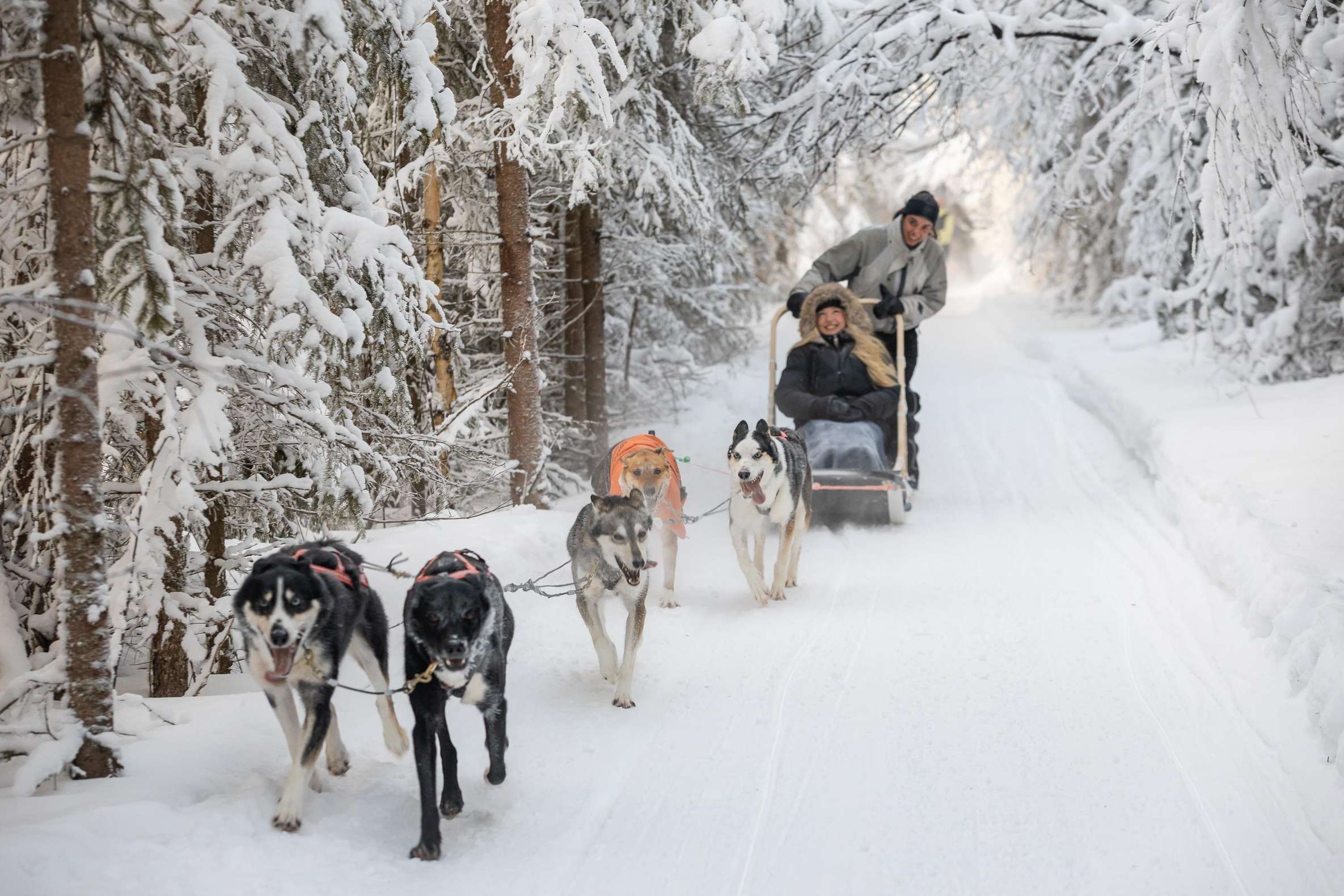
A 6 kilometer run through snowy forest trail is the heart of it: after suiting up in the provided thermal overalls, boots, and mittens, a guide shows you how to steer and brake, then you drive your own team, two adults per sled with children seated inside.
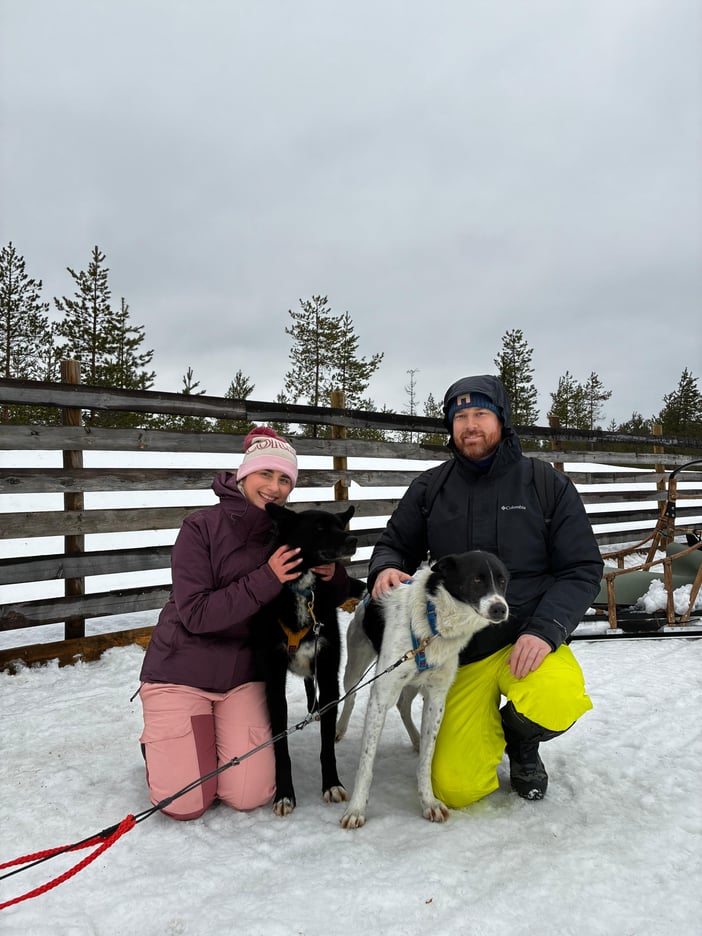
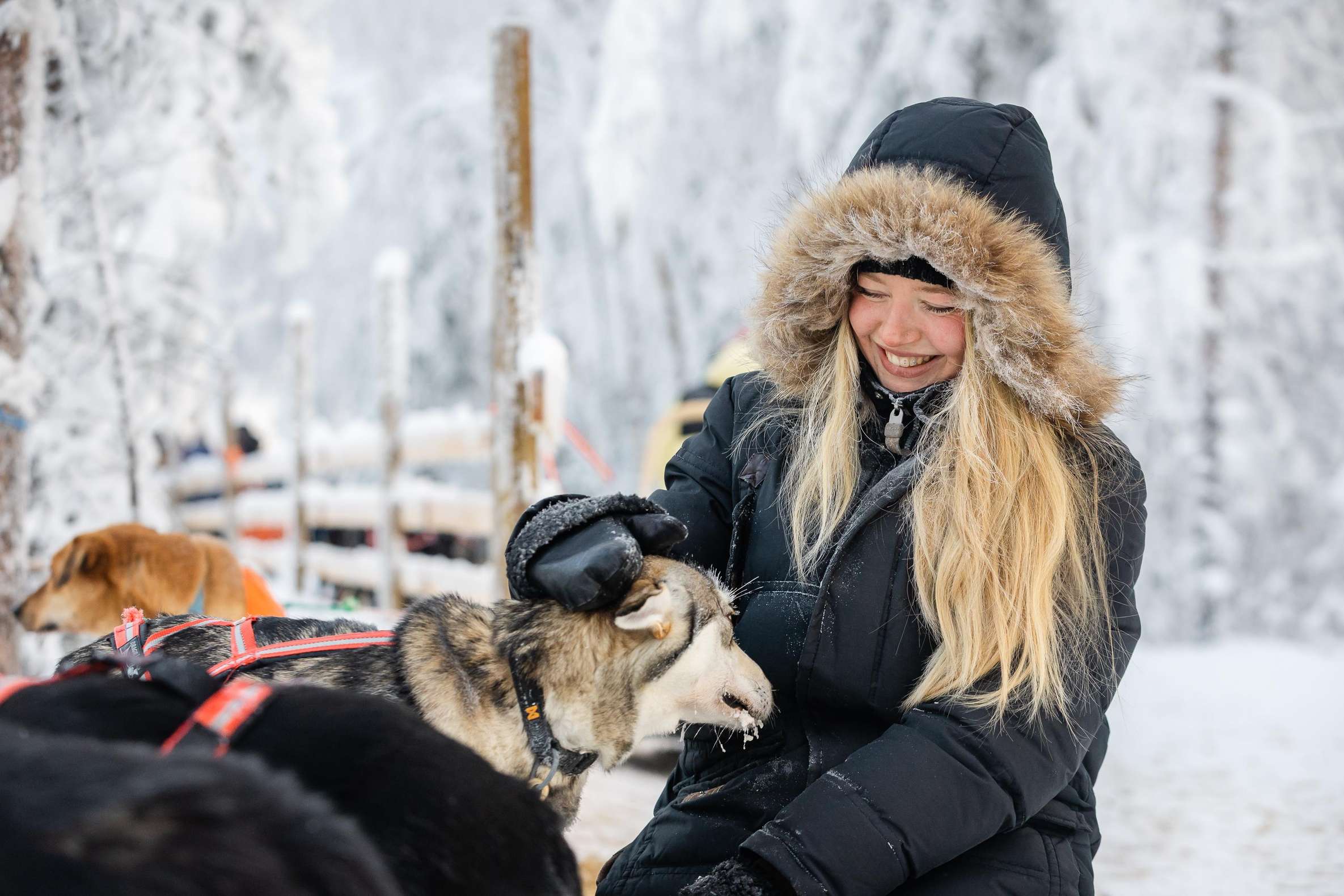
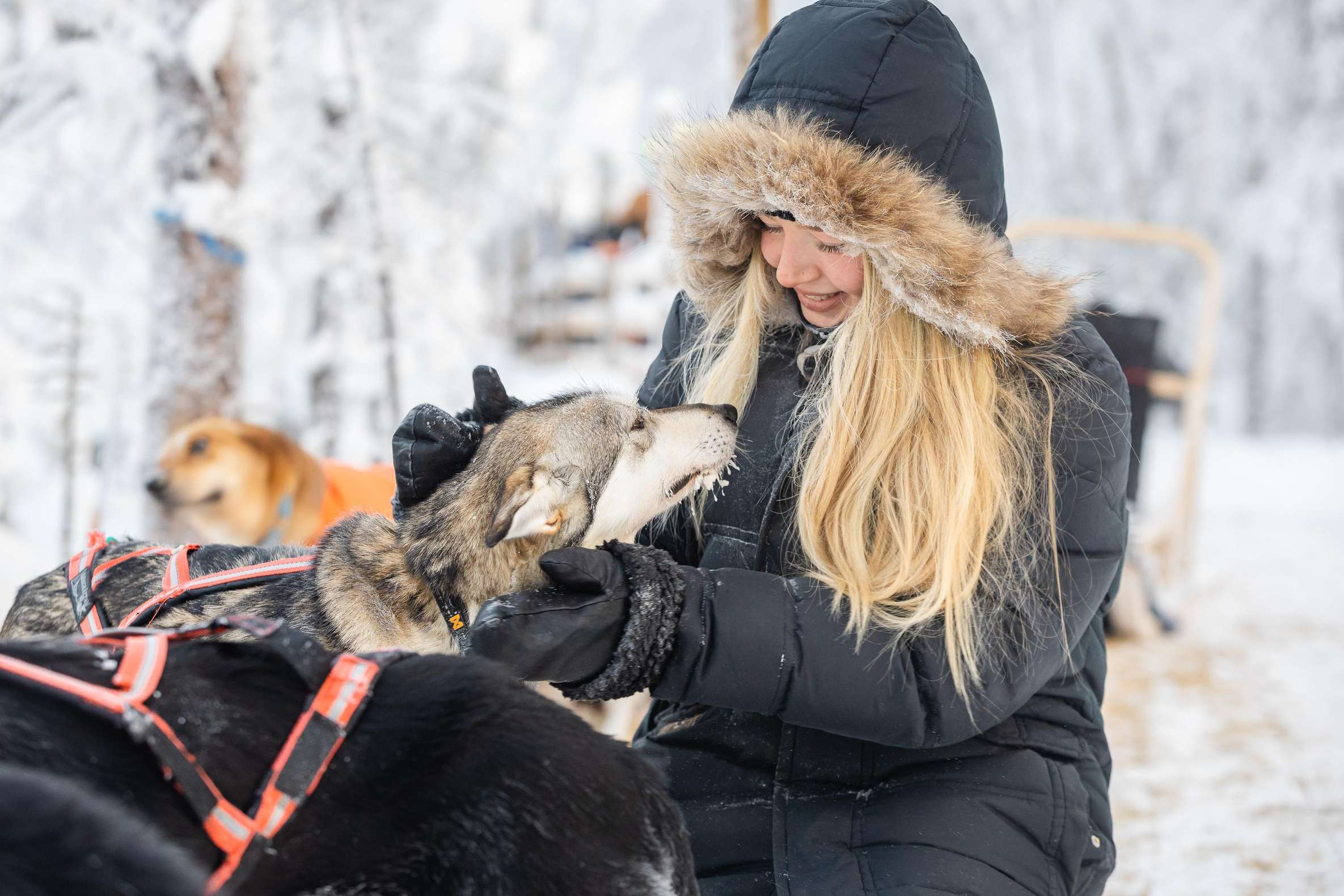
When the run ends, there is time to pet the dogs and thank your team, then hot drinks before the van returns you to Rovaniemi or Santa Claus Village.
Pickup2 places, depending on your optionAfter the ride and kennel time, the van collects the group here for the trip back.Street ViewStop 2Apukka· 120 minThe husky farm and resort where the safari happens. Guides fit you with winter clothing, brief you on driving and braking, then you mush your own team 6 km and pet the dogs afterwards with a hot drink.Drop-off2 places, depending on your optionAfter the ride and kennel time, the van collects the group here for the trip back.Street View
Included
6 km husky rideHusky pettingHot drinkWinter clothing (thermal overall, thermal boots, woolen socks, mittens)Transfers (if needed, from Rovaniemi city center or Santa Claus Village to Apukka Resort and back)
Choosing your self-drive sledding tour in Rovaniemi
Choose a date, then check the season. Midday departures between 10:30 am and 2 pm give the best twilight on the trails during the Polar Night, and prime Christmas slots can fill six months ahead.
Pro tipIn deep winter, aim for a late morning slot. You get blue twilight on the snow, and the dogs run best in the cold of the day.
Common mistakeLeaving the booking until you land. February school holiday slots often sell out four to five weeks ahead, and walk-ins rarely catch a gap.
2. Choose the right option
Compare trail length and who drives. Tours run from about 5 km with two adults sharing one sled, up to 10 km through private forest, with a switch at the halfway point.
Pro tipTraveling alone, you often get your own sled for the whole ride, so a solo booking can turn into more driving than the pair format promises.
3. Check who can drive
Read the rules before you pay. One tour on this page only lets adults aged 18 and over hold the handlebar, and children ride as passengers in the sled instead.
ImportantSome operators require drivers to be at least 18, and pregnant travelers or anyone with back problems are advised against self-driving. Settle this before booking, since it can stop the ride.
4. Pay and read the confirmation
Book online and cancel up to 24 hours in advance for a full refund. The confirmation email carries your meeting time and place, so check it the night before.
Pro tipDress in your own warm layers under the provided overalls. Operators hand out thermal suits, boots, mittens and wool socks, but skip cotton next to the skin.
RecommendedSome tours collect you from central Rovaniemi hotels, others meet at a city office, so follow the instructions in your confirmation email.
5. On the day
Arrive early and get fitted for your winter gear. The safaris start once the whole group is dressed and ready, and a missed meeting time is not refunded.
Common mistakeCutting the pickup window fine. Operators cannot hold the bus, and a late arrival means a missed safari with no refund.
What to know before you book self drive husky sledding
Can stop the dayGood to knowGood news
01
ChoosingWhat it is, who it suits, when to go
4
Meeting timeCan stop the day
One operator runs a strict clock: arriving late at the meeting point means the safari leaves without you and the booking is not refunded. The safari only starts once the whole group is dressed and ready. Read the meeting time and place in your confirmation email the night before.
Fitness
Driving a sled is physical, fast and bumpy rather than a gentle glide. You stand on the runners, grip the handlebar, and on steeper inclines you may need to step off and push the sled to help the dogs. Most healthy adults handle a 5 km run without trouble.
Sharing a sled
Two adults usually share one sled and take turns, so each person drives only part of the trail. Swapping happens at the midway point, with one driving and one seated in the basket. Solo travelers often get their own sled for the whole ride.
The brake
A briefing before departure covers braking and balance, and the huskies respond to basic commands, so no experience is needed. On groomed trails, driving mostly means stepping on the foot brake when needed while following your guide.
02
BookingHow far ahead, and what happens if plans change
1
Cancellation
The self-drive safaris here can be cancelled up to 24 hours in advance for a full refund. If heavy snow or extreme cold forces a change of program, operators offer an alternative or a full refund rather than a shortened ride at full cost.
03
Before you goPapers, health, what to bring
4
Clothing
Most safaris fit you with an insulated thermal overall, snow boots, mittens and wool socks before departure. Underneath, wear your own non-cotton layers: a merino or synthetic base layer, then a fleece or wool sweater. A few short rides skip the thermal suit.
Cold
The seated passenger feels the cold far more than the driver, because standing still in the windchill of an open sled freezes exposed skin and eyes quickly. Bring a hat, gloves and a scarf, and cover your face on the coldest days.
Ride length
A 5 km trail means roughly 15 to 30 minutes of actual sledding, while a 10 km trail lasts 30 to 50 minutes depending on snow, weather and the dogs' pace. A three to four hour tour duration covers transfers, gearing up and the kennel visit too.
Age and healthCan stop the day
Only adults 18 and over drive on some safaris, and children under four are not accepted on one of them. Pregnant women and people with back or heart problems should not take part. Drivers need sufficient fitness and body control to handle the sled.
04
During the tourWhat is expected of you
1
If you fall
If you slip from the runners, let go of the handlebar and do not grab the sled, lines or dogs. The team keeps moving until it hears a command or feels the brake, then a guide intercepts it. Holding on when falling can drag you or tangle you.
The self drive sledding guide for Rovaniemi
spring trails in march run faster
Most first-timers in Rovaniemi drive their own husky team on day one, no experience needed. What matters instead is your legs, your month, your departure hour and the trail you pick.
Rovaniemi· 66.50° N, 25.73° E
If you only remember three things
1
A 5 km trail means 15 to 30 minutes of actual sledding; a 10 km trail runs 30 to 50 minutes.
2
Book a midday departure in December, roughly 10:30 am to 2 pm, when blue twilight lights the trail.
3
Christmas departures sell out up to 6 months ahead; February slots go within a few weeks.
Is driving your own dog sled really worth it?
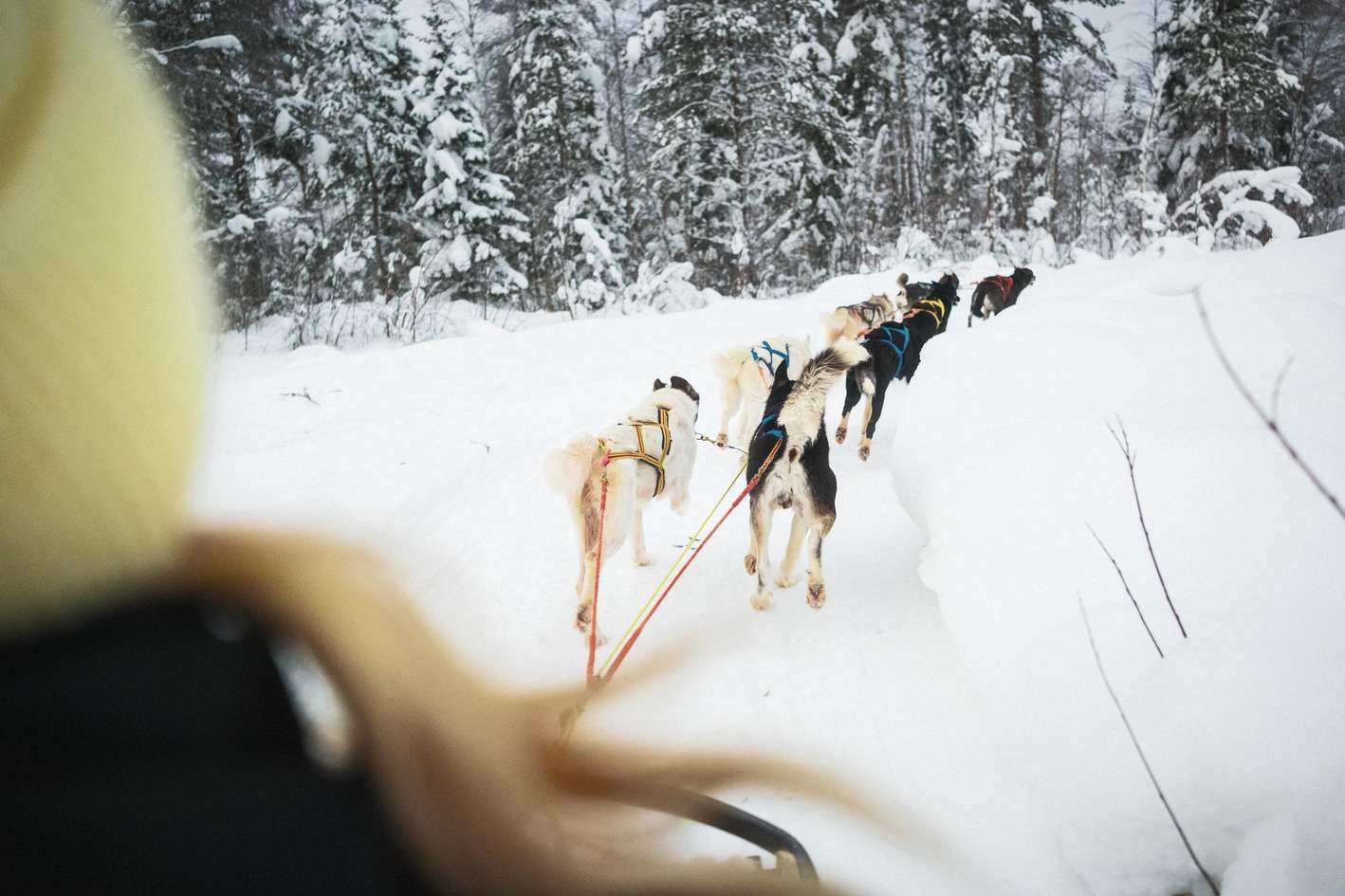
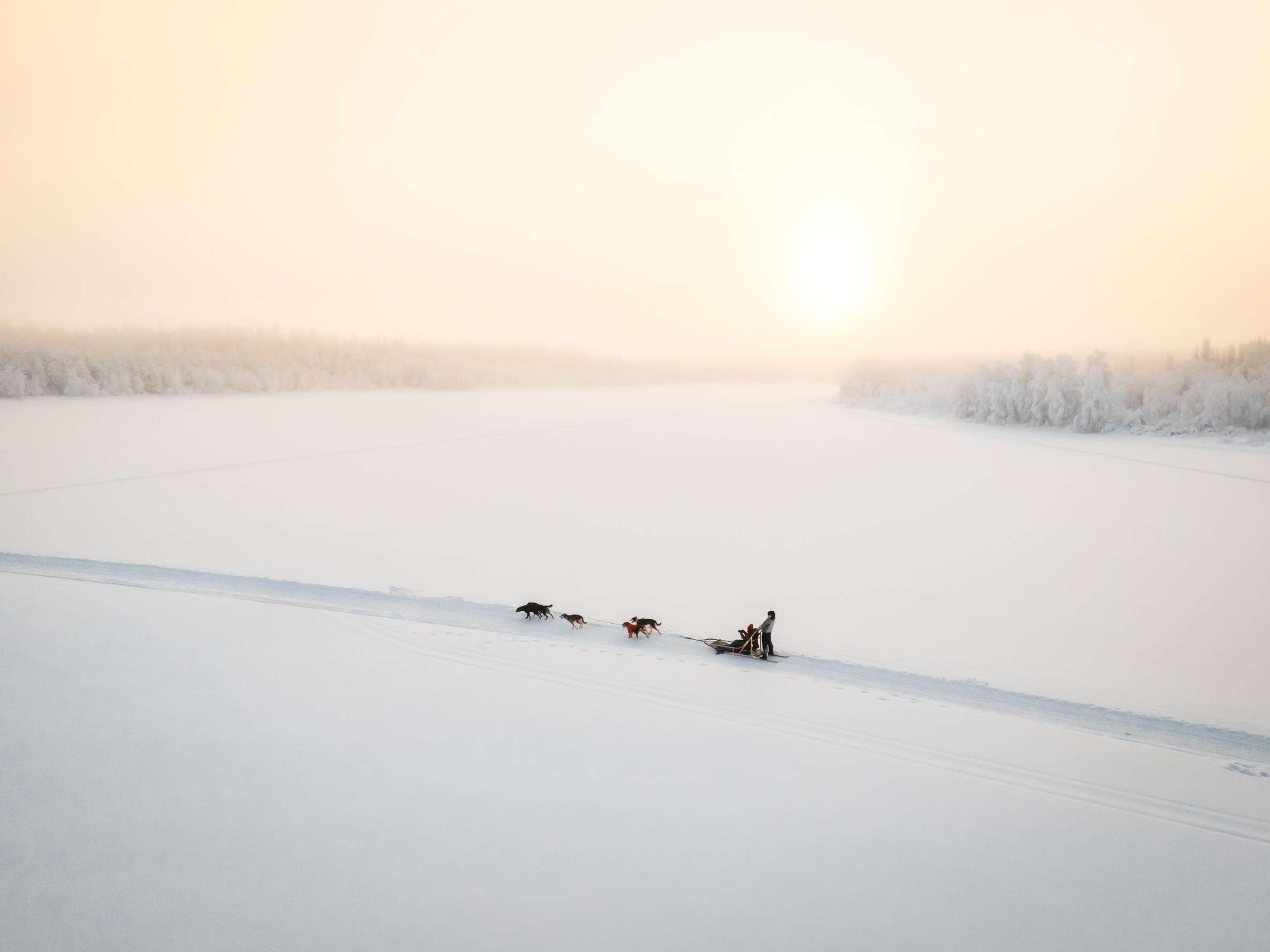
The noise comes first. Twenty dogs in a line at the kennel, howling and leaping against their lines because the brake is about to come off and running is what they live for. Then the lurch, the snow creaking under the runners, and suddenly you are the one holding the handlebar.
Beginners drive here all the time. No prior dog sledding experience is required, because every guide gives instruction before departure and the huskies are trained to answer basic commands. The dogs pull; your job is balance, braking and a bit of judgment.
Expect a physical, fast-paced and bumpy ride across wilderness terrain; the sled jumps over uneven snow and you stay on your feet throughout. You need enough fitness and body control to keep standing, and on a steeper hill you may step off and push.
What standing on the runners demands
Driving yourselfYou stand on the runners for 15 to 25 minutes at a stretch, knees bent, gripping the handlebar through every bend.
Moderate
Pushing on uphillsOn steeper climbs you step off a runner and push or jog behind to help the dogs.
Moderate
Riding as a passengerYou sit in the sled basket and hold on, but the open wind makes it the colder seat.
Easy
Short village taster ridesQuick tracks of 400 to 800 metres, no wilderness, no real mushing.
Easy
That comparison is the whole decision in four lines. If the middle rows sound like work you would enjoy, self drive sledding is the part people book again for. If the passenger row sounds more like your speed, the trail chapters ahead will point you to the right product.
Tour for this
10 km Authentic Husky Safari in the Taiga, Family Kennel5.0★ (3) · 1 day · Hotel pickup · Free cancellation
How hard is it to steer, brake and stay on the runners?
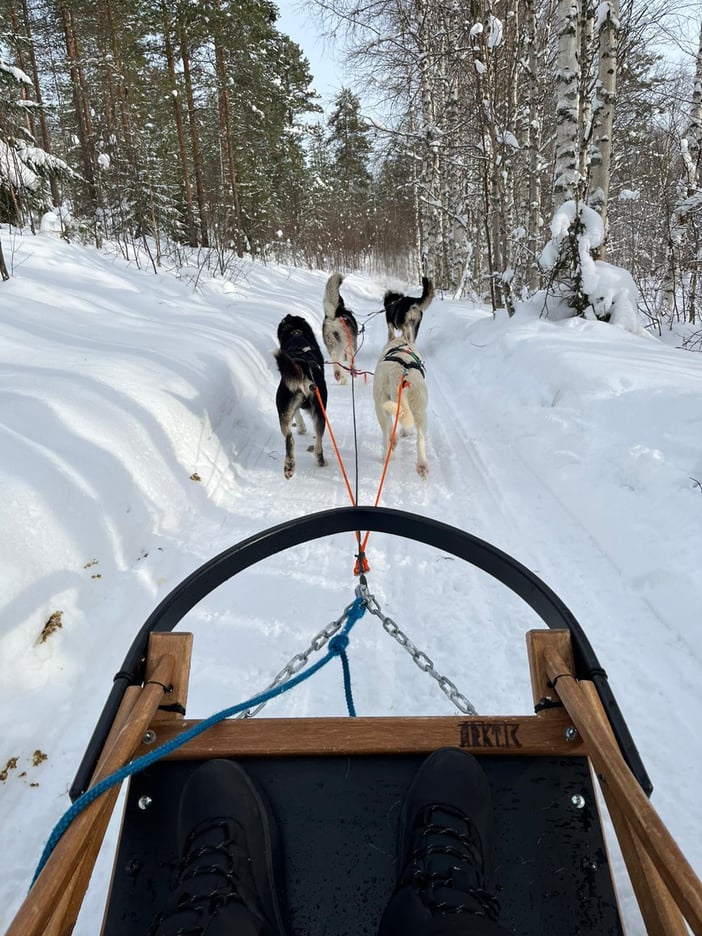
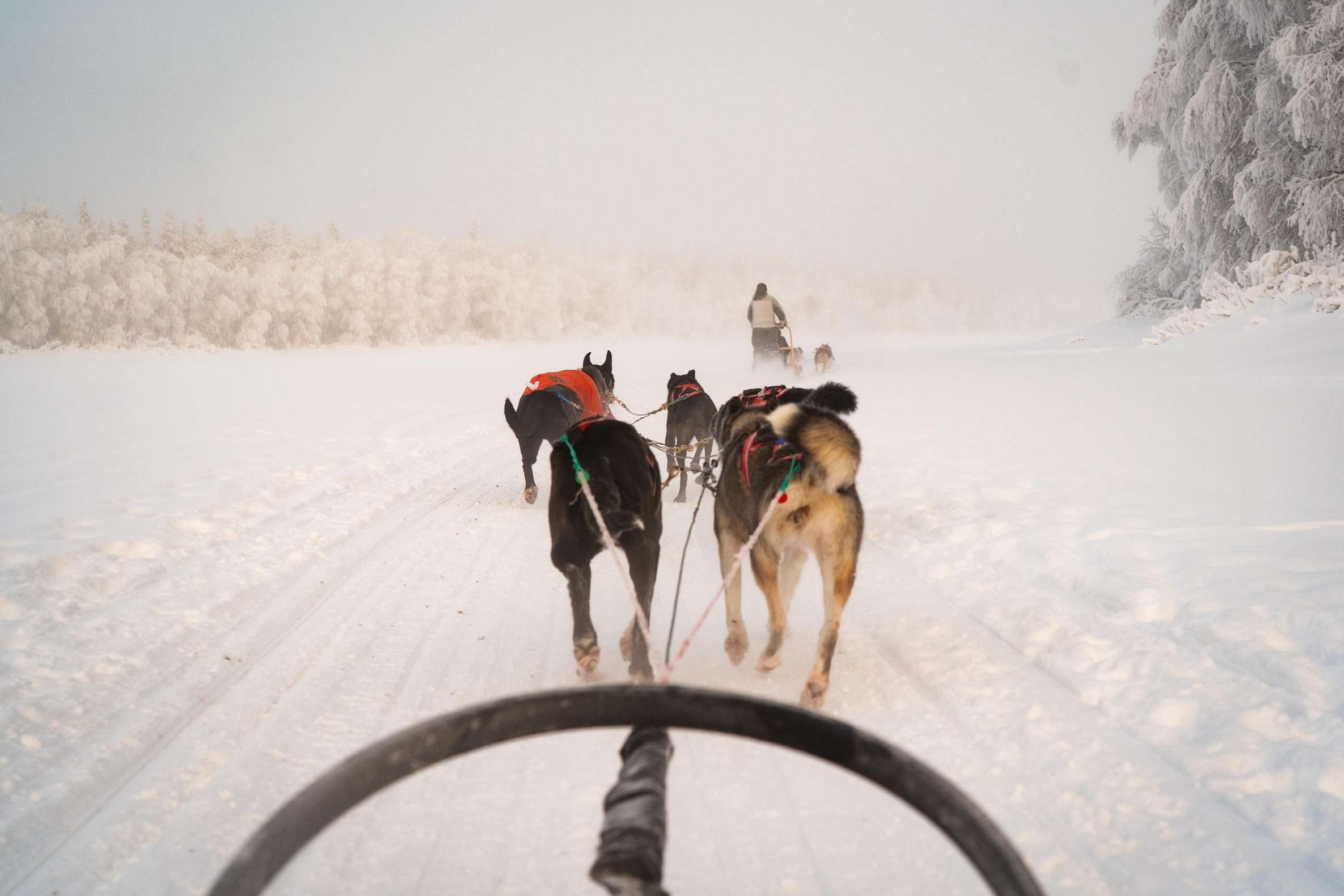
The brake is the one thing to learn. A U-shaped bar sits at the back of the sled with two metal claws; step on it and the teeth dig into the snow to slow the team.
Step off, and the dogs simply keep running until they feel the brake or hear a command. Your foot is the only brake.
Corners are where the effort goes. On narrow trails winding through trees you bend your knees, lean your body and grip the handlebar hard. On icy stretches the brake spikes bounce off the surface, so you ease into turns at a moderate speed and let the sled follow the curve instead of braking mid-corner.
On flat ground it is easy. Uphills are the workout: you may hop off a runner and push. A brisk walk uphill is the fitness level the kennels expect.
And if you slip off? Let go of the handlebar and do not grab the sled, the lines or the dogs. A team without a driver either halts on its own or is caught by a guide along the trail.
Holding on is what drags people. Guides can move anyone who struggles onto the passenger seat, and a rider who ignores safety instructions can be stopped from continuing.
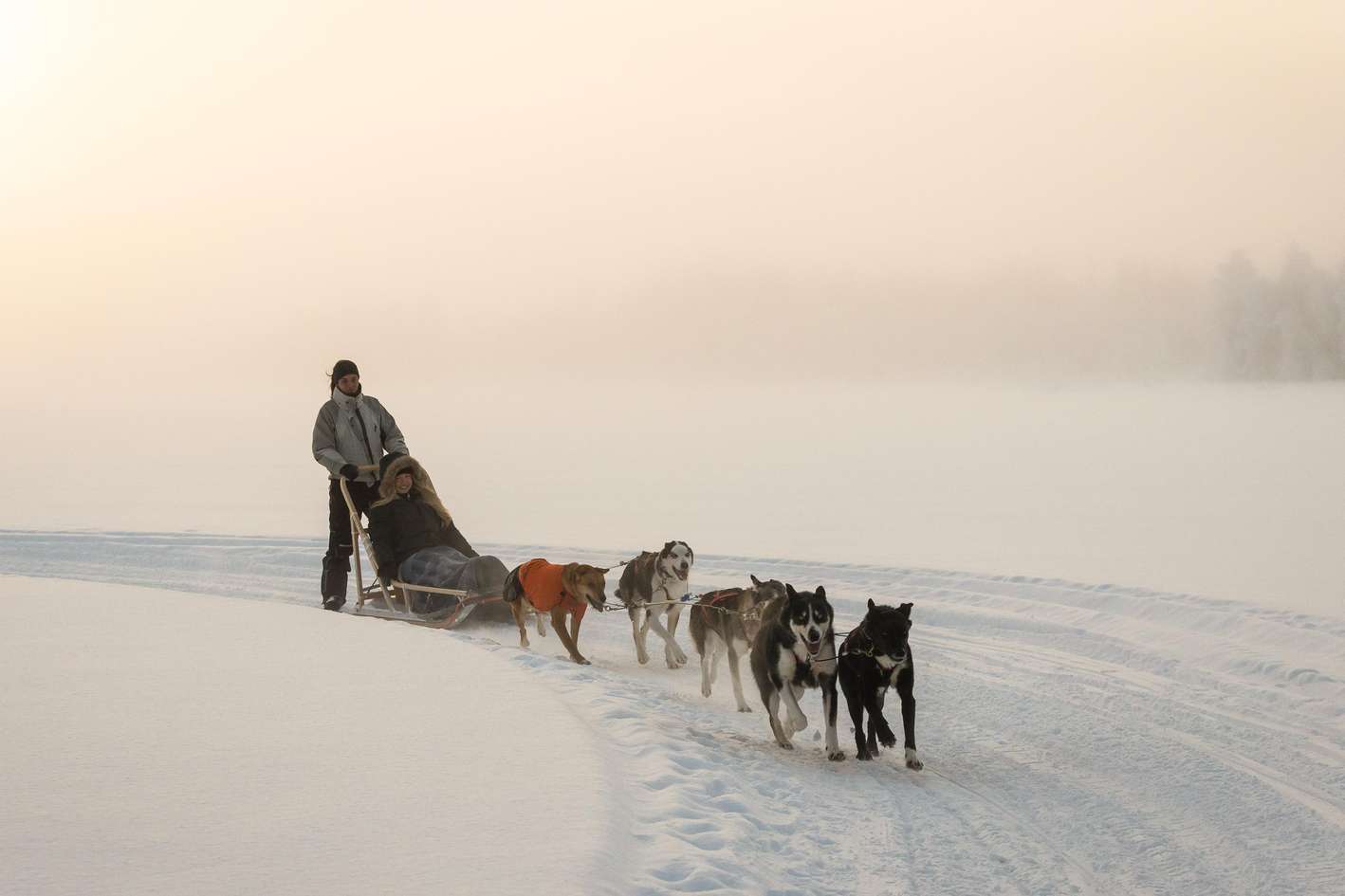
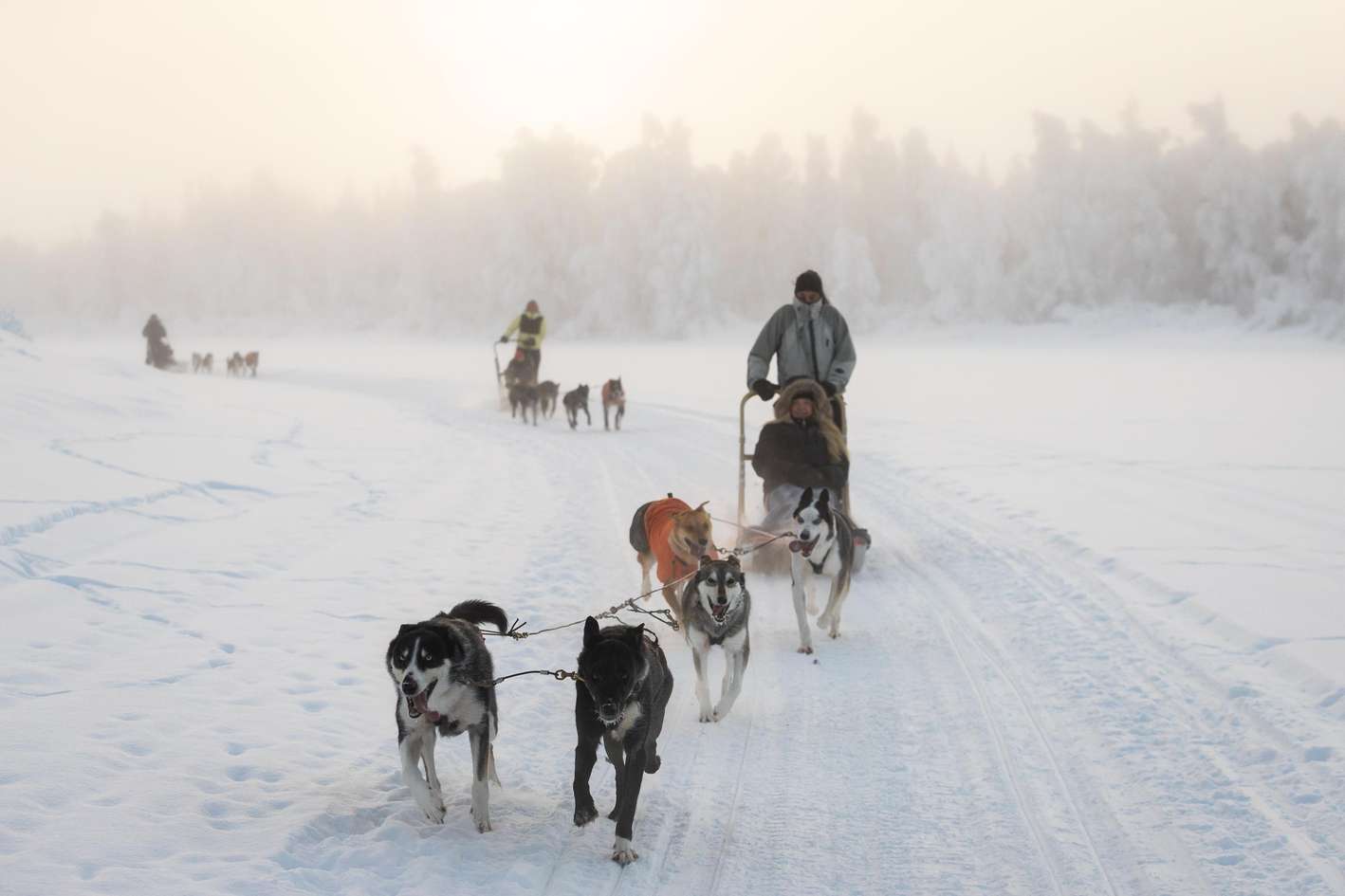
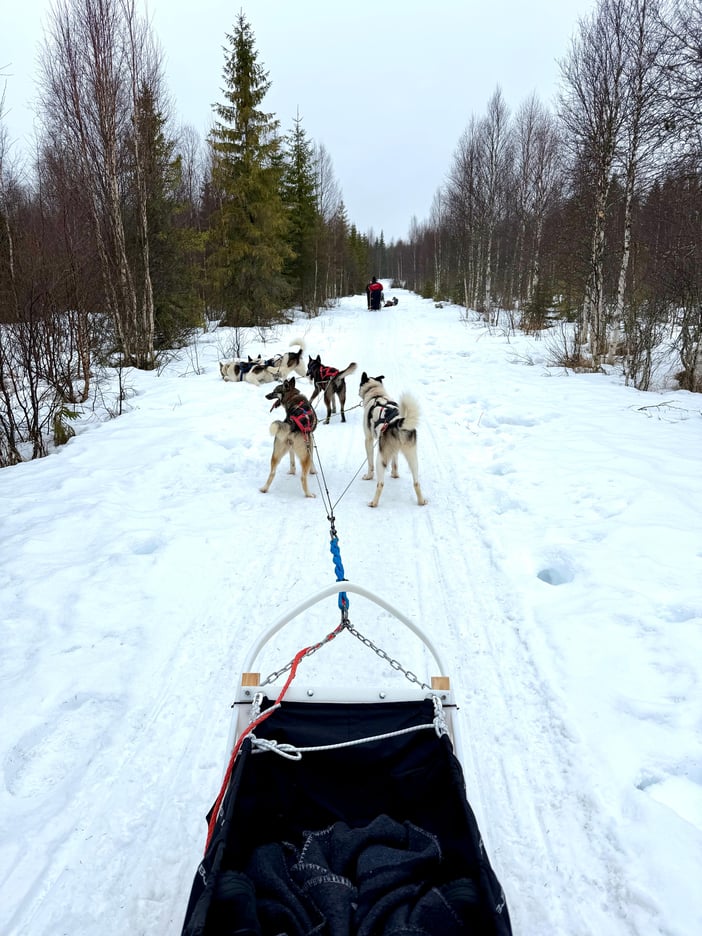
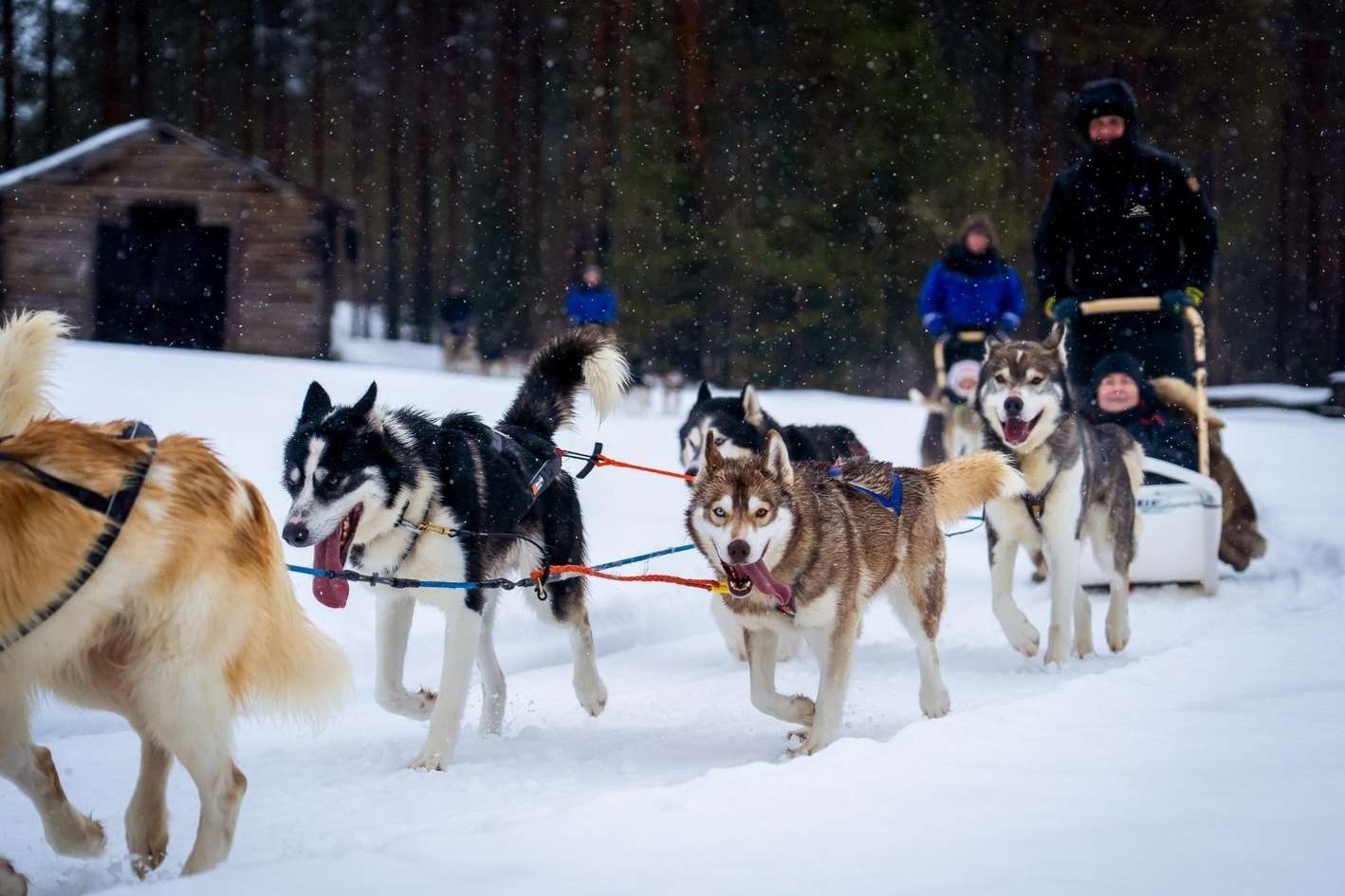
Most self-drive safaris pair two adults on one sled. One stands at the handlebar, the other sits wrapped up in the basket, and the partners swap driver and passenger halfway through the run, so each gets the steering and the rest.
The passenger seat has a price of its own. Sitting still on an open sled is colder than driving, so passengers need an extra layer. The driver works, but the movement keeps the blood going.
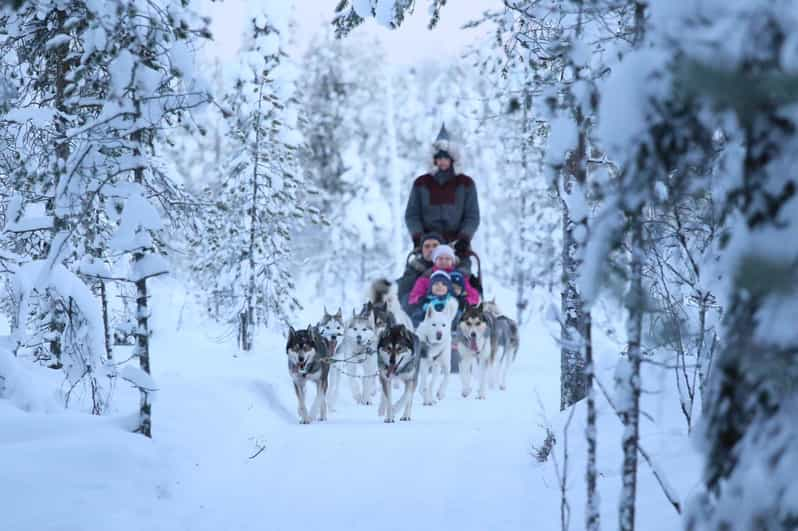
Families with small children usually take the middle road: adults drive, children ride in the basket, with up to two kids per sled on family tours.
A musher-driven passenger ride is the comfortable choice for families with toddlers or anyone with limited mobility, since the whole family sits together. Drivers are typically at least 15 to 18 years old.
Traveling alone? You will often be handed a sled of your own for the entire journey, no stranger required.
Drive or ride: what decides it
Standing on the runners, braking and leaning through corners
None, though you hold on tight
Warmth
Movement keeps you warmer
Colder, needs an extra layer
Who can join
Most healthy adults; kids ride along
Families with toddlers and limited mobility
Control
You steer, brake and set the pace for your half
A professional musher runs the team
Standing on the runners, braking and leaning through corners
Warmth
Movement keeps you warmer
Who can join
Most healthy adults; kids ride along
Control
You steer, brake and set the pace for your half
None, though you hold on tight
Warmth
Colder, needs an extra layer
Who can join
Families with toddlers and limited mobility
Control
A professional musher runs the team
Read that table against your own group and the answer usually falls out on its own. On the Rovaniemi: Insider 5 km Husky Self-Drive Tour, the group splits in half, so one pair drives while the other warms up in a kota first.
January and February are the deep-winter months: unbroken snow cover building from roughly half a metre to well over that by mid-February, with average lows between -11°C and -14°C. That is proper husky weather, and it is also when everyone books.
March is the editor's pick for some. Snow is deepest from mid-March into early April, around 75 to 77 cm, while days moderate to just below freezing. Hard-packed spring trails run faster than mid-winter powder, so a 10 km run takes less time and the foot brake earns its keep.
November is the gamble. Snow cover can be thin early in the season, and kennels adapt with shorter distances or, when runners are impossible, wheeled carts.
Cold snaps cut both ways. At -28°C to -30°C operators shorten runs or switch self-drivers to guide-driven sleds, and at -35°C tours stop altogether for the dogs' sake. Typical winter lows sit well above those limits, so a cancellation stays rare.
The month layers below show how visitor numbers stack up against that snow picture: January, February, March and December all run at the top of the scale, and the quiet months mostly fall outside the sledding season.
How busy it gets, month by month
January: 5 out of 5 for how busy it gets.
HighestDec to Mar
LowestApr to Nov
Darker: a higher how busy it gets score, out of 5
Tap a month to read it.
So the deep winter months give you the best snow and the thinnest availability at once. Pick your dates early, because the calendar and the crowd move together.
In December the sun barely rises at all, and husky mushing in Rovaniemi runs on whatever light the day gives. The window that matters is midday, from about 10:30 am to 2 pm, when the Polar Night produces its blue twilight reflected off the snow. This is the hour with real visibility on the trail.
Morning departures before 11 am begin in the dark. Afternoon tours that leave after 2 pm watch the twilight fade and finish running the trail under headlamps, which changes the character of the drive completely.
By January full darkness settles in around 6:15 pm, and in March it slides past 10 pm, so later departures become workable as the season moves on. In November, darkness arrives around 6 pm by mid-month.
The daypart breakdown below makes the arithmetic visible at a glance.
Trail lighting by time of day in Polar Night
Morning9 am to 11 am
Tours start in the dark and gradually gain twilight.
Midday Peak11 am to 2 pm
Peak blue-hour twilight and maximum trail visibility.
Late afternoon2 pm to 3:30 pm
Fading blue twilight; sled tours finish in darkness.
Evening3:30 pm to 9 pm
Full darkness requiring headlamps on the trail.
QuietBusyThe busiest
The practical reading: book midday in the dark weeks, and save an evening slot for an aurora safari on another night, where the darkness is the whole point. For a first self-drive run, take the twilight.
Tour for this
Rovaniemi: Drive Your Own Husky Team (5-8 km)4.4★ (460) · 5 hours · Hotel pickup · Free cancellation
The distances on the cards are not the minutes on the sled. Trail figures put a 5 km run at 15 to 30 minutes of actual sledding, and a 10 km run at 30 to 50 minutes, depending on snow and the dogs' pace.
Some morning safari plans count the time on the sled closer to 10 to 15 minutes, because they measure only the short ride that fits before the rest of the day's programme; the honest estimate for a standalone run sits at the short end of the trail range.
For a first drive, 5 km is the sensible pick. Most healthy adults handle it without trouble, and the group stays closer to roads and buildings. The 4-to-5 km self-drive through the forest with a 30-minute ride is built exactly for this: one proper run, then hot drinks and a fire.
The 10 km tours buy you more. More time away from roads, deeper into forest and frozen lakes, and more minutes standing on the runners, which your legs will notice on the second half.
The 10 km Authentic Husky Safari in the Taiga takes a full day and puts you on a family kennel's own trail with the mushers who train the dogs. If you want the long version, that is the one.
For beginners, around 45 minutes to an hour of sledding in total is plenty when the temperature sits below freezing.
Actual sledding time by trail distance
15 to 30 min5 km trail sledding time
30 to 50 min10 km trail sledding time
Those two bars carry the chapter's whole point. Choose by minutes on the runners rather than kilometers on the card, then book early: Christmas departures often fill six months ahead, and February school holiday slots go within four to five weeks to a couple of months.
Tour for this
Rovaniemi: 4-5 km Self-Drive Husky Sled Through the Forest4.6★ (284) · 3 hours · Hotel pickup · Free cancellation
How do you get to a husky kennel outside the city?
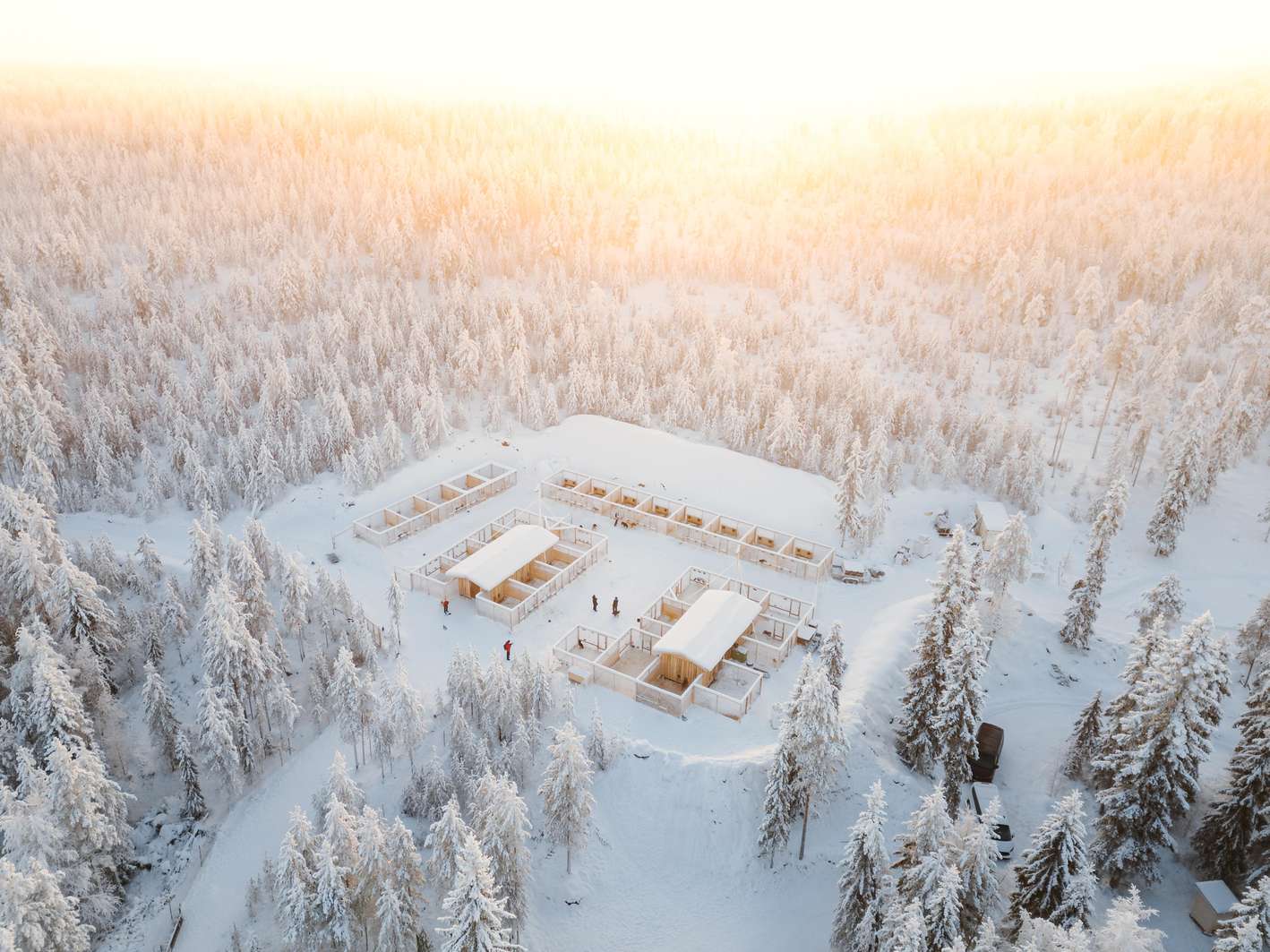
The wilderness kennels sit 20 to 60 km from central Rovaniemi, deep in forest and lake country.
Transfer times come in two honest ranges: 20 to 45 minutes for the nearer farms 20 to 35 km out, and up to 30 to 60 minutes for the farthest kennels, so your pickup time depends on which farm the tour runs. No public bus serves any of them.
Take the transfer. Safari buses and vans collect guests from the big downtown hotels, including Santa's Hotel Santa Claus and Scandic Rovaniemi, and from central safari offices on streets like Maakuntakatu and Korkalonkatu.
The Rovaniemi: Husky Safari with Transfers & BBQ includes the pickup and the round trip to its wilderness farm, which is why it suits travelers without a car.
A rental car is the option that looks tempting and is not. Winter roads out to the kennels are icy and remote, drivers regularly get stuck, and the tours give no discount for self-driving to the gate.
On top of that, many operators hold a mandatory thermal clothing fitting at their city office before departure, so you need to be at their door anyway.
Santa Claus Village is the exception, an 8 to 9 km hop northeast of town that takes 10 to 14 minutes by car or bus. Its short tracks are the easy, walk-in version of the sport.
What should you wear under the overalls they give you?
The kennel dresses you before you meet the dogs: an insulated one-piece thermal overall, thick winter boots, bulky mittens and wool socks. The fitting is part of the standard safari kit, so the outer layer is handled.
What the overalls cannot fix is what sits underneath. No cotton, ever: cotton holds sweat and chills you fast. Start with merino wool or a synthetic base layer, top and leggings, then a fleece or wool sweater over it. One pair of wool socks inside the boots beats two tight ones that cut circulation.
The passenger seat deserves respect here. Standing on the runners keeps your blood moving; sitting still in an open sled with the wind you generate makes the same cold feel far harsher, and exposed cheeks and eyes suffer first. Bring a snug hat, a neck gaiter over a scarf, and glove liners under the mittens.
Your phone needs a coat too. Below minus 10°C a battery keeps only 40 to 50 percent of its normal life, and a phone left out can die in minutes. Keep it in an inside chest pocket between photos.
The checklist below gathers the whole under-suit wardrobe in one place.
Clothing and gear to bring under tour overalls
Merino wool or synthetic base layerLong-sleeved thermal top and leggings wick moisture away from skin. Avoid cotton, which absorbs sweat and causes rapid cooling.
Fleece or wool mid-layerA warm fleece jacket or wool sweater worn over thermals traps body heat beneath the windproof outer thermal suit.
Thick wool socksWear one breathable wool pair inside provided winter boots; avoid multiple tight layers that compress feet and cut blood circulation.
Windproof beanie or thermal hatMust fit snugly over your ears and forehead to stop body heat escaping into sub-zero Arctic windchill.
Thermal neck gaiter or balaclavaProtects exposed facial skin and neck; far safer and less prone to unraveling on sled runners than long loose scarves.
Touchscreen-compatible glove linersWorn inside supplied thick mittens so you can operate phone cameras or adjust sled clips without exposing bare skin.
Chemical hand and toe warmersAdhesive heat packs inserted into mittens and boots keep extremities functional while gripping cold sled handlebars.
Tour for this
Rovaniemi: Daytime Husky Safari - 5 km self-driven4.6★ (1,037) · 1.5 hours · Hotel pickup · Free cancellation
A three-hour tour is a door-to-door day, and the sled run is one chapter of it. The transfer out takes 20 to 45 minutes, then 15 to 20 minutes of suiting up, meeting the pack and the safety briefing that covers braking, balance and the commands your team already knows.
Then the run: 30 to 50 minutes on the runners, depending on trail and pace. Afterwards comes the part people undersell.
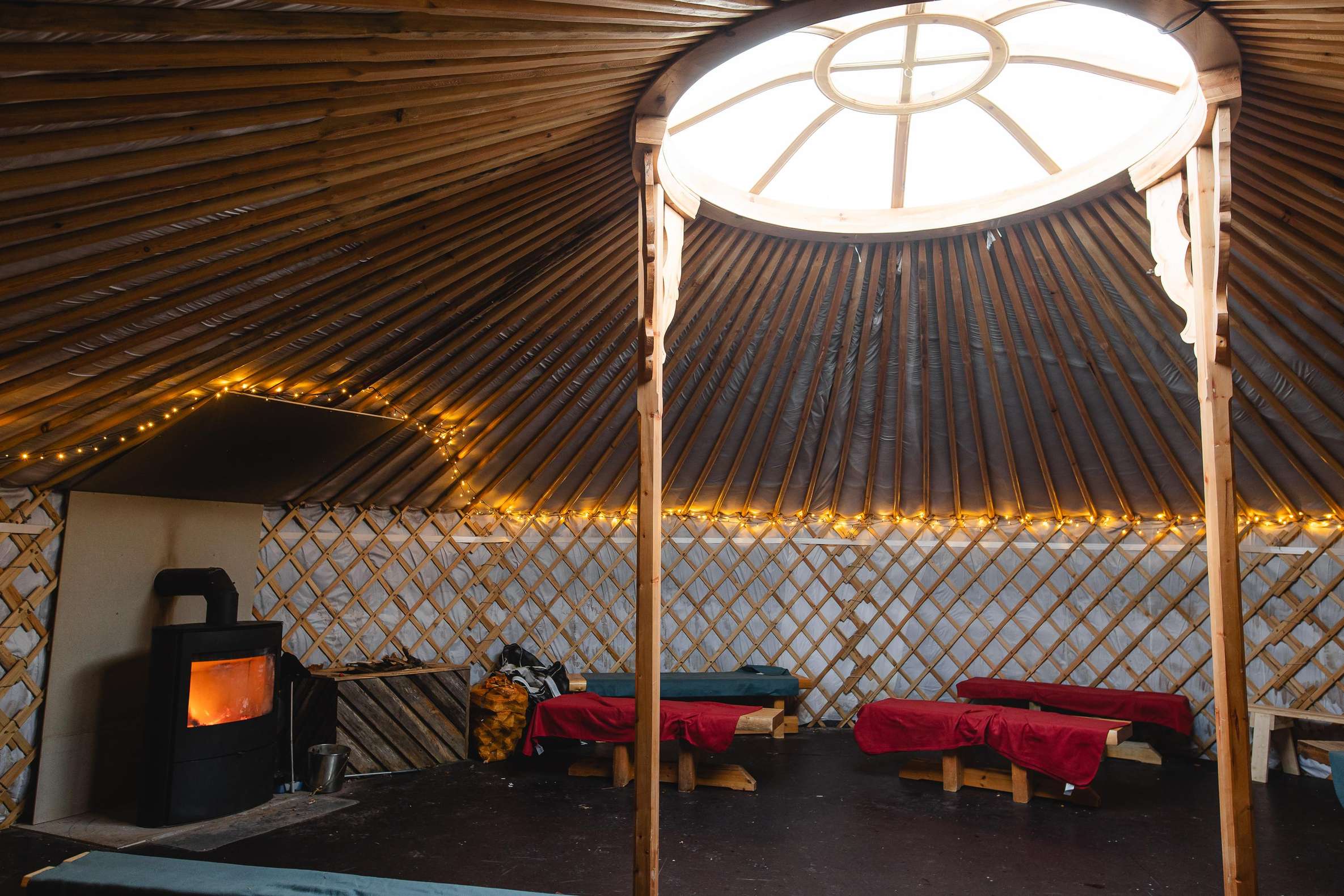
Around 15 minutes of kennel time to pet the dogs and warm up, and on wilderness safaris it stretches out, unhurried, with hot drinks and grilled sausages or cookies around a fire or inside a kota. Some quick commercial runs compress the cuddling to five minutes; the family kennels give it room.
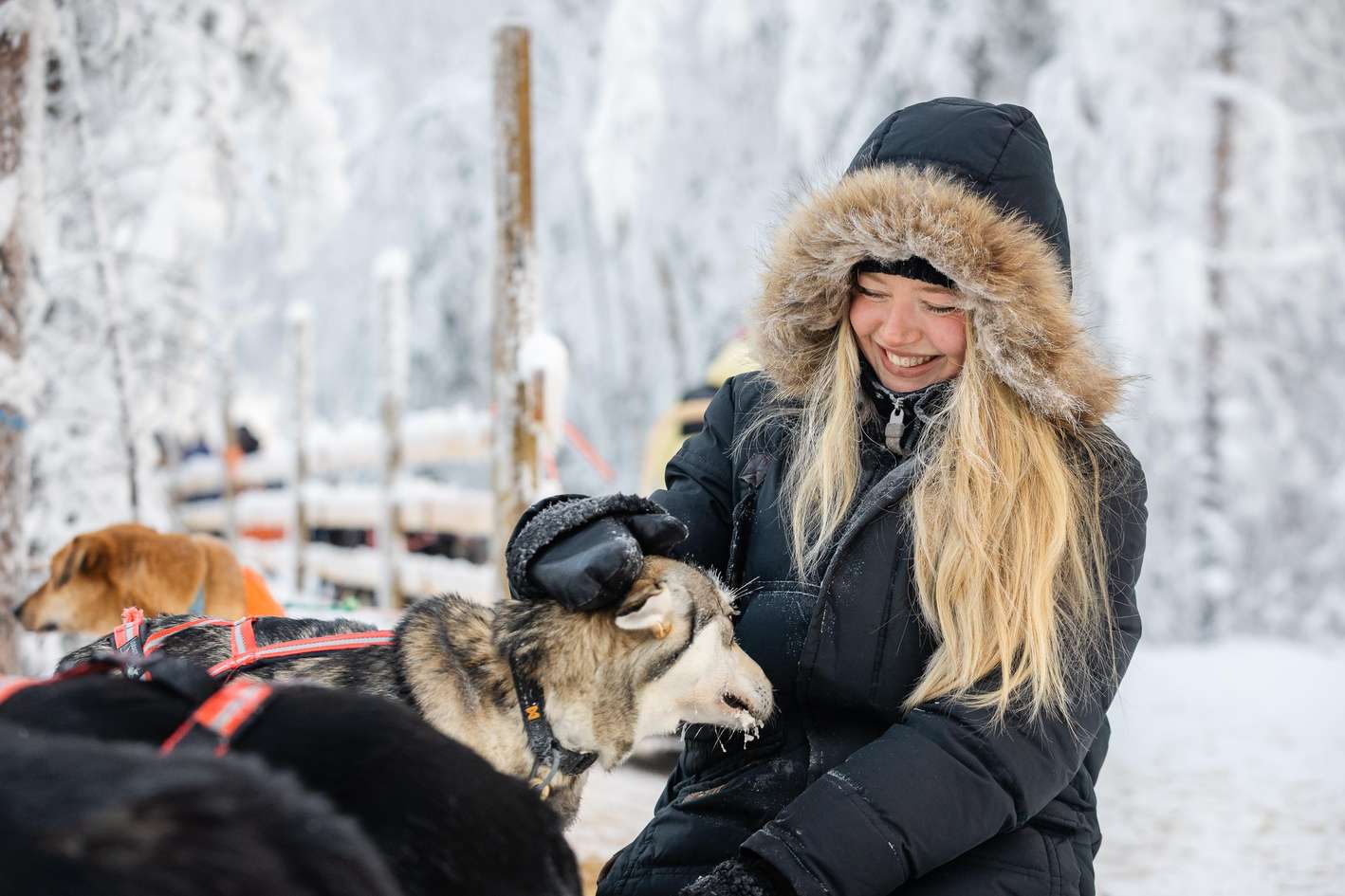
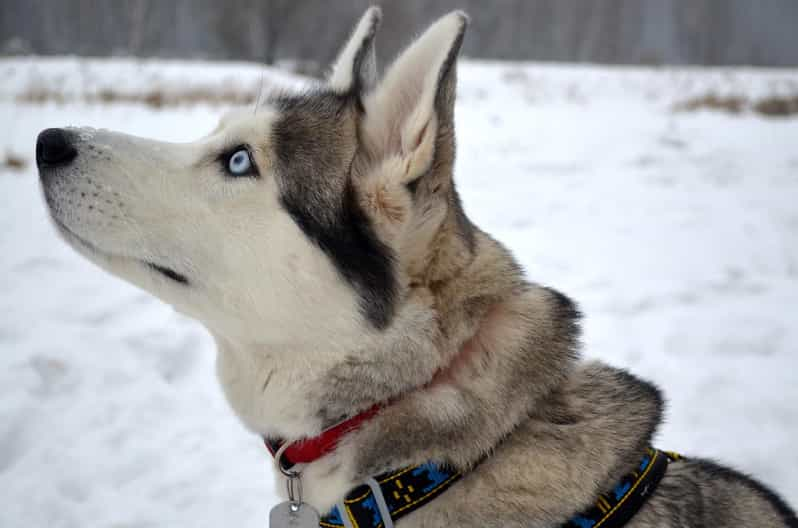
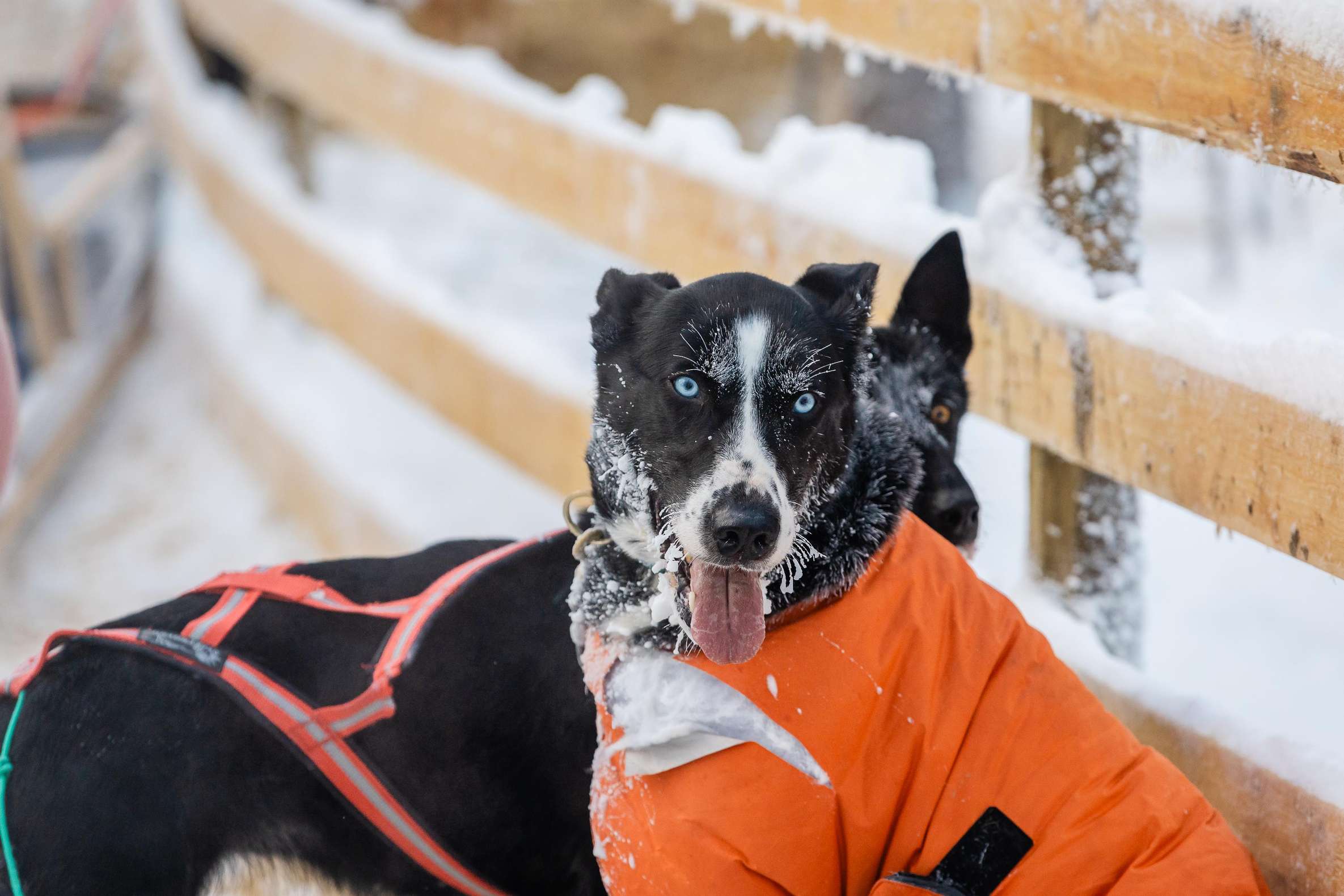
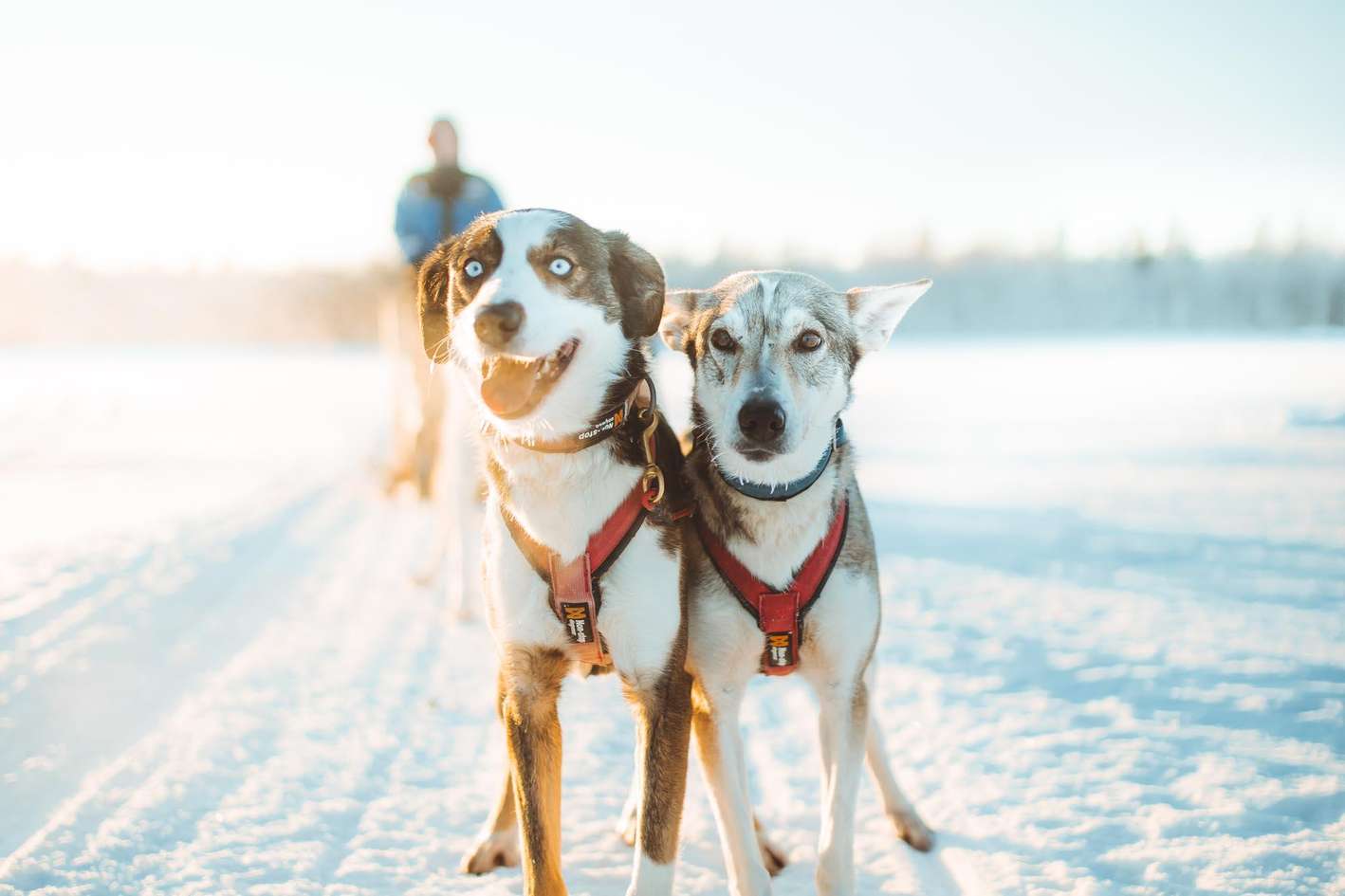
Ask the guide before petting. These are working animals, not pets on demand, and some are timid. A team here may be pure Siberian huskies or the Alaskan huskies that dominate Lapland, crossbreds built for the job. Either way they live outdoors, curling nose to tail to hold their core warmth down to minus 50.
One thing nobody warns you about: kennels smell strongly of dog. It is part of the place.
How the day unfolds
1
Hotel pickup
Van or bus collects you in central Rovaniemi
Transfer runs 20 to 45 minutes each way
2
Suit-up and briefing
Thermal overalls fitted, safety and braking instruction
What if the weather turns or you need to change plans?
The weather rules exist for the dogs, and they are applied without negotiation. Between -28°C and -30°C tours get shortened or switched to guide-driven sleds; at -35°C or colder, or -30°C on exposed airport trails, they are cancelled outright. On thin snow early in the season, kennels run wheeled carts or shorter trails.
If a change is significant, you are offered an alternative program with a partial refund, or the chance to cancel for a full refund. Free cancellation up to 24 hours ahead applies on these tours as standard.
The rule that catches people is punctuality. One operator states plainly that missing the meeting time means a missed safari with no refund, and late arrivals are not repaid. The bus leaves when it leaves.
Book ahead, too. Walk-in prices in peak winter rarely drop, and the good midday departures sell out long before arrival, sometimes months before Christmas.
The rows below set each disruption beside what actually happens next.
What happens when the day changes
If this happens
What happens then
Temperatures drop to -35°C or colder
Tour cancelled; a full refund or a rescheduled date applies
Thin snow in early season
Tour runs on wheeled carts or a shorter trail; big changes bring a partial refund or full cancellation option
You miss the meeting point or time
No refund; check the confirmation email for the exact time and place
You cancel a day ahead
Free cancellation up to 24 hours before departure on these tours
Three rules decide who holds the handlebar. Drivers must be 18 or over on some tours, with one tour on this page allowing adults only at the handlebar, and children under 16 on self-drive safaris ride in a sled driven by a parent.
Weight: drivers on featured tours must weigh more than 50 kg. Fitness: you need enough balance and body control to stay on the runners, and a guide can reassign anyone who cannot manage the sled.
Health matters more than nerve. Pregnant travelers are advised against husky rides because of the strain, vibration and sudden bumps, and people with back problems are told the same on several tours.
Heart conditions rule out at least one tour here. If any of that touches your group, check with the tour operator before booking, since it can stop the visit.
The sled basket has its own arithmetic. Family sleds carry up to 2 adults and 2 children, and some operators cap the load at a strict 250 kg total. Infants and toddlers need a dedicated adult seated with them in the sled, and the driver does not count as that adult.
Check before you book a self-drive husky tour
Check
Why it matters
Our pick
Driver's minimum age
Under-age drivers must ride in the basket
Some require 18; one tour allows only adults to drive
Weight to drive
Drivers below 50 kg cannot control the sled safely
Featured tours require more than 50 kg
Who rides with children
Kids need a seated adult in the sled
Up to 2 adults and 2 children per sled, with a 250 kg cap
Health conditions
Back problems and pregnancy rule out the bumps
Several tours list pregnant travelers and back problems as unsuitable
What else is worth doing around your husky safari?
A morning on the runners hands you back an afternoon.
From the kennel run, Santa Claus Village sits about 9 km from central Rovaniemi, a 14-minute drive, and once you are there the sights stack within a few minutes' walk: the man himself, the Arctic Circle line, the Main Post Office, and Snowman World with its ice slides and skating rink.
Toddlers, whom the wilderness trails mostly exclude, have their own door. The village's Husky Park runs short walk-in tracks of 400 to 800 metres with tickets bought on site, no booking needed, and children under four join free with an adult. Reindeer sleigh rides there welcome babies on a lap with no minimum age.
If you want both animals in one morning, one tour combines a self-drive husky sleigh ride with a visit to a reindeer farm, hand-feeding included.
And on a clear, strong night, the Northern Lights can show even from the quieter edges of the village, though light pollution makes the wilderness the better bet.
Huskies are faster than expected! 7 km is plenty. They teach you sled handling, then you drive yourself, with a snowmobile guide leading and watching safety. Petting after, super friendly puppies. Unforgettable.
Self drive husky sledding in Rovaniemi works for almost any healthy adult, and the dogs carry the difficulty. Choose 5 km for a first run, 10 km for the wilderness, and a midday departure in the dark weeks. Book months ahead for Christmas.
Go ifYou want to hold the handlebar and steer your own teamYou can ride midday in December or January for the twilight lightYou book several weeks to months ahead for peak dates
Skip ifYou are pregnant or have a back or heart condition, unless you choose a passenger ride after adviceYour group is all toddlers and small children, where a musher-driven sleigh fits betterYou arrive in November unprepared for wheeled carts or shorter trails on thin snow
Common questions about self drive sledding in Rovaniemi
Short answers to what people ask before they book a sled and a team of their own.
Rovaniemi2026
Fifteen minutes standing on the runners while six dogs pull you through silent forest. Book ahead, the midday slots go first in peak season.
Do I need experience to drive a husky sled?
No. Guides teach you braking and balance before departure, and the dogs know the basic commands. Most healthy adults handle a 5 km run without trouble. The main thing is standing steady on the runners while the team pulls.
How fit do I have to be to mush my own team?
A basic level is enough, roughly what it takes to walk briskly uphill. On steeper climbs you step off a runner and push the sled to help the dogs. Trails are fast-paced and bumpy, so good balance and a firm grip matter more than strength.
How does the foot brake work?
A metal bar with claws sits at the back of the sled. Step on it and the teeth dig into the snow to slow the team.
On very icy stretches the claws may bounce off the surface, so ease your speed down before corners and let the sled carry through the curve instead of braking mid-turn.
What happens if I fall off the sled?
Let go of the handlebar and do not grab the sled, the lines or the dogs. The team keeps moving until it hears a command or feels the brake, then it either stops on its own or a guide intercepts it along the trail.
Can two of us share one sled and swap?
Yes, and most people do. You pair up, one drives while the other rides in the sled basket, and you switch at the halfway point. Solo travelers are often given a sled of their own for the whole run.
How old do you have to be to drive?
It varies by tour operator. Some allow drivers from 15, others require 18, and children under 16 ride in a sled driven by a parent. Some operators also ask that drivers weigh more than 50 kg. Check the rule for the tour you want, since it can stop you from driving.
Can pregnant women or people with back problems take part?
Self-drive sledding is not recommended in either case. The ride brings vibrations, bumps and sudden movements, and several tours list pregnancy and back conditions as unsuitable. A musher-driven passenger sleigh is the comfortable alternative.
How long is the actual ride on a 5 km versus 10 km trail?
A 5 km trail takes about 15 to 30 minutes of sledding, while 10 km runs 30 to 50 minutes, depending on snow, weather and the dogs' pace. The rest of the tour covers transfers, dressing up, the briefing and time with the dogs.
Is the trail hard to steer through corners?
Narrow trails winding between trees are the tricky part. You bend your knees, lean your body and hold the handlebar firmly. Approach turns at a moderate speed and the sled follows the curve on its own.
How far are the kennels from central Rovaniemi?
Wilderness husky kennels sit 20 to 60 km out in forest and lake country, usually a 40- to 50-minute drive. Tours with transfers collect you from downtown hotels or central safari offices, and self-driving out there is not advised on icy winter roads.
What if there is too little snow or extreme cold on the day?
Operators adapt. With thin snow, tours may run on wheeled carts or shorter trails, and major changes bring an alternative program with a partial refund or a full cancellation option. In deep cold, runs get shortened or switch to guide-driven sleds, and tours are cancelled around -30°C to -35°C.
How are the dogs cared for?
Responsible kennels keep written welfare standards, trained staff and veterinary care, and limit how many runs each dog does. Look for the Green Activities ecolabel, which sets third-party verified criteria for sled dog welfare, including summer activity and retirement.

 Your best match