Our pick
5 hours·English
4.4(460)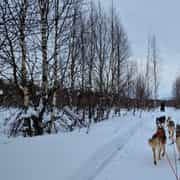
Rovaniemi: Drive Your Own Husky Team (5-8 km)
Free cancellationHotel pickup includedCertified professional guide & musher support
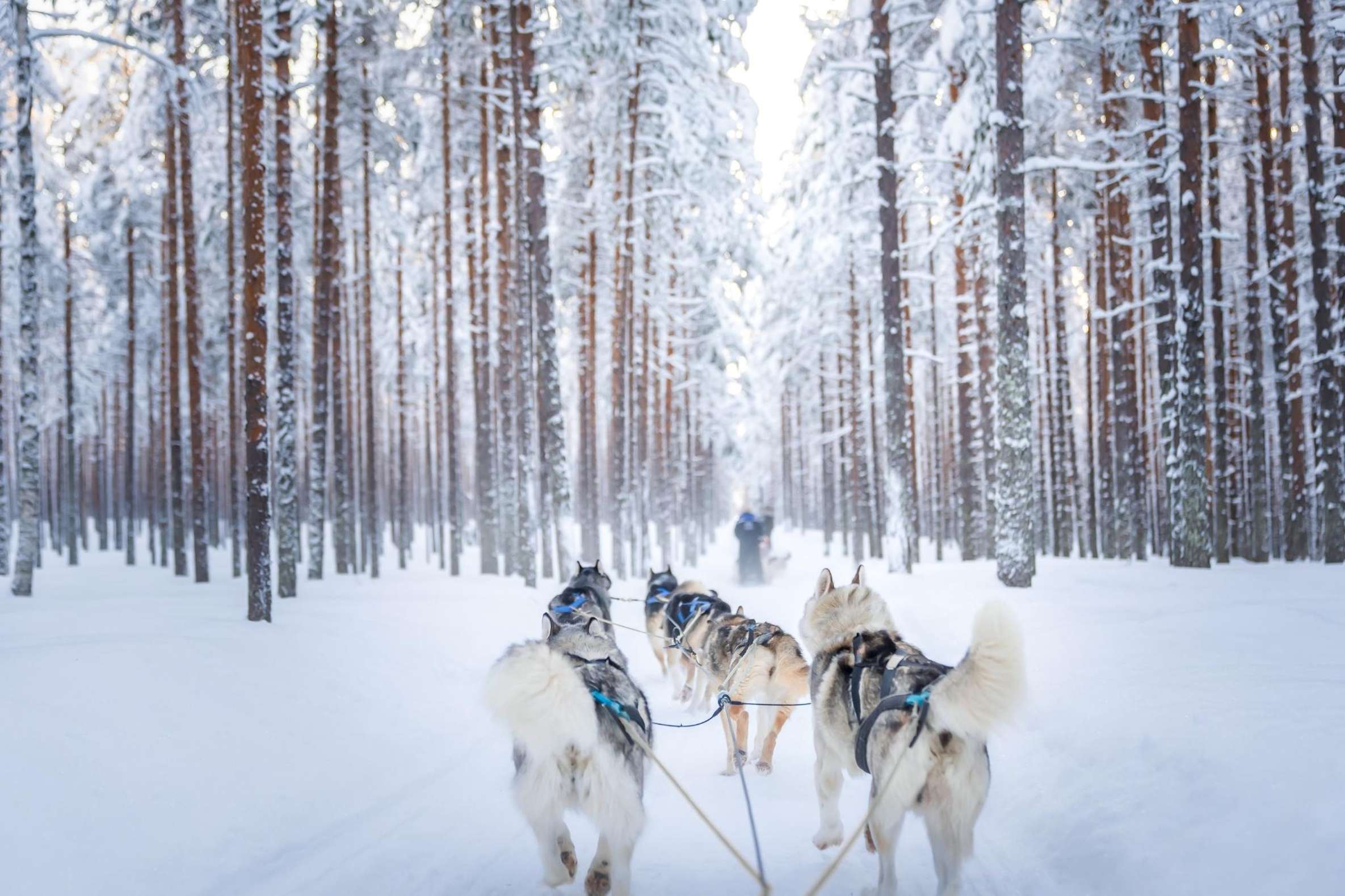
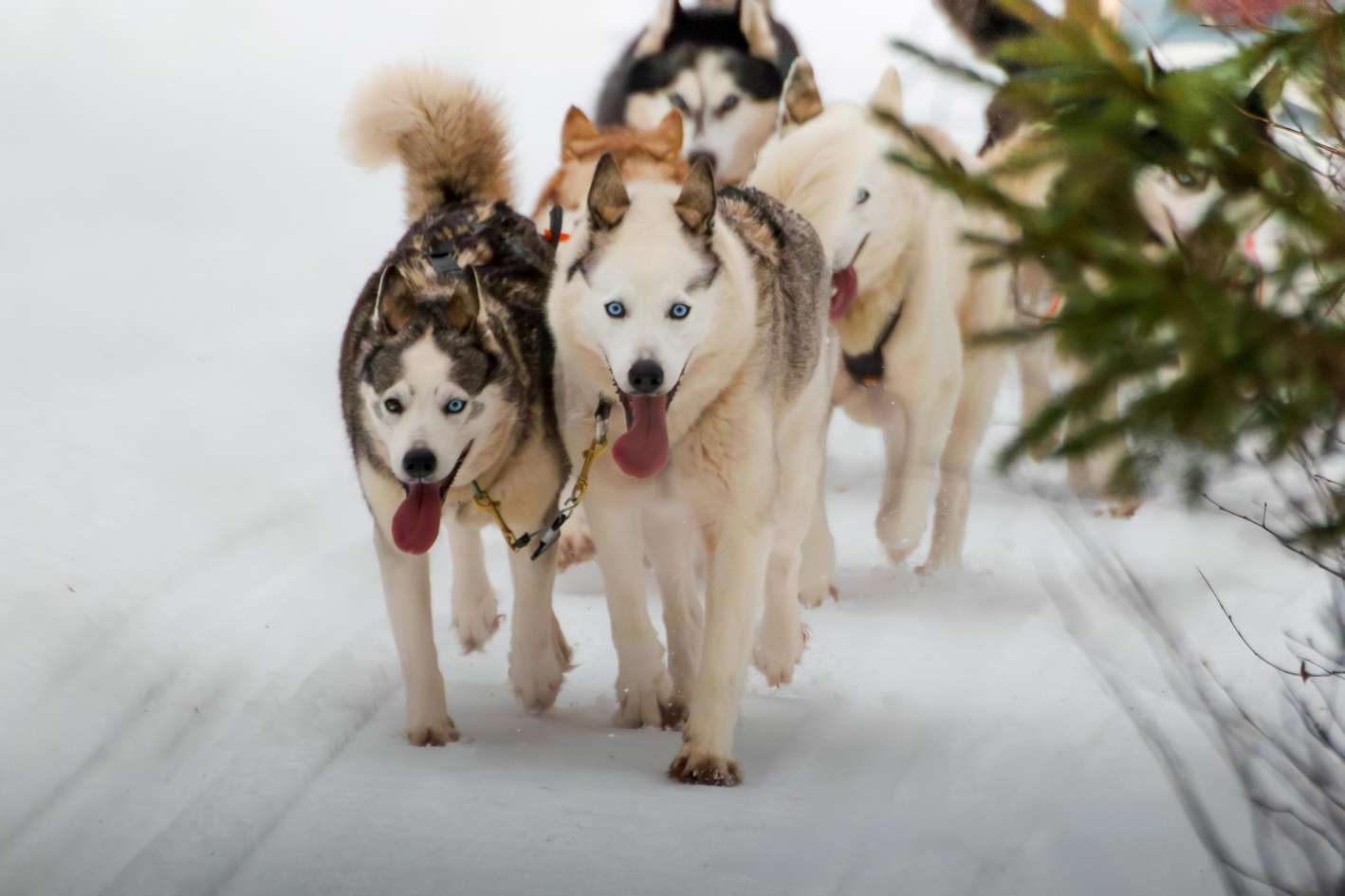
Dream of husky paws and glowing skies? Drive your own husky team on a 5-8 km run through secluded taiga far from the city glow, then warm up with hot drinks by the fire and swap mushing stories. Small groups of eight, certified guides, thermal overalls. Book your sled while the winter slots last.
An aurora husky safari in Rovaniemi, a night run timed around the Northern Lights, is not on this site's books.
What is here runs deep in the dark taiga: the Drive Your Own Husky Team tour takes you 5 to 8 km through secluded forest near a family-run kennel, far from city glare, with a campfire BBQ and hotel pickup.
The honest difference is daylight. You drive your own team for roughly half an hour, swap seats with your partner, meet the dogs and warm up over hot drinks in a five-hour trip.
A true aurora husky safari, with sled teams running under the Northern Lights after dark, is not on sale on this page. The tour recommended instead is Rovaniemi: Drive Your Own Husky Team (5-8 km), the nearest thing here to what aurora seekers want.
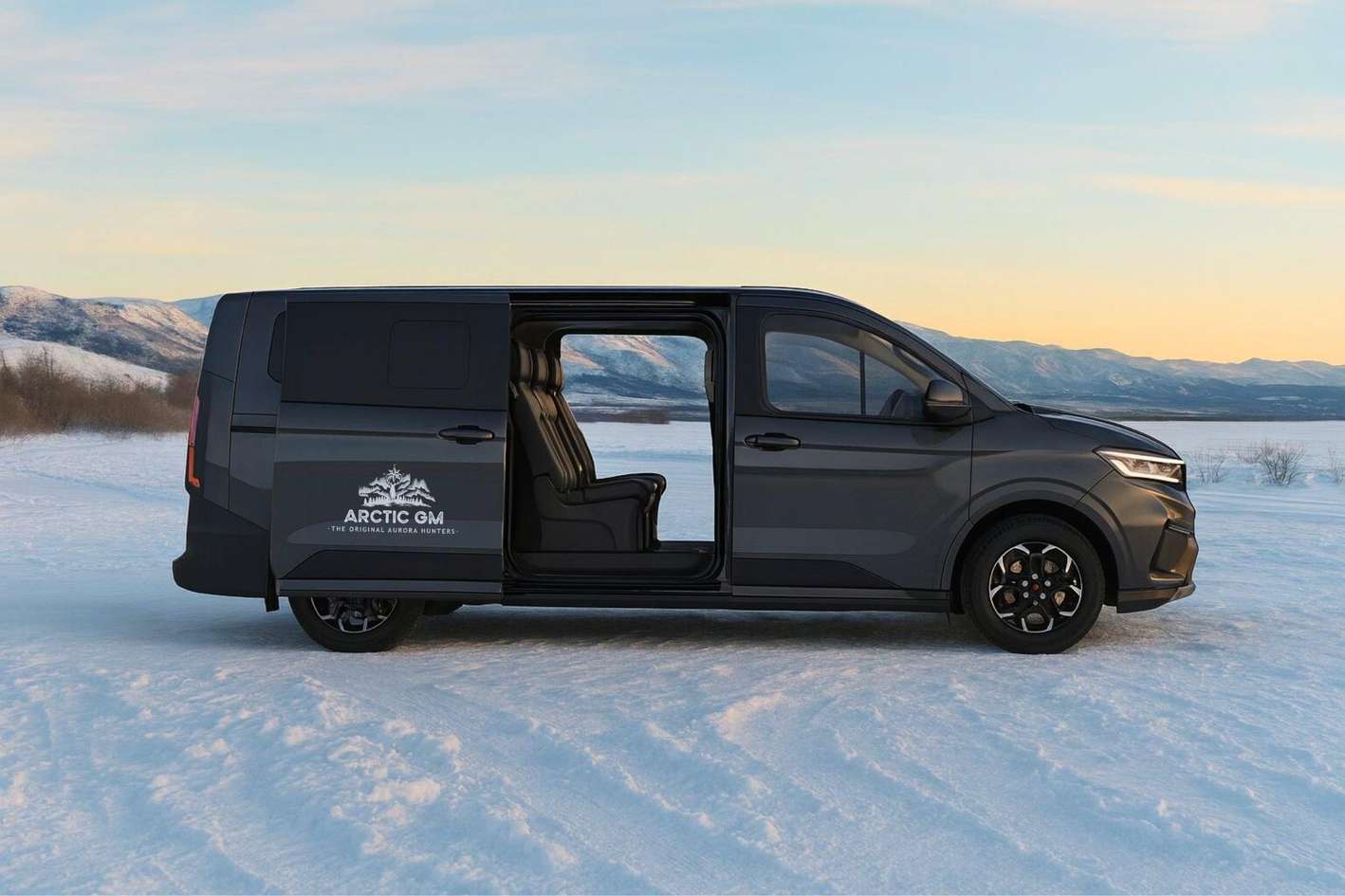
What it gives you is the setting that makes aurora sightings possible at all. A van collects you from your accommodation in Rovaniemi and carries you out to a secluded family husky farm, deep in the taiga and far from city glare, where the sky stays dark.
Small groups of no more than 8 guests keep the forest quiet around you. After instruction from a certified guide and musher, you take the handlebar yourself for a 5 to 8 km run through snowy wilderness, then meet the dogs, warm up with hot drinks, and ride back.
Thermal overalls are included, and the whole outing takes about 5 hours.
One limit to weigh honestly: the sled follows a fixed trail loop near the farm, so the team cannot drive off to find a break in the clouds the way a dedicated minibus aurora hunt can.
On a clear night over the kennel, the sky is all yours; under heavy cloud, no sled tour can fix that.
This tour suits anyone who wants to mush their own team rather than sit wrapped in blankets, and first-timers manage it well with the briefing. Two things to know before booking: a minimum of 2 participants is required, and you can cancel up to 24 hours ahead for a full refund.
Green marks the lowest price. Prices per person.
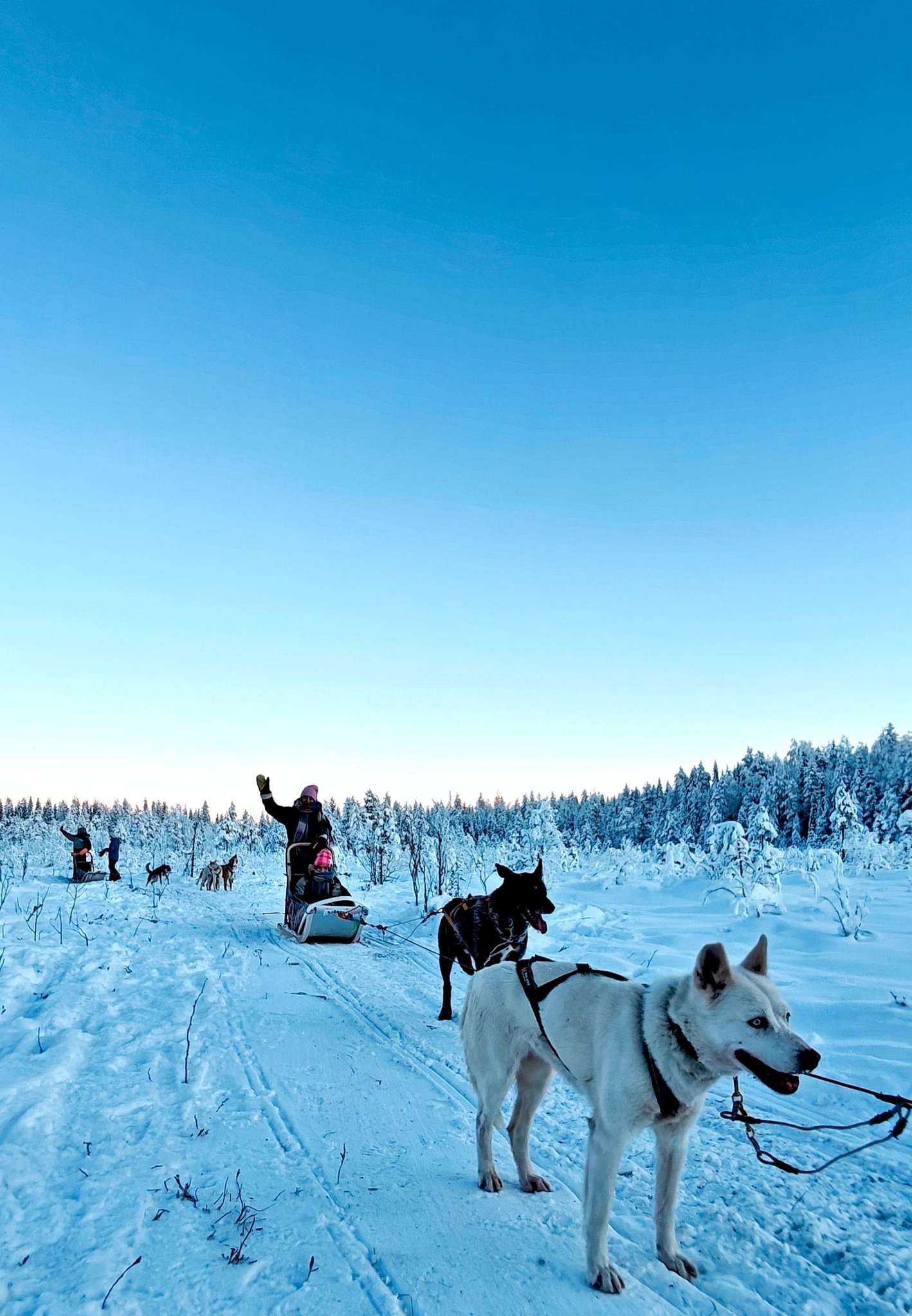
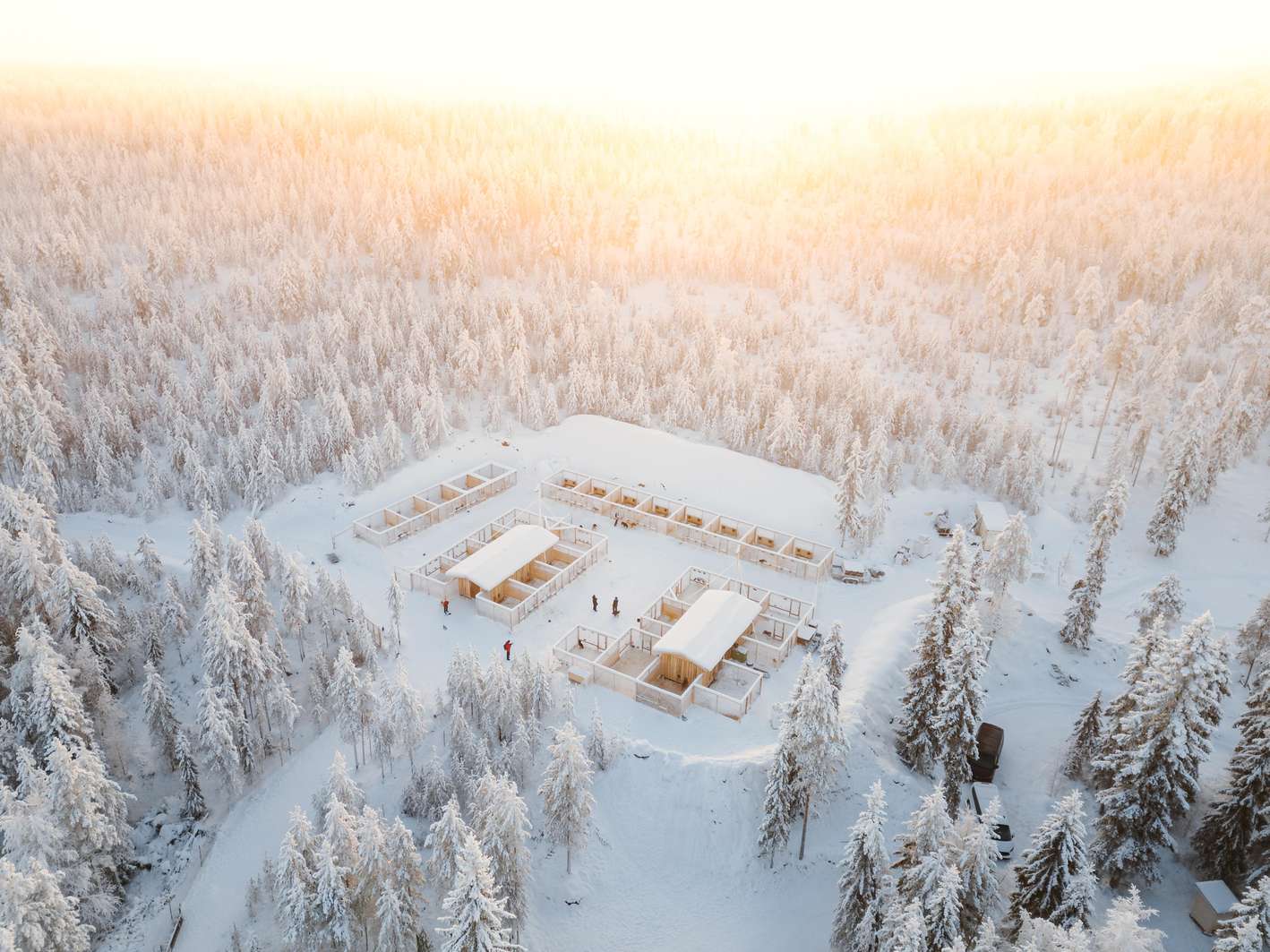
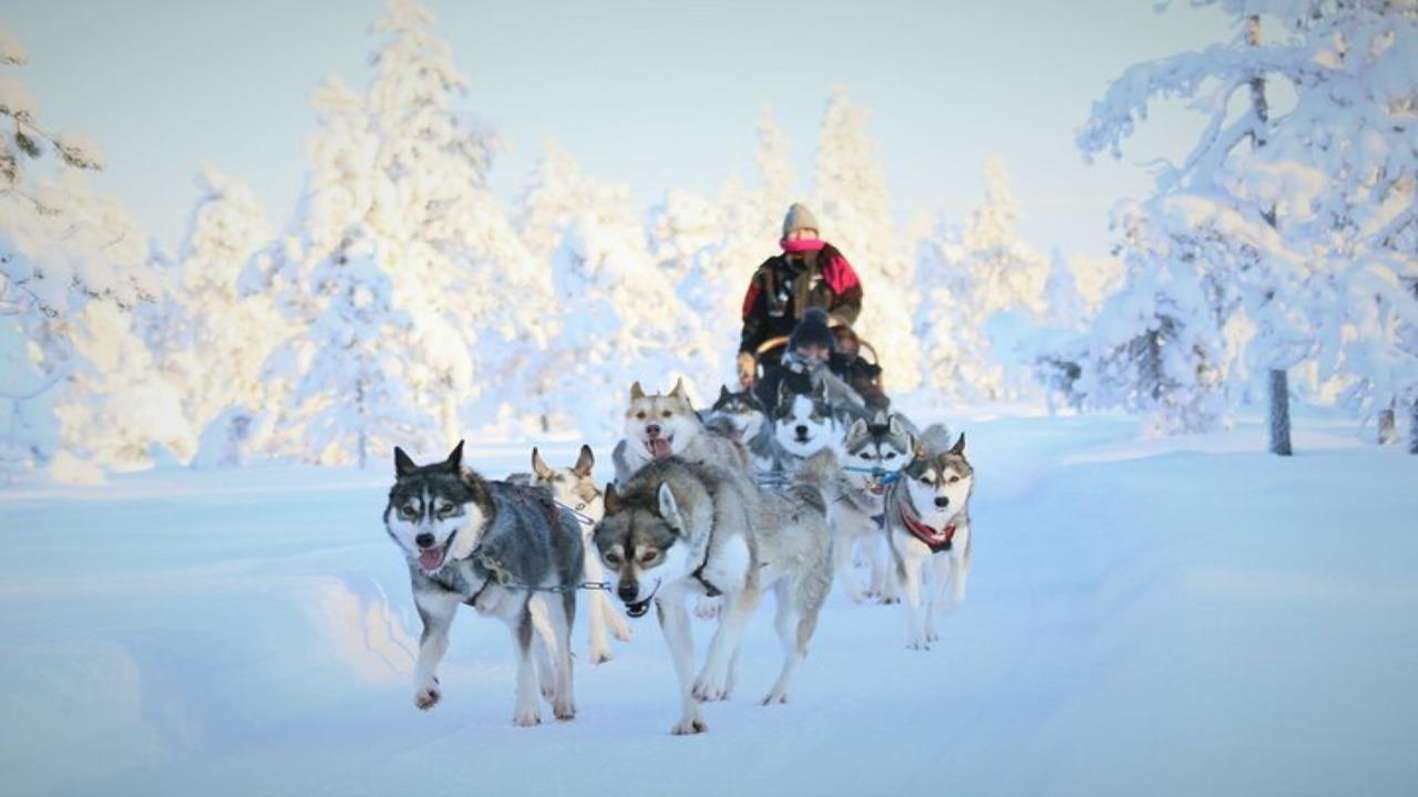
snow makes the dark trail glow
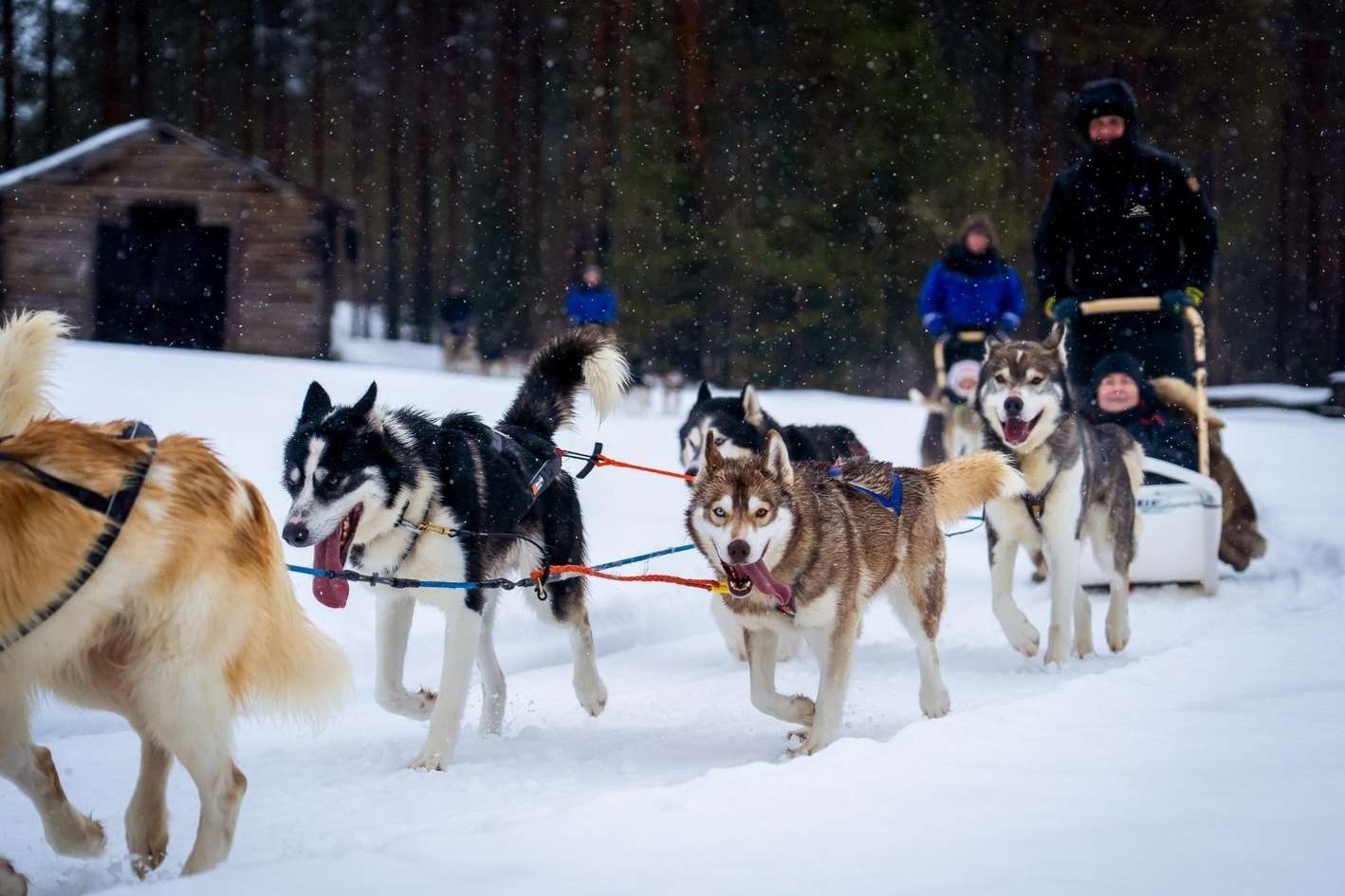
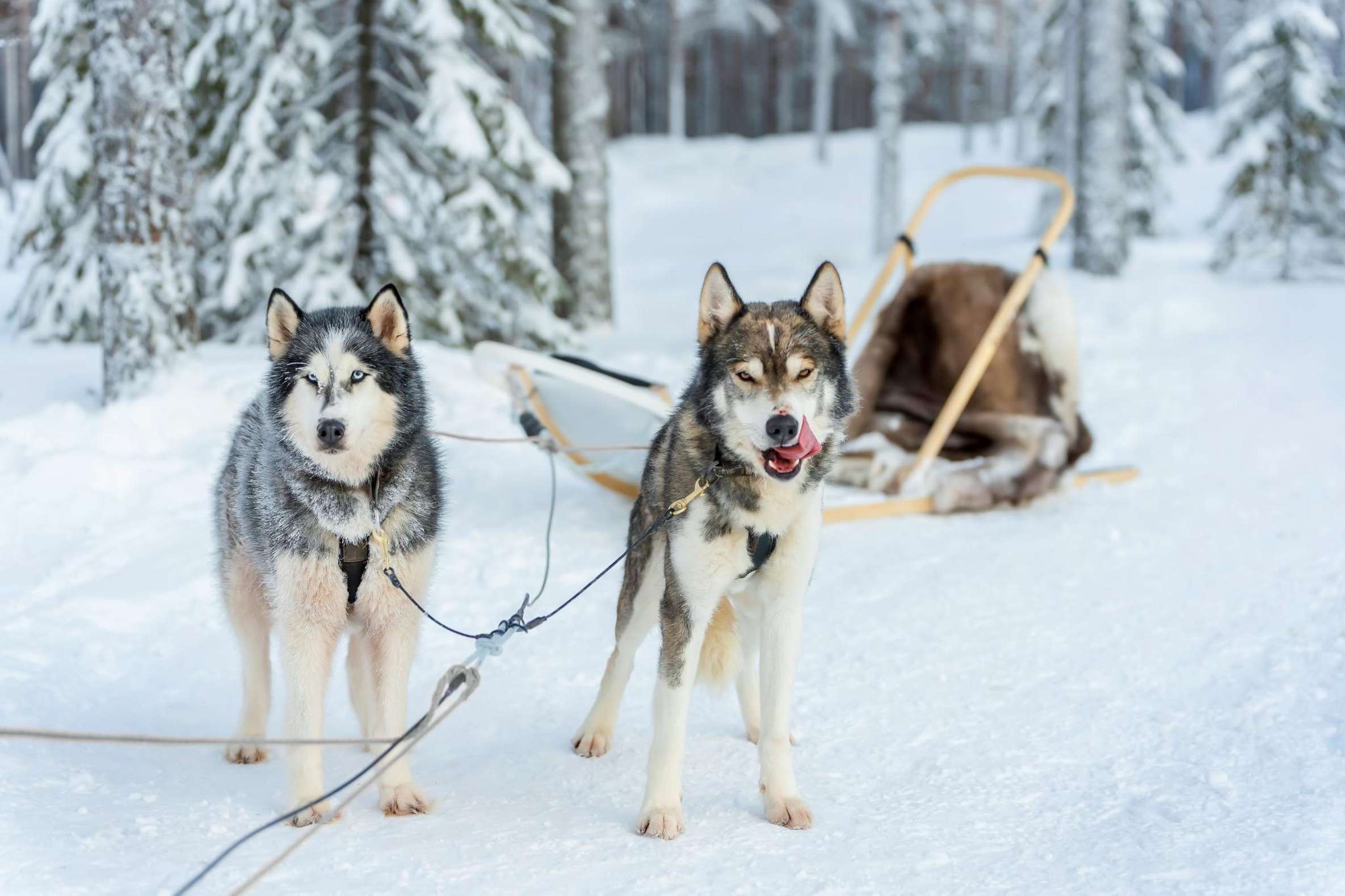
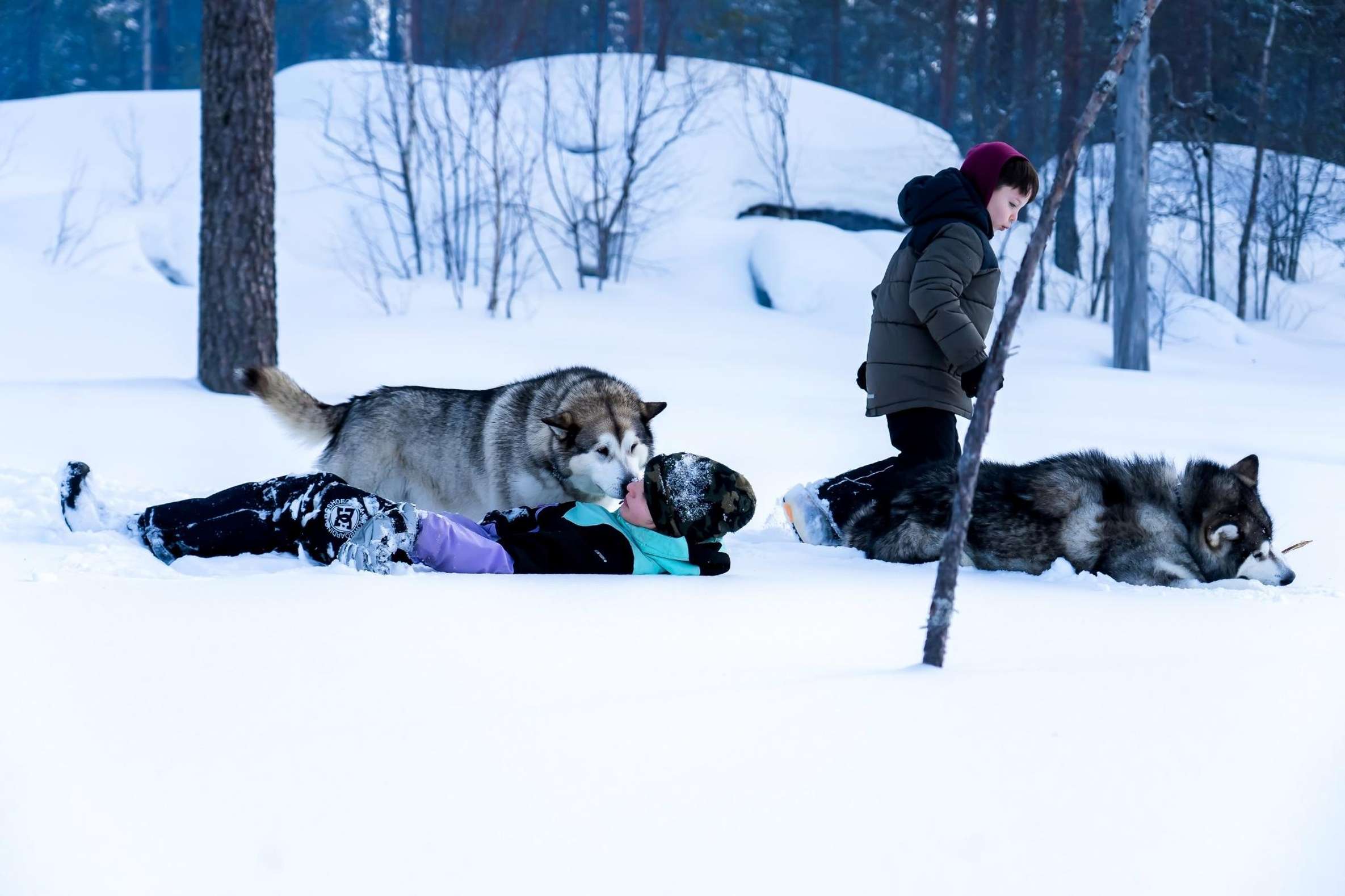
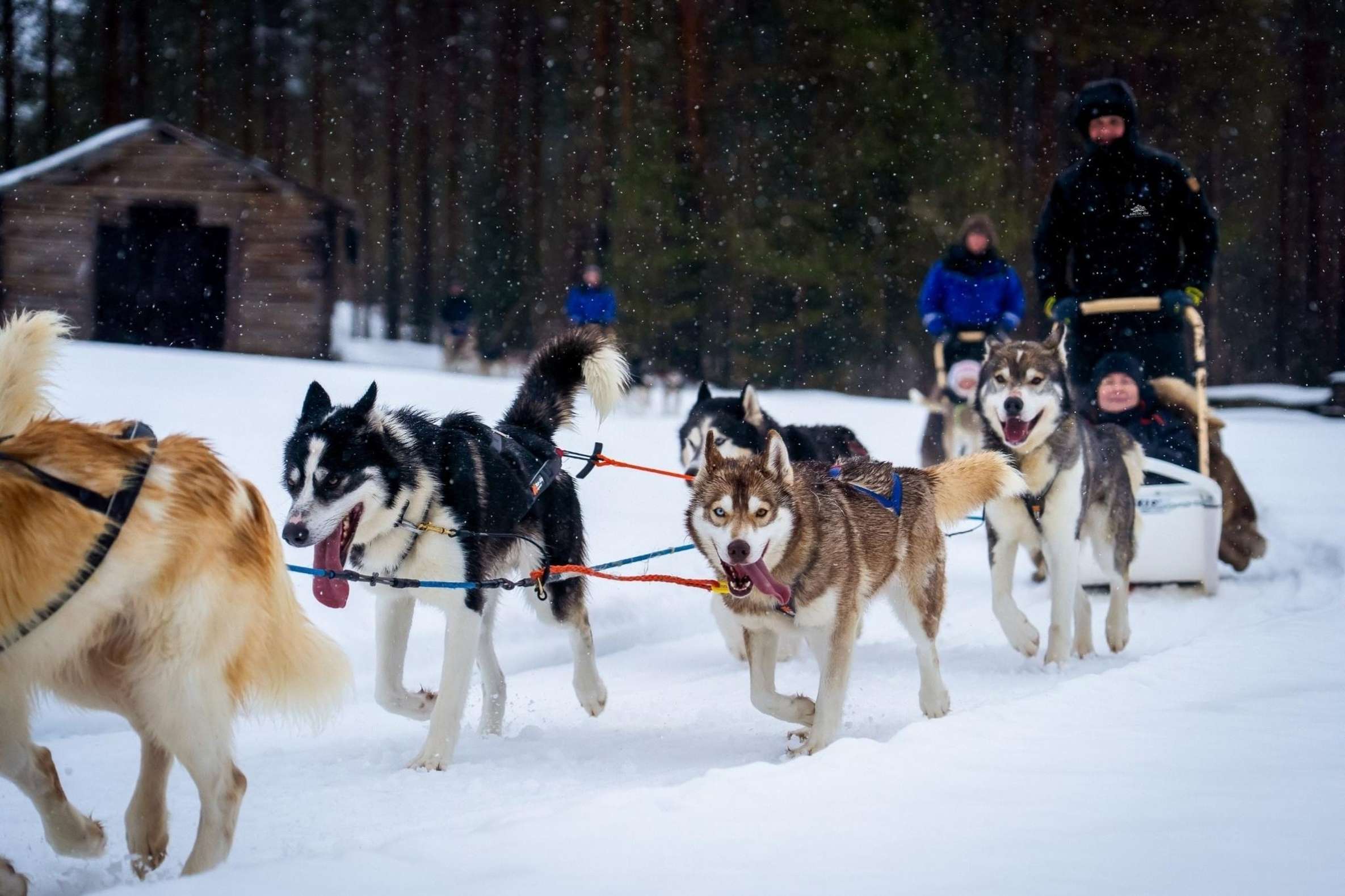
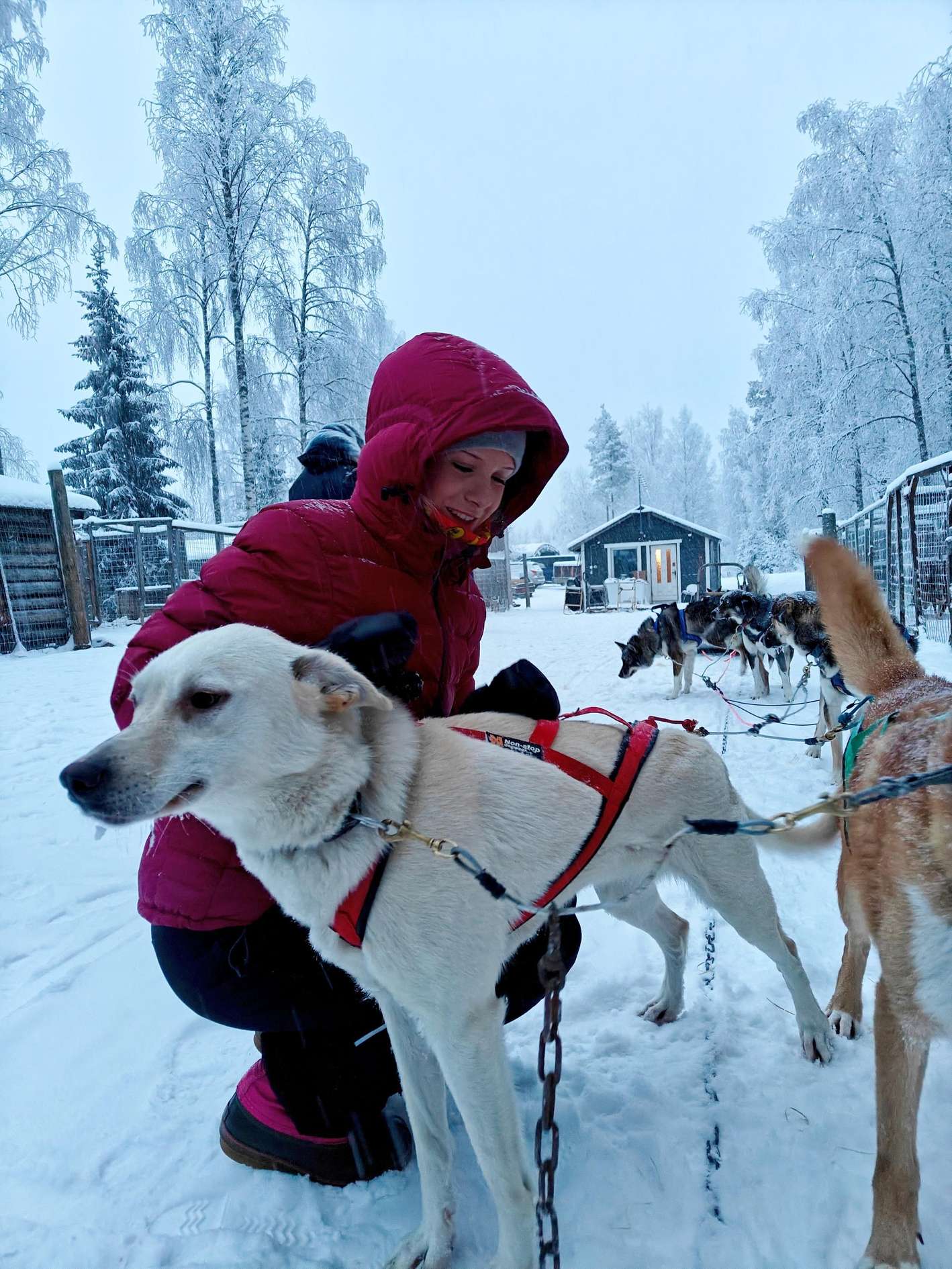
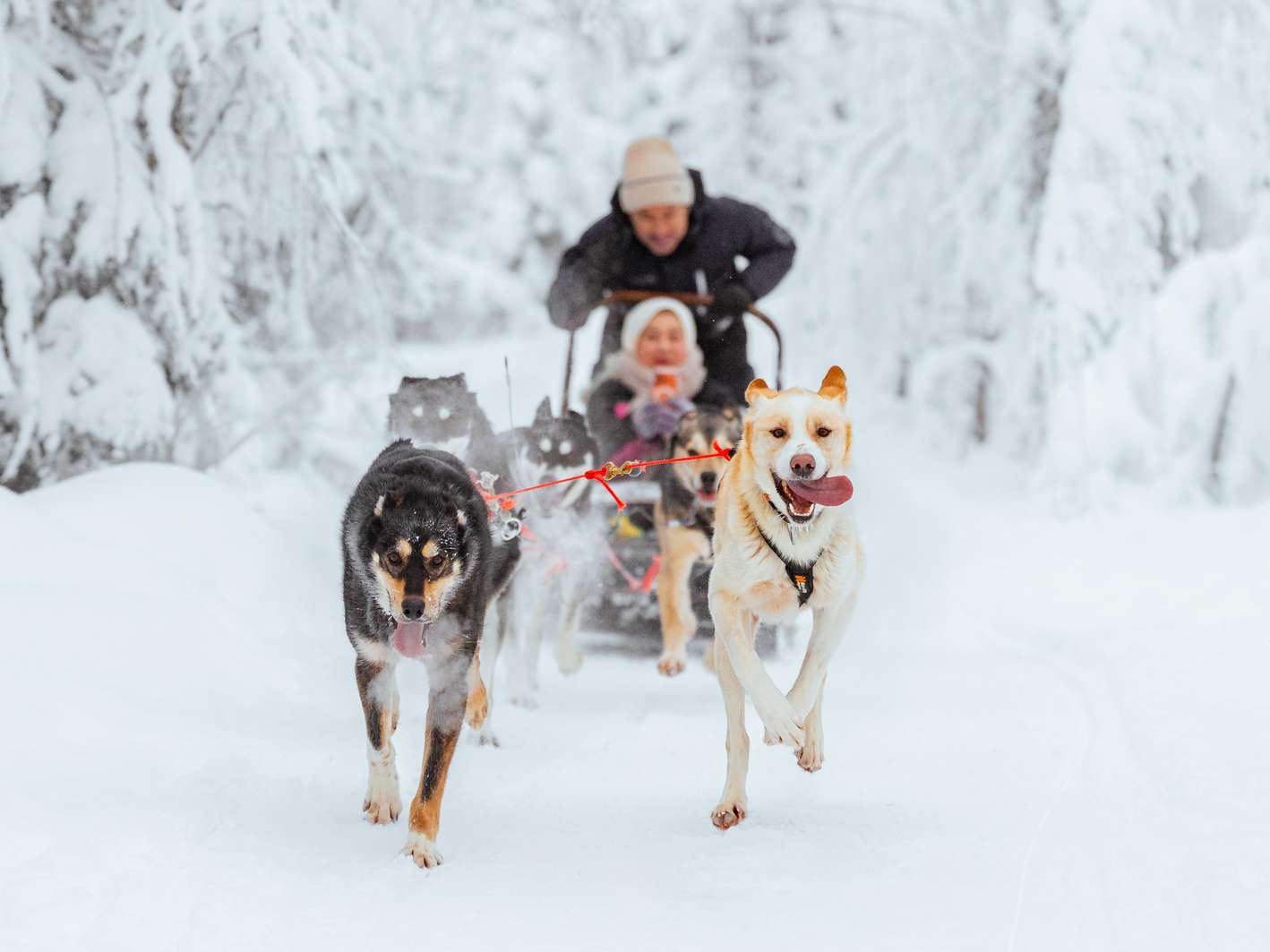
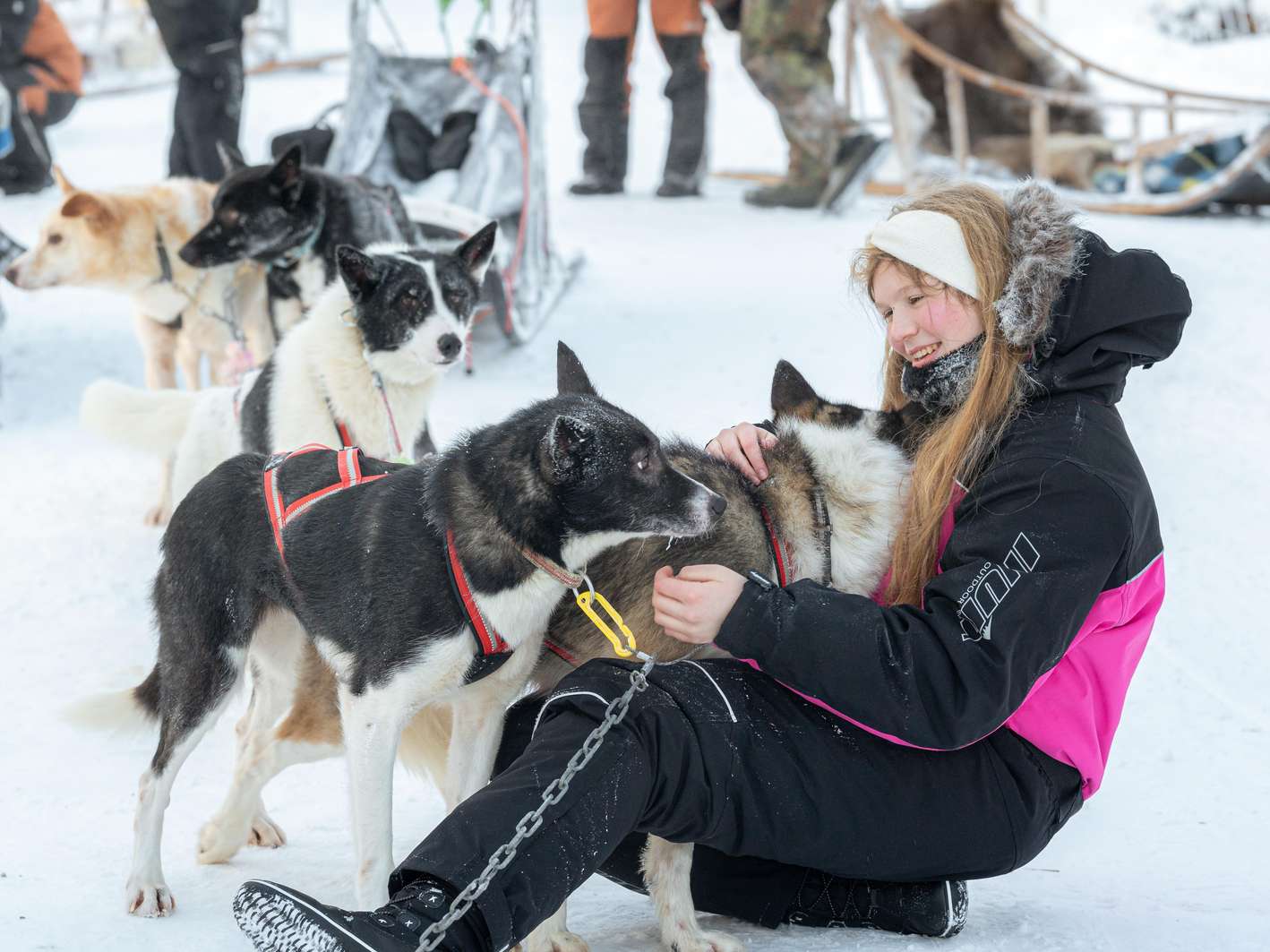
The dogs come first. At a secluded family farm deep in the forest outside Rovaniemi, teams of eager huskies bark and leap at their lines because they cannot wait to run. Groups stay small, no more than eight guests, so there is time to meet every dog before the sleds are hitched.
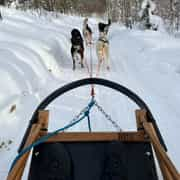
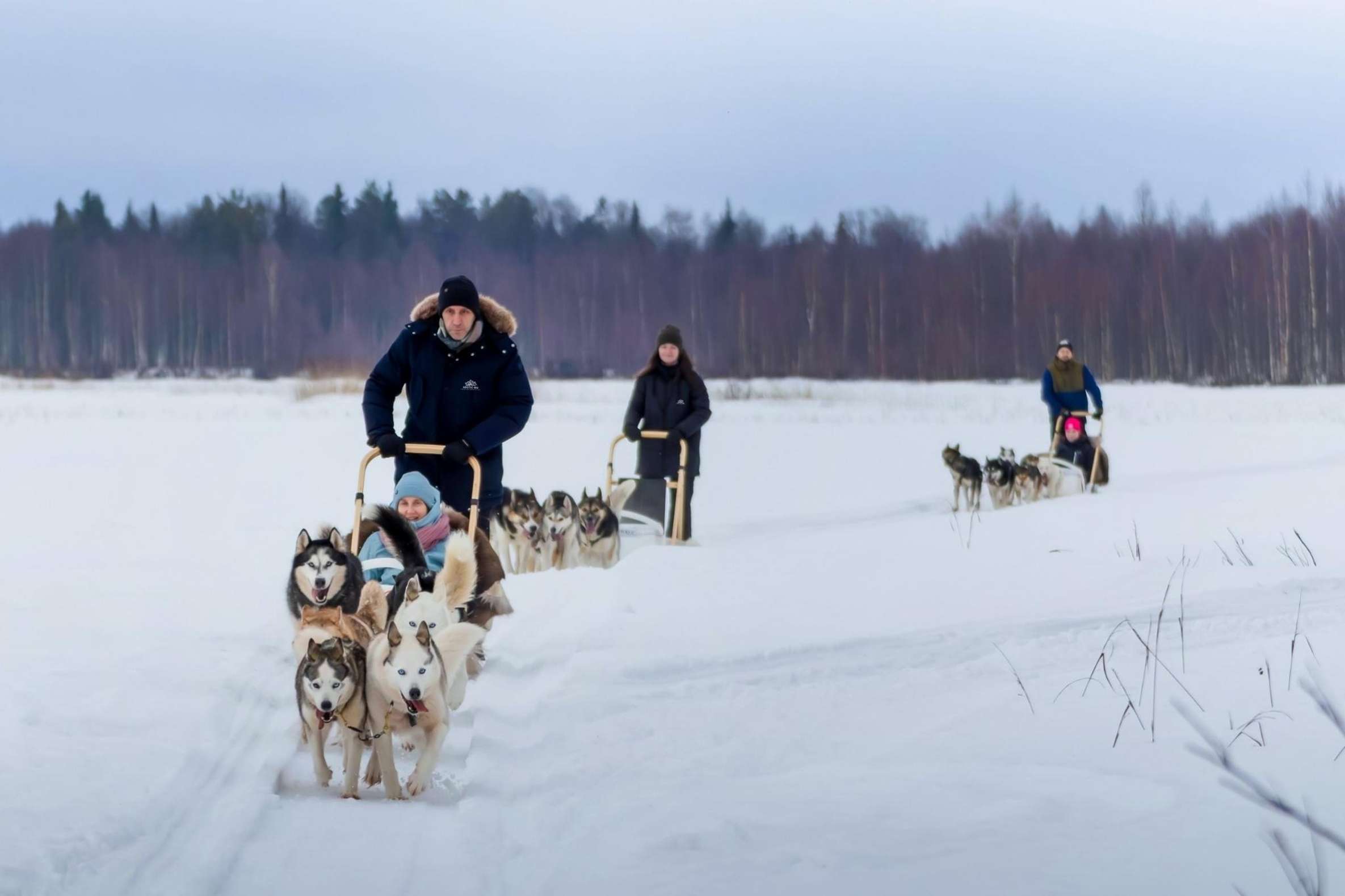
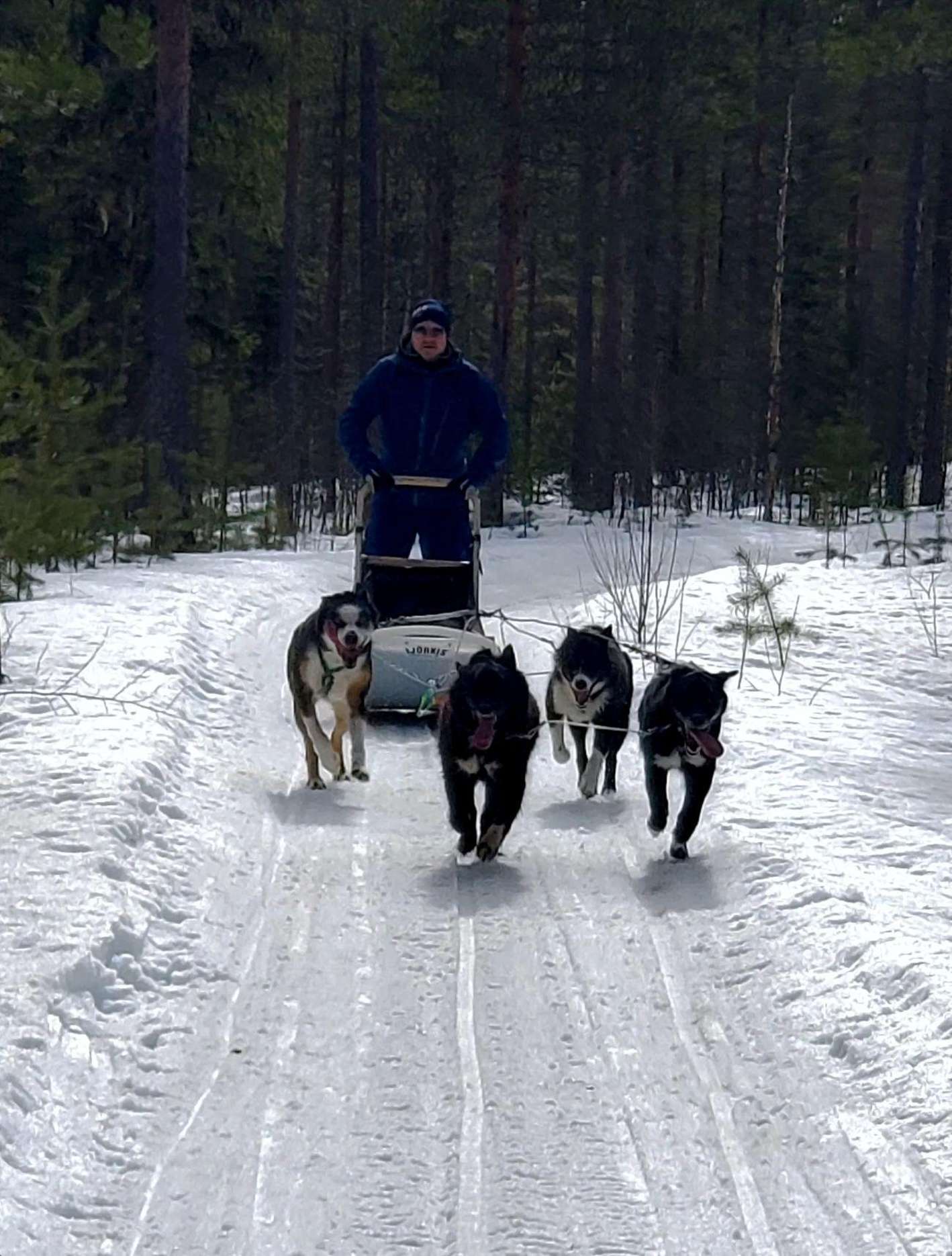
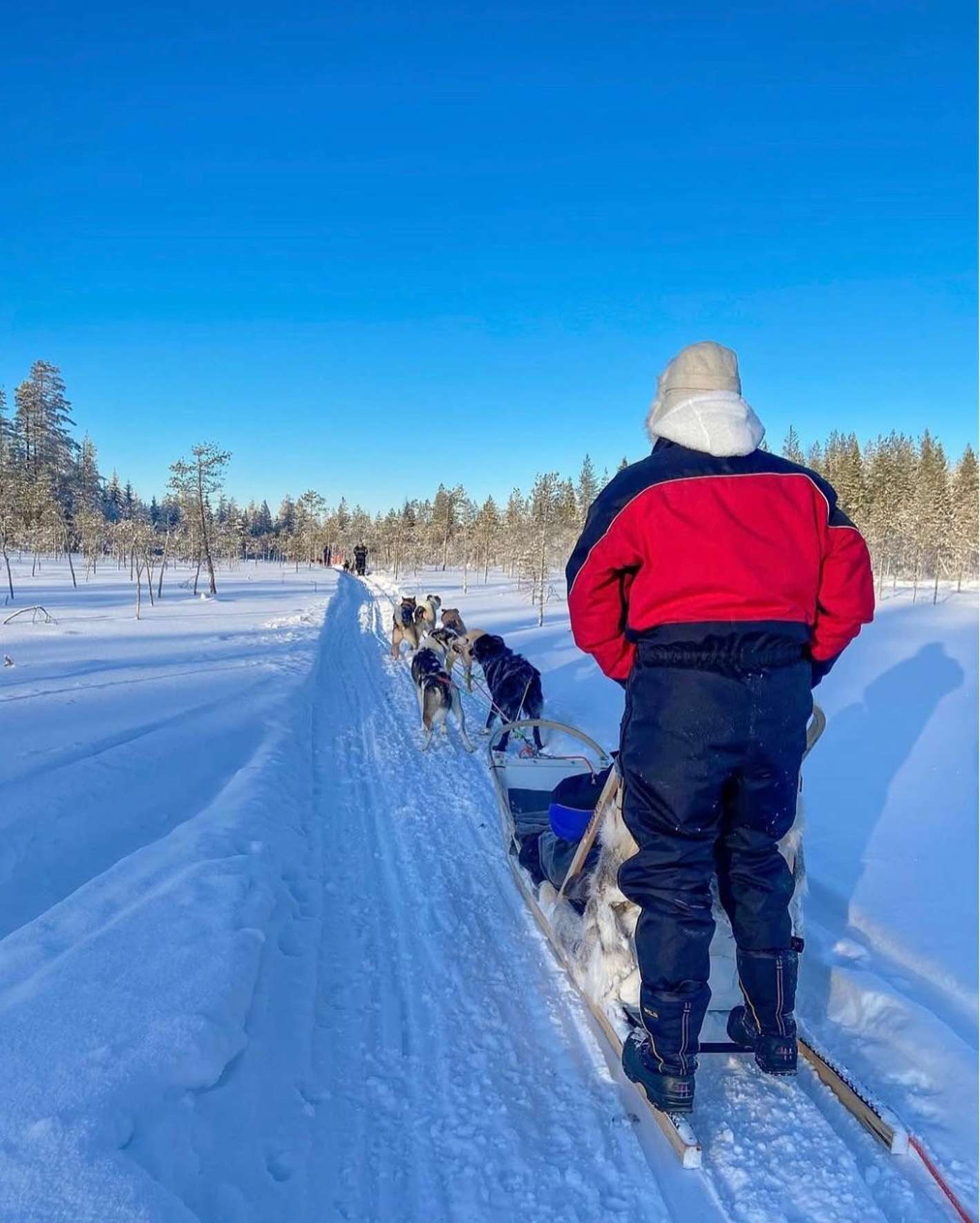
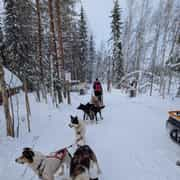
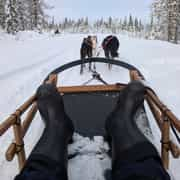
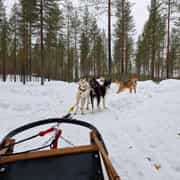
Then you take the handlebar. A guide demonstrates braking and steering, and after that you drive your own team along a 5 to 8 km trail through quiet snowy forest, one guest steering while the other rides, swapping halfway.
Back at the farm there is time for photos with the dogs, stories about Arctic husky traditions from your musher, and hot drinks to warm your hands.
sleds can't chase clear skies
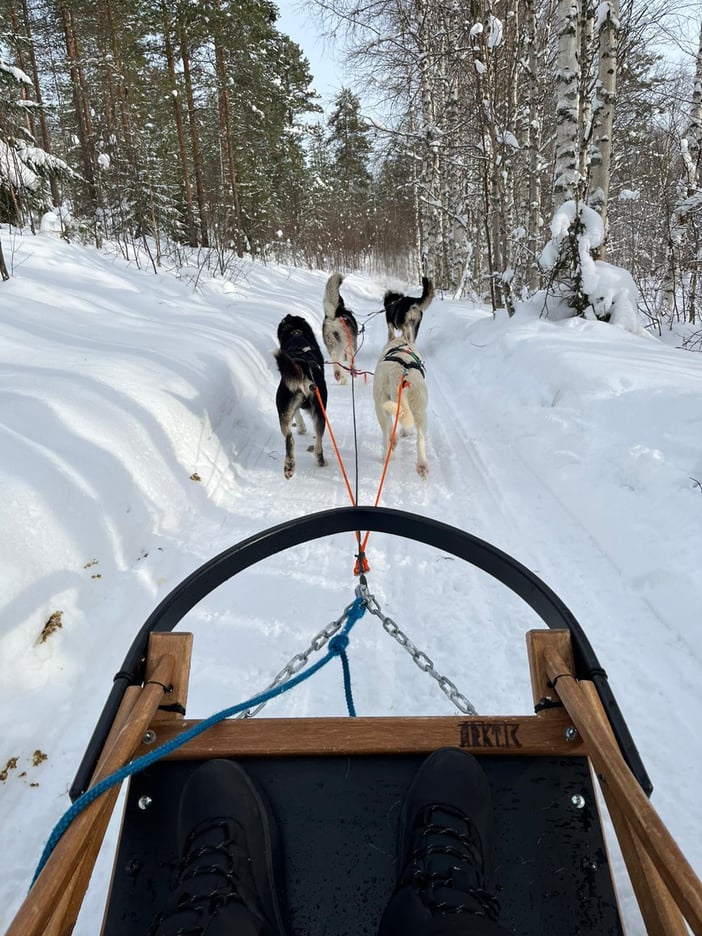
Everything was great! Super organized, friendly and informative guide.
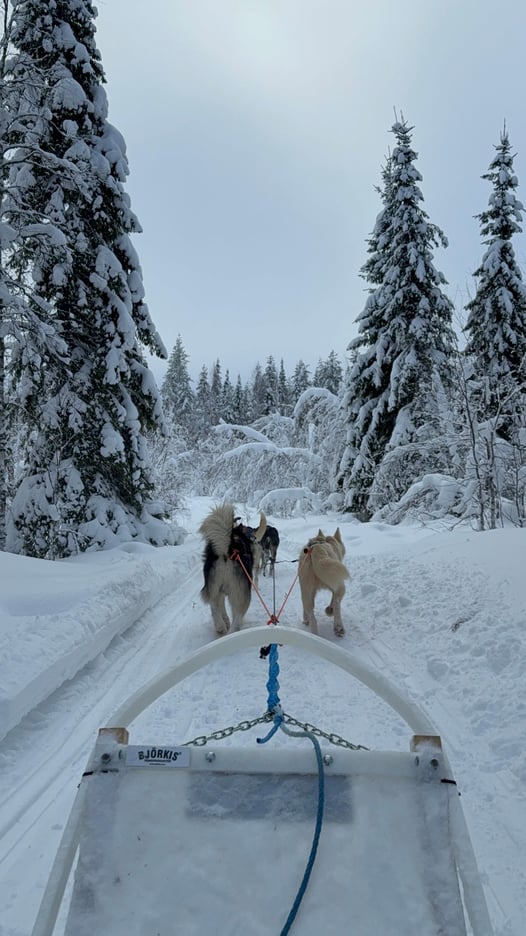
Great husky tour! Friendly driver Robin picked us up early. Met the dogs first, then self-drove the sled, challenging but with careful instruction and sweet dogs, Kate looked after us.
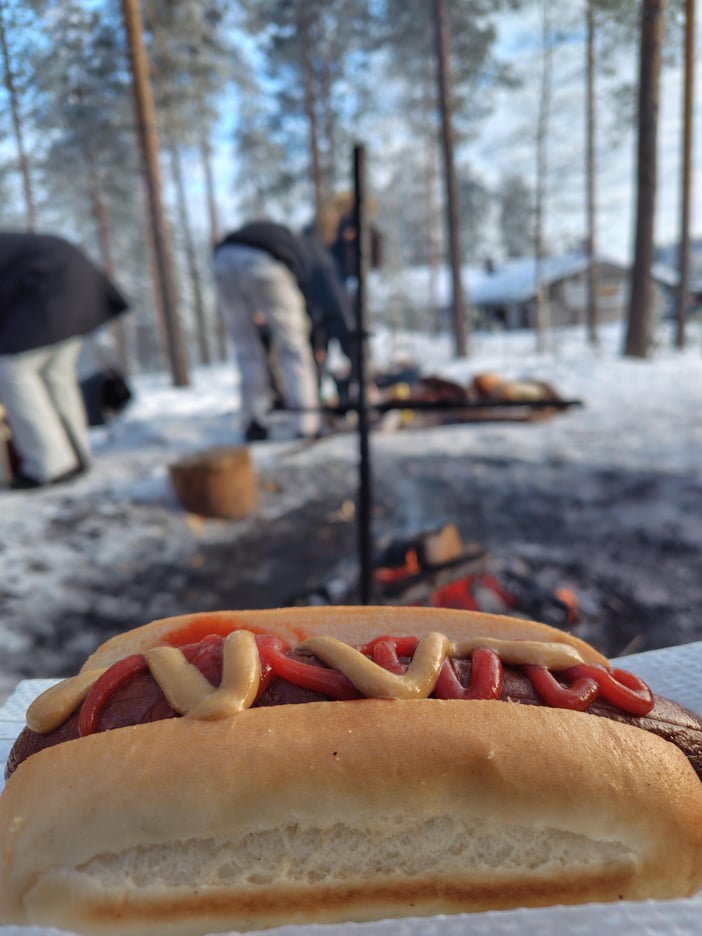
Really enjoyable tour. The husky park staff patiently taught me to drive the sled and I loved it.
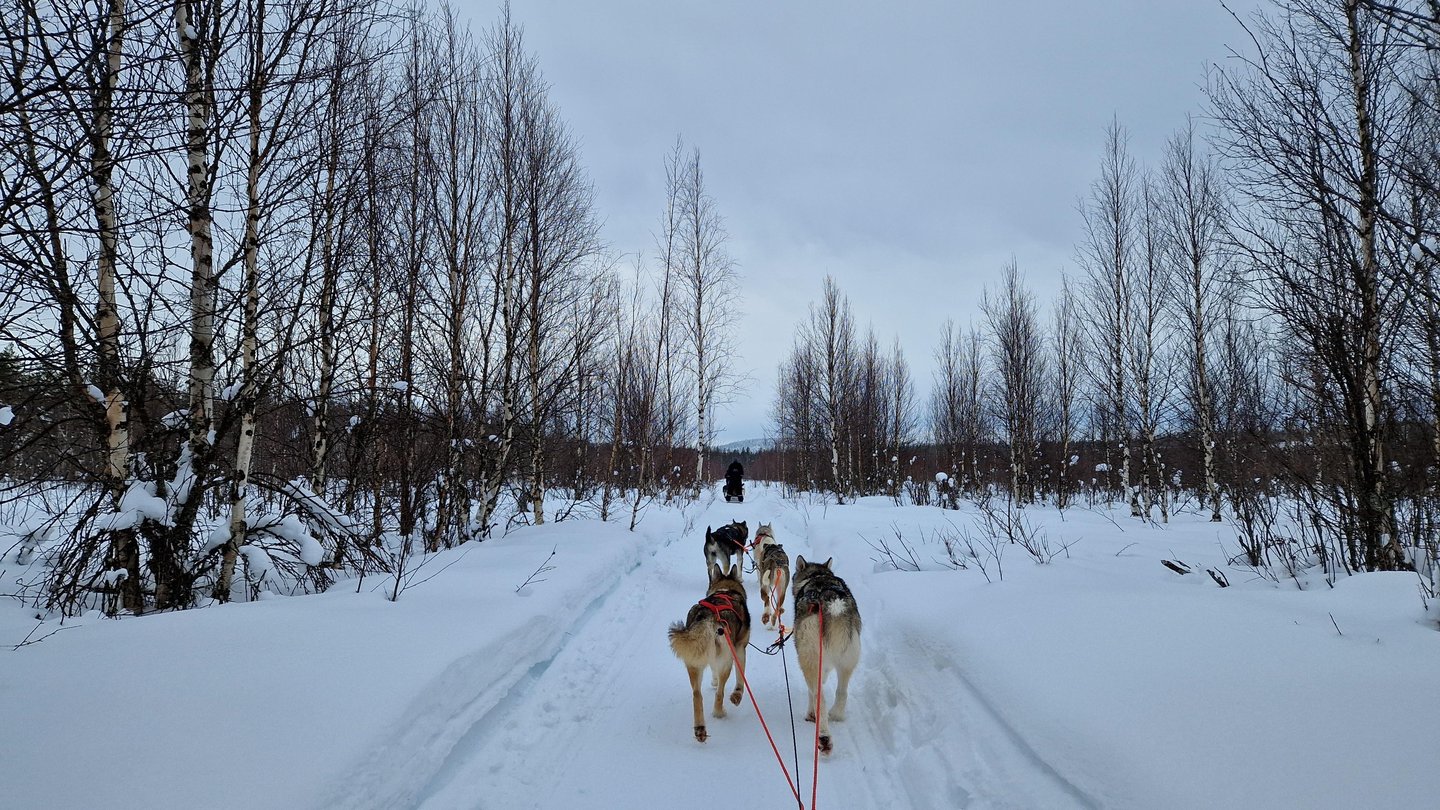
We adored this experience, it was magical. Lost in nature with wonderful dogs! Our guide was great with clear explanations.
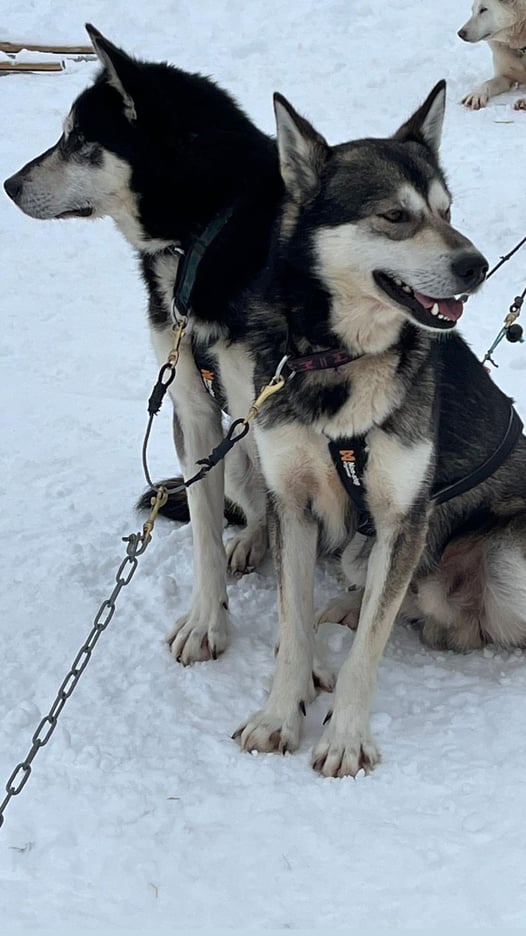
Everything was well organised with great communication beforehand.
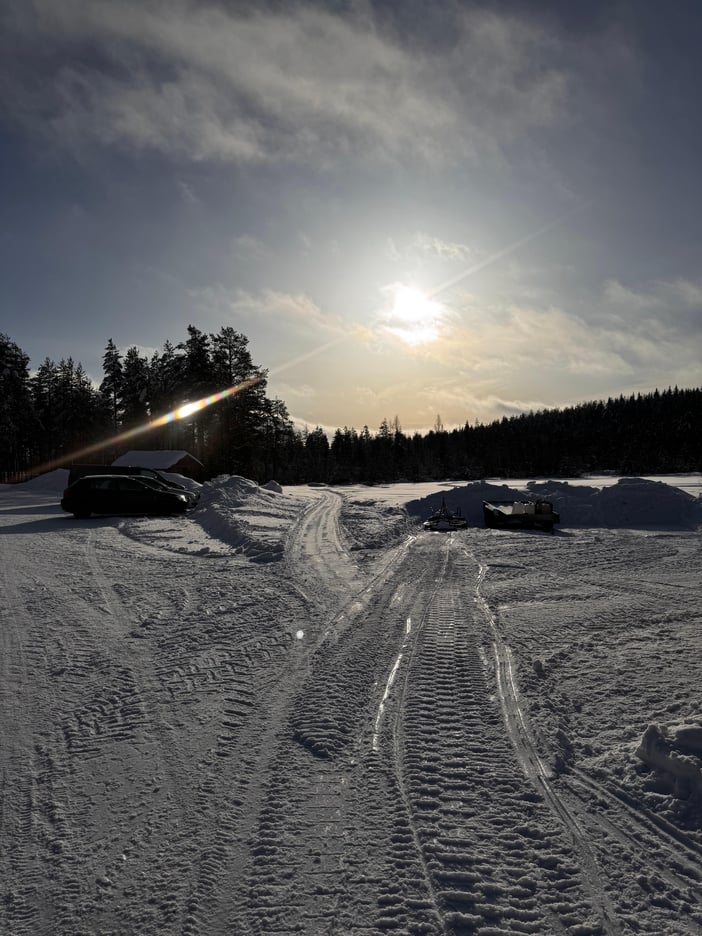
Amazing!! One of the best things I've ever done. Riding and controlling the sled were so much fun, and the dogs adore running, then cuddles afterwards.
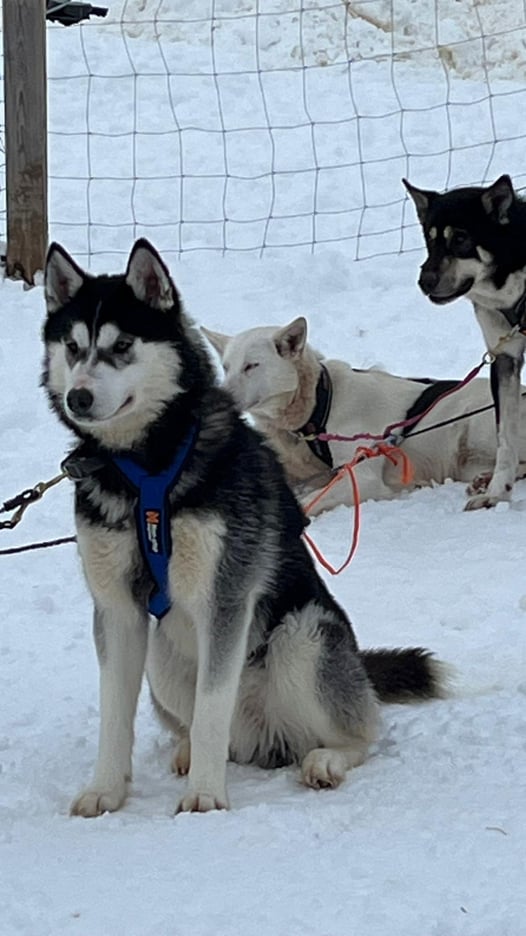
Everything was great! Super organized, friendly and informative guide. We enjoyed every part and highly recommend it to every traveler!
Driving their own husky team was the best part, with the dogs eager to run the whole way.
Many were surprised by the unhurried time to cuddle the huskies and puppies after the sled ride.
Several couples wished the trail had been longer, saying the ride felt short once the dogs got going.
december dark falls by about 5:40 pm
Choose your date as soon as your trip is set. Prime husky slots around Christmas can fill up to six months ahead, and February school holiday departures often go four to five weeks or more in advance.
Common mistakeLeaving the booking to your arrival week in Rovaniemi, when prime departures are already full
On the recommended tour, Drive Your Own Husky Team (5-8 km), pick the winter sled option for the snowy trail or the autumn version if you travel before the snow settles, when teams pull wheeled carts instead.
ImportantChildren cannot drive the sled, so everyone who wants the handlebar should book an adult slot
Pay online and the confirmation arrives by email right away, along with any later messages from the operator about departure times. Read the second email too, because it carries your pickup details.
Your ticket lands as an electronic voucher, usually on your phone. The tour collects you from your accommodation in Rovaniemi, so you only need the voucher and the stated pickup time. The drive out to the secluded kennel takes a while, so a van collects you well before dark.
Common mistakeArriving at the pickup point late, because a missed collection usually costs you the spot
Dress in warm layers under the thermal overalls the operator hands out, and wear your own warm boots and hat. Cancellation stays free up to 24 hours before departure, so you can move the date if the forecast turns.
Pro tipIf heavy cloud kills the aurora chances before departure, operators may cancel or move you to another date
Three things need to line up while you are on the trail: full darkness, a sky free of cloud, and enough solar activity. The sleds run fixed loops a few kilometres from the kennel, so they cannot chase a clear patch of sky on an overcast night.
After dark you cannot see the forest scenery; the run feels quieter and more remote instead. Snow reflects what light there is, headlamps are supplied, and on clear nights the moon and stars brighten the trail more than you might expect.
Complete darkness falls between about 5:40 pm in December and 6:14 pm by mid-January, so late-afternoon departures in those months finish under real night skies. By March, darkness arrives past 8:25 pm.
Only adults of 18 and over may drive the sled on one of the main self-drive safaris. Children ride as passengers in the basket, and you need to check with the tour operator where a younger child wants to join.
Two people share each self-drive sled: one drives while the other sits wrapped up in the passenger seat, and you can swap halfway so both get the handlebar. Solo travelers often get their own sled for the whole run.
Nighttime trail temperatures sit between -15°C and -25°C on winter safaris, and the sled adds windchill. The thermal overalls and boots from the kennel are the outer layer only; wear your own merino base layer and a wool or fleece midlayer underneath.
The husky safari with transfers is not suitable for pregnant women, people with back problems or heart conditions, or children under four. This rule comes from the strain of the ride, so respect it when booking.
In extreme cold around -28°C to -30°C, tours are shortened or switched to guide-driven sleds, and runs are cancelled at -35°C or colder. Early in the season, wheeled carts replace sleds when snow is thin.
Below -10°C, phone batteries hold only 40 to 50 percent of their normal runtime, and an exposed device can shut down within minutes. Keep your phone in an inside chest pocket between shots and take it out briefly.
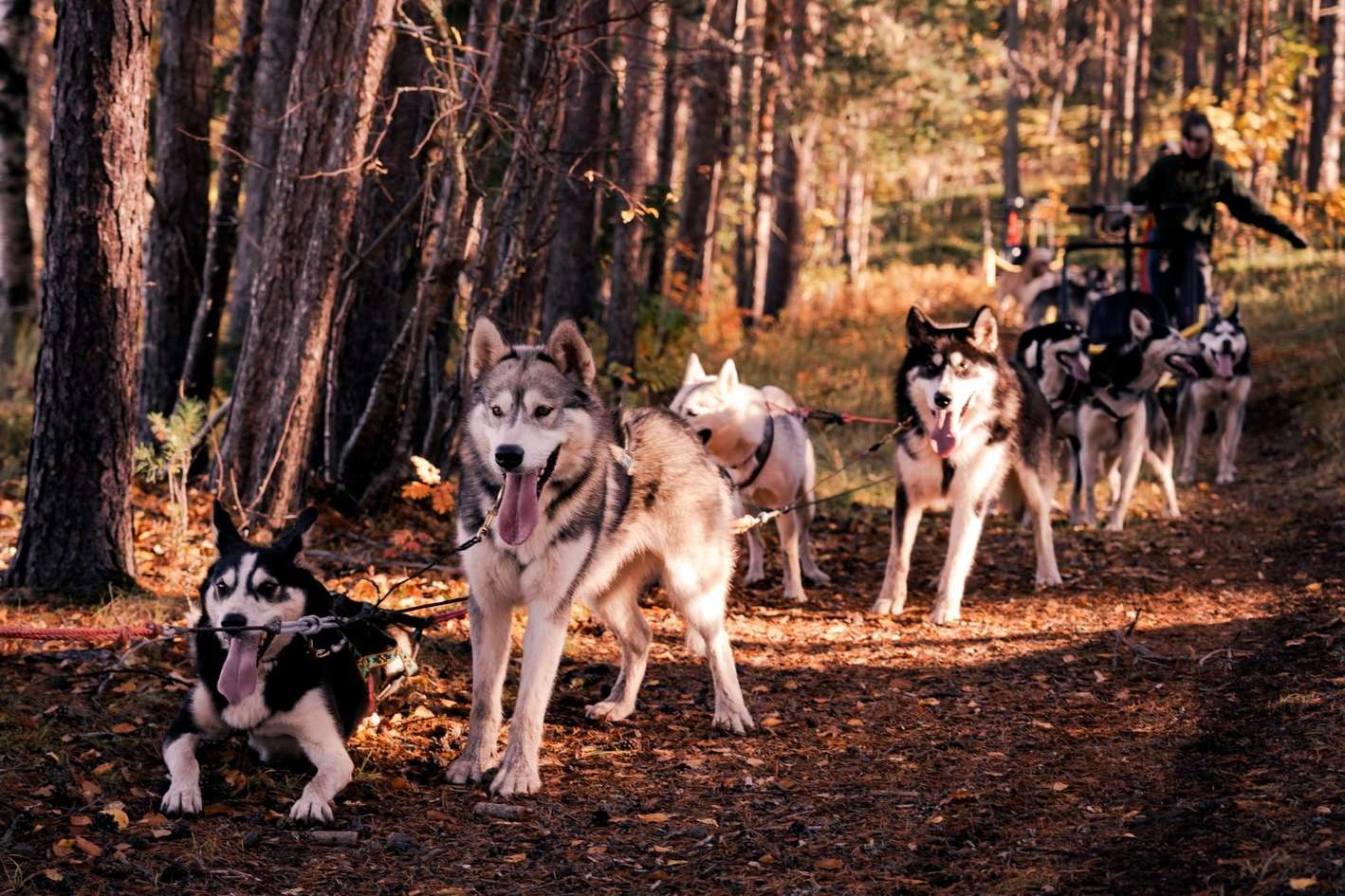
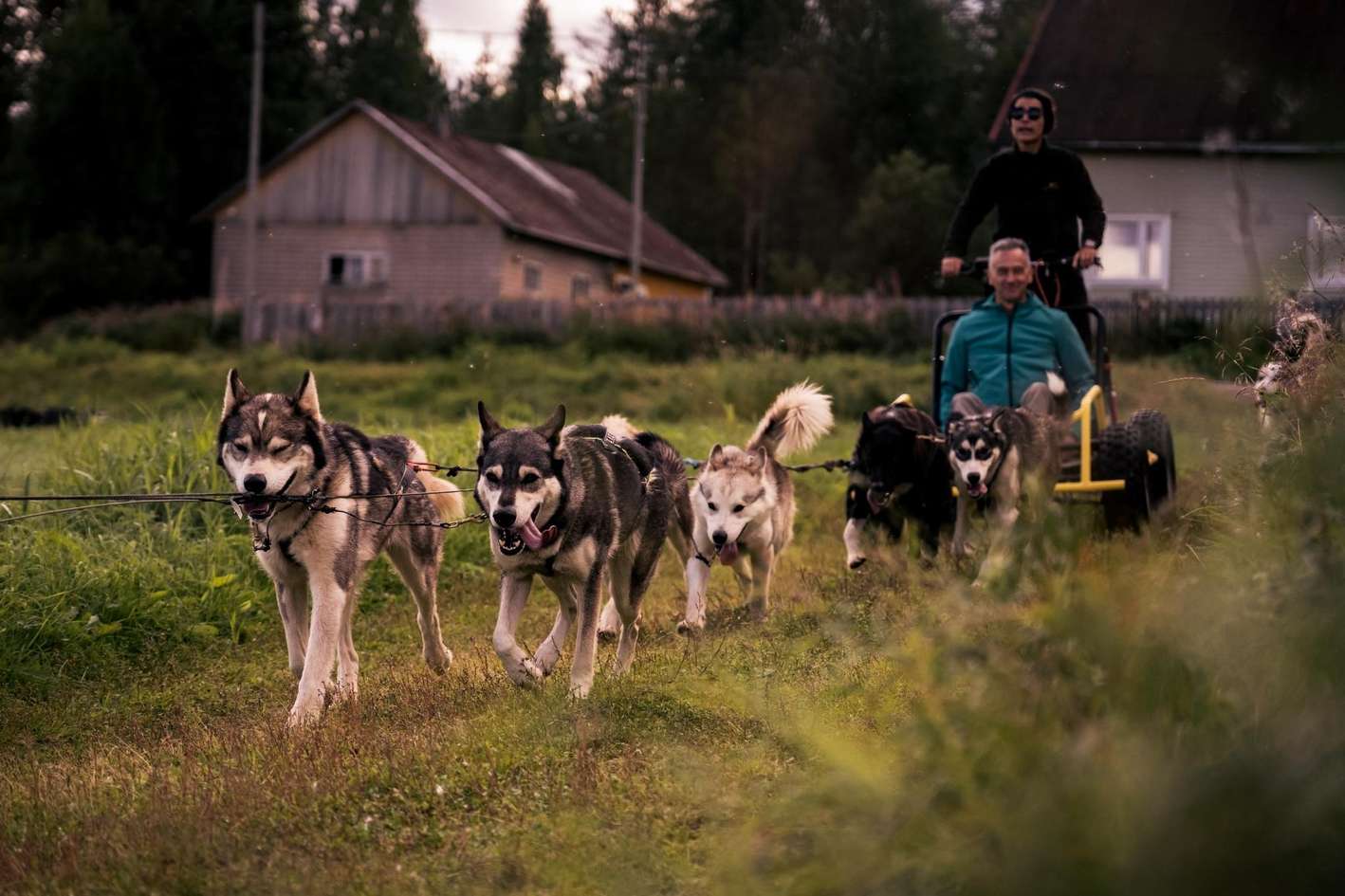
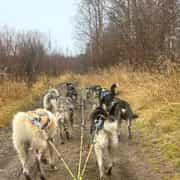
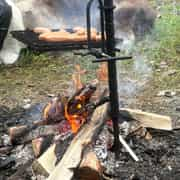
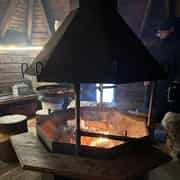
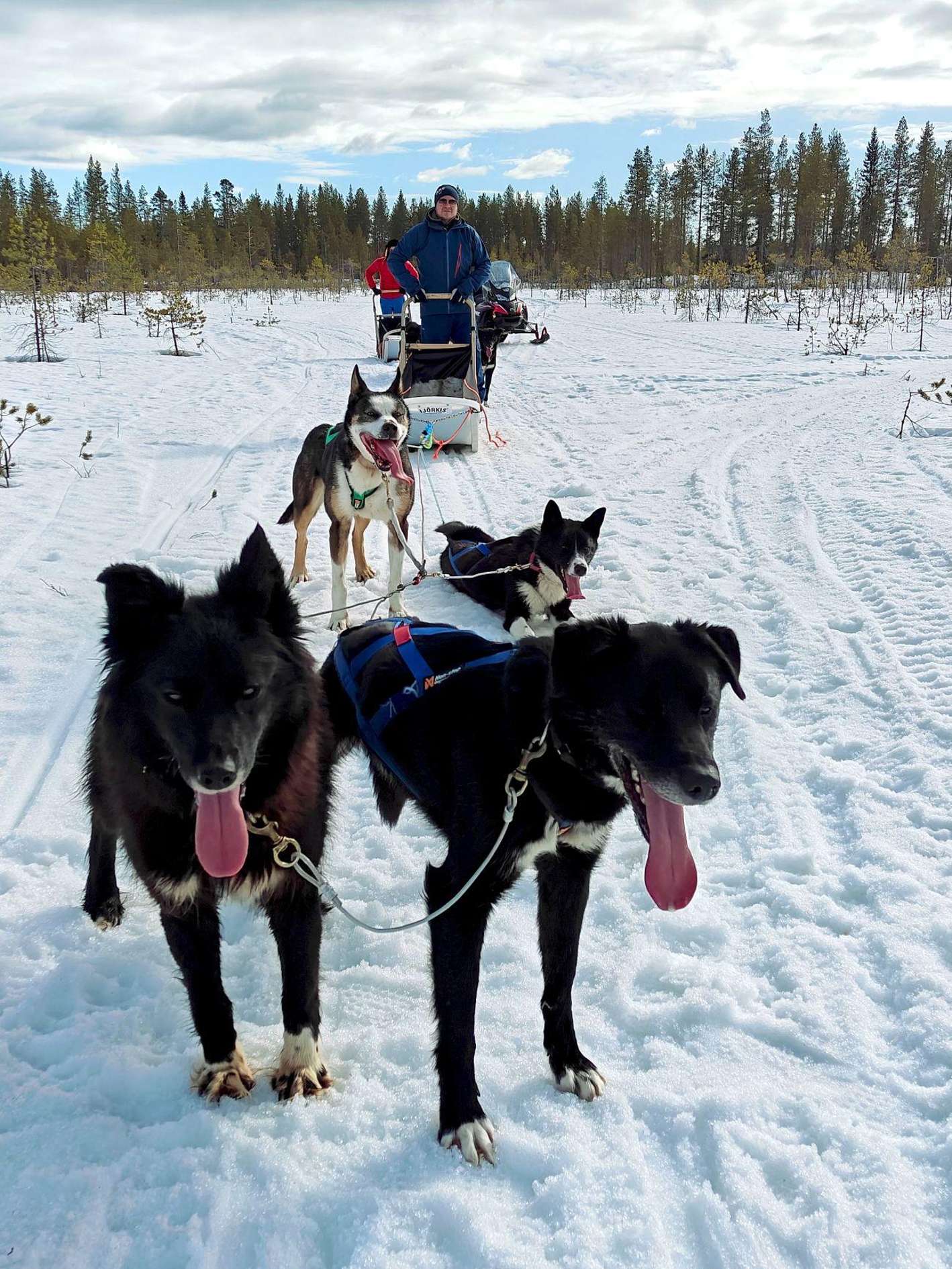
Every husky kennel around Rovaniemi sits far from the city's glow, under some of the darkest skies in Lapland. The lights themselves answer to the sky, and this guide settles everything you can control.
Book January to March, when deep snow, long nights and the most clear dark skies overlap.
A husky sled is locked to its trail; pair the run with a dedicated aurora hunt on another night for the lights.
Christmas departures sell out up to six months ahead, and February trips need four to five weeks at least.
The howling starts before the brake releases. A dozen dogs lean into their harnesses, paws scrabbling on packed snow, and the sled jerks forward into a forest where nobody has switched on a light.
No dedicated after-dark aurora husky safari is on sale here. What is on sale comes close in the way that matters, because the tours run from wilderness kennels 20 to 60 km outside Rovaniemi, far past the city's light pollution.
The Drive Your Own Husky Team (5-8 km) safari is the closest match: a secluded family farm, small groups of eight at most, and your own sled to steer.
Dark skies, who holds the handlebar, how wild the kennel feels, and how the outing fits around your daylight plans: those are the four things this reader brings to the choice. Three tours measure up well on those counts.
| Drive Your Own Husky Team (5-8 km) | Insider 10 km Husky Sled Ride | Apukka Husky Adventure 6 km | |
|---|---|---|---|
| Remoteness and dark skies | Secluded family farm deep in the forest | Private farm, quiet forest trails | Resort kennel near Santa Claus Village |
| Who drives | You, after a full briefing | You, swapping with your partner halfway | You, guides never drive |
| Distance | 5-8 km | 10 km | 6 km |
| Fit around daylight | 5 hours door to door | 4 hours with transfers and a kota stop | 3.5 hours, easy to slot into an afternoon |
The day runs on daylight; the aurora is a night thing. That split shapes everything that follows.
Three things have to line up in the same window of a few hours: full darkness, a sky free of cloud, and enough solar activity. Miss one and the lights stay home.
A sled team is locked to its trail. The loop runs within a few kilometres of the kennel, so if cloud sits over your patch of forest, the dogs cannot carry you somewhere clearer.
Only a dedicated aurora hunt, booked separately, covers that kind of ground in an evening; a husky run goes where the trail goes.
Regulars treat these as two bookings on two nights. Take the husky safari for the run, and book a dedicated aurora hunt for the lights, so one cloudy evening does not sink both.
Darkness, clear sky and solar activity all have to coincide in your tour's fixed window
Sled teams run fixed trail loops near the farm; a sled cannot chase cloud breaks
If conditions are judged unsuitable before departure, tours may be cancelled or rescheduled, and refund protection can apply when nothing shows
Book the sled for the experience it guarantees, and the aurora as the bonus that might.
The sweet spot runs from January to March. Snow lies deep and unbroken by then, darkness lasts long enough for a proper night run, and clear skies appear most often in March, which gets around twelve clear dark nights against January's six.
By mid-January the snowpack stands roughly knee-deep and keeps building to its peak around mid-March, when the trails are at their best even as the cold eases to near minus two by day.
January is very busy with deep snow around 47 cm and over 14 hours of daily darkness, though cloud cover is high.
Tap a month to read it.
December is exceptionally busy with holiday crowds and 15 hours of darkness, though snow cover is still building toward 28 to 38 cm.
Tap a month to read it.
June: 23.8 hours of daylight. Snow sledding tours do not run in June, and continuous daylight under the midnight sun prevents any aurora viewing.
Tap a month to read it.
December is exceptionally busy with holiday crowds and 15 hours of darkness, though snow cover is still building toward 28 to 38 cm.
Tap a month to read it.
September brings autumn husky cart tours on dirt trails with nearly 7 hours of darkness and clear skies, but no snow.
Tap a month to read it.
The daylight chart tells the other half of the story. December gives you the longest nights, with full dark by about 5:40 pm, and the busiest calendar of the season.
Read those two together and the choice gets simple. December trades a thinner, fresher snowpack for maximum darkness and maximum crowds. January and February give you both: nights of eleven to fourteen dark hours and snow deep enough to carry any sled.
April is the honest end of the season, when darkness shrinks to a couple of hours and the aurora window closes with it.
If the lights are the point, aim for March and its clear nights. If the deep-silent-forest run is the point, any of the three months delivers.
The decision happens at the kennel fence, in the fifteen minutes before your briefing. On one side, standing on the runners with a team of eight in front of you. On the other, the sled basket, a blanket of reindeer hide and a musher doing the work.
Driving takes balance, a firm grip and legs that last. A 5 km run means 15 to 30 minutes on the runners; a 10 km trail stretches to 30 to 50, and standing for half of that tires the legs.
Most self-drive safaris pair two adults on one sled who swap halfway, so each person drives only part of the distance. Operators typically want drivers aged 15 to 18 or older, and some set the bar at 18 with a weight floor.
Guides can move a struggling driver to the passenger seat, so the worst case is a shorter turn at the handlebar.
Families with small children do better riding together: a musher-driven sled seats the whole family while nobody manages the team, and it is the warmer seat too, since passengers feel the cold more.
| Check | Why it matters | Our pick |
|---|---|---|
| Who drives | Self-drive needs the age, weight and fitness for the runners | You drive your own team after a full instruction and demonstration |
| Trail length vs time on the runners | A 5 km run means 15 to 30 minutes of standing; 10 km means double that | 5-8 km keeps first-timers comfortably inside their legs |
| Transfers and thermal gear | Without them you arrange your own way out and your own layers | Hotel pickup, 4x4 transfer, thermal overalls and hot drinks are all included |
| Group size | Big groups mean waiting and crowded trails | Maximum eight guests |
For the Husky Safari with Transfers & BBQ, the deal is similar at a longer reach: a 6 to 10 km self-driven run with a photo stop, overalls and boots provided, and hot drinks in a kota afterwards. Adults 18 and up hold the handlebar there.
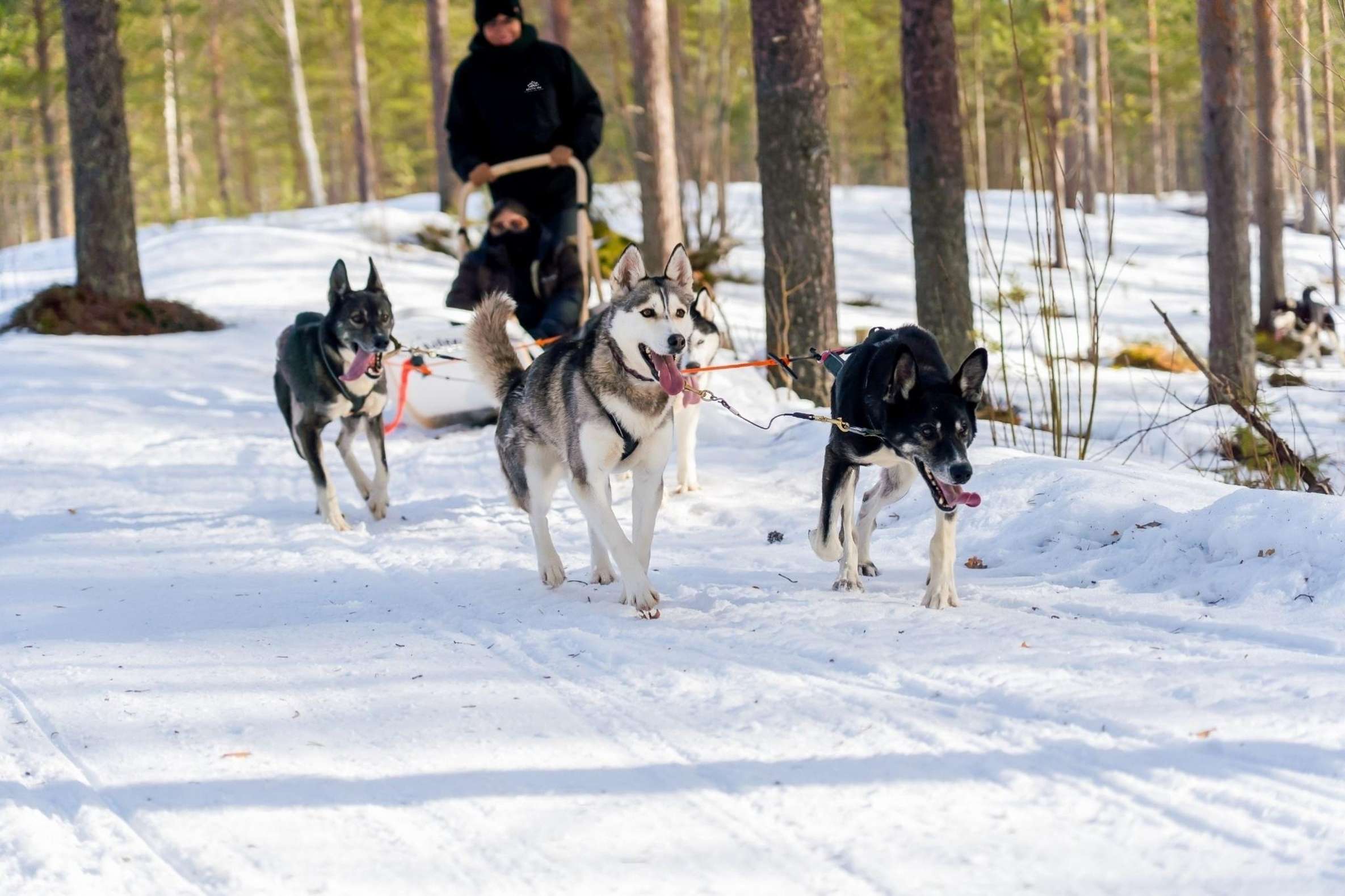
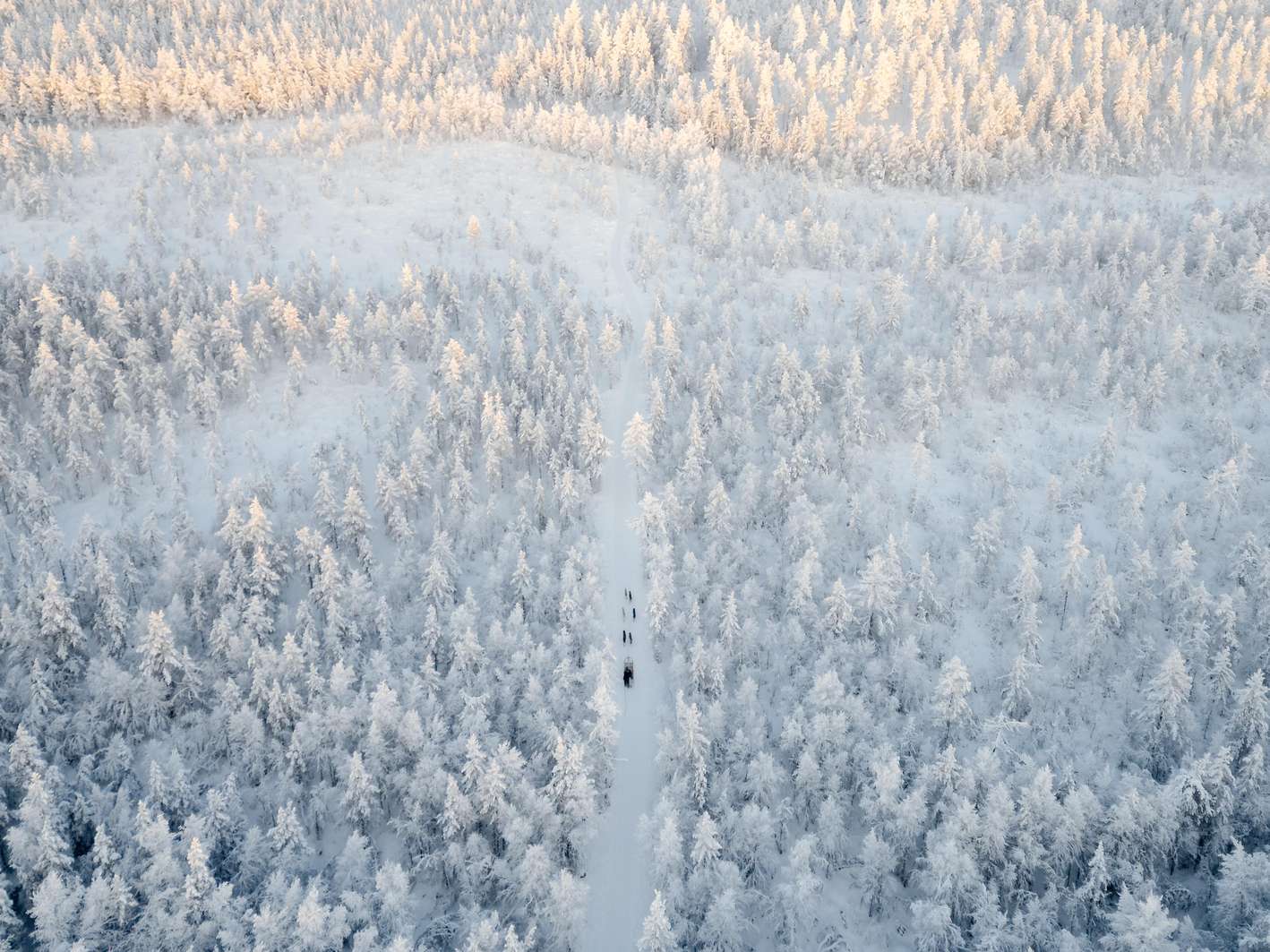
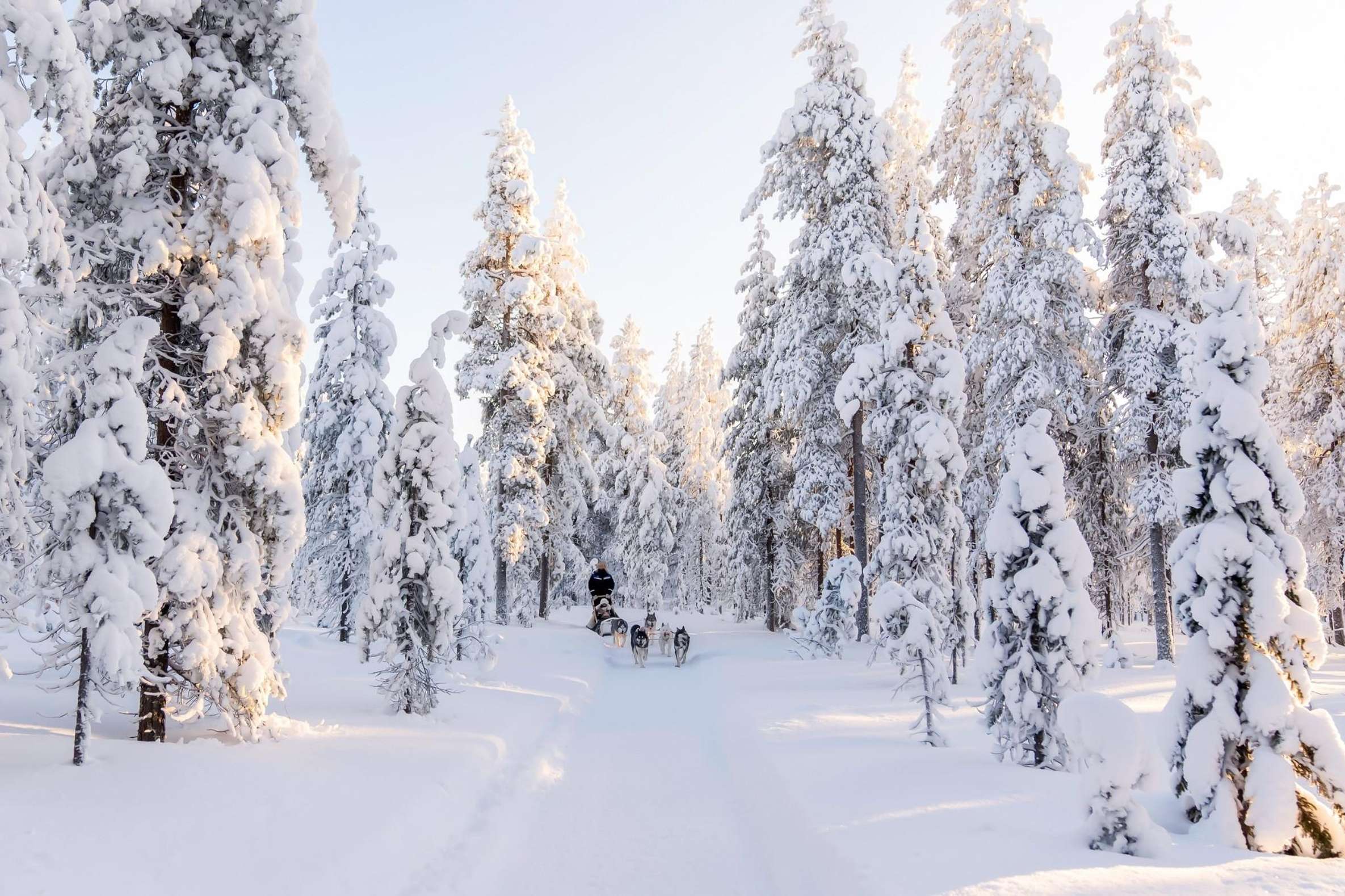
Night changes the forest. The spruce close in over a trail barely a sled wide, every branch hung with snow, and the only sounds are paws and runners. In daylight you would be reading the scenery; after dark the forest simply feels farther away from everything.
It is brighter than you expect. Snow throws back whatever light there is, and on clear nights the moon and stars do real work over an open stretch. Where the trail runs dark, the kennel hands out headlamps. The snow keeps moving under the dogs, and the sled glides on its own glow.
The dogs run better at night too. Their double coats build heat fast, and a crisp sub-zero evening lets a team hold speed and energy that midday sun would drain. What you hear behind you is eight animals working at their best.
Great husky tour! Friendly driver Robin picked us up early. Met the dogs first, then self-drove the sled, challenging but with careful instruction and sweet dogs, Kate looked after us.
The trade is honest: a night run gives you atmosphere, a day run gives you the view. Open frozen lake sections open the sky right up for anyone hoping upward, while the taiga corridors keep the wind off. By morning, hare and fox tracks cross the snow where you passed.
The scenery you remember, though, is the dogs. People who have done it talk about the surge at the start more than anything they saw.
A four-hour tour with half an hour of sledding confuses everyone the first time. The arithmetic is simple once you follow the clock.
Vans collect guests from the downtown hotels and safari offices in central Rovaniemi, then drive out to a kennel 20 to 60 km away, and the one-way drive runs between 30 and 60 minutes depending on which farm holds your team.
The remote kennels are the ones worth having: deeper forest, darker sky. Santa Claus Village, by comparison, sits only 8 to 9 km from town, which is exactly why its skies glow.
Arrive ten minutes early; late arrivals lose their seat
The far kennels mean the darkest skies
This is where the foot brake gets explained
The part you came for
Unhurried on wilderness safaris
The Insider 10 km Husky Sled Ride pieces it together cleanly: pickup in a new van, thermal jacket, pants, boots and gloves fitted before departure, then the 10 km run with a driver swap halfway, and hot drinks with local snacks in a traditional kota to close it.
Three hours of logistics wrapped around half an hour you will not forget is the normal shape of the day.
The roads out to the kennels are the argument. Remote farms sit 20 to 60 km from the city, down snow-covered roads and, in places, icy gravel that catches drivers who have never seen a Finnish winter.
Take the transfer. It is included on most of these tours, it is timed to the departure, and the thermal clothing fitting that precedes it usually happens at a city-centre office, which a rental car only complicates. Operators organise the group transport themselves before anyone sets off.
The independent options thin out fast. Public buses do not serve rural kennels at all, so it is a rental car or a taxi.
Operators advise against the rental outright, and no tour discounts the price for arriving under your own steam, so driving yourself buys you nothing but risk. A taxi works, but a long ride out into the forest each way adds up.
Plan the evening around the pickup point and let the van do the winter driving.
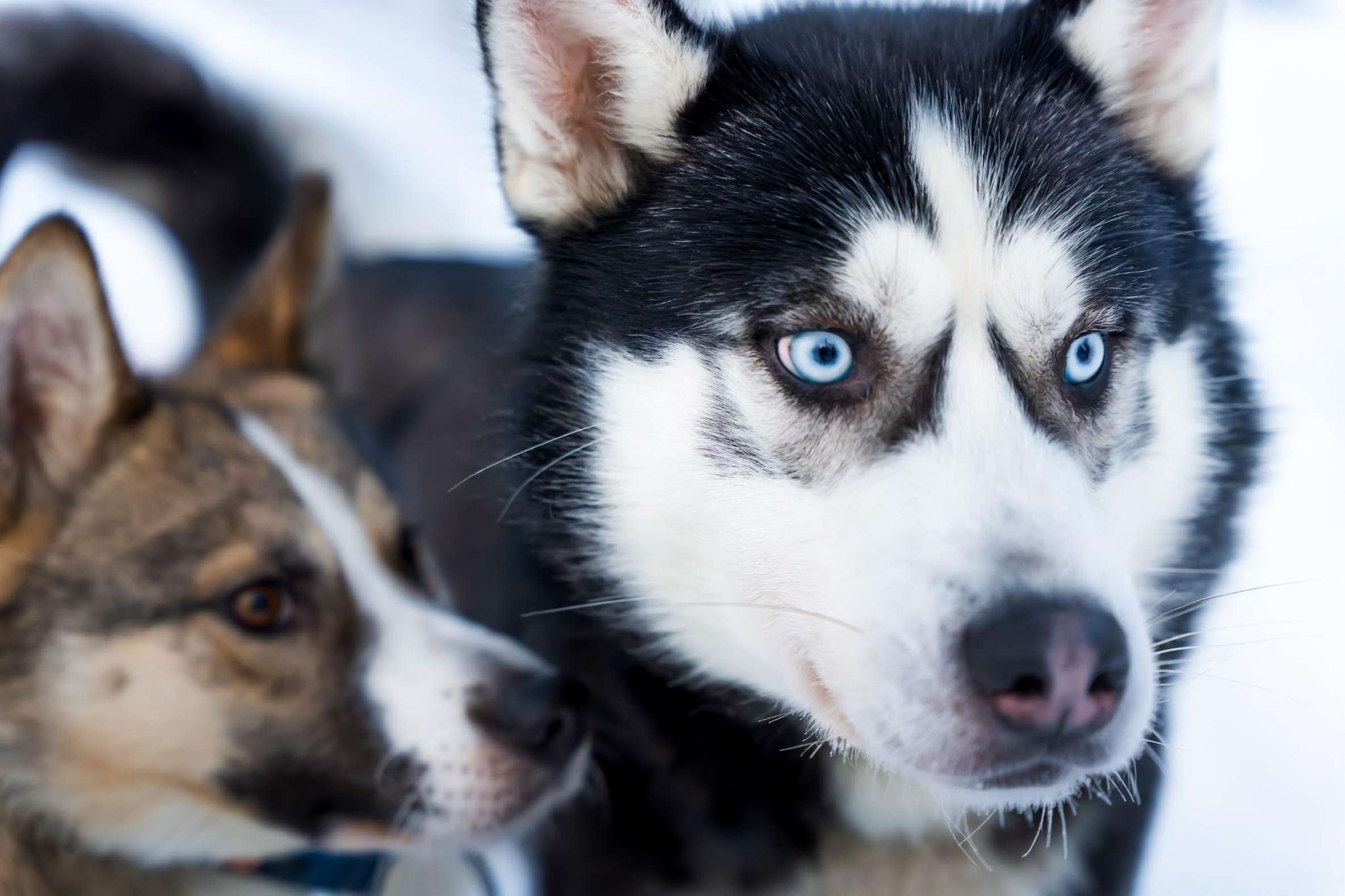
On wilderness trails the night temperature sits between minus 15 and minus 25 through the peak season, and cold snaps push it toward minus 30. Then the sled moves, and the windchill arrives.
The kennel handles the outer shell. A one-piece thermal overall, thick boots, mittens and wool socks get fitted before departure on most tours, and they are built for exactly this.
What the suit cannot fix is what you wear under it, and that part is yours: a merino or synthetic base layer, top and leggings, never cotton, then a fleece or wool sweater over it.
Two personal layers underneath, because a standing driver generates less heat than you would think and a seated passenger generates less still.
The photos survive the same way you do: in short exposures. Pull the phone out, shoot, put it back against your chest. A power bank in the same pocket earns its weight on a night tour.
Dress for standing still at minus 25 and the ride itself will feel mild.
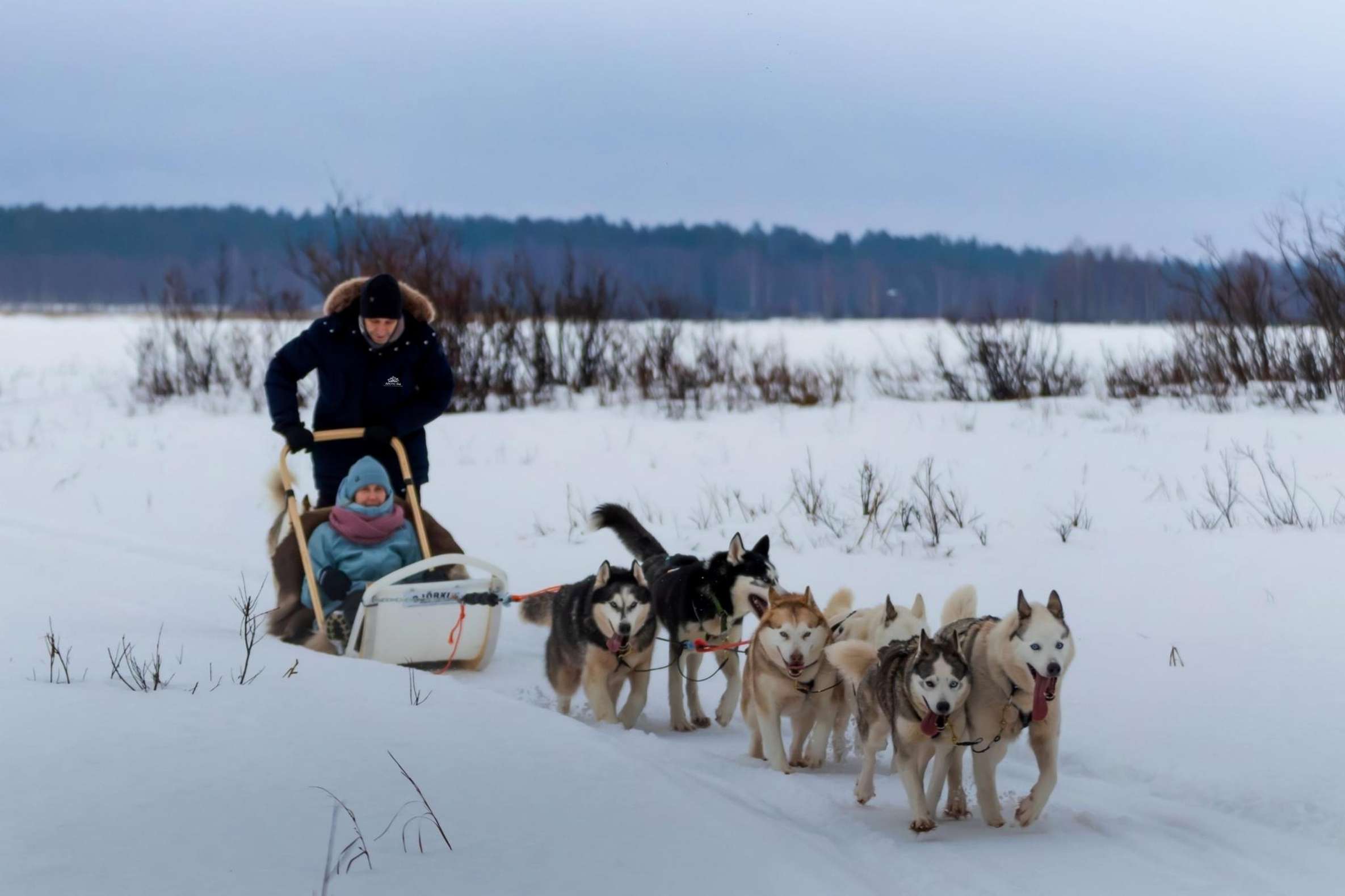
No experience is needed, and that is not a marketing line. Guides run a full instruction before every departure, and the dogs know the commands better than you will.
What driving does ask for is a body that cooperates. You stand on the runners for 15 to 25 minutes at a stretch, lean into the bends, and work the foot brake, the metal bar you step on to drive its teeth into the snow.
Flat ground is easy; uphill, drivers step off and push, so think of it as brisk uphill walking, nothing harder. Some operators set the driver minimum at 18, and operators can hold anyone back who cannot control a sled safely.
The one rule to carry with you: if you slip off the runners, let go of everything. Grabbing the sled, the harness lines or a dog drags you forward or tangles you in.
A team that runs on without its driver either stops on its own training or gets caught by a guide further down the trail.
Holding on drags you forward or tangles you in the lines
The dogs are trained to halt on command or at the brake
No supplement and no stranger required
Stepping on it drops metal teeth into the snow, so practice it in the first hundred metres
Solo travelers get the best surprise of the day: most are assigned their own sled for the whole run.
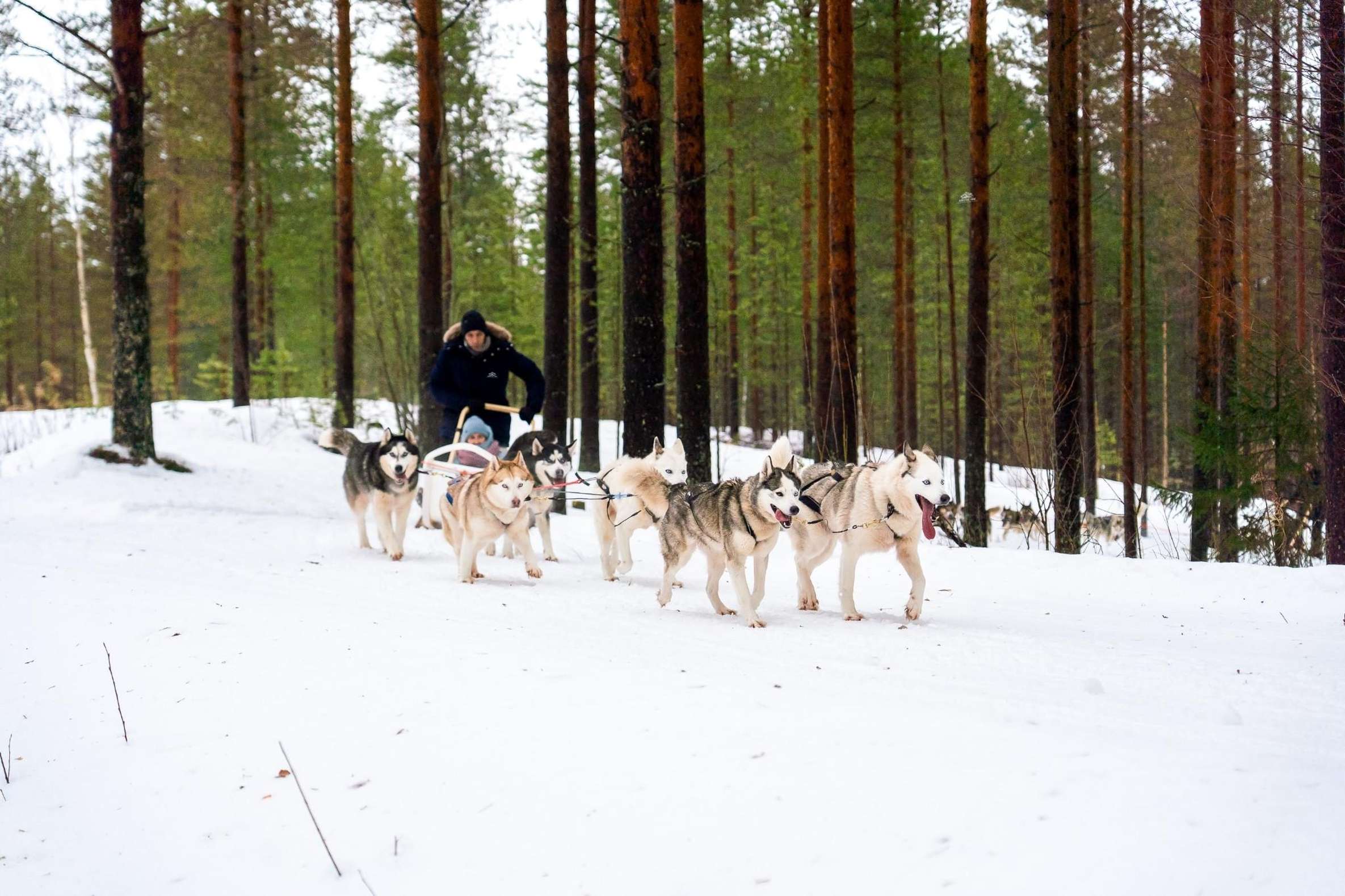
Two forces can reshape a booked day, and both have a playbook.
Cold first. When the thermometer reaches between minus 28 and minus 30, operators shorten the runs, split them into shorter sections, or move guests from self-driving into guide-driven sleds.
At minus 35 or colder, or minus 30 on exposed trails, tours are cancelled outright. These are rare days: average winter lows run between about minus 8 and minus 12, so a cancellation stays an outlier.
Thin snow gets handled differently. Tours shift onto wheeled carts, use stored snow on early-season tracks, or trim the trail distance, and if the change is a big one you get an alternative program with a partial refund or a full cancellation option.
| If this happens | What happens then |
|---|---|
| Temperatures hit -28°C to -30°C | Runs are shortened or converted to guide-driven sleds |
| Temperatures hit -35°C or colder (-30°C on exposed trails) | The tour is cancelled |
| Snow is too thin for sleds | Tours run on wheeled carts or shortened trails; major changes bring an alternative program with a partial refund or full cancellation |
| You waited to book on arrival | Walk-in prices rarely drop in peak winter, so there is no saving for waiting |
The last line is the one that costs people their slot. Prime Christmas departures fill six months ahead in the busiest years, and even the likelier reading puts them at six to eight weeks minimum.
February school holidays sell out four to five weeks to two or three months out. Book when you fix your flights, before the calendar closes.
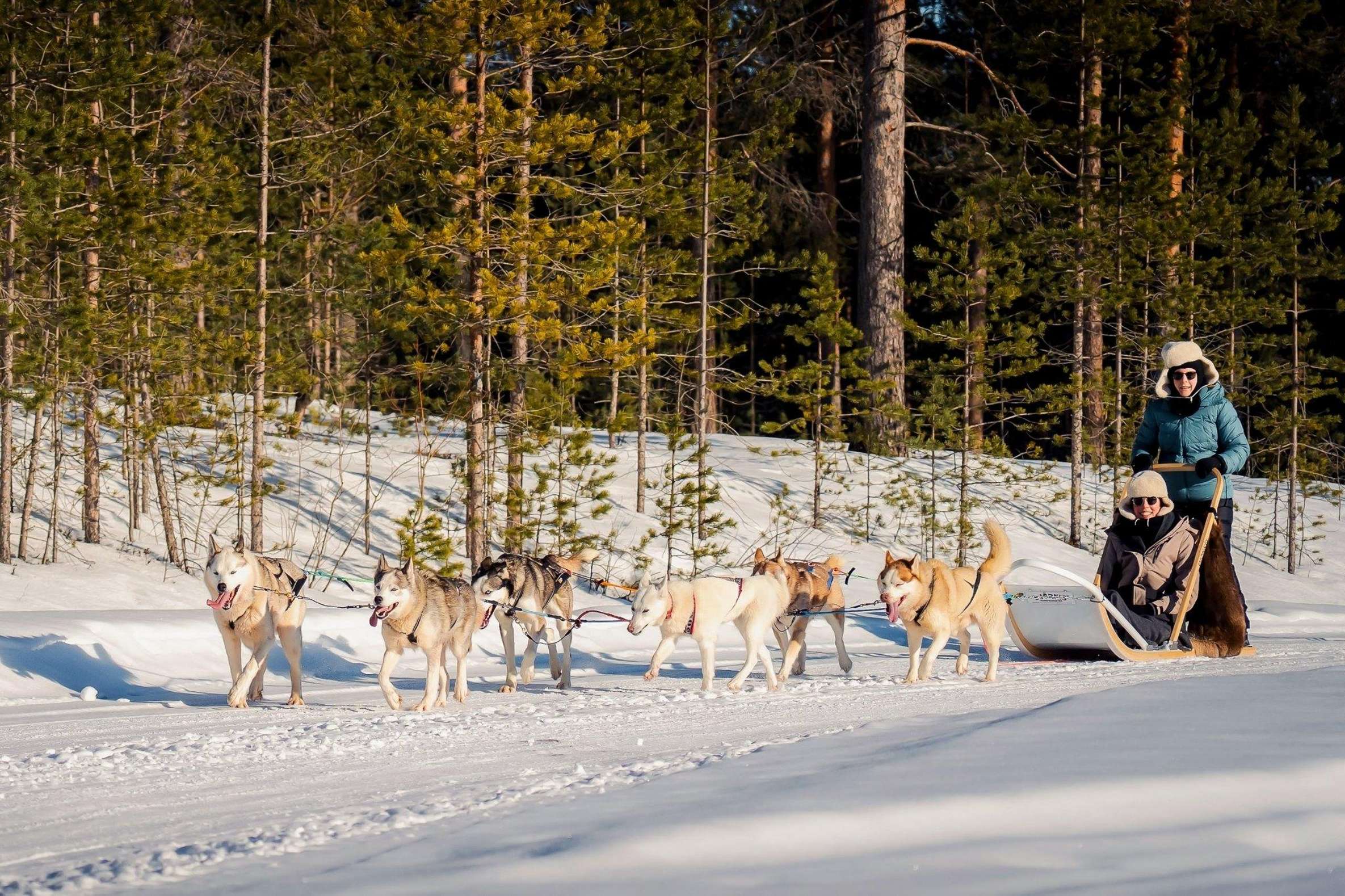
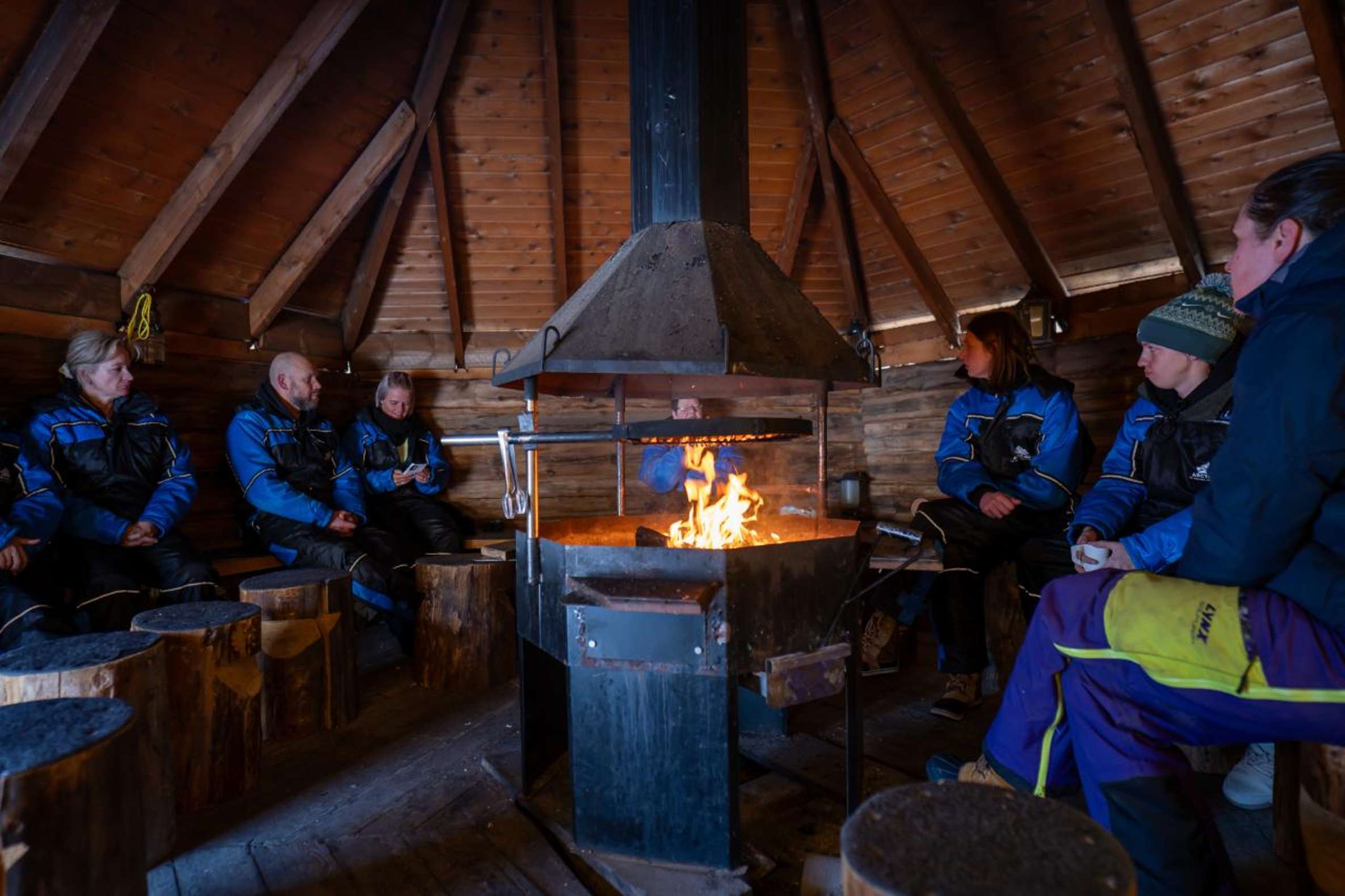
The fire is half the tour. After the runners go quiet, guests file into a kota, the wooden hut with a fire at its centre, where hot drinks, sweet snacks and grilled sausages wait, and the cold leaves your face in that slow stinging way it does.
The dogs get their half too. On wilderness kennel safaris the petting time is unhurried and folded into the campfire hour, though the big commercial runs can squeeze it to five minutes, which is one more reason the small farms earn their keep.
Ask the guide before you approach any dog, and let the animal come to you; these are working animals, some of them shy of fuss.
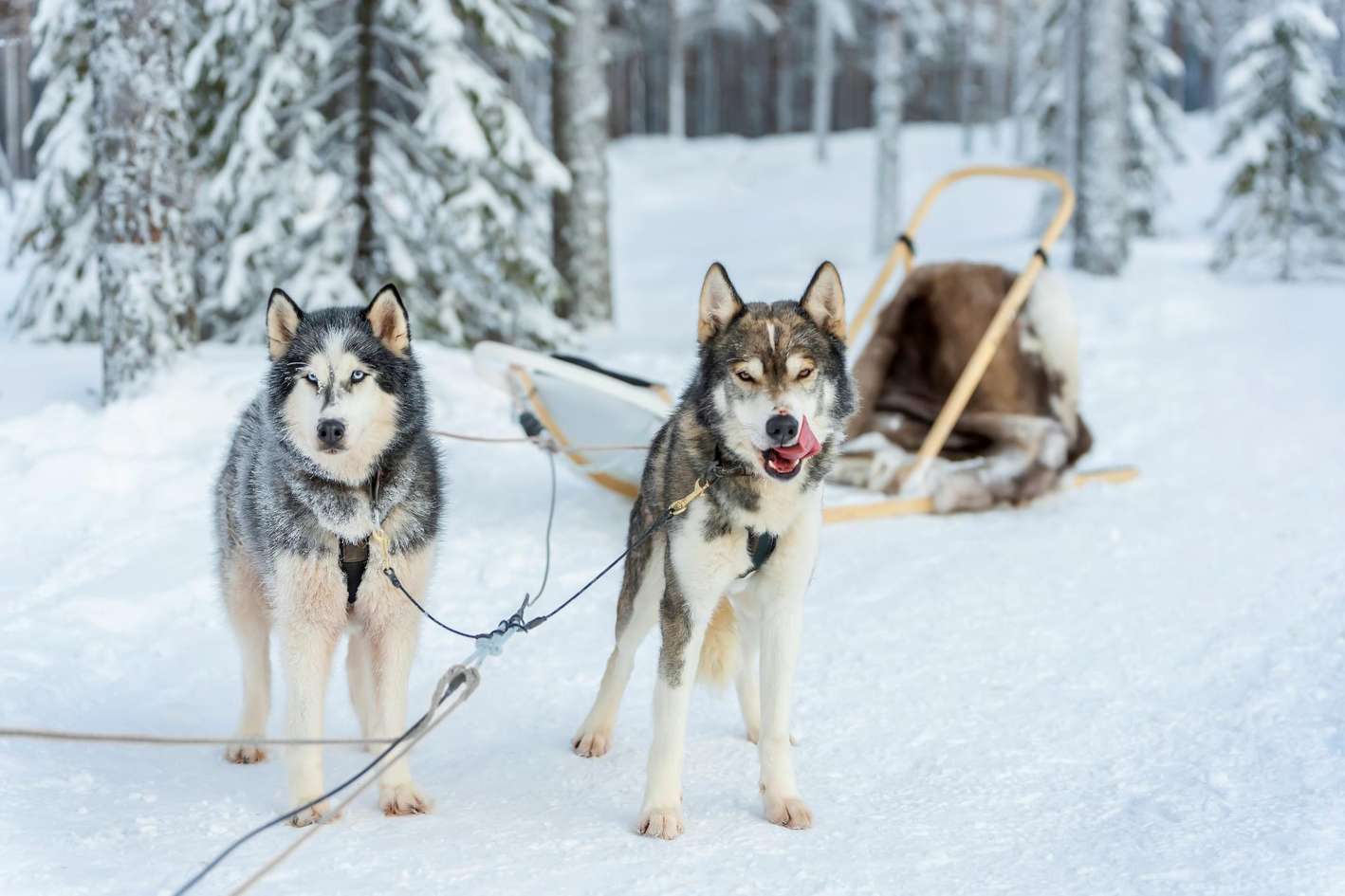
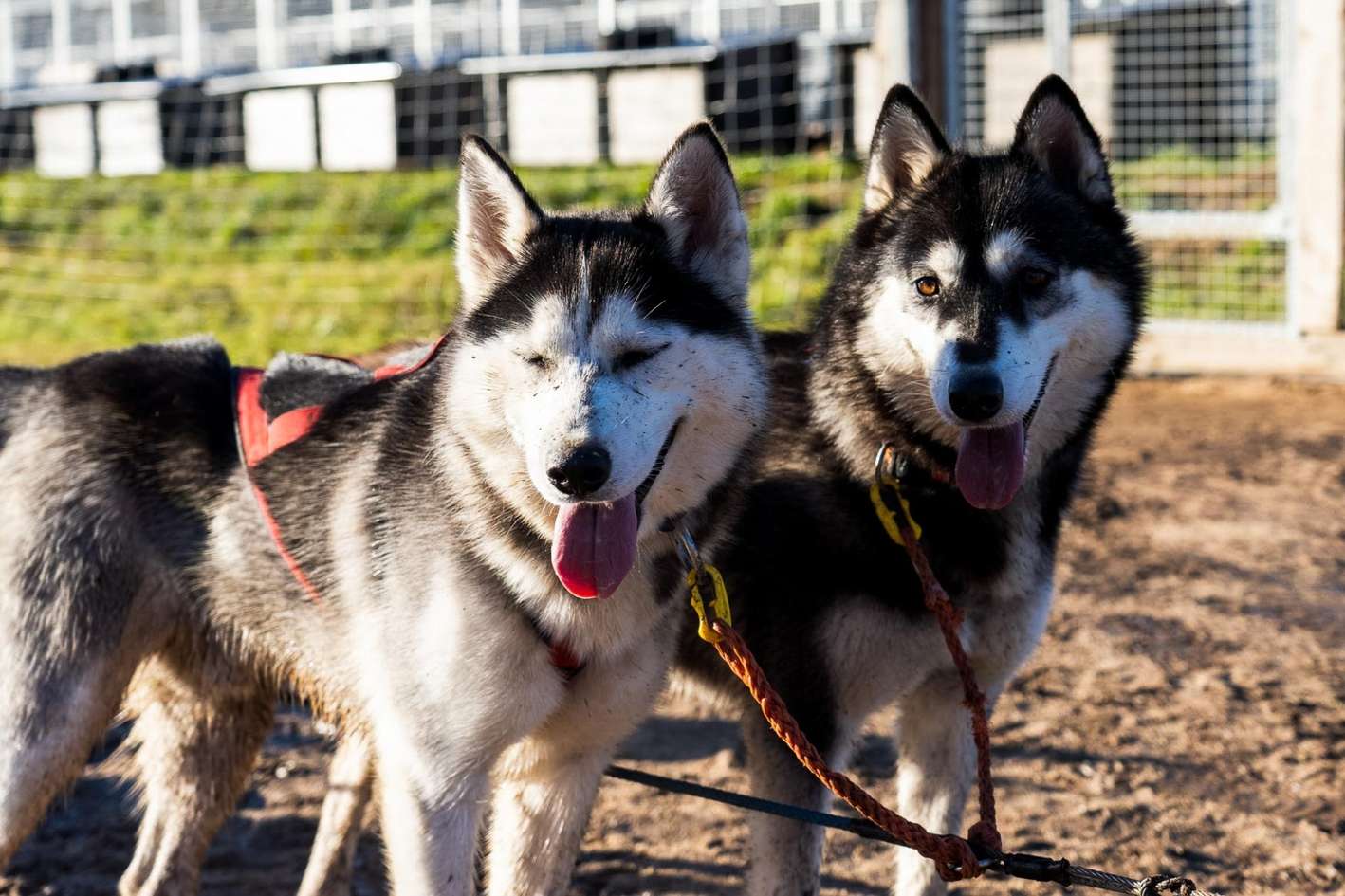
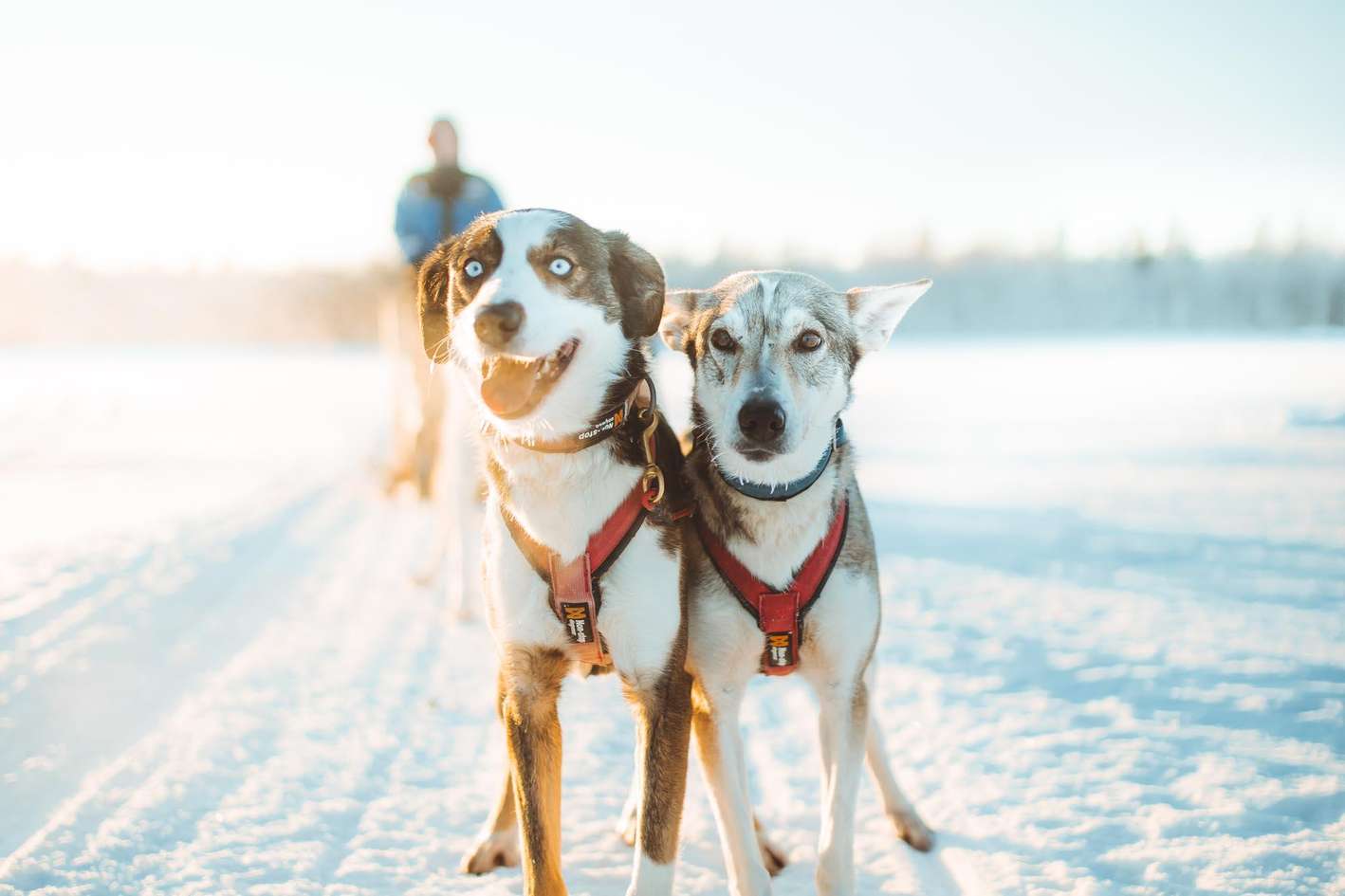
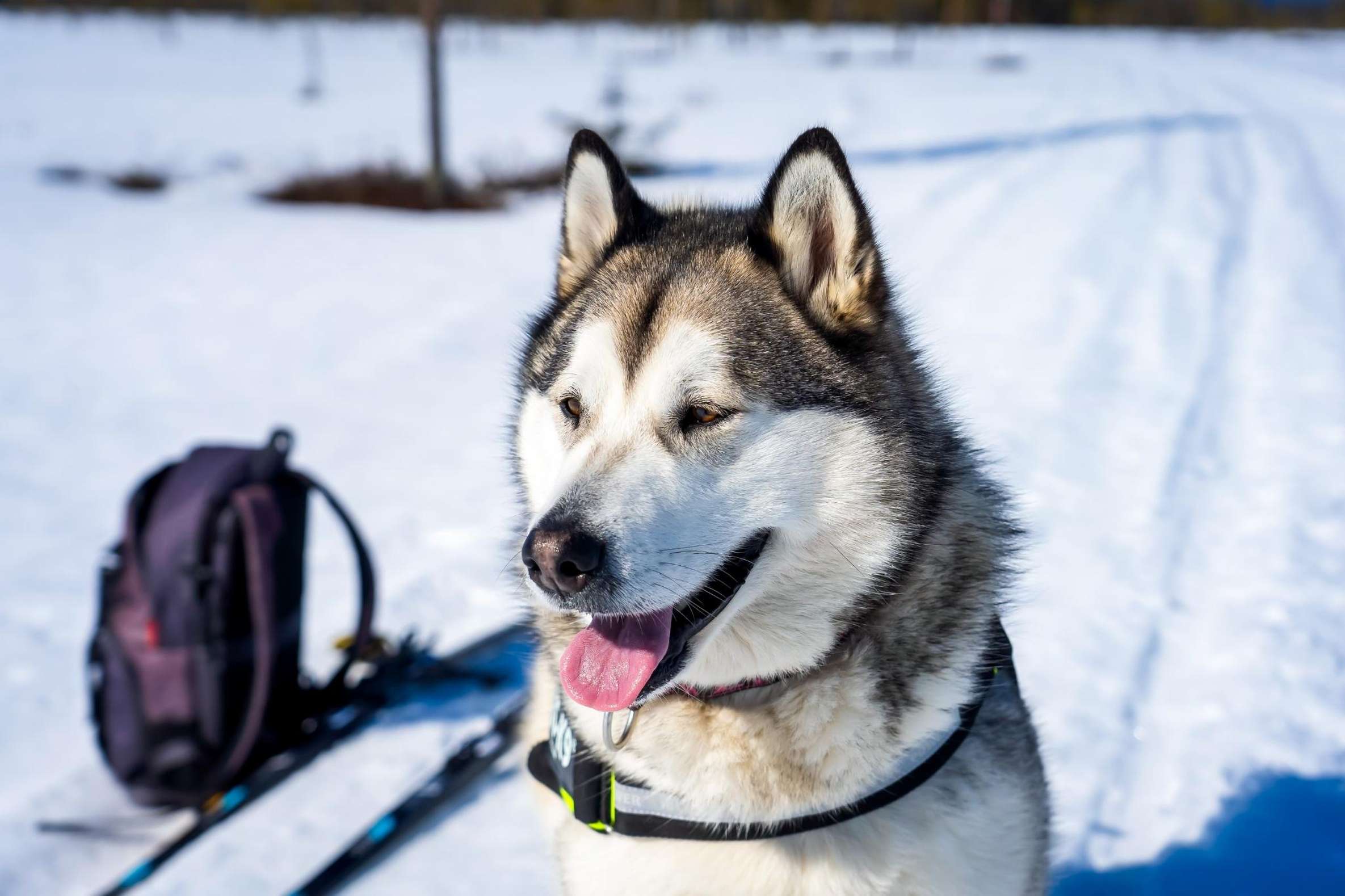
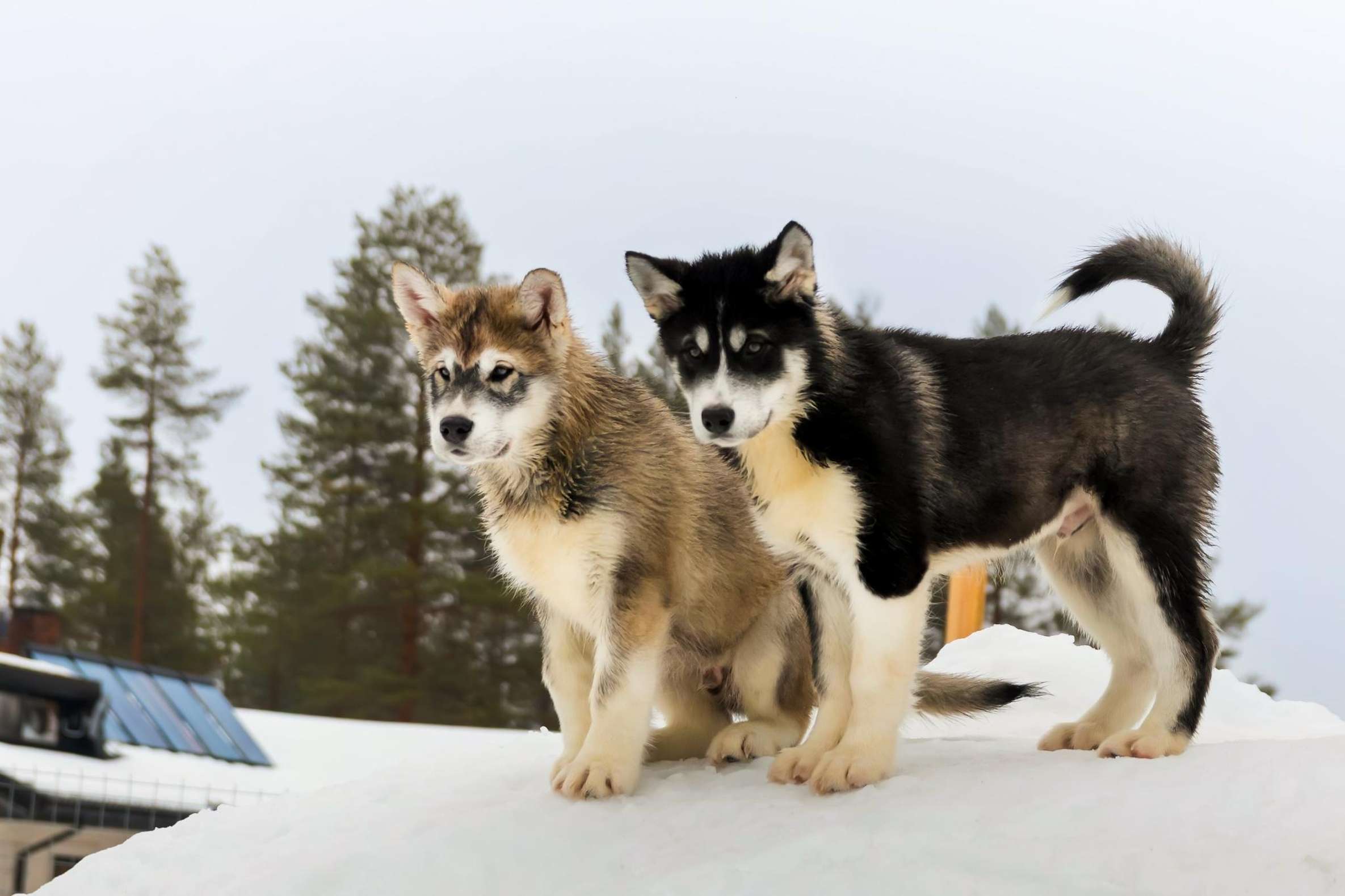
Look at the teams while you wait. Most Lapland kennels run Alaskan huskies, purpose-bred crossbreeds built for pace and endurance rather than looks, though some kennels, including the one at Apukka, run purebred Siberian huskies.
Either way, they sleep outside by choice: a curled husky with its tail over its nose holds its own warmth in temperatures far below anything you will stand in, tucked into shelters raised off the snow.
The dogs who howled at the start sleep soundly an hour later, and you will understand why by then.
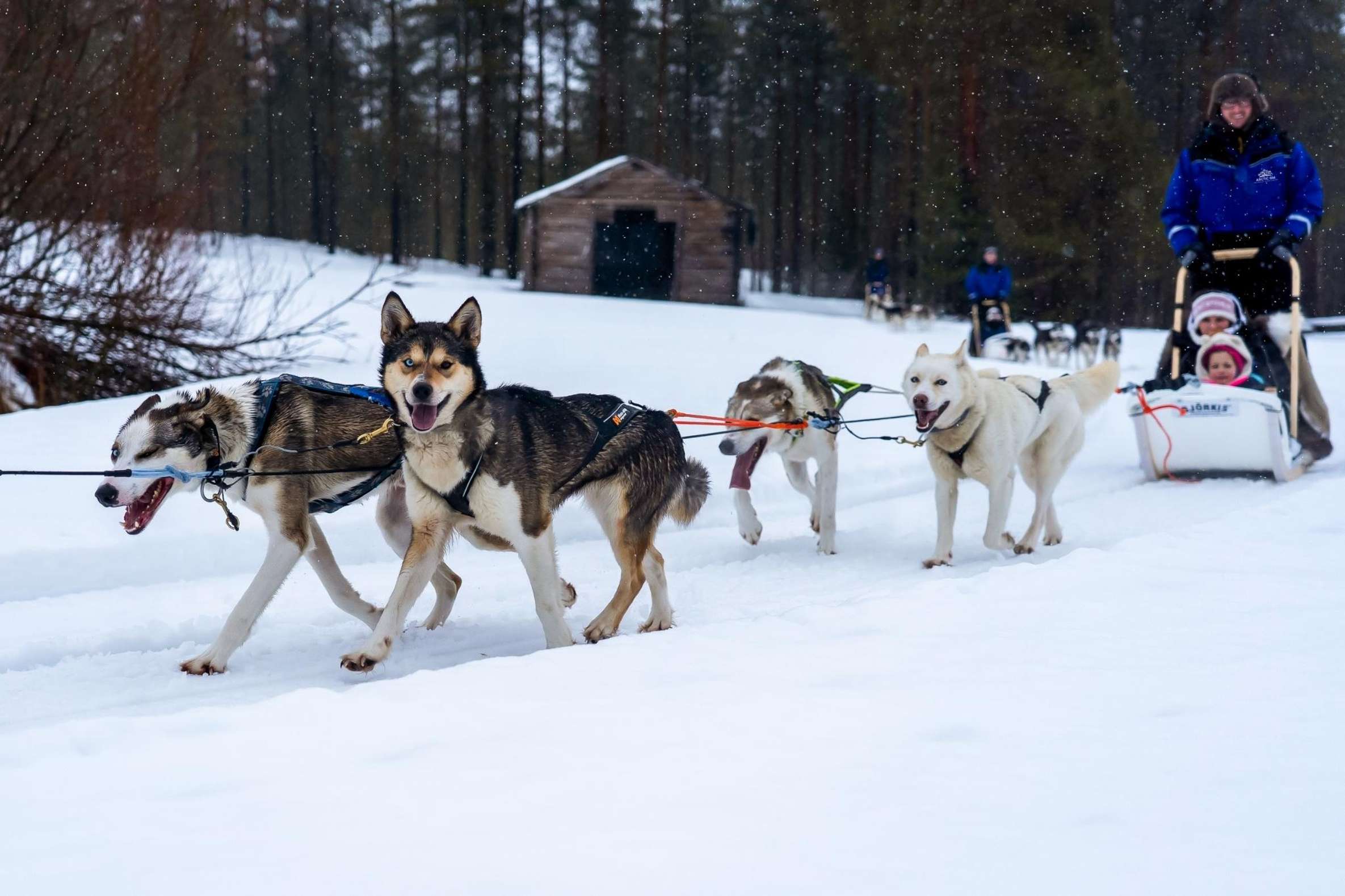
An hour north of Rovaniemi, near the kennel at Korvala, the wilderness keeps going after the sled run ends. The same forests that carry the trails carry cross-country ski tracks, snowshoe routes and ice-fishing holes, and the open ground around the kennel shows the lights from autumn through spring without any tour attached.
The walk worth planning a day around is the 12 km winter hike to the top of Käyrästunturi fell, which ends at a wooden day hut with a stove. Reindeer and horse farms sit about 60 km further north, close enough to chain onto the same drive.
Closer to town, the options thin but do not vanish. Santa Claus Village keeps short walk-in husky rides for anyone who wants a taster without a full safari, and on a clear, strong night the lights can show from its quieter edges, though the village centre glows too much for reliable viewing.
The honest shape of the trip is a wilderness safari out in the taiga and a separate evening for the sky. Book the dogs for the day and keep a second night free.
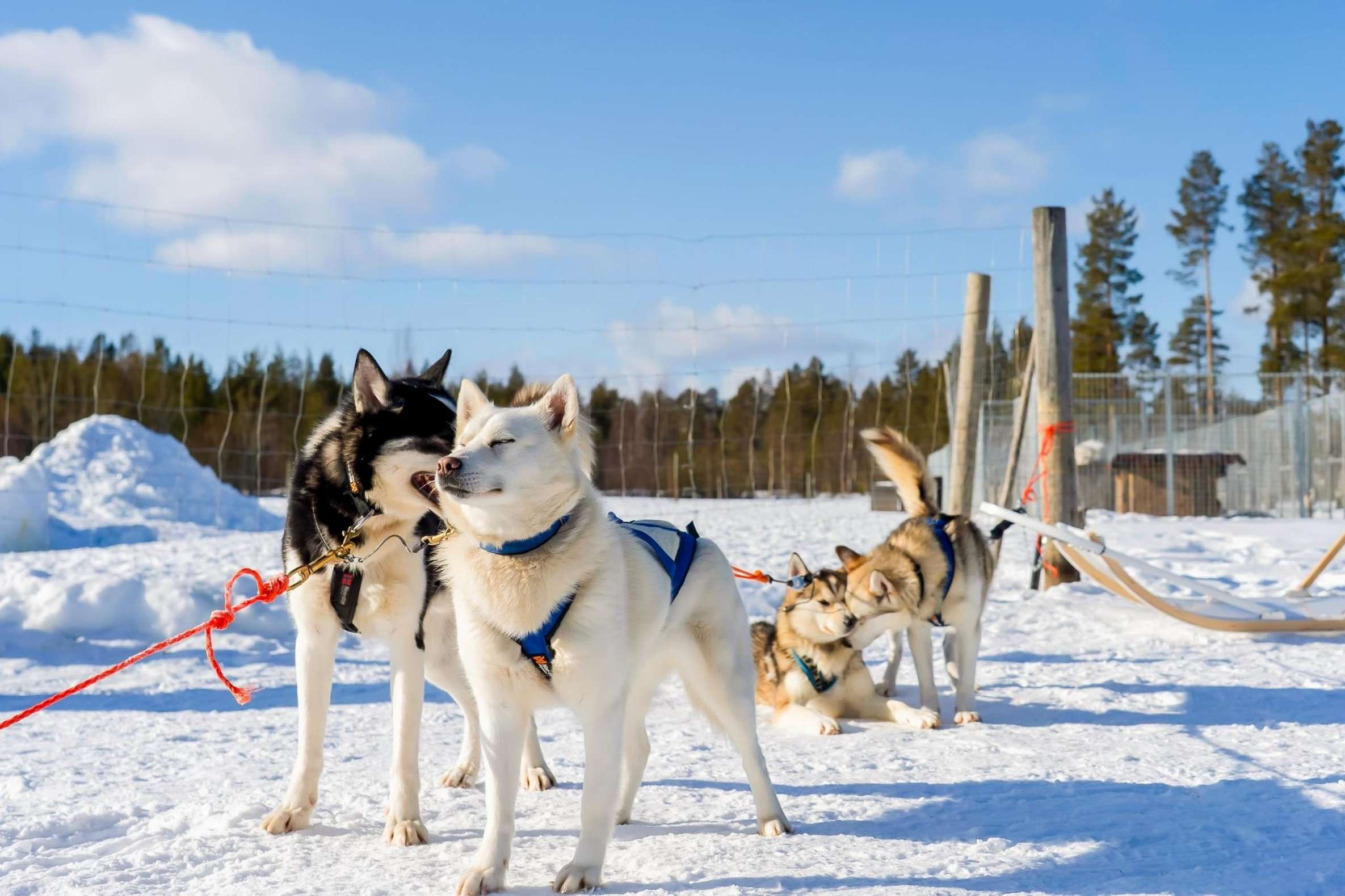
The aurora husky safari you searched for does not exist on sale here, and the Drive Your Own Husky Team (5-8 km) safari is the closest thing worth your money: a secluded farm, real dark skies and your own team.
Book it for January to March, dress in your own layers underneath the provided overalls, and pair the run with a dedicated aurora hunt on another night.
Straight answers on seeing the Northern Lights from a sled, and what to book when evening sledding is not on sale.
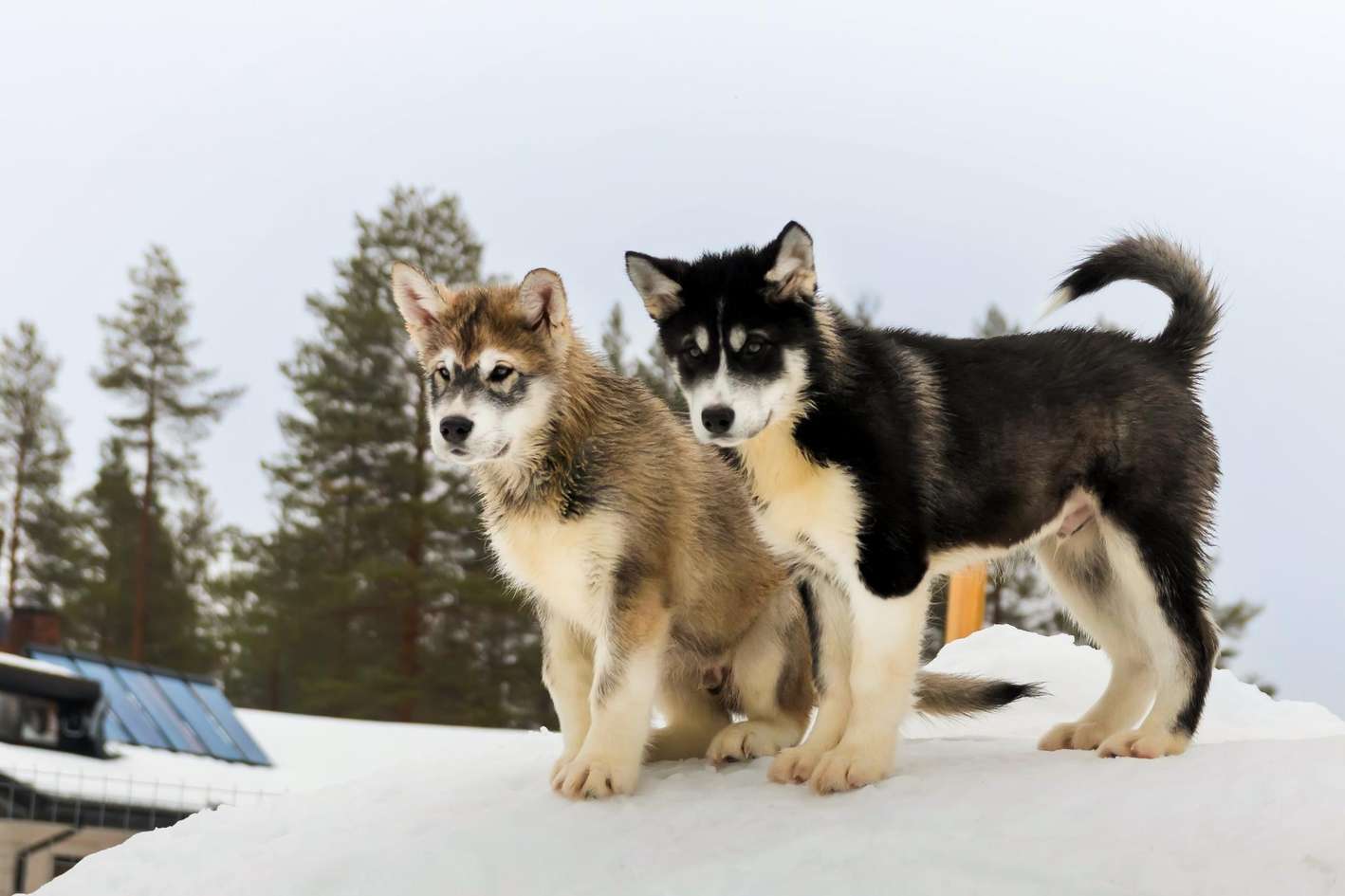 Rovaniemi2026
A sled run after dark can show the aurora when three things line up: full darkness, a sky free of cloud, and enough solar activity. The wilderness kennels sit far from city glare, so the sky above the trail is genuinely dark.
Not on this site. The husky safaris on sale run in daytime, though they reach secluded taiga trails far from Rovaniemi's light pollution, which is exactly where dark skies are. The Drive Your Own Husky Team safari is the nearest match on sale, and it gets you onto a quiet forest trail under open sky.
Pick a date for a daytime wilderness husky safari, then book a separate dedicated aurora hunt for an evening. A minibus aurora chase can cover 100 to 200 km in a night to reach clear skies, which gives materially better odds on a cloudy night than a sled loop fixed to one trail.
A sled team follows its local trail loop and cannot drive to a gap in the clouds. If conditions look clearly hopeless before departure, operators may cancel or reschedule the tour, and refund protection can apply when no aurora is visible. On some aurora tours a full refund is given when nothing appears on camera.
From late August until early April, on clear dark nights away from city lights. Deep winter from January to March is the peak, with February the busiest month, and Rovaniemi averages 6 to 12.7 clear dark nights per month over that season.
Guests get headlamps, and snow reflects whatever light there is, so a clear night with a moon and stars is brighter than most people expect. Hares and foxes cross the snow after dark and leave tracks you can read the next morning.
They often do. Dogs heat up quickly under a thick double coat, and cold night air without sun keeps them from overheating, so they can hold more speed and energy. Mushers regularly rest teams in the warmest part of the day.
Complete darkness falls around 5:40 pm in December and around 6:14 pm by mid-January, so a late afternoon departure already runs under a dark sky. In March it stays light much later, until nearly midnight at month's end.
Yes. One tour on this site combines a self-driven husky sleigh ride with a reindeer farm visit, and you feed the reindeer there. That covers two Arctic animals in a single outing.
Sometimes. On clear nights with strong solar activity the lights show from the remote edges of the village, though light pollution makes them hard to spot from the center. A wilderness kennel far outside town gives a darker sky over the trail.
sled trails stay put, clouds don't
Take the handlebar yourself: compare every self-drive mushing tour in Rovaniemi by trail length and driving rules.
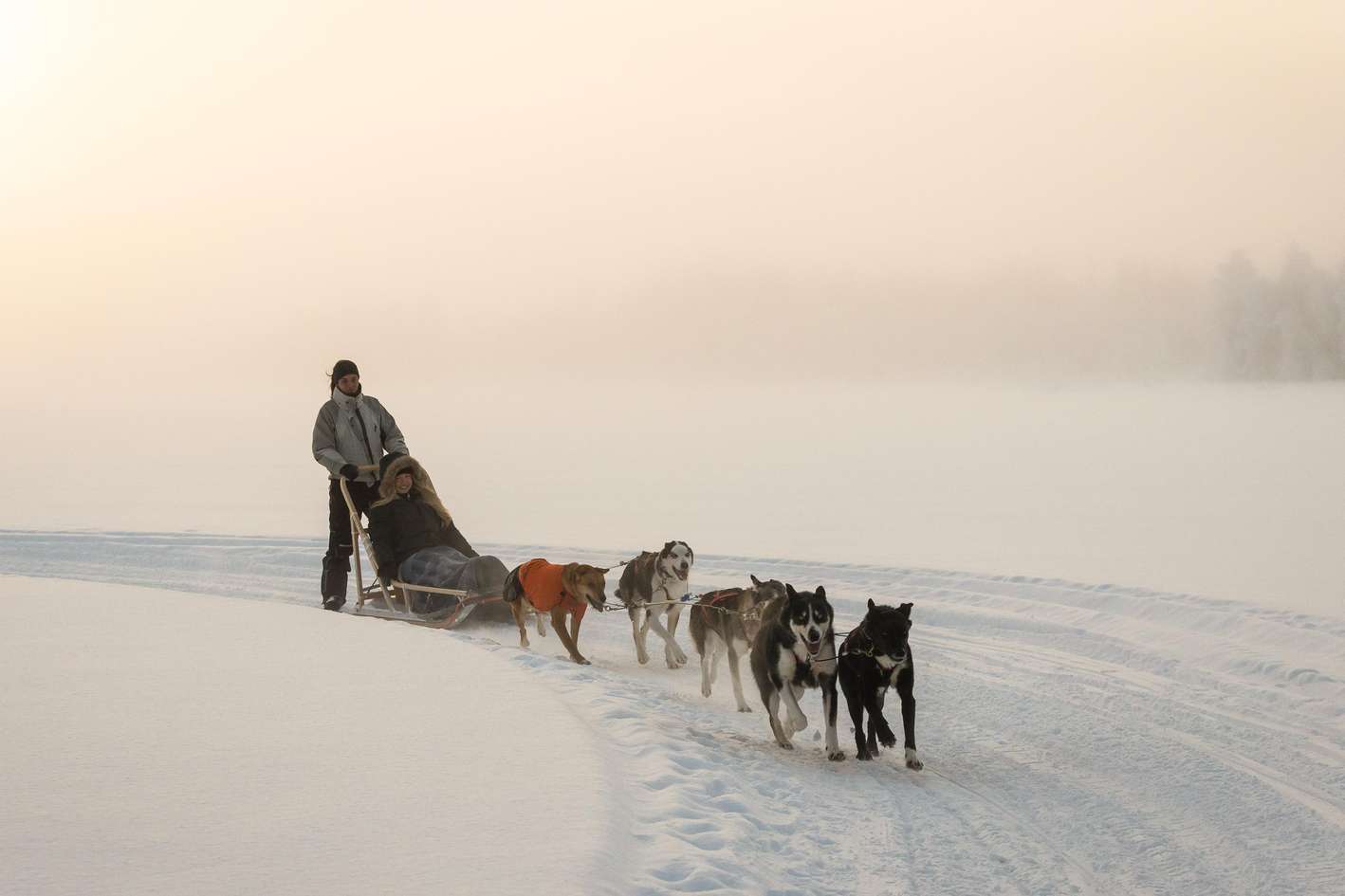
Shorter runs, less time on the runners: see what a 5km husky safari in Rovaniemi involves from start to finish.
For the longest taiga runs, the 10km husky safari page covers trail time, pace and how the driving works.
Prefer daylight for the scenery? See how daytime sleigh rides trade dark skies for wide snowy views.
sleds take two adults, swap halfway
Pickup from your Rovaniemi hotel, a 5 to 8 km run from a secluded wilderness farm, small groups of eight, and free cancellation up to 24 hours ahead.